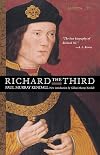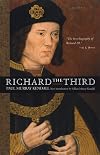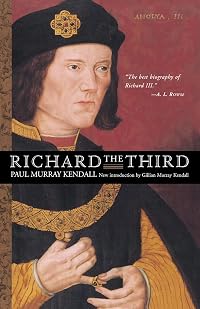
Richard the Third
by Paul Murray Kendall
On This Page
Description
Paul Murray Kendall's masterful account of the life of England's King Richard III has remained the standard biography of this controversial figure.Tags
Recommendations




















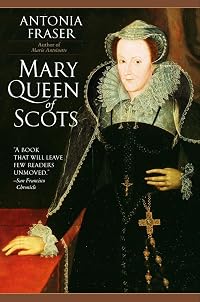

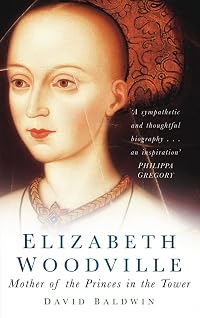
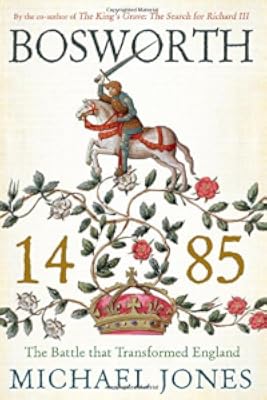
Member Recommendations


by anonymous user

waltzmn Paul Murray Kendall's biography was the first of the modern "revisionist" tales of Richard III -- that is, the first twentieth century biography to try to really rehabilitate Britain's most maligned king. Chances are that it goes too far. Those wishing to see a biography that takes the other side -- but that genuinely seeks to find the truth, not score points off the other side -- cannot do better than Charles Ross's more recent account.
Member Reviews
Paul Murray Kendall's Richard the Third is a readable biographical introduction of the last Plantagenet King of England that for many only comes to mind as the sinister hunchback of Shakespeare. Even though over 50 years worth of research has outdated some of Kendall's evidence, his overall body of work gives the reader a truer glimpse of Richard the man than from Richard the arch villain. From the outset, Kendall informs his reader of personal interpretations he has made from evidence through the use of starred (*) references within the text with explanations in the Notes after the main body of text. Kendall does tackle the death of the Princes in the first Appendix as he feels a discussion within the text itself would not be proper, show more which given the subject seems to be the correct course. Although Kendall believes that Richard was not responsible for the death of his nephews, in fact believing the evidence points to the Duke of Buckingham as instigator if not actual culprit, but Kendall does acknowledge that Richard might have in some way acquiesced and ultimately believed he was at fault through taking the throne. In the second appendix Kendall gives a historiography surrounding Richard of over the centuries until the publication of his book, which he hopes to be a moderate addition instead of "revisionist." Although the writing and pace are a little dated, Kendall's book is a fine introduction to Richard the man. show less
Paul Murray Kendall, the author of this biography of Richard III, one of the most controversial English kings, carefully and painstakingly constructs Richard’s life and times through contemporary fifteenth-century sources, resolutely attempting to thrust away the “Tudor tradition” once and for all.
Necessarily, it takes a long while to get through a volume so heavy with facts and references, especially considering Kendall backs up nearly all of his points with lengthy endnotes. These are welcome and flesh out every aspect of Kendall’s thought processes as he attempts to show us the man who has been so maligned. What emerges is a picture of an honest, well-intentioned man, perhaps too eager to seize a throne, let down by nearly show more all of his contemporaries. As Duke of Gloucester, Richard won the allegiance of the North, a task which no one had yet managed since William the Conqueror, if not before. He stood by his brother and his brother’s children, for the most part. As King, Richard forgave many of his enemies, bestowed annuities on helpless people, and passed laws entirely for the betterment of society. He did not ask Parliament for a tax despite facing two rebellions, and in general focused largely on increasing the well-being of the poor. He even compares Richard to Henry VII, and Henry comes out the worse for it.
The matter of the Princes in the Tower also comes into play, as do Richard’s motives for dethroning his nephew Edward V. In each case, Kendall addresses the matter logically and with plenty of evidence from the sources he has consulted. Richard comes out of all this possibly guilty, but understandably so, especially in the latter case. Kendall doesn’t believe that Richard killed the princes, and neither do I, though my opinion has been formed for some time now.
Kendall’s writing is at times overly flowery and it’s fairly obvious that this book is over fifty years old. That doesn’t negate its virtues, but it does make for occasionally slow reading, especially compared to current popular biographies. This is very easy to read compared to the original sources, of course. One must also keep in mind that other evidence has been discovered in the years since Kendall’s biography; nevertheless this one remains a cornerstone in the case for Richard III and should be read as such.
I particularly enjoyed the excerpts from Richard’s letters displaying characteristics of his that Kendall wanted to show. I’ve read several medieval biographies at this point and the glimpse into the subjects’ minds is fascinating. Richard’s mind is no less, and it is in these letters that we can feel closest to the king who was betrayed by so many people and even by his own generous policies.
With this biography, Kendall tries, and succeeds, at building a picture of Richard III that is not marred by Tudor legend, a picture of a man and not a monster. He goes through each source and attempts to extract what is true and what is false. I can’t say if he has the whole truth, because I don’t think anyone ever will, but he does a remarkably convincing job.
http://chikune.com/blog/?p=3 show less
Necessarily, it takes a long while to get through a volume so heavy with facts and references, especially considering Kendall backs up nearly all of his points with lengthy endnotes. These are welcome and flesh out every aspect of Kendall’s thought processes as he attempts to show us the man who has been so maligned. What emerges is a picture of an honest, well-intentioned man, perhaps too eager to seize a throne, let down by nearly show more all of his contemporaries. As Duke of Gloucester, Richard won the allegiance of the North, a task which no one had yet managed since William the Conqueror, if not before. He stood by his brother and his brother’s children, for the most part. As King, Richard forgave many of his enemies, bestowed annuities on helpless people, and passed laws entirely for the betterment of society. He did not ask Parliament for a tax despite facing two rebellions, and in general focused largely on increasing the well-being of the poor. He even compares Richard to Henry VII, and Henry comes out the worse for it.
The matter of the Princes in the Tower also comes into play, as do Richard’s motives for dethroning his nephew Edward V. In each case, Kendall addresses the matter logically and with plenty of evidence from the sources he has consulted. Richard comes out of all this possibly guilty, but understandably so, especially in the latter case. Kendall doesn’t believe that Richard killed the princes, and neither do I, though my opinion has been formed for some time now.
Kendall’s writing is at times overly flowery and it’s fairly obvious that this book is over fifty years old. That doesn’t negate its virtues, but it does make for occasionally slow reading, especially compared to current popular biographies. This is very easy to read compared to the original sources, of course. One must also keep in mind that other evidence has been discovered in the years since Kendall’s biography; nevertheless this one remains a cornerstone in the case for Richard III and should be read as such.
I particularly enjoyed the excerpts from Richard’s letters displaying characteristics of his that Kendall wanted to show. I’ve read several medieval biographies at this point and the glimpse into the subjects’ minds is fascinating. Richard’s mind is no less, and it is in these letters that we can feel closest to the king who was betrayed by so many people and even by his own generous policies.
With this biography, Kendall tries, and succeeds, at building a picture of Richard III that is not marred by Tudor legend, a picture of a man and not a monster. He goes through each source and attempts to extract what is true and what is false. I can’t say if he has the whole truth, because I don’t think anyone ever will, but he does a remarkably convincing job.
http://chikune.com/blog/?p=3 show less
Richard III has been enshrined as one of the must-read Monarchical biographies. Mr. Kendall's treatment has been satisfactory to me, and I must remark that the Shakespeare treatment , is a work I read about five times. Like Edward II, Richard suffers from his spectacular dethronement in the interests of the development of England as we know it. He could well, if he had managed the battle of Bosworth better, have set his mark on the Tudor period as well as Henry VII did.
Excellent debunking of the ogre as portrayEd by Shakespeare
Altho the only version I could find on line is a paperback,the version I own is a hardback first edtion.This is still im my oppinon the best bio of Richard,And I've read every book on him I can find.
756. Richard the Third, by Paul Murray Kendall (read 1 Dec 1963) I found this a good book to read.
have not read yet
Members
- Recently Added By
Author Information

13+ Works 1,544 Members
Paul Murray Kendall was Professor of English Literature at the University of Kansas in Lawrence.
Some Editions
Awards and Honors
Awards
Distinctions
Series
Belongs to Publisher Series
Common Knowledge
- Canonical title*
- Richard III. Der letzte Plantagenet auf dem englischen Königsthron, 1452-1485
- Original title
- Richard the Third. The great debate
- Alternate titles
- Richard III
- Original publication date
- 1955
- People/Characters
- Richard III, King of England; Edward IV, King of England; Anne Neville, Queen Consort of England; Henry Stafford, 2nd Duke of Buckingham; Sir William Catesby; George, Duke of Clarence (show all 30); Thomas Grey, 1st Marquis of Dorset; Edward V, King of England; Edward of Middleham (son of Richard III); Elizabeth of York; William, Lord Hastings; Henry VI, King of England; Henry VII, King of England; Louis XI, King of France; Francis Lovell, 1st Viscount Lovell; Margaret of Anjou; John Howard, 1st Duke of Norfolk; Henry Percy, 4th earl of Northumberland; Anthony Woodville, Earl Rivers; Thomas Rotherham, Archbishop of York; John Russell, Bishop of Lincoln; Thomas Stanley, 1st Earl of Derby; William Stanley (brother of Thomas Stanley of Derby); Robert Stillington, Bishop of Bath and Wells; James Tyrell; Richard Neville, 16th Earl of Warwick (Warwick the Kingmaker); Elizabeth Woodville, Queen Consort of England; Richard Plantagenet, 3rd Duke of York; Richard, Duke of York (child); Cecily Neville, Duchess of York
- Important places
- England, UK (as England)
- Important events
- Wars of the Roses (1455 | 1485); Battle of Bosworth Field (1485-08-22)
- Epigraph
- What strategems, how fell, how butcherly,
Erroneous, mutinous, and unnatural,
This deadly quarrel daily doth beget.
(Epigraph to Prologue)
"... all the clouds that lour'd upon our house ..." (Epigraph to Chapter I, Cradle of Violence) - Dedication
- To my two Carols
- First words
- Preface (PMK): Richard the Third is perhaps the most polemical figure in the reaches of English history.
Prologue: When Harry the Fifth descended into the grave in August of 1422, he left a kingdom which seemed to be among the greatest and most fortunate of the earth.
Book One: The King's Brother. Part One: Richard, Duke of Gloucester. I. Cradle of Violence.
Richard Plantagenet, afterward Duke of Gloucester, and still later King Richard the Third, was born on October 2, 1452, at Fot... (show all)heringhay Castle. - Blurbers
- Wedgwood, C.V.; Rowse, A.L.
- Original language
- English (USA) (USA)
*Some information comes from Common Knowledge in other languages. Click "Edit" for more information.
Classifications
- Genres
- History, Nonfiction, Biography & Memoir, General Nonfiction
- DDC/MDS
- 942.046092 — History & geography History of Europe England and Wales England Lancaster and York 1400-85 Richard III 1483-85
- LCC
- DA260 .K4 — History of Europe, Asia, Africa and Oceania Great Britain History of Great Britain England History By period Early and medieval to 1485 1154-1485. Angevins. Plantagenets.
- BISAC
Statistics
- Members
- 674
- Popularity
- 42,742
- Reviews
- 8
- Rating
- (4.08)
- Languages
- English, French, German, Polish
- Media
- Paper, Ebook
- ISBNs
- 15
- ASINs
- 22