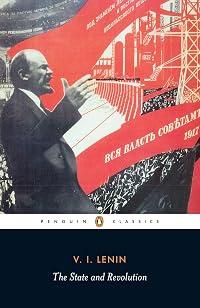
State and Revolution
by V. I. Lenin
On This Page
Description
"State and Revolution" (1917) describes the role of the State in society, the necessity of proletarian revolution, and the theoretic inadequacies of social democracy in achieving revolution. It describes the inherent nature of the State as a tool for class oppression, a creation born of one social class's desire to control all other social classes.Tags
Recommendations



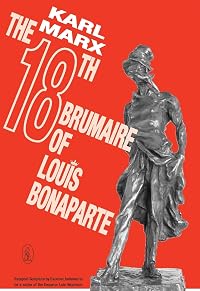
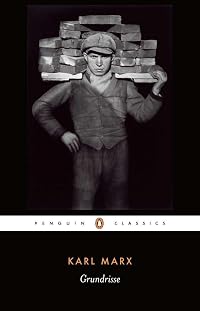




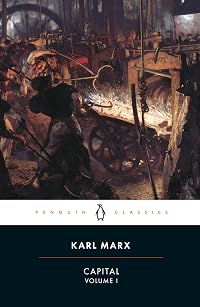


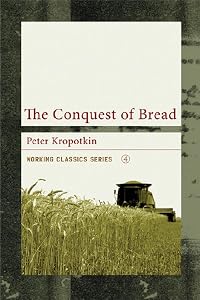



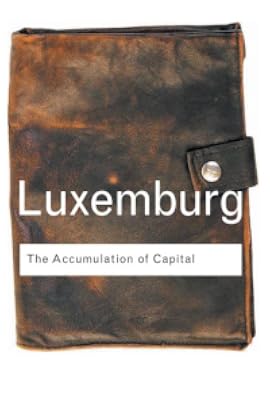




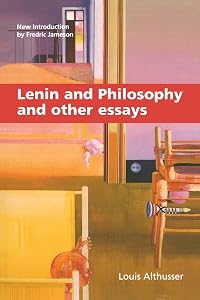
Member Recommendations

by anonymous user
Member Reviews
Many people dismiss Lenin, and Marxism in general, because they are usually associated with the bureaucratic tyranny of the Stalinist regimes of Russia, Eastern Europe, China etc. But these regimes had/have nothing to do with genuine Marxism, as anyone who reads this book will see. The so-called “communist” states were actually state capitalist systems controlled by a ruling class of bureaucrats who betrayed the democratic aims of the 1917 Russian Revolution.
Lenin follows Marx and Engels in showing that the existence of the state is a result of the existence of class exploitation and class conflict in society. (In pre-class societies, the state did not exist.) As Marx said, “...the state is nothing but a machine for the oppression show more of one class by another...”
This is obvious in the case of ancient Roman slave society or medieval feudalism, but it is less obvious in modern capitalist societies, because capitalists usually hide their class rule behind a veneer of “democracy”. But as Lenin says in this book:
“Bourgeois democracy, although a great historical advance in comparison with medievalism, always remains, and under capitalism is bound to remain, restricted, truncated, false and hypocritical, a paradise for the rich, and a snare and deception for the exploited...”
In modern capitalist “democracies” the electorate and parliaments do not have real power. The ruling class capitalists can use their economic power to force governments into line; they control the media and the top levels of the civil service; and if all else fails they can resort to force, through their control of the police and armed forces.
Lenin agreed with Marx’s view that a revolution was necessary in order to achieve socialism for two reasons: firstly, because the ruling class would not give up power peacefully; and secondly, because it was by going through the experience of class struggle that the working class’s ideas would change on a mass scale and the majority would be won over to socialist ideas and become “fitted to found society anew.”
Lenin did not want to seize power in a coup. He wanted to win over the majority of the exploited and for THEM to take power. When Marx and Lenin talked about the “dictatorship of the proletariat”, they did not mean that Marxists would rule OVER the working class, they meant rule BY the working class. This workers’ state would then gradually be replaced by a classless society in which the state would “wither away”.
Marx’s model for a democratic workers’ state was the short-lived Paris Commune, where all officials were elected, subject to recall at any time, and paid only an average worker’s wage; and where the army and police were replaced by a workers’ militia. Lenin’s idea was that the soviets (workers’ councils) would also follow this highly democratic model. Bourgeois “democracy” should be replaced by something much MORE democratic. John Reed's book "Ten Days That Shook The World", for example, shows how democratic the soviets were in their early days.
The February Revolution of 1917 had got rid of the Tsar, but it brought to power the Provisional Government which continued to take part in the bloodbath of World War One. Lenin argued for a new revolution, which eventually took place in October.
October would only be a "coup" if the Bolsheviks took power without majority support. In fact they only took power when they had won a majority on the soviets, with the previous majority of SRs and Mensheviks having been voted out. Even the Menshevik Martov admitted that the workers were solidly behind the Bolsheviks by October.
Lenin’s idea was that the Bolshevik party should compete with other parties on the soviets. The fact that the soviets later ended up as being a one-party system was a sign of the FAILURE of the revolution: it was not what Lenin had intended.
Lenin expected the Russian Revolution to spark off revolutions in other countries. (Indeed there was a failed revolution in Germany.) But the isolation of the Russian Revolution, the horrors of the Civil War initiated by the “Whites” and intervention by foreign powers in support of the White armies combined to destroy the foundations of the new regime.
It is claimed by anti-Marxist historians that Leninism led directly to Stalinism. But Stalin actually had to DESTROY the last vestiges of genuine Leninism in order to consolidate his counter-revolution. Incidentally, given that it was the isolation of the Russian Revolution which ultimately led to its demise under Stalin, it was not the politics of Lenin's Bolsheviks which led to Stalinism, it was the LACK of mass Leninist parties in other countries.
After Lenin’s death Trotsky kept alive the genuine Marxist idea that socialism means workers’ democracy, but unfortunately he clung to the idea that Russia had become a degenerated workers’ state, whereas in fact it had become under Stalin a bureaucratic state capitalist regime. show less
Lenin follows Marx and Engels in showing that the existence of the state is a result of the existence of class exploitation and class conflict in society. (In pre-class societies, the state did not exist.) As Marx said, “...the state is nothing but a machine for the oppression show more of one class by another...”
This is obvious in the case of ancient Roman slave society or medieval feudalism, but it is less obvious in modern capitalist societies, because capitalists usually hide their class rule behind a veneer of “democracy”. But as Lenin says in this book:
“Bourgeois democracy, although a great historical advance in comparison with medievalism, always remains, and under capitalism is bound to remain, restricted, truncated, false and hypocritical, a paradise for the rich, and a snare and deception for the exploited...”
In modern capitalist “democracies” the electorate and parliaments do not have real power. The ruling class capitalists can use their economic power to force governments into line; they control the media and the top levels of the civil service; and if all else fails they can resort to force, through their control of the police and armed forces.
Lenin agreed with Marx’s view that a revolution was necessary in order to achieve socialism for two reasons: firstly, because the ruling class would not give up power peacefully; and secondly, because it was by going through the experience of class struggle that the working class’s ideas would change on a mass scale and the majority would be won over to socialist ideas and become “fitted to found society anew.”
Lenin did not want to seize power in a coup. He wanted to win over the majority of the exploited and for THEM to take power. When Marx and Lenin talked about the “dictatorship of the proletariat”, they did not mean that Marxists would rule OVER the working class, they meant rule BY the working class. This workers’ state would then gradually be replaced by a classless society in which the state would “wither away”.
Marx’s model for a democratic workers’ state was the short-lived Paris Commune, where all officials were elected, subject to recall at any time, and paid only an average worker’s wage; and where the army and police were replaced by a workers’ militia. Lenin’s idea was that the soviets (workers’ councils) would also follow this highly democratic model. Bourgeois “democracy” should be replaced by something much MORE democratic. John Reed's book "Ten Days That Shook The World", for example, shows how democratic the soviets were in their early days.
The February Revolution of 1917 had got rid of the Tsar, but it brought to power the Provisional Government which continued to take part in the bloodbath of World War One. Lenin argued for a new revolution, which eventually took place in October.
October would only be a "coup" if the Bolsheviks took power without majority support. In fact they only took power when they had won a majority on the soviets, with the previous majority of SRs and Mensheviks having been voted out. Even the Menshevik Martov admitted that the workers were solidly behind the Bolsheviks by October.
Lenin’s idea was that the Bolshevik party should compete with other parties on the soviets. The fact that the soviets later ended up as being a one-party system was a sign of the FAILURE of the revolution: it was not what Lenin had intended.
Lenin expected the Russian Revolution to spark off revolutions in other countries. (Indeed there was a failed revolution in Germany.) But the isolation of the Russian Revolution, the horrors of the Civil War initiated by the “Whites” and intervention by foreign powers in support of the White armies combined to destroy the foundations of the new regime.
It is claimed by anti-Marxist historians that Leninism led directly to Stalinism. But Stalin actually had to DESTROY the last vestiges of genuine Leninism in order to consolidate his counter-revolution. Incidentally, given that it was the isolation of the Russian Revolution which ultimately led to its demise under Stalin, it was not the politics of Lenin's Bolsheviks which led to Stalinism, it was the LACK of mass Leninist parties in other countries.
After Lenin’s death Trotsky kept alive the genuine Marxist idea that socialism means workers’ democracy, but unfortunately he clung to the idea that Russia had become a degenerated workers’ state, whereas in fact it had become under Stalin a bureaucratic state capitalist regime. show less
Lenin offers a competent explanation of the Marxist conception of the state. According to Lenin, the purpose of the bourgeois state is to render the contradictions of capitalism livable, which it does by dominating the proletariat. The state is therefore structurally premised on domination and can never serve to reconcile opposing classes. It is for this reason, then, that reformism appears a dead end.
But even if one accepts such a conception of the state, it is not clear why reform and revolution must be understood as mutually exclusive. One might instead conceive of reforms as placing pressure on the state’s capacity to dominate, thereby opening space for more radical transformation.
Lenin also makes questionable interpretive show more decisions in light of contemporary scholarship on Marx. For example, he endorses a deterministic reading of Marx and claims that Engels “quite definitely regards universal suffrage as a means of bourgeois domination.” The former claim has been thoroughly contested in the literature. As for the latter, in The Principles of Communism, Engels quite explicitly advocates universal suffrage as a means of emancipation. show less
But even if one accepts such a conception of the state, it is not clear why reform and revolution must be understood as mutually exclusive. One might instead conceive of reforms as placing pressure on the state’s capacity to dominate, thereby opening space for more radical transformation.
Lenin also makes questionable interpretive show more decisions in light of contemporary scholarship on Marx. For example, he endorses a deterministic reading of Marx and claims that Engels “quite definitely regards universal suffrage as a means of bourgeois domination.” The former claim has been thoroughly contested in the literature. As for the latter, in The Principles of Communism, Engels quite explicitly advocates universal suffrage as a means of emancipation. show less
This was the guidance that Lenin thought the newly minted Russian Revolution needed.
There is a lot of vibrancy in his language and it's a classic text of agitprop. He takes down his enemies much like a ruthless rapper. I swear some these ideas of the "deep state" have had an unwitting influence on Maga populists in 2025.
I love his Chapter 7 postscript. He didn't get to write it because of the hindrance of an immediate political crisis in Russia. [This chapter] "will probably have to be delayed for a long time; it is more pleasant and useful to undertake 'the experience of revolution' than to write about it."
This edition contains, a lengthy and detailed introduction which is a big help when it comes to context and this pamphlet's show more history. From that history (via Robert Service), he sums it all up by stating "The book's practical historical impact therefore outweighs its intrinsic merit as a work of political science. The State and Revolution was a choral ode to action, intolerance, combat and collectivism; it was the anthem of Bolshevism in its revolutionary era." show less
There is a lot of vibrancy in his language and it's a classic text of agitprop. He takes down his enemies much like a ruthless rapper. I swear some these ideas of the "deep state" have had an unwitting influence on Maga populists in 2025.
I love his Chapter 7 postscript. He didn't get to write it because of the hindrance of an immediate political crisis in Russia. [This chapter] "will probably have to be delayed for a long time; it is more pleasant and useful to undertake 'the experience of revolution' than to write about it."
This edition contains, a lengthy and detailed introduction which is a big help when it comes to context and this pamphlet's show more history. From that history (via Robert Service), he sums it all up by stating "The book's practical historical impact therefore outweighs its intrinsic merit as a work of political science. The State and Revolution was a choral ode to action, intolerance, combat and collectivism; it was the anthem of Bolshevism in its revolutionary era." show less
Lenin possui um estilo de escrita pragmático e esse livro é focado em combater as ideias por ele tidas como oportunistas, pequeno-burguesas (eu odeio essa palavra, é uma escolha muito infeliz que vai levar às interpretações completamente deturpadas posteriores do que é a burguesia), e o marxismo aguado ou falseado de sua época. De modo que não é uma leitura agradável. Há um combate contra os sociais democratas, escrito entre a revolução de 1917 e a outra que resultaria na chegada de Lenin ao poder. Basicamente, e trazendo Marx e Engels à baila (mas eu não domino o suficiente os pormenores para arbitrar o quão convincente é sua leitura), trata-se de não perder o horizonte último (o comunismo abolindo o estado), e show more entender a democracia com vistas a essa meta (como modo de remodelar a opressão de uma classe por outra, como elemento conjunto da ditadura do proletariado). show less
Bloody hell, the main figures of the Second International seem pretty goddamn anaemic. As my friends in London would say, these dickheads should ‘pattern up’. It makes me laugh every time Lenin pulls out some quote from Kautsky and then proceeds to take an absolutely steaming syphilitic piss all over it. Great commie fun for all the family!
A fairly short, digestible book that is definitely worth checking out. Lenin's interpretation of Marx and his critiques of other leftists is entertaining to read, but they really should be analyzed thoroughly in the present day. This interpretation of Marx was only designed for 20th century Russia. However, there are some cornerstones and insights to be had with some (if not many) of Lenin's conclusions. Still a great book regardless.
Obviously The State and Revolution has had major historical impact. But it's the perverse product of an aggressive mind who is speaking without thinking clearly. Lenin misuses and abuses political terms--"dictatorship of the proletariat" comes to mind, since a dictatorship is leadership by one person, usually a military leader in times of crisis, and the proletariat is a class of people--and therefore his argument falls way short.
Members
- Recently Added By
Lists

First published in 1917
132 works; 3 members

10 Books that Screwed Up the World (And 5 Others that Didn't Help)
15 works; 1 member

How to Read a Book's Recommended Reading List
309 works; 10 members

Books Read in 2024
4,623 works; 126 members

Economics
16 works; 1 member
Author Information

1,138+ Works 12,663 Members
Creator of the former Soviet Union, Vladimir Ilyich Lenin (family name Ulianov) was born on April 10, 1870 in Simbirsk (later Ulianovsk), Russia, the son of a schools inspector. Lenin received upper class education and obtained a law degree in 1891, but he was moved to oppose the czarist Russian government, partly due to the execution of his show more brother, Alexander, who had participated in a plot to assassinate the Russian emperor. For taking part in revolutionary activities, Lenin was eventually imprisoned, publishing his work, The Development of Capitalism in Russia, from prison in 1899. Three years later, his pamphlet "What Is to Be Done" became the model for Communist philosophy. Lenin helped the Bolshevist movement that overthrew the czarist government and brought an end to Russia's war against Germany. As head of the new government, he put land in the hands of the peasants and brought industry under government control. An assassination attempt in 1918 wounded him, and two strokes in 1922 forced him to severely curtail government duty. He retreated to his country home in Gorki, where he died on January 21, 1924. (Bowker Author Biography) show less
Some Editions
Awards and Honors
Notable Lists
Series
Belongs to Publisher Series
Work Relationships
Common Knowledge
- Canonical title*
- Государство и революция
- Original title
- Государство и революция
- Original publication date
- 1917
- Important events
- Paris Commune
- Original language
- Russian
*Some information comes from Common Knowledge in other languages. Click "Edit" for more information.
Classifications
Statistics
- Members
- 1,886
- Popularity
- 11,365
- Reviews
- 26
- Rating
- (3.92)
- Languages
- 22 — Czech, Danish, Dutch, English, Esperanto, Finnish, French, German, Greek, Hungarian, Italian, Japanese, Latvian, Norwegian (Nynorsk), Norwegian (Bokmål), Portuguese, Russian, Serbian, Spanish, Swedish, Turkish, Yiddish
- Media
- Paper, Audiobook, Ebook
- ISBNs
- 116
- ASINs
- 66