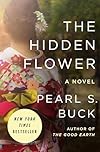
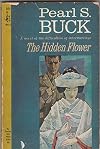
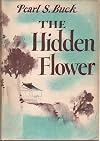
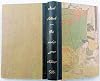
The Hidden Flower
by Pearl S. Buck
On This Page
Description
An affecting portrait of interracial love in post-war JapanPearl S. Buck's The Hidden Flower centers on the relationship between a Japanese student and an American soldier stationed in post-war Japan. The Japanese student's father worked in the United States as a doctor, but had to flee to Kyoto to avoid imprisonment in an internment camp. The American soldier has inherited his family's estate in Virginia, where interracial marriage is forbidden. Against such forces, and without the help of show more their families, how can the love between the young pair-and the future of their child-flourish? The Hidd show lessTags
Recommendations






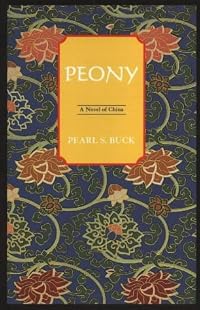
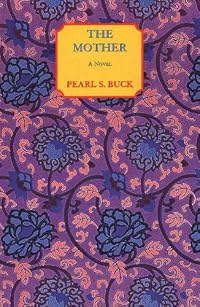




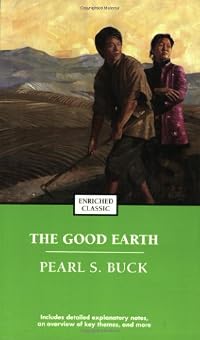

















Member Recommendations

Member Reviews
Every five to ten years I pick up a Pearl S. Buck novel and am always impressed with her ability to portray the complex issues that surface in relationships between members of different races. In this novel, she slowly unravels the passions, realities, and subtle racism that come into play when an American serviceman falls for a college student from a prominent but conquered Japanese family.
When we first meet Lt. Allen Kennedy, he is a handsome, rising star, a favorite of his Colonel and a powerful member of the occupying army in Japan after the end of World War II. Josui Sakai, the daughter of a prominent doctor in Kyoto, sits uncomfortably between the American culture of her youth (she grew up in California until War War II began) and show more the Japanese culture so revered in Kyoto, where her father moved the family rather than be sent to an internment camp in the US. Following the death of his only son during the war and furious at the injustice of the interment camps, Dr. Sakai holds strong anti-American sentiment and desperately wants his daughter to live the life of a traditional Japanese woman. He even has a groom in mind for her.
Inevitably, when Allen and Josui fall in love - the intensity of their feelings lead them to believe that love is all they need. But as their romance unfolds, they must face family obstacles, religious prejudices, bureaucratic difficulties, legal challenges, and social restrictions. These are beautifully drawn but flawed human beings, who wind up facing so many difficulties that even the nature of their love is eventually called into question. It’s a beautiful story, with a realistic ending. Enjoy! show less
When we first meet Lt. Allen Kennedy, he is a handsome, rising star, a favorite of his Colonel and a powerful member of the occupying army in Japan after the end of World War II. Josui Sakai, the daughter of a prominent doctor in Kyoto, sits uncomfortably between the American culture of her youth (she grew up in California until War War II began) and show more the Japanese culture so revered in Kyoto, where her father moved the family rather than be sent to an internment camp in the US. Following the death of his only son during the war and furious at the injustice of the interment camps, Dr. Sakai holds strong anti-American sentiment and desperately wants his daughter to live the life of a traditional Japanese woman. He even has a groom in mind for her.
Inevitably, when Allen and Josui fall in love - the intensity of their feelings lead them to believe that love is all they need. But as their romance unfolds, they must face family obstacles, religious prejudices, bureaucratic difficulties, legal challenges, and social restrictions. These are beautifully drawn but flawed human beings, who wind up facing so many difficulties that even the nature of their love is eventually called into question. It’s a beautiful story, with a realistic ending. Enjoy! show less
Every five to ten years I pick up a Pearl S. Buck novel and am always impressed with her ability to portray the complex issues that surface in relationships between members of different races. In this novel, she slowly unravels the passions, realities, and subtle racism that come into play when an American serviceman falls for a college student from a prominent but conquered Japanese family.
When we first meet Lt. Allen Kennedy, he is a handsome, rising star, a favorite of his Colonel and a powerful member of the occupying army in Japan after the end of World War II. Josui Sakai, the daughter of a prominent doctor in Kyoto, sits uncomfortably between the American culture of her youth (she grew up in California until War War II began) and show more the Japanese culture so revered in Kyoto, where her father moved the family rather than be sent to an internment camp in the US. Following the death of his only son during the war and furious at the injustice of the interment camps, Dr. Sakai holds strong anti-American sentiment and desperately wants his daughter to live the life of a traditional Japanese woman. He even has a groom in mind for her.
Inevitably, when Allen and Josui fall in love - the intensity of their feelings lead them to believe that love is all they need. But as their romance unfolds, they must face family obstacles, religious prejudices, bureaucratic difficulties, legal challenges, and social restrictions. These are beautifully drawn but flawed human beings, who wind up facing so many difficulties that even the nature of their love is eventually called into question. It’s a beautiful story, with a realistic ending. Enjoy! show less
When we first meet Lt. Allen Kennedy, he is a handsome, rising star, a favorite of his Colonel and a powerful member of the occupying army in Japan after the end of World War II. Josui Sakai, the daughter of a prominent doctor in Kyoto, sits uncomfortably between the American culture of her youth (she grew up in California until War War II began) and show more the Japanese culture so revered in Kyoto, where her father moved the family rather than be sent to an internment camp in the US. Following the death of his only son during the war and furious at the injustice of the interment camps, Dr. Sakai holds strong anti-American sentiment and desperately wants his daughter to live the life of a traditional Japanese woman. He even has a groom in mind for her.
Inevitably, when Allen and Josui fall in love - the intensity of their feelings lead them to believe that love is all they need. But as their romance unfolds, they must face family obstacles, religious prejudices, bureaucratic difficulties, legal challenges, and social restrictions. These are beautifully drawn but flawed human beings, who wind up facing so many difficulties that even the nature of their love is eventually called into question. It’s a beautiful story, with a realistic ending. Enjoy! show less
Ratings
Members
- Recently Added By
Lists

Authors from the United States
245 works; 3 members
Author Information

430+ Works 37,099 Members
Pearl S. Buck, June 26, 1892 - March 6, 1973 Pearl Sydenstricker Buck was an American author, best know for her novels about China. Buck was born on June 26, 1892, in Hillsboro, West Virginia, but as the daughter of Presbyterian missionaries she was taken to China in infancy. She received her early education in Shanghai, but returned to the United show more States to attend college, and graduated from Randolph-Macon Woman's College in Virginia in 1914. Buck became a university teacher there and married John Lossing Buck, an agricultural economist, in 1917. Buck and her husband both taught in China, and she published magazine articles about life there. Her first novel East Wind, West Wind was published in 1930. Buck achieved international success with The Good Earth, which won the Pulitzer Prize in 1932. This story of a Chinese peasant family's struggle for survival was later made into a MGM film. Buck resigned from the Presbyterian Board of Foreign Missions after publishing an article that was critical of missionaries. She returned to the United States because of political unrest in China. Buck's novels during this period include Sons, A House Divided, and The Mother. She also wrote biographies of her father (Fighting Angel) and her mother (The Exile). She won the Nobel Prize for Literature in 1938. During her career, Buck published over 70 books: novels, nonfiction, story collections, children's books, and translations from the Chinese. She also wrote under the pseudonym John Sedges. In the United States, Buck was active in the civil rights and women's rights movements. In 1942 she founded the East and West Association to promote understanding between Asia and the West. In 1949, Buck established Welcome House, the first international interracial adoption agency. In 1964, she established the Pearl S. Buck foundation to sponsor support for Amerasian children who were not considered adoptable. Pearl Buck died in Danbury, Vermont, on March 6, 1973. (Bowker Author Biography) show less
Awards and Honors
Distinctions
Series
Belongs to Publisher Series
Margriet-pocketserie (30)
Cardinal Editions [Pocket Books] (C-387)
Work Relationships
Common Knowledge
- Canonical title*
- De verborgen bloem
- Original title
- The Hidden Flower
- Original publication date
- 1952
- People/Characters
- Josui Sakai; Allen Kennedy; Cynthia Levering; Dr. Soton Sakai; Hariko Sakai; Kobori (show all 7); Mrs. Kennedy
- Important places
- Kyoto, Japan; Virginia, USA; New York, New York, USA
- First words
- The garden was quiet.
- Last words
- (Click to show. Warning: May contain spoilers.)And she sat, triumphant, rocking to and fro, gently patting Lennie's back.
*Some information comes from Common Knowledge in other languages. Click "Edit" for more information.
Classifications
Statistics
- Members
- 291
- Popularity
- 109,957
- Reviews
- 2
- Rating
- (3.27)
- Languages
- 10 — Danish, Dutch, English, Estonian, Finnish, French, German, Norwegian (Bokmål), Polish, Spanish
- Media
- Paper, Ebook
- ISBNs
- 20
- ASINs
- 29