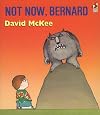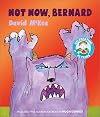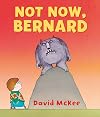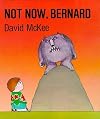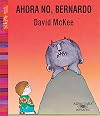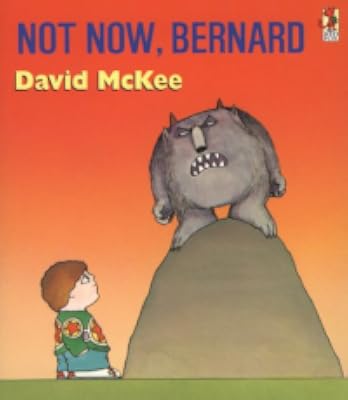
Not Now, Bernard
by David McKee
On This Page
Description
A humorous story in which a young boy is exasperated by his parents refusal to listen to him, so he decides to make them take notice.Tags
Recommendations

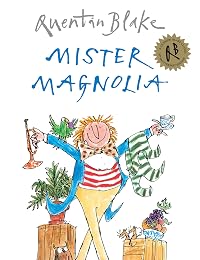
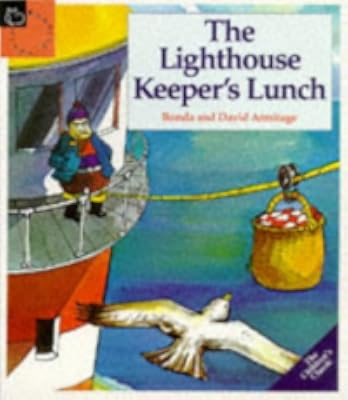
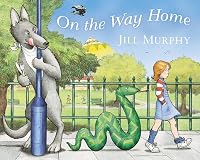
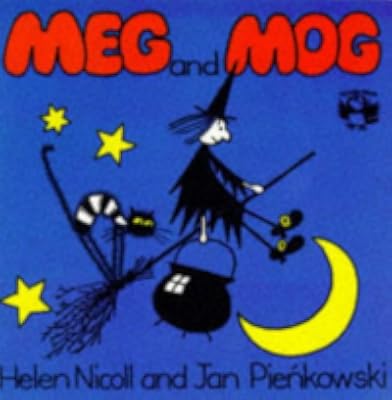




Member Recommendations
by conuly

Sylak This is another fun read about a scary monster! ;)
nessreader Both heroes feel ignored by their parents - a bit chilling, but handled at child level.
Member Reviews
I've read and enjoyed this many times, albeit not recently. The story and illustrations are good, funny, and, at first, relatable, with echoes of The Boy who Cried 'Wolf'. The parents are always too busy to pay much attention to their son. It was written in 1980, long before smartphones and social media.
I was reminded of it by Rafael Behr's opinion piece in today's Guardian, 31 August 2022, six days before Johnson actually resigned as Prime Minister and Liz Truss took over, "Brexit is the monster under the bed Liz Truss is desperately trying to ignore" - see below.
In addition to all the problems Behr lists, on 4 September, twelve Tory MPs said they plan to submit letters of No Confidence to the internal 1922 Committee in Truss' first show more week as PM (they'd need 54 in total). See HERE.
Image: “'But I'm a monster,' said the monster.” (Source)
The article is HERE. show less
I was reminded of it by Rafael Behr's opinion piece in today's Guardian, 31 August 2022, six days before Johnson actually resigned as Prime Minister and Liz Truss took over, "Brexit is the monster under the bed Liz Truss is desperately trying to ignore" - see below.
In addition to all the problems Behr lists, on 4 September, twelve Tory MPs said they plan to submit letters of No Confidence to the internal 1922 Committee in Truss' first show more week as PM (they'd need 54 in total). See HERE.
Image: “'But I'm a monster,' said the monster.” (Source)
Brexit is the monster under the bed Liz Truss is desperately trying to ignore, by Rafael Behr.
There is a book that foresaw with precision this summer’s Conservative leadership contest, although it was first published in 1980. It is a thin volume about denial and negligence, making its point with few words and colourful illustrations. It is called Not now, Bernard by David McKee.
The titular hero is a boy who tries to alert his parents to the presence of a child-eating monster in the garden. They are busy with other things. “Not now, Bernard,” says the father, striking his own hand with a hammer. “Not now, Bernard,” says the mother, watering a plant.
The monster eats the boy.
The next resident of 10 Downing Street will find the garden crawling with monstrous economic and political menaces. A chorus of Bernards is raising the alarm. Economists, MPs, former Tory ministers, charities, trade unions, businesses, local councils – all can hear rustling in the bushes where a beastly crisis lurks, ready to savage the new prime minister.
Anyone who pays an energy bill and does a weekly shop can feel the claws of a budget squeeze closing around the nation’s windpipe. There’s an ogre in the health service. “Not now, Bernard,” says Rishi Sunak. There’s a fiend in the financial outlook. “Not now, Bernard,” says Liz Truss. There are devils in your policy details. “Not now, Bernard!”
Then there is that other monster, the one that has become such a fixture in the garden that even the opposition seems not to notice it any more. Can we talk about Brexit? Not now, Bernard!
Britain’s self-exclusion from continental markets is not the biggest cause of present economic pain but it will be hard to imagine remedies in the absence of any rational audit of that decision or any reexamination of the ideological fixations that provoked it. But for Brexit believers, it is always too soon and too late to pass judgment.
Too soon, because the benefits of freedom lie unclaimed under the pyre of “retained” EU regulations that both Truss and Sunak promise to incinerate. And too late, because Brexit is the settled will of the people and any hint of a downside is sedition.
The Tory party recognises only two possible positions on Britain’s relationship with the EU – heroic insistence on further severance and cowardly plotting to rejoin. Labour, unwilling to adopt the former stance and afraid of being cast in the latter one, says nothing meaningful on the subject.
Meanwhile, the erection of pointless customs barriers between Britain and its nearest markets has obstructed trade, imposed costs on business, snarled up supply chains and stoked inflation. The end of free movement has caused labour shortages for food producers, care homes and a gamut of services in between.
Free trade deals with non-European states that were meant to compensate for the loss of continental custom have had negligible impact. (Most are copy-and-paste jobs from arrangements Britain had as an EU member.)
Sterling has depreciated, but without the compensating boost to export competitiveness that might be expected from a currency devaluation. Business investment has been flat since the referendum, in large part because the political climate has been so unpredictable. That volatility – two general elections and three changes of prime minister in six years – is a function of the struggle to turn an ideal Brexit, nurtured in the parochial Eurosceptic imagination, into a reality-based Brexit involving other countries and real people’s jobs.
It can’t be done. Opinion polls suggest a majority of voters think the whole thing was a mistake. Liz Truss, the likely winner of the leadership contest, insists otherwise with the vehemence of a zealous convert.
Truss was a remainer in 2016 because she was an acolyte of George Osborne. The then chancellor convinced his disciple that Britain would not be foolish enough to jettison EU membership. The campaign would be fought on the economy and the smart thing for an ambitious young minister to do was back the winning side. She promptly did just that once the results were in.
Truss now claims that backing the wrong horse in the referendum taught her to discard orthodox economic thinking. That created a mental vacancy, which she filled with hardline Brexit dogmas. By 2019, she was arguing in private that Britain could safely walk away from the EU without a comprehensive deal. Brussels, she said, would immediately be cowed into “side deals” to mitigate any possible harm, the threat of which was, in any case, vastly exaggerated by lily-livered remoaners.
Having learned to despise received Treasury wisdom, Truss has graduated on to scorn for diplomacy as traditionally practised at the Foreign Office. Reports of her encounters with overseas counterparts suggest she stumbles at the subtle boundary between direct and brusque; candid and crass.
That tendency was on display at the hustings event last week, where Truss was asked whether the French president, Emmanuel Macron, is friend or foe. “The jury’s out,” she said. It was meant in a mischievous spirit, with an eye only for the Tory activists in the room. Foreign secretaries and wannabe prime ministers used to avoid imbecilities of that kind before Boris Johnson contaminated both offices with his marauding insouciance. And even he doesn’t hesitate to call France an ally.
Tories now speak increasingly fondly of the outgoing prime minister, not because they remember him as a skilled leader, but because his unique skill is mesmerising them into forgetting what good government is meant to look like. Truss doesn’t have that magic touch. The Brexit booster wand sits awkwardly in her hand.
Conservative readiness to indulge Johnson is no measure of his reputation in the country, but the leadership contest is not a national election. For at least one more week, British politics is contained in that sealed chamber where there is a Boris legacy to celebrate, where the solution to poverty is corporate tax cuts, where the solution to everything is tax cuts, where tax cuts have no impact on public service budgets, where life outside the EU is all upside and can only get better.
But there’s a monster in the garden.
McKee’s story doesn’t end when Bernard is eaten. In a brilliant twist, the monster then enters the house and moves into the boy’s room, breaking his toys and eating his dinner. Still the parents don’t notice. “But I’m a monster,” the monster is finally moved to inform them. “Not now, Bernard,” they say.
This is the next chapter for Britain. The monster is here, announcing itself with roars and snarls. The crisis is upon us, demanding capable, serious government. When will that cry be heard? Not now, Britain. Not now.
The article is HERE. show less
My rating of this book is based on my initial gut reaction to it, which was that of dislike. I'm however still pondering whether there is more to the story than what I first read into it. But, my first impression was that this was more a story for parents than children, assuming that kids are not going to get the irony, and are therefore left with a story that has neither plot nor message. However, I was rather surprised to see that most of the reviewers here come away with a first degree, or naive, interpretation of the story. I'm not going to say which interpretation is the correct one, but it's obviously a very different story from the one that I read if you think there's actually a monster in the book and that it gobbles up poor show more Bernard and goes on to make itself at home in his house. My first (and maybe too rational) interpretation of the story was of Bernard making up a monster to try to get his parents' attention. His ruse doesn't work however, his parents continue to ignore him, but he still carries the game all the way to completely impersonating the monster. And thus ends the story, with a little nudge to us parents, always so busy, sometimes too busy to take the time to listen.
Now, there may be more to the story, and the pleasant and colorful pictures made me think of illustrators [a:José Aruego|5480|José Aruego|/assets/nophoto/nophoto-U-50x66-251a730d696018971ef4a443cdeaae05.jpg] and [a:Ariane Dewey|5479|Ariane Dewey|/assets/nophoto/nophoto-U-50x66-251a730d696018971ef4a443cdeaae05.jpg]. Some of them have references, such as the picture of Bernard's book case, with an [b:Elmer the Elephant|1223119|Elmer|David McKee|http://d.gr-assets.com/books/1347603862s/1223119.jpg|1178938] toy and I might have missed some. I didn't for instance understand what the charcoal art in the hallway was supposed to represent, although I'm sure it had some significance or the other. What else? Every room in Bernard's house is painted in a different color, and some in two. Actually, on one of the spreads, Bernard's mother is painting a green wall, in between watering the plants and making Bernard dinner. Just to say the parents are quite busy. Are they in the middle of home improvement? And they make Bernard/monster take his dinner in front of the TV, not a good choice! Otherwise, I'm not passing judgement on Bernard's parents, although plenty will ... show less
Now, there may be more to the story, and the pleasant and colorful pictures made me think of illustrators [a:José Aruego|5480|José Aruego|/assets/nophoto/nophoto-U-50x66-251a730d696018971ef4a443cdeaae05.jpg] and [a:Ariane Dewey|5479|Ariane Dewey|/assets/nophoto/nophoto-U-50x66-251a730d696018971ef4a443cdeaae05.jpg]. Some of them have references, such as the picture of Bernard's book case, with an [b:Elmer the Elephant|1223119|Elmer|David McKee|http://d.gr-assets.com/books/1347603862s/1223119.jpg|1178938] toy and I might have missed some. I didn't for instance understand what the charcoal art in the hallway was supposed to represent, although I'm sure it had some significance or the other. What else? Every room in Bernard's house is painted in a different color, and some in two. Actually, on one of the spreads, Bernard's mother is painting a green wall, in between watering the plants and making Bernard dinner. Just to say the parents are quite busy. Are they in the middle of home improvement? And they make Bernard/monster take his dinner in front of the TV, not a good choice! Otherwise, I'm not passing judgement on Bernard's parents, although plenty will ... show less
Em honra de David Mckee (1935 - 2022)
Isso é tão genial que nem sei. E o tamanho da gargalhada que eu dei.
Isso é tão genial que nem sei. E o tamanho da gargalhada que eu dei.
Bernardo es un niño que pide un poco de atención a su mamá y su papá, quienes en repetidas ocasiones le dicen “ahora no,” fastidiado por escuchar lo mismo y aun sabiendo que afuera había un monstruo, decide salir y regresa cambiado en un monstruo, a lo cual, los padres siguen sin prestar mayor interés.
Jan 15, 2024Spanish
Agora não, Duarte!, de David Mckee, é uma obra que se caracteriza pela simplicidade e brevidade textuais, acentuadas ainda pela repetição, pelos vários paralelismos, escondendo, ou pelo menos mascarando, a grande complexidade e seriedade do assunto tratado – a falta de atenção e de diálogo nas relações entre pais e filhos.
Jun 16, 2014 (Edited)Portuguese (Portugal)
Ratings
Members
- Recently Added By
Lists

Favorite Childhood Books
1,651 works; 515 members

Best children's picture books
377 works; 85 members

Favorite Picture Books
479 works; 160 members
Author Information

219+ Works 9,969 Members
Awards and Honors
Common Knowledge
- Canonical title*
- Inte nu, Robert
- Original title
- Not Now, Bernard
- Original publication date
- 1980
- People/Characters*
- Hendrik; het monster; Hendrik's vader; Hendrik's moeder
- First words
- "Hello, Dad," said Bernard.
- Last words
- (Click to show. Warning: May contain spoilers.)"Not now, Bernard," said Bernard's mother.
- Original language
- English
*Some information comes from Common Knowledge in other languages. Click "Edit" for more information.
Classifications
Statistics
- Members
- 356
- Popularity
- 88,542
- Reviews
- 5
- Rating
- (4.15)
- Languages
- 8 — Basque, Chinese, English, French, German, Portuguese (Portugal), Spanish, Swedish
- Media
- Paper, Audiobook
- ISBNs
- 40