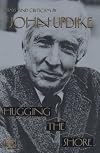
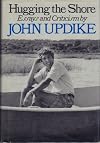
Hugging the Shore: Essays and Criticism
by John Updike
On This Page
Description
A collection of short pieces, including book reviews done for the New Yorker since about 1975.Tags
Recommendations













Member Reviews
I've loved Updike's work since college when, in 1967, I picked RABBIT, RUN off the rack at the Student Book Exchange (SBX) one afternoon and finished reading it late that same night. I was hooked. By the time I finished grad school in 1970, I'd read four more novels, three short story collections and three poetry collections by Updike. I have since read probably another twenty or more of Updike's works. (He wrote more than fifty books.) I was devastated when he died, on my birthday in 2009.
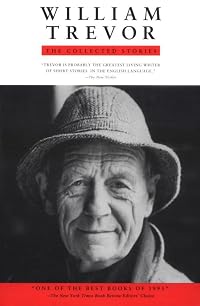
HUGGING THE SHORE: ESSAYS AND CRITICISM is a mammoth paperback (919 pages) I found at a used book sale about fifteen years ago. It's a book that defies reviewing. There's just too much in it - pieces about not just books, but also art, philosophy, show more interviews and more. I pick it up every now and then and lose myself in his takes and opinions on other writers, some familiar to me, some not. Today I read his review of Tim O'Brien's GOING AFTER CACCIATO a book I read and loved back in the 70s. Then a piece on Wallace Stevens, who, it turns out, was born and raised in Reading, the bigger town near Shillington, where Updike was from. In past samplings I've learned what Updike thought about books by Anne Tyler, Milan Kundera, V.S. Naipaul, Auden, Bellow, Gunter Grass, Nabokov, Edmund Wilson, William Trevor, Muriel Spark, Iris Murdoch, Kafka, and on and on. There's even a fascinating piece on Doris Day - a review of A.E. Hotchner's bio of the actress. There's plenty more in here I have yet to peruse, but my favorite section so far is the last one, "On One's Own Oeuvre," where he offers tantalizing little backstories and explanations about some of his own stories and novels.
Why only four stars? Probably because some of these pieces, on writers like Tillich, Barth and Bettelheim, for example, are just a little too far beyond my experience to interest me. So some pieces here I'll probably never read. But I will return to these essays whenever I can, just to experience Updike's voice again. He was so much a part of my reading life and literary education. Miss you, Mr Updike.
- Tim Bazzett, author of the memoir, BOOKLOVER show less
HUGGING THE SHORE: ESSAYS AND CRITICISM is a mammoth paperback (919 pages) I found at a used book sale about fifteen years ago. It's a book that defies reviewing. There's just too much in it - pieces about not just books, but also art, philosophy, show more interviews and more. I pick it up every now and then and lose myself in his takes and opinions on other writers, some familiar to me, some not. Today I read his review of Tim O'Brien's GOING AFTER CACCIATO a book I read and loved back in the 70s. Then a piece on Wallace Stevens, who, it turns out, was born and raised in Reading, the bigger town near Shillington, where Updike was from. In past samplings I've learned what Updike thought about books by Anne Tyler, Milan Kundera, V.S. Naipaul, Auden, Bellow, Gunter Grass, Nabokov, Edmund Wilson, William Trevor, Muriel Spark, Iris Murdoch, Kafka, and on and on. There's even a fascinating piece on Doris Day - a review of A.E. Hotchner's bio of the actress. There's plenty more in here I have yet to peruse, but my favorite section so far is the last one, "On One's Own Oeuvre," where he offers tantalizing little backstories and explanations about some of his own stories and novels.
Why only four stars? Probably because some of these pieces, on writers like Tillich, Barth and Bettelheim, for example, are just a little too far beyond my experience to interest me. So some pieces here I'll probably never read. But I will return to these essays whenever I can, just to experience Updike's voice again. He was so much a part of my reading life and literary education. Miss you, Mr Updike.
- Tim Bazzett, author of the memoir, BOOKLOVER show less
Similar to classical violinists taking a master class with Itzhak Perlman, similar to generations of painters sitting at their easel before a Leonardo da Vinci, those of us reading and writing book reviews can likewise learn a great deal from an accomplished master of the craft. ‘Hugging the Shore – Essays and Criticism by John Updike’ contains dozens and dozens of provocative, extraordinarily well-written essays, enough examples to keep any student of book reviewing going for many years. As a way of sampling this book’s rasa, here are three quotes from John Updike’s Forward where he specifically addresses the art of book reviewing. I’ve also included my modest comments on his quotes.
"Writing criticism is to writing fiction show more and poetry as hugging the shore is to sailing in the open sea." --------- Well, certainly, if you write a novel or a collection of poems, you are opening yourself, your feelings and emotions, your ideas and values, your sense of language and character and relationships to yourself in the process of creation and also to the public via publication. However, I have seen many book reviewers taking strong stands on controversial subjects. Opening oneself to criticism, especially in an on-line format like Goodreads, is very much part of the agenda. Hugging the shore can have some pretty rough, choppy water to navigate.
"My own experience of authorship urges me to heed the author’s exact expressions and to condemn him, if he must be condemned, out of his own mouth." --------- Excellent point. This is why incorporating direct quotes from the book can be so helpful to readers, such quotes can serve as evidence to underscore a reviewer’s judgment. Also, of course, direct quotes provide a sample of the tone and quality of the author’s writing.
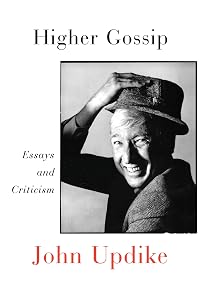
"Whereas book reviews perform a clear and desired social service: they excuse us from reading the books themselves. They give us literary sensations in concentrated form. They are gossip of a higher sort. They are as intense as a television commercials and as jolly as candy bars." --------- Ha! Love your language, sir. And as jolly as candy bars, here are a few of my very favorite reviews, each a one sentence review:
Nightmare of an Ether Drinker, by Jean Lorrain
“Almost too good to be true.”
The Book of Monelle, by Marcel Schwob
“What the fuck did I just read?”
The Book of Laughter and Forgetting, by Milan Kundera
“It was funny, but I can't remember why.”
When it comes to book reviews, the first few lines can serve as a hook to prompt a reader to continue reading. Again, by way of example, here are a few hooks written by Mr. John, ever the virtuoso wordsmith, combining vivid master sentences by artfully orchestrating colorful vocabulary and turn of phrase, telling detail, and an ear for the rhythms of language:
Searching For Caleb, by Anne Tyler
"Out of her fascination with families – with brotherly men and aunty women, with weak sisters and mama’s boys, with stay-at-homes and runaways – Anne Tyler has fashioned, in “Searching for Caleb”, a dandy novel, funny and lyric and true-seeming, exquisite in its details and ambitious in its design. She here constructs the family as a vessel of Time."
The Pornographer, by John McGahern
"Surely one of the novel’s habitual aims is to articulate morality, to sharpen the reader’s sense of vice and virtue. Yet, in a time of triumphant relativism, speckled with surreal outbursts of violence on both the public and private level, light and shadow are so bafflingly intermixed that fiction exerts its own spell best in pockets of underdevelopment where the divisive ghosts of religious orthodoxy still linger. Out of a contemporary Ireland where the production of pornography is still a matter of, if not prosecution, self-reproach, and where a woman can still be concerned for her virginity and a man for his honor, and where the notion can persist in intelligent heads that “things were run on lines of good and bad, according to some vague law or other,” and where erotic adventure is still enough freighted with guilt and pain to seem a mode of inner pilgrimage."
Invisible Cities, by Italo Calvino
"Like Jorge Luis Borges and Gabriel Garcia Marquez, Italo Calvino dreams perfect dreams for us; the fantasy of these three Latins ranges beyond the egoism that truncates and anguishingly turns inward the fables of Kafka and that limits the kaleidoscopic visions of Nabokov. Of the three, Calvino is the sunniest, the most variously and benignly curious about the human truth as it comes embedded in its animal, vegetable, historical, and cosmic contexts: all his investigations spiral in upon the central question of “How shall we live?” In “Invisible Cities” he has produced a consummate book, both crystalline and limpid, adamant and airy, playful yet “worked” with a monkish care." show less
“What art offers is space – a certain breathing room for the spirit.” - John Updike
Similar to classical violinists taking a master class with Itzhak Perlman, similar to generations of painters sitting at their easel before a Leonardo da Vinci, those of us reading and writing book reviews can likewise learn a great deal from an accomplished master of the craft. Hugging the Shore – Essays and Criticism by John Updike contains dozens and dozens of provocative, extraordinarily well-written essays, enough examples to keep any student of book reviewing going for many years. As a way of sampling this book’s rasa, here are three quotes from John Updike’s Forward where he specifically addresses the art of book reviewing. I’ve also show more included my modest comments on his quotes.
"Writing criticism is to writing fiction and poetry as hugging the shore is to sailing in the open sea." --------- Well, certainly, if you write a novel or a collection of poems, you are opening yourself, your feelings and emotions, your ideas and values, your sense of language and character and relationships to yourself in the process of creation and also to the public via publication. However, I have seen many book reviewers taking strong stands on controversial subjects. Opening oneself to criticism, especially in an on-line format like Goodreads, is very much part of the agenda. Hugging the shore can have some pretty rough, choppy water to navigate.
"My own experience of authorship urges me to heed the author’s exact expressions and to condemn him, if he must be condemned, out of his own mouth." --------- Excellent point. This is why incorporating direct quotes from the book can be so helpful to readers, such quotes can serve as evidence to underscore a reviewer’s judgment. Also, of course, direct quotes provide a sample of the tone and quality of the author’s writing.
"Whereas book reviews perform a clear and desired social service: they excuse us from reading the books themselves. They give us literary sensations in concentrated form. They are gossip of a higher sort. They are as intense as a television commercials and as jolly as candy bars." --------- Ha! Love your language, sir. And as jolly as candy bars, here are a few of my very favorite reviews, each a one sentence review:
Nightmare of an Ether Drinker, by Jean Lorrain
“Almost too good to be true.”
The Book of Monelle by Marcel Schwob
“What the fuck did I just read?”
The Book of Laughter and Forgetting by Milan Kundera
“It was funny, but I can't remember why.”
When it comes to book reviews, the first few lines can serve as a hook to prompt a reader to continue reading. Again, by way of example, here are a few hooks written by Mr. John, ever the virtuoso wordsmith, combining vivid master sentences by artfully orchestrating colorful vocabulary and turn of phrase, telling detail, and an ear for the rhythms of language:
Searching For Caleb by Anne Tyler
"Out of her fascination with families – with brotherly men and aunty women, with weak sisters and mama’s boys, with stay-at-homes and runaways – Anne Tyler has fashioned, in Searching for Caleb, a dandy novel, funny and lyric and true-seeming, exquisite in its details and ambitious in its design. She here constructs the family as a vessel of Time."
The Pornographer by John McGahern
"Surely one of the novel’s habitual aims is to articulate morality, to sharpen the reader’s sense of vice and virtue. Yet, in a time of triumphant relativism, speckled with surreal outbursts of violence on both the public and private level, light and shadow are so bafflingly intermixed that fiction exerts its own spell best in pockets of underdevelopment where the divisive ghosts of religious orthodoxy still linger. Out of a contemporary Ireland where the production of pornography is still a matter of, if not prosecution, self-reproach, and where a woman can still be concerned for her virginity and a man for his honor, and where the notion can persist in intelligent heads that “things were run on lines of good and bad, according to some vague law or other,” and where erotic adventure is still enough freighted with guilt and pain to seem a mode of inner pilgrimage."
Invisible Cities by Italo Calvino
"Like Jorge Luis Borges and Gabriel Garcia Marquez, Italo Calvino dreams perfect dreams for us; the fantasy of these three Latins ranges beyond the egoism that truncates and anguishingly turns inward the fables of Kafka and that limits the kaleidoscopic visions of Nabokov. Of the three, Calvino is the sunniest, the most variously and benignly curious about the human truth as it comes embedded in its animal, vegetable, historical, and cosmic contexts: all his investigations spiral in upon the central question of “How shall we live?” In Invisible Cities he has produced a consummate book, both crystalline and limpid, adamant and airy, playful yet “worked” with a monkish care." show less
Updike is one of the most important men of letters on the scene today. Was. His range was astounding. Art. World Literature. Poetry. Golf. Religion. The man was tireless.
Ratings
Members
- Recently Added By
Lists

Books referenced in Jim Holt's Why Does the World Exist?
119 works; 1 member
Author Information

342+ Works 53,688 Members
American novelist, poet, and critic John Updike was born in Reading, Pennsylvania on March 18, 1932. He received an A.B. degree from Harvard University, which he attended on a scholarship, in 1954. After graduation, he accepted a one-year fellowship to study painting at the Ruskin School of Drawing and Fine Art in Oxford, England. After returning show more from England in 1955, he worked for two years on the staff of The New Yorker. This marked the beginning of a long relationship with the magazine, during which he has contributed numerous short stories, poems, and book reviews. Although Updike's first published book was a collection of verse, The Carpentered Hen and Other Tame Creatures (1958), his renown as a writer is based on his fiction, beginning with The Poorhouse Fair (1959). During his lifetime, he wrote more than 50 books and primarily focused on middle-class America and their major concerns---marriage, divorce, religion, materialism, and sex. Among his best-known works are the Rabbit tetrology---Rabbit, Run (1960), Rabbit Redux (1971), Rabbit Is Rich (1981), and Rabbit at Rest (1988). Rabbit, Run introduces Harry "Rabbit" Angstrom as a 26-year-old salesman of dime-store gadgets trapped in an unhappy marriage in a dismal Pennsylvania town, looking back wistfully on his days as a high school basketball star. Rabbit Redux takes up the story 10 years later, and Rabbit's relationship with representative figures of the 1960s enables Updike to provide social commentary in a story marked by mellow wisdom and compassion in spite of some shocking jolts. In Rabbit Is Rich, Harry is comfortably middle-aged and complacent, and much of the book seems to satirize the country-club set and the swinging sexual/social life of Rabbit and his friends. Finally, in Rabbit at Rest, Harry arrives at the age where he must confront his mortality. Updike won the Pulitzer Prize for both Rabbit Is Rich and Rabbit at Rest. Updike's other novels range widely in subject and locale, from The Poorhouse Fair, about a home for the aged that seems to be a microcosm for society as a whole, through The Court (1978), about a revolution in Africa, to The Witches of Eastwick (1984), in which Updike tries to write from inside the sensibilities of three witches in contemporary New England. The Centaur (1963) is a subtle, complicated allegorical novel that won Updike the National Book Award in 1964. In addition to his novels, Updike also has written short stories, poems, critical essays, and reviews. Self-Consciousness (1989) is a memoir of his early life, his thoughts on issues such as the Vietnam War, and his attitude toward religion. He was elected to the American Academy of Arts and Letters in 1977. He died of lung cancer on January 27, 2009 at the age of 76. (Bowker Author Biography) John Updike was born in 1932, in Shillington, Pennsylvania. Since 1957 he has lived in Massachusetts. His novels have won the Pulitzer Prize, the National Book Award, the National Book Critics Circle Award, & the Howells Medal. (Publisher Provided) John Updike was born in 1932 and attended Harvard College and the Ruskin School of Drawing and Fine Art in Oxford, England. Form 1955 to 1957 he was a staff member of The New Yorker, which he contributed numerous writings. Updike's art criticism has appeared in publications including Arts and Antiques, The New Republic, The New York Times Book Review, and Realites, among many others. He is the author of such best-selling novels as Rabbit Run and Rabbit is Rich. His many works of fiction, poetry and criticism have been awarded the Pulitzer Prize, the National Book Award, the American Book Award, and the National Book Critics Circle Award. For the past 40 years he has lived in Massachusetts. (Publisher Provided) John Updike is the author of some 50 books, including collections of short stories, poems, & criticism. His novels have won the Pulitzer Prize, the National Book Award, the National Book Critics Circle Award, & the Howells Medal. Born in Shillington, Pennsylvania, in 1932, he has lived in Massachusetts since 1957. (Publisher Provided) show less
Awards and Honors
Awards
Distinctions
Series
Belongs to Publisher Series
rororo (5850)
Common Knowledge
- Original publication date
- 1983-09-23
- Dedication
- For Edith Oliver who proposes and Susan Moritz who disposes.
- Quotations
- Being naked approaches being revolutionary; going barefoot is mere populism.
- Publisher's editor
- Jones, Judith
Classifications
Statistics
- Members
- 397
- Popularity
- 78,433
- Reviews
- 4
- Rating
- (4.02)
- Languages
- English, German, Portuguese
- Media
- Paper, Ebook
- ISBNs
- 11
- ASINs
- 4