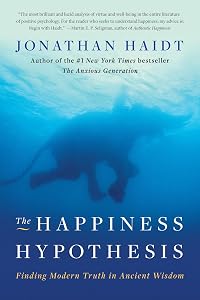
The Happiness Hypothesis: Finding Modern Truth in Ancient Wisdom
by Jonathan Haidt
On This Page
Description
Philosophy. Psychology. Self-Improvement. Nonfiction. HTML:Jonathan Haidt skillfully combines two genres-philosophical wisdom and scientific research-delighting the reader with surprising insights. He explains, for example, why we have such difficulty controlling ourselves and sticking to our plans; why no achievement brings lasting happiness, yet a few changes in your life can have profound effects, and why even confirmed atheists experience spiritual elevation. In a stunning final chapter, show more Haidt addresses the grand question "How can I live a meaningful life?," offering an original answer that draws on the rich inspiration of both philosophy and science."The Happiness Hypothesis is a wonderful and nuanced book that provides deep insight into the some of the most important questions in life — Why are we here? What kind of life should we lead? What paths lead to happiness? From the ancient philosophers to cutting edge scientists, Haidt weaves a tapestry of the best and the brightest. His highly original work on elevation and awe—two long-neglected emotions—adds a new weave to that tapestry. A truly inspiring book." —David M. Buss, author of The Evolution of Desire: Strategies of Human Mating
"In this beautifully written book, Jonathan Haidt shows us the deep connection that exists between cutting-edge psychological research and the wisdom of the ancients. It is inspiring to see how much modern psychology informs life's most central and persistent questions" —Barry Schwartz, author ofThe Paradox of Choice: Why More Is Less
"In our quest for happiness, we must find a balance between modern science and ancient wisdom, between East and West, and between "left brain" and "right brain." Haidt has struck that balance perfectly, and in doing so has given us the most brilliant and lucid analysis of virtue and well-being in the entire literature of positive psychology. For the reader who seeks to understand happiness, my advice is: Begin with Haidt." —Martin E.P. Seligman, Director, Positive Psychology Center at the University of Pennsylvania and author of Authentic Happiness
"Haidt is a fine guide on this journey between past and present, discussing the current complexities of psychological theory with clarity and humor. . . Haidt's is an open-minded, robust look at philosophy, psychological fact and spiritual mystery, of scientific rationalism and the unknowable ephemeral—an honest inquiry that concludes that the best life is, perhaps, one lived in the balance of opposites." —Bookpage. show less
Tags
Recommendations


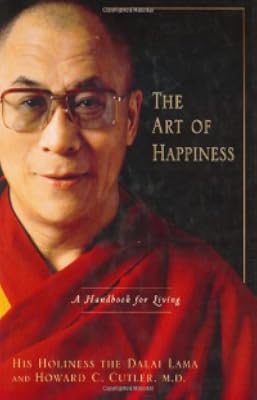
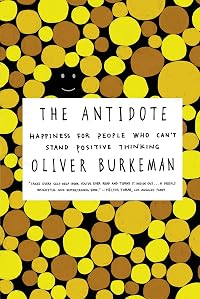
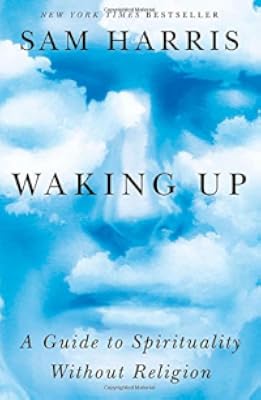

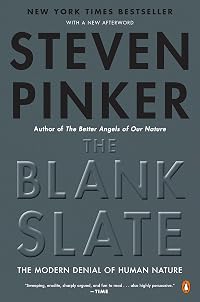


Member Recommendations
Member Reviews
The Happiness Hypothesis: Finding Modern Truth in Ancient Wisdom
By Jonathan Haidt
2005, Basic Books
Hardcover, 320pp
"Happiness comes from between."
Any book that takes on happiness and meaning in life is doomed to failure, or at least a discouragement of the readers' expectations. This, in large part, is because of what we intend when we ask questions like, What is the meaning of life? Haidt, in this treasure trove of a text, clarifies the big question (the Holy Question, as he calls it) in his final chapter. One wishes this had been the first chapter, but it works just as well for unraveling an ambiguous and self-defeating stance that dupes us all. Each of his ten chapters uses epigrams from ancient wisdom and then filters them through show more modern science, or, to be more specific, positive psychology, of which Haidt is an advocate and professional at the University of Virginia. The book is much heavier on the psychology side than the wisdom side, but the two complement each other well. Where the effort in the reading soars is in the wealth of intriguing experiments that Haidt describes and qualifies. Anyone interested in the human plight for fulfillment should read this book. show less
By Jonathan Haidt
2005, Basic Books
Hardcover, 320pp
"Happiness comes from between."
Any book that takes on happiness and meaning in life is doomed to failure, or at least a discouragement of the readers' expectations. This, in large part, is because of what we intend when we ask questions like, What is the meaning of life? Haidt, in this treasure trove of a text, clarifies the big question (the Holy Question, as he calls it) in his final chapter. One wishes this had been the first chapter, but it works just as well for unraveling an ambiguous and self-defeating stance that dupes us all. Each of his ten chapters uses epigrams from ancient wisdom and then filters them through show more modern science, or, to be more specific, positive psychology, of which Haidt is an advocate and professional at the University of Virginia. The book is much heavier on the psychology side than the wisdom side, but the two complement each other well. Where the effort in the reading soars is in the wealth of intriguing experiments that Haidt describes and qualifies. Anyone interested in the human plight for fulfillment should read this book. show less
When I was young, I remember a mentor telling me that ideas are more powerful than any weapon. Ideas fuel wars and motivate suicide bombers, but they also are the catalyst for hospitals, libraries, and soup-kitchens. Ideas, undoubtedly, are important but, truth be told - we are overwhelmed by great ideas and "wisdom." The library of human knowledge is effectively infinite. As he writes in the introduction, "Quantity undermines the quality of our engagement.... We might already have encountered the Greatest Idea, the insight that would have transformed us had we savored it, taken it to heart, and worked it into our lives."
The Happiness Hypothesis looks at 10 Great Ideas - ideas found in ancient wisdom and questions them in light of show more scientific research to apply for us today the lessons learned.
Here are the 10 ideas - which admittedly does cheapen them. I hope this simply whets you appetite for more:
1. Our mind is divided. He gives four ways - body and mind; three parts of the brain; the two sides; and in short, thinking fast and slow. We are like a rider on the back of an elephant - "the conscious, reasoning part of the mind has only limited control of what the elephant does."
2. "Our life is the creation of our mind." -Buddha. Is this true? Here he focuses on three ways to change how we think - meditation, modern medication (like Prozac), and therapy, particularly CBT.
3. "Do unto others as you would have them do unto you." -Jesus. This Great Idea, found in many places, speaks of the universal rule of reciprocity. Here he looks at how we use and are used by reciprocity.
4. We are all hypocrites. We fail to follow the Golden Rule. "It is easy to see the faults of others, but difficult to see one's own faults." -Buddha. Science has shown this to be true - we see others much more objectively than we see ourselves. We are all prone to self-righteousness, which leads to both feelings of superiority and villianizing the other.
5. The Happiness Hypotheses. Here he examines some of the hypotheses for happiness looking particularly at what Buddha/Stoic philosophers taught - happiness is found within and changing your mind. This is not completely true according to modern research. Some things outside the mind play a big role in our happiness. H (Happiness) = S (set point) C (conditions of life) V (voluntary activities).
Genetics plays a role in your happiness. We have been given a happiness range from birth. This is the "S." Some of the surprising conditions that play a role in our happiness: variable/intermittent noise, commuting, lack of perceived control, shame, and perhaps most important - relationships. He also has a section on Csikszentmihalyi's Flow, as important for happiness (so good!). And things such as conspicuous consumption decreases happiness. (This was one of my favorite chapters!)
6. "No man is an island." - John Donne. This chapter gives a brief overview on attachment theory and the fundamental importance of love and relationships for happiness. He also talks about the difference of falling in love / being in love, which is important for romance / marriage.
7. "What doesn't kill me makes me stronger." How does adversity affect us? Nietzsche's succinct idea, unfortunately is a dangerous over-simplification. "Many of the things that don't kill you can damage you for life. Recent research on 'posttraumatic growth' reveals when and why people grow from adversity, and what you can do to prepare yourself for trauma, or to cope with it after the fact."
8. "Set your heart of doing good. Do it over and over again, and you will be filled with joy." Buddha. How does virtue lead to happiness? Here he extols the virtues of positive psychology - virtues found across a diversity of places - wisdom, courage, humanity, justice, temperance and transcendence (the ability to forge connections to something larger than the self).
9. This was the chapter I had the hardest time with. Here he looked at "the culturally widespread idea that there is a vertical, spiritual dimension of human existence." Connecting to sacredness/divinity does bring happiness to many. He also touches on his "own research on the moral emotions of disgust, elevation, and awe to explain how this vertical dimension works."
10. The holy question - "What is the meaning of life?" Here he looks at the role of work in finding happiness and how our perspective on our job/career/calling plays a role in how much fulfillment we have in it. He also talks briefly about "cross-level coherence" - how well our system/worldview fits together with everything else.
A brief response: the ideas I hope to apply and carry with me into the future. Each is profound in its own way. As I mentioned, chapter 9 on the spiritual realm was disappointing, half-baked and choppy. But I think it was the beginning of The Righteous Mind, which I'm still looking forward to reading.
A couple quotes:
"Love and work are, for people, obvious analogues to water and sunshine for plants."
"If you are in passionate love and want to celebrate your passion, read poetry. If your arder has calmed and you want to understand your evolving relationship, read psychology. But if you have just ended a relationship and would like to believe are better off without love, read philosophy."
This was my second time through it, and I may return. I hope you've enjoyed the summary as much as I've enjoyed reviewing the ideas. The pleasure is in the journey and my poor summary is a stale bite of bread for what is actually a feast. show less
The Happiness Hypothesis looks at 10 Great Ideas - ideas found in ancient wisdom and questions them in light of show more scientific research to apply for us today the lessons learned.
Here are the 10 ideas - which admittedly does cheapen them. I hope this simply whets you appetite for more:
1. Our mind is divided. He gives four ways - body and mind; three parts of the brain; the two sides; and in short, thinking fast and slow. We are like a rider on the back of an elephant - "the conscious, reasoning part of the mind has only limited control of what the elephant does."
2. "Our life is the creation of our mind." -Buddha. Is this true? Here he focuses on three ways to change how we think - meditation, modern medication (like Prozac), and therapy, particularly CBT.
3. "Do unto others as you would have them do unto you." -Jesus. This Great Idea, found in many places, speaks of the universal rule of reciprocity. Here he looks at how we use and are used by reciprocity.
4. We are all hypocrites. We fail to follow the Golden Rule. "It is easy to see the faults of others, but difficult to see one's own faults." -Buddha. Science has shown this to be true - we see others much more objectively than we see ourselves. We are all prone to self-righteousness, which leads to both feelings of superiority and villianizing the other.
5. The Happiness Hypotheses. Here he examines some of the hypotheses for happiness looking particularly at what Buddha/Stoic philosophers taught - happiness is found within and changing your mind. This is not completely true according to modern research. Some things outside the mind play a big role in our happiness. H (Happiness) = S (set point) C (conditions of life) V (voluntary activities).
Genetics plays a role in your happiness. We have been given a happiness range from birth. This is the "S." Some of the surprising conditions that play a role in our happiness: variable/intermittent noise, commuting, lack of perceived control, shame, and perhaps most important - relationships. He also has a section on Csikszentmihalyi's Flow, as important for happiness (so good!). And things such as conspicuous consumption decreases happiness. (This was one of my favorite chapters!)
6. "No man is an island." - John Donne. This chapter gives a brief overview on attachment theory and the fundamental importance of love and relationships for happiness. He also talks about the difference of falling in love / being in love, which is important for romance / marriage.
7. "What doesn't kill me makes me stronger." How does adversity affect us? Nietzsche's succinct idea, unfortunately is a dangerous over-simplification. "Many of the things that don't kill you can damage you for life. Recent research on 'posttraumatic growth' reveals when and why people grow from adversity, and what you can do to prepare yourself for trauma, or to cope with it after the fact."
8. "Set your heart of doing good. Do it over and over again, and you will be filled with joy." Buddha. How does virtue lead to happiness? Here he extols the virtues of positive psychology - virtues found across a diversity of places - wisdom, courage, humanity, justice, temperance and transcendence (the ability to forge connections to something larger than the self).
9. This was the chapter I had the hardest time with. Here he looked at "the culturally widespread idea that there is a vertical, spiritual dimension of human existence." Connecting to sacredness/divinity does bring happiness to many. He also touches on his "own research on the moral emotions of disgust, elevation, and awe to explain how this vertical dimension works."
10. The holy question - "What is the meaning of life?" Here he looks at the role of work in finding happiness and how our perspective on our job/career/calling plays a role in how much fulfillment we have in it. He also talks briefly about "cross-level coherence" - how well our system/worldview fits together with everything else.
A brief response: the ideas I hope to apply and carry with me into the future. Each is profound in its own way. As I mentioned, chapter 9 on the spiritual realm was disappointing, half-baked and choppy. But I think it was the beginning of The Righteous Mind, which I'm still looking forward to reading.
A couple quotes:
"Love and work are, for people, obvious analogues to water and sunshine for plants."
"If you are in passionate love and want to celebrate your passion, read poetry. If your arder has calmed and you want to understand your evolving relationship, read psychology. But if you have just ended a relationship and would like to believe are better off without love, read philosophy."
This was my second time through it, and I may return. I hope you've enjoyed the summary as much as I've enjoyed reviewing the ideas. The pleasure is in the journey and my poor summary is a stale bite of bread for what is actually a feast. show less
I had a great deal of respect for evolution before I read this book. Do we have to rely on evolution in every attempt to understand every single aspect of human nature? I find this revolting. This alliance between psychology and evolution has ruined the appeal of scientific thinking for me. It has revealed to me the ugliness of both psychology and the theory of evolution. I really don't care whether theories makes sense anymore as long as they draw such an appalling, simplistic image of the human being.
And it is not the likening of humans to animals that I find repulsive. It's rather the view of the human being as a perfectly coordinated machine, not in a book about the human anatomy or whatever, but in a book that discusses happiness show more and wisdom and love !
I remember feeling very excited after I read the first chapter of this book. I couldn't resist the urge to recommend it to some of my friends whom I thought would enjoy it. Now I regret doing that. I don't wish to have any role in spreading this monstrosity. I don't know what happened after the first couple of chapters. Although I agree with a lot of the ideas in this book, I've began to devellop a feeling of weariness. My mind kept objecting desperately: a human being is much more than that !
A belief has been growing with me, that some ideas are really poisonous, that some books must not be read (by me). Not poisonous in the traditional sense; that they poison the spirit and shake beliefs. Rather, they poison the imagination. They set the mind thinking in inflexible patterns (the conscious and the unconscious, the elephant and the rider). You can't unlearn these stupid images. You can't forbid your mind from satisfying itself by reaching for such stupid, oversimplified explanations whenever the need arises. There is some truth to these ideas which is how they stick, but there is some truth to the devil's words too. show less
And it is not the likening of humans to animals that I find repulsive. It's rather the view of the human being as a perfectly coordinated machine, not in a book about the human anatomy or whatever, but in a book that discusses happiness show more and wisdom and love !
I remember feeling very excited after I read the first chapter of this book. I couldn't resist the urge to recommend it to some of my friends whom I thought would enjoy it. Now I regret doing that. I don't wish to have any role in spreading this monstrosity. I don't know what happened after the first couple of chapters. Although I agree with a lot of the ideas in this book, I've began to devellop a feeling of weariness. My mind kept objecting desperately: a human being is much more than that !
A belief has been growing with me, that some ideas are really poisonous, that some books must not be read (by me). Not poisonous in the traditional sense; that they poison the spirit and shake beliefs. Rather, they poison the imagination. They set the mind thinking in inflexible patterns (the conscious and the unconscious, the elephant and the rider). You can't unlearn these stupid images. You can't forbid your mind from satisfying itself by reaching for such stupid, oversimplified explanations whenever the need arises. There is some truth to these ideas which is how they stick, but there is some truth to the devil's words too. show less
This book is squarely in the genre of experimental psychology digested for a popular audience. As such, it is full of commentary on experiments, many of which are familiar to readers of this genre (yes, he mentions the marshmallows).
That said, this is a particularly good example of this genre. Unlike many authors in this genre, Haidt is both author and researcher. This seems to have had some positive effects. He makes clear the difference between the well-agreed upon results of the research and his own extensions of those interpretations. Even when talking about his own work, the distinction is there, although less so. He also gives the impression of having thought more deeply about his subject matter than non-researching authors.
As show more the title implies, this book is about happiness, and it is about evaluating ancient wisdom from the viewpoint of modern science. Happiness, not surprisingly, covers everything from relationships and stuff to work to morality and religion. I think the breadth of Haidt's explorations is part of what I like.
But what really makes the ideas in this book stick is Haidt's juxtaposition of ancient wisdom and modern findings. After realizing that he could use quotations from various sources of ancient wisdom to help his students remember ideas in his psychology classes, Haidt decided to find the common pieces of ancient wisdom and then evaluate them against the experimental results. The resulting pieces of wisdom come from many sources: the Bible, the Bhagavad Gita, the Koran, the Dhammapada, the Tao Te Ching, Aristotle and other Greek thinkers, Shakespeare, Benjamin Franklin, and more.
Many of these pieces of wisdom hold up well under modern knowledge. Many others, however, are at odds with how people actually work. The evaluation is interesting. And independent of the validity of the ideas is the way that this book makes clear how almost all of the really big ideas about happiness and human nature are common across many cultures, religions, and times. show less
That said, this is a particularly good example of this genre. Unlike many authors in this genre, Haidt is both author and researcher. This seems to have had some positive effects. He makes clear the difference between the well-agreed upon results of the research and his own extensions of those interpretations. Even when talking about his own work, the distinction is there, although less so. He also gives the impression of having thought more deeply about his subject matter than non-researching authors.
As show more the title implies, this book is about happiness, and it is about evaluating ancient wisdom from the viewpoint of modern science. Happiness, not surprisingly, covers everything from relationships and stuff to work to morality and religion. I think the breadth of Haidt's explorations is part of what I like.
But what really makes the ideas in this book stick is Haidt's juxtaposition of ancient wisdom and modern findings. After realizing that he could use quotations from various sources of ancient wisdom to help his students remember ideas in his psychology classes, Haidt decided to find the common pieces of ancient wisdom and then evaluate them against the experimental results. The resulting pieces of wisdom come from many sources: the Bible, the Bhagavad Gita, the Koran, the Dhammapada, the Tao Te Ching, Aristotle and other Greek thinkers, Shakespeare, Benjamin Franklin, and more.
Many of these pieces of wisdom hold up well under modern knowledge. Many others, however, are at odds with how people actually work. The evaluation is interesting. And independent of the validity of the ideas is the way that this book makes clear how almost all of the really big ideas about happiness and human nature are common across many cultures, religions, and times. show less
I literally just finished this book by Jonathan Hiadt 5 minutes ago, and it was an intriguing and thought-provoking read. Applying modern science to ancient wisdom is a nice way of remodifying the way we perceive the world in order to make us happier in life. The elephant (desire) and rider (rational self) was a great metaphor to describe how the elephant is an autonomous pleasure-seeking vehicle that translocates us as it pleases, and how the rider, at times, refuses what the elephant wants but is reluctantly taken to wherever the elephant desires (the book explains methods to remedy this). Also, he explains how opposition or contradiction--such as in east's collectivist culture and west's individualist culture; and liberalism and show more conservatism--are essential for change, group cohesion, and moving forward.
"When opponents of evolution object that human beings are not mere apes, they are correct. We are part bee." -Jonathan Haidt
"Happiness requires changing yourself and changing your world." -Jonathan Haidt
"The big greedy self is like a brick holding down the soul."
-Jonathan Haidt
"The self does not like to be denied, and it is adept at finding reasons to bend the rules or cheat." -Jonathan Haidt
"If you are in passionate love and want to celebrate it, read poetry. If your ardor has calmed and you want to understand your evolving relationship, read psychology. But if you have just ended a relationship and would like to believe you are better off without love, read philosophy." -Jonathan Haidt show less
"When opponents of evolution object that human beings are not mere apes, they are correct. We are part bee." -Jonathan Haidt
"Happiness requires changing yourself and changing your world." -Jonathan Haidt
"The big greedy self is like a brick holding down the soul."
-Jonathan Haidt
"The self does not like to be denied, and it is adept at finding reasons to bend the rules or cheat." -Jonathan Haidt
"If you are in passionate love and want to celebrate it, read poetry. If your ardor has calmed and you want to understand your evolving relationship, read psychology. But if you have just ended a relationship and would like to believe you are better off without love, read philosophy." -Jonathan Haidt show less
The first 8 chapters were good, but maybe a little bit of a theoretical stretch without research to back up his hypothesis in chapter 8 and forward. I liked his idea of the rider and the elephant as an analogy to our selves and life. It may not be completely accurate, but it does encompass a good deal of the research that does back up his hypothesis.
The end fell apart for me with the last few chapters when he tries to balance his atheism with life purpose and happiness. It just seems like believing a falsehood because you know it works. Confusing. Maybe I read into it with my Christian beliefs, and think he is trying to reason his way out of faith even though the evidence is staring him in the face.
The end fell apart for me with the last few chapters when he tries to balance his atheism with life purpose and happiness. It just seems like believing a falsehood because you know it works. Confusing. Maybe I read into it with my Christian beliefs, and think he is trying to reason his way out of faith even though the evidence is staring him in the face.
Excellent overview of modern psychology, in the perspective of ancient philosophy and religion and how all this might actually be relevant. Lots of fascinating detail, though the broad lines are pretty familiar to me at least. Intriguing comment on the similarities between behaviourism and freudianism: both see our adult problems as product of childhood experience - and this is not borne out by proper modern research. Conclusions: we all need work and love - and a wider sense of social belonging. Meditation, CBT and Prozac are all effective ways of calming anxiety and gaining perspective; take your choice! The writing style is light and he seems to really enjoy what he's doing. Could he actually be happy?
Members
- Recently Added By
Lists


My List
302 works; 1 member

Men's healing resources
747 works; 1 member

Books Read in 2024
4,727 works; 128 members
Author Information

14+ Works 11,230 Members
Work Relationships
Common Knowledge
- Canonical title*
- Felicità: un'ipotesi. Verità moderne e saggezza antica
- People/Characters
- Michael Gazzaniga; Antonio Damasio; David Hume (1711-1776); Boethius (Anicius Manlius Torquatus Severinus, ca. 480-ca. 524)
- Dedication
- For Jayne
- First words
- What should I do, how should I live, and whom should I become? (Introduction)
I first rode a horse in 1991, in Great Smoky National Park, North Carolina. - Last words
- (Click to show. Warning: May contain spoilers.)But by drawing on humanity's greatest ideas and best science, we can train the elephant, know our possibilities as well as our limits, and live wisely.
*Some information comes from Common Knowledge in other languages. Click "Edit" for more information.
Classifications
Statistics
- Members
- 2,454
- Popularity
- 7,926
- Reviews
- 53
- Rating
- (4.08)
- Languages
- 10 — Chinese, Dutch, English, French, German, Italian, Polish, Portuguese, Romanian, Spanish
- Media
- Paper, Audiobook, Ebook
- ISBNs
- 34
- ASINs
- 22