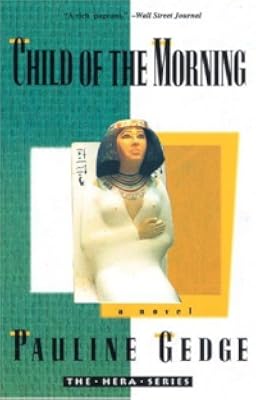
Child of the Morning
by Pauline Gedge
On This Page
Description
Based closely on historical events, this sensuously beautiful, astonishingly evocative novel tells the story of one of history's most remarkable women, the first female Pharaoh of Egypt. Thirty-five centuries ago, Hatshepsut, the youngest daughter of the Pharaoh, was to marry her father's illegitimate son and heir to the throne, Thothmes, in order to cleanse the bloodline in accordance with Egypt's supreme law. Fearing his son's incompetence, Hatshepsut's father chose her as the heir if the show more unprecedented ascension by a woman did not inspire the priests to commit treason or instill enough hatred in the envious heart of her half-brother and future consort to have her put to death. Rich in historical detail, this account recalls the rule of one of Egypt's greatest queens who, under her father's guidance, assumed the throne at the age of 15 and ruled brilliantly for more than two decades. show lessTags
Recommendations




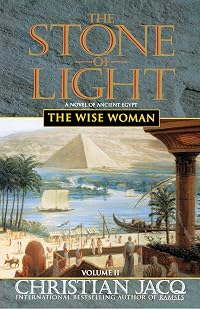
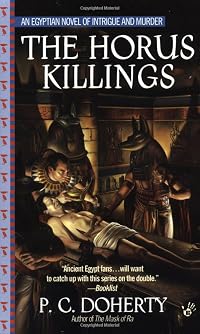
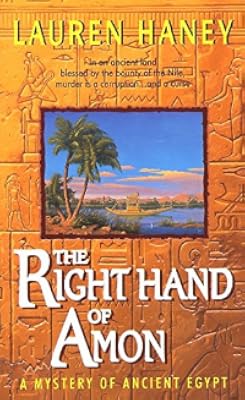
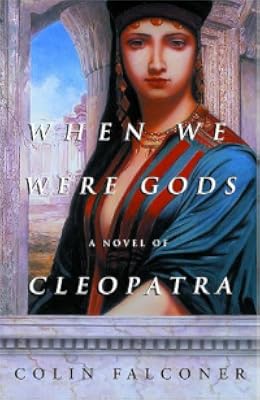


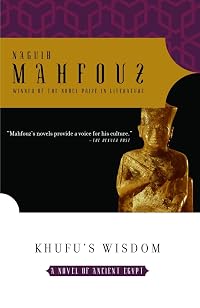
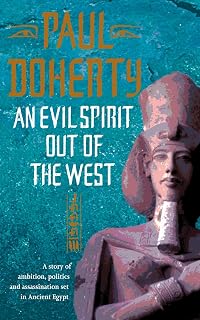

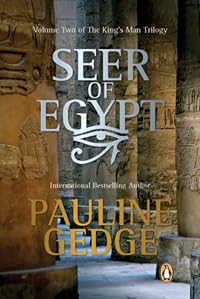
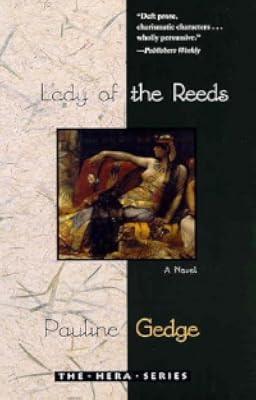





Member Recommendations

Member Reviews
Another of Gedge's vivid and utterly believable recreations of the past. I knew nothing about Queen/Pharoah Hapshetsut; this book certainly provided a lot of information about her time and place. Interesting as she is as an historical figure, as drawn by Gedge she is a fascinating and potent woman--strong-willed, confident in her own divinity, full of the power that the god Amun's favor bestows. It's interesting that though she waged war alongside her troops, she did so only to defend Egypt and not for purposes of conquest. Absorbing and hard to put down.
I loved this book from when I first discovered it in my teens. It's a novel of Hatshepsut, the only woman to ever reign as Pharaoh, and it's vivid and lush without ever being purple, conjuring up a distant land that was as, the forward notes, as ancient to the Caesars as they are to us--she ruled 3,500 years ago. Gedge does a wonderful job of bringing that land and its people to the mind's eye. When Hatshepsut discusses her temple with her lover architect, Senmut (still in existence) it's described so well, it brought the pictures I'd seen of it to mind. Hatshepsut herself is strongly drawn--brilliant, charismatic, arrogant as she must have been to rule as a woman in those times. I understand there are aspects of the book that aren't show more historically accurate--but then this novel was written in 1977 and we've learned quite a bit more about Hatshpsut since then. I still recommend it. It's a gripping novel and does the work of good historical fiction, making you want to read books of history and archeology to uncover the real woman behind the portrait painted here. show less
A wonderful blend of history and fiction. Intrigue, glory, failure, love, loss, it's all here in a captivating, deliciously described setting.
Mrs. Gedge does a wonderful job of making Ancient Egypt and the characters within spring to life from the page. No one here is one dimensional or perfect. Simply put there aren't any real plot holes.
Without spoiling, the ending is not what actually happened, but Mrs. Gedge in the last few chapters does a wonderful job of building an impending sense of not being able to escape destiny and closes it out perfectly for the tale she wove.
Mrs. Gedge does a wonderful job of making Ancient Egypt and the characters within spring to life from the page. No one here is one dimensional or perfect. Simply put there aren't any real plot holes.
Without spoiling, the ending is not what actually happened, but Mrs. Gedge in the last few chapters does a wonderful job of building an impending sense of not being able to escape destiny and closes it out perfectly for the tale she wove.
If you love ancient history, especially the wonderful Egyptians, then this book is just what you need. What it lacks in characterization it makes up for in sheer fun. A fast read, and though it can hardly be faithful to history, Hatshepsut is just as one might imagine her to be: lovely as the dawn yet cold as the night, drawing you into herself yet keeping everyone at a distance. I feel so much more could have been done with her character, as her relationship with Senmut left much wanting, but the book was already long enough since it covered her entire lifetime. The story did get maddening at times and required more than normal suspension of disbelief, but it was absolutely fun, the detail was exquisite, the battle scenes well drawn, show more and the characters were full of life. Gedge is a wonderful writer. This is my first book of hers, but I will definitely be reading more! show less
3.25 stars
In ancient Egypt (I looked it up, and Hatshepsut lived around 1500 BC). Hatshupset ruled Egypt as a female Pharaoh (normally only a title/position for men). This is a fictionalized account of her life.
I seem to be in a minority for my opinion on this but… The first half was just not interesting to me. It was ok, but nothing more. It picked up somewhat in the second half, after her father died, with the power struggle between her and her half-brother. So, most of the second half, I would rate good, but there were still parts that lost my interest. It seemed, at times, like what happened was drawn out longer than it needed to be. I would have liked to know how much of the story was true, but there was no author’s note, show more unfortunately. All that being said, what an incredible woman, especially for the time. Decided on a rating between “ok” and “good”. show less
In ancient Egypt (I looked it up, and Hatshepsut lived around 1500 BC). Hatshupset ruled Egypt as a female Pharaoh (normally only a title/position for men). This is a fictionalized account of her life.
I seem to be in a minority for my opinion on this but… The first half was just not interesting to me. It was ok, but nothing more. It picked up somewhat in the second half, after her father died, with the power struggle between her and her half-brother. So, most of the second half, I would rate good, but there were still parts that lost my interest. It seemed, at times, like what happened was drawn out longer than it needed to be. I would have liked to know how much of the story was true, but there was no author’s note, show more unfortunately. All that being said, what an incredible woman, especially for the time. Decided on a rating between “ok” and “good”. show less
I don’t read much historical fiction set in ancient Egypt. I read Judith Tarr’s Pillar of Fire (about Amunhotep); and another one whose name is escaping me at the moment; and Michelle Moran’s books about Nefertiti and Nefertari; but this is the first novel I’ve read about Hatshepsut, Egypt’s female Pharaoh. She ruled Egypt for twenty years, despite the various troubles she faced during her reign—including the threat from her nephew, Tuthmoses III, who later attempted to erase Hatshepsut’s name from the temples and monuments she erected during her lifetime. Nonetheless, Hatshepsut had a long, illustrious career as Pharaoh, not the least of which is because she was assisted by a strong group of advisors.
The novel focuses on show more the earlier part of Hatshepsut’s life, beginning at around the age of ten, when her sister dies and Tuthmoses I decides that Hatshepsut will follow in his footsteps. Gedge brings Hatshepsut the woman to life in this novel, merging fiction with fact. Her description of the various military campaigns lost me a little bit, but other that that, I found this to be a really well-written piece of fiction. Hatshepsut was a strong, tenacious woman, as seen in the way that she held on to her crown, even as her nephew attempted to take it from her. Gedge’s descriptions of ancient Egypt are evocative of the time and place. I don’t know much about ancient Egypt, but I’ve heard that Gedge was renowned for accuracy in her research. This novel is a slow one to read, but well wroth it. I’ll be on the lookout for more books by Pauline Gedge. show less
The novel focuses on show more the earlier part of Hatshepsut’s life, beginning at around the age of ten, when her sister dies and Tuthmoses I decides that Hatshepsut will follow in his footsteps. Gedge brings Hatshepsut the woman to life in this novel, merging fiction with fact. Her description of the various military campaigns lost me a little bit, but other that that, I found this to be a really well-written piece of fiction. Hatshepsut was a strong, tenacious woman, as seen in the way that she held on to her crown, even as her nephew attempted to take it from her. Gedge’s descriptions of ancient Egypt are evocative of the time and place. I don’t know much about ancient Egypt, but I’ve heard that Gedge was renowned for accuracy in her research. This novel is a slow one to read, but well wroth it. I’ll be on the lookout for more books by Pauline Gedge. show less
I have to use a quote off the back of this book, it's just too good. Mary Renault (famous author of novels set in ancient Greece) writes: "Remarkable... It has a vivid and powerful sense of atmosphere, and its interpretation of the enigmatic Hatshepsut is extremely interesting." Which to me translates as "I don't believe a word of it, but don't let that stop you, it's good."
It is, in fact, evocative and compelling.
It is, in fact, evocative and compelling.
Members
- Recently Added By
Lists

Best Historical Fiction
620 works; 262 members

Best historical fiction set in the ancient world
126 works; 38 members
Author Information

31+ Works 3,734 Members
Some Editions
Awards and Honors
Awards
Distinctions
Series
Belongs to Publisher Series
Work Relationships
Contains
Common Knowledge
- Canonical title
- Child of the Morning
- Original title
- Child of the Morning
- Original publication date
- 1977
- People/Characters
- Hatshepsut; Thothmes; Neferu; Senmut; Per-hor
- Important places
- Africa; Egypt (Ancient)
- Important events
- New Kingdom of Egypt; Eighteenth Dynasty of Egypt
- Epigraph
- I have done this from a loving heart for my Father Amun;
I have entered into his scheme for this first jubilee;
I was wise by his excellent Spirit, and I forgot nothing of that which he exacted.
My Majesty knoweth t... (show all)hat he is Divine.
I did it under his command; it was he who led me.
I conceived no works without his doing; it was he who gave me directions.
I slept not because of his temple; I erred not from that which he commanded.
My heart was wise before my Father; I entered into the affairs of his heart.
I turned not my back on the City of the All-Lord, but turned to it the face.
I know that Karnak is God's dwelling upon earth; the August Ascent of the Beginning;
The Sacred Eye of the All-Lord; the place of his heart;
Which wears his beauty,and encompasses those who follow him.
Prayer composed by King Hatsepsu I on the occasion of Her Julbilee - Dedication
- For my mother Airini and
my father Lloyd, with love - First words
- She went to her couch early, signaling to her slave and slipping from the hall almost unnoticed while the food still steamed on the little gilded tables and the fragrance of the flowers, scattered everywhere, moved in an invi... (show all)sible cloud with her down the colonnaded walk. (Prologue)
Although the north wall of the schoolroom opened onto the garden, the prevailing summer wind did not blow between the dazzling white, color-splashed pillars.
After twenty years of struggle to rise, struggle to rule, struggle to hold onto what was hers, there was no longer any need even to think, and the grayness of uselessness threatened to engulf her. (Epilogue) - Last words
- (Click to show. Warning: May contain spoilers.)He sat on, her cold hand pressed to his face and the last shreds of her Father's shining garments lighting the jewels on her feet. (Epilogue)
(Click to show. Warning: May contain spoilers.)I shall, after all, live forever. (Prologue)
(Click to show. Warning: May contain spoilers.)And the love of Senmut. - Blurbers
- Renault, Mary
Classifications
- Genres
- Fiction and Literature, General Fiction, Historical Fiction, Teen
- DDC/MDS
- 813.54 — Literature & rhetoric American literature in English American fiction in English 1900-1999 1945-1999
- LCC
- PR9199.3 .G415 .C48 — Language and Literature English English Literature English literature: Provincial, local, etc.
- BISAC
Statistics
- Members
- 826
- Popularity
- 33,510
- Reviews
- 21
- Rating
- (4.05)
- Languages
- 12 — Catalan, Czech, Dutch, English, French, German, Italian, Norwegian (Bokmål), Portuguese, Russian, Spanish, Swedish
- Media
- Paper, Ebook
- ISBNs
- 70
- ASINs
- 16