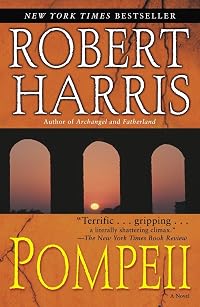
Pompeii
by Robert Harris
On This Page
Description
When the aqueduct that brings fresh water to thousands of people around the bay of Naples fails, Roman engineer Marius Primus heads to the slopes of Mount Vesuvius to investigate, only to come face to face with an impending catastrophe.Tags
Recommendations








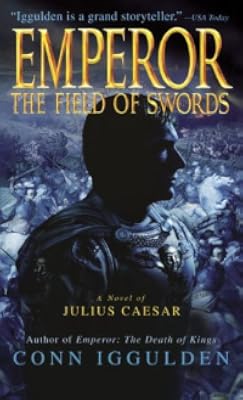
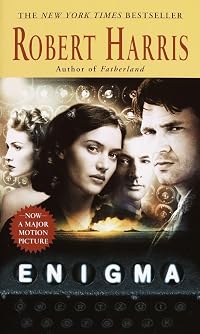

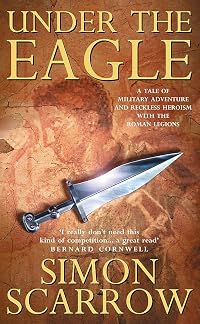
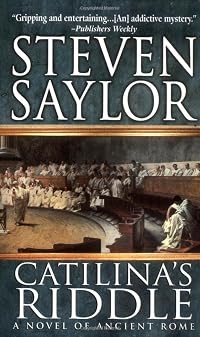








Member Recommendations

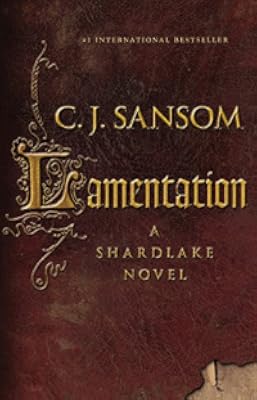
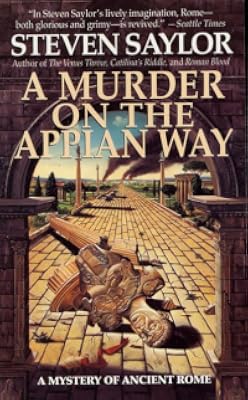
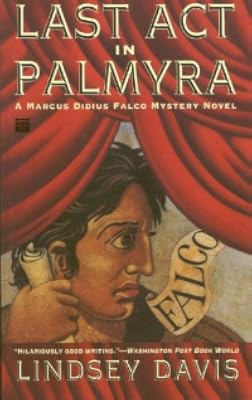
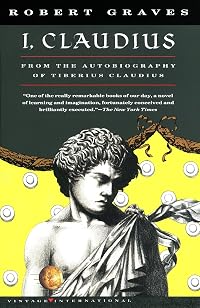
wandering_star A comprehensive and entertaining look at what life in Pompeii might really have been like (and incidentally, Beard namechecks Harris' book).
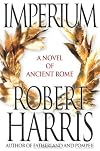
rakerman Imperium, the first book in Harris' Cicero trilogy, has a very well-framed and grounded tale of elite Romans, heavily based in real history.
Member Reviews
Great description and detail, a real immersion in the varied strata and characters of the gloriously purposeful Roman society. Harris recreates that advanced and connected world and the self-assured worldview of the Romans through interesting, believable portrayals. There’s tension throughout the story from the plot lines that connect those characters, but also the looming sense of what we the readers well know became of Pompeii. Regarding which, Harris draws a parallel (I only notice now, looking at the epigraphs) with our own world and its American pre-eminence as if this too is or was (when the book came out, 20 years ago) on the brink of collapse.
This really is rather good although it loses a star for perhaps fiddling the reality of the effects of a pyroclastic flow in order to come out with a crowd-pleasing result that really should not have been allowed. However, this is a small quibble.
What we have here is a startlingly good evocation of the Roman Empire in the Bay of Naples in the first century AD - so good and so well researched that it would do no harm to have it on the syllabus of anyone studying the classics (if anyone does nowadays) at secondary school.
It is also a solid thriller but the skill lies in the almost cinematic writing and clarity of style, the sign of an educated man trained as a journalist and abandoning any attempt to be self-consciously literary for a show more market of introverts.
This is excellent writing for the educated element in the masses as we might have expected a hundred years ago from the likes of Rider Haggard or Conan Doyle. The set piece of the Roman fleet under a rain of pumice is a tour de force of imagination and tight writing.
The characterisation is superb as well. He pulls off the difficult trick of presenting us with real human beings who do not know anything outside their era and who share the assumptions of that era but who have all the emotions that we might have.
With only one romantic lapse, these are people who accept the social conditions of their era much as we do ours. There is no didacticism or moralising from a twenty-first century perspective - a rare pleasure nowadays. Harris imagines what it must have been like to be Roman brilliantly.
Harris seems to specialise in fine popular writing set in history without allowing his stories to slip into the standard tropes of the historical novel. Most of his story-telling is set in the twentieth century and he has no problem with alternative history - most famously in 'Fatherland'.
To have moved from territory he clearly knows well back in time two thousand years and come up with this book shows more than just the novelist and the journalist - it shows an author who could also have been, had he chosen, a very fine historian. A very good read. show less
What we have here is a startlingly good evocation of the Roman Empire in the Bay of Naples in the first century AD - so good and so well researched that it would do no harm to have it on the syllabus of anyone studying the classics (if anyone does nowadays) at secondary school.
It is also a solid thriller but the skill lies in the almost cinematic writing and clarity of style, the sign of an educated man trained as a journalist and abandoning any attempt to be self-consciously literary for a show more market of introverts.
This is excellent writing for the educated element in the masses as we might have expected a hundred years ago from the likes of Rider Haggard or Conan Doyle. The set piece of the Roman fleet under a rain of pumice is a tour de force of imagination and tight writing.
The characterisation is superb as well. He pulls off the difficult trick of presenting us with real human beings who do not know anything outside their era and who share the assumptions of that era but who have all the emotions that we might have.
With only one romantic lapse, these are people who accept the social conditions of their era much as we do ours. There is no didacticism or moralising from a twenty-first century perspective - a rare pleasure nowadays. Harris imagines what it must have been like to be Roman brilliantly.
Harris seems to specialise in fine popular writing set in history without allowing his stories to slip into the standard tropes of the historical novel. Most of his story-telling is set in the twentieth century and he has no problem with alternative history - most famously in 'Fatherland'.
To have moved from territory he clearly knows well back in time two thousand years and come up with this book shows more than just the novelist and the journalist - it shows an author who could also have been, had he chosen, a very fine historian. A very good read. show less
Harris is a reliable writer who I can count on for a good story. Pompeii does not disappoint. This was published in 2003 and tells us stories of people beginning two days prior to the eruption of Mt Vesuvius in AD 79. It is however, primarily the story of one man and his experiences. The book starts off a little slow as an Aquarius and aqueduct engineer, Marcus Attilius, searches for water in the midst of a severe drought, but the story picks up considerably. We know of course how the big story ends. What we have here are smaller stories, woven around Attilius's investigation of what is suddenly going wrong with the aqueduct that has very recently come under his responsibility. He is the latest of several generations of engineers who show more have been building and caring for the Roman aqueducts. I also really liked the portrayal of Pliny in this book.
A nice history lesson woven into this tale. Once this got going, it turned into a real page turner that was very hard to put down. I have a few minor quibbles with the book that bothered me a little, but I won't detail them since I suspect they vary by reader. show less
A nice history lesson woven into this tale. Once this got going, it turned into a real page turner that was very hard to put down. I have a few minor quibbles with the book that bothered me a little, but I won't detail them since I suspect they vary by reader. show less
Pompeii is forever associated with a catastrophic eruption from Mount Vesuvius that destroyed the city, but at the same time managed to preserve a lot of artefacts and even actual citizens. Robert Harris's book covers the day or so leading up to the actual eruption and the immediate aftermath through the eyes of four people: an engineer in charge of repairing the aqueduct, noted scholar and scientist Pliny the Elder, wealthy landowner (and former slave) Ampliatus, and Ampliatus's daughter Corelia.
Overall this was a very good book. It is historical fiction with a deft touch. Details about Roman life (the different types of gladiators, for example) and actual Latin words and phrases are woven into the narration and sometimes the dialogue show more in a way that makes them easy to digest. In other words, this isn't an info-dump. I also liked the use of Pliny the Elder's actual accounts of the eruption, and presumably other quotes from his Natural History, in translation, and the chapter introductions that describe the eruption in some technical detail.
The description of the eruption in the book is truly awesome: imagining the great column of smoke and ash and rock spewing many miles into the sky is both thrilling and terrifying. As I read I could vividly imagine the sudden darkness in the middle of the day and the resulting panic and bewilderment among the citizens. (Also, how ironic that it happened the day after celebrations honouring Vulcan, whose area of expertise includes volcanoes.) I even found myself ducking slightly as I read, as though experiencing an onslaught of pumice, and sometimes I would be squinting as though trying to read through the clouds of ash.
Choosing an engineer as the primary character was also interesting. For all the reading I've done about Rome (admittedly, not that much), I've never really read that much about the aqueduct system, so the technical aspects that are brought up in the context of the story are a nice treat.
Some may object to Corelia's rather limited role in the proceedings -- indeed, when I wrote my first draft of this review I was able to come up with a fair description of each of the three male characters, but could not conjure up a brief summary of Corelia. She does manage to be rebellious and headstrong without really seeming too modern (at least not to me), but her limited role in society, and the greater freedom the men have, mean that she does not feature as prominently.
I must also confess to being somewhat disoriented during the final sequence, when Attilius is trying to track down Corelia, but of course a volcanic eruption is not exactly the most ordered of events, and I was reading really fast so that can probably be chalked up to reader error.
This book is recommended for students of Roman history, those looking for exciting retellings of historical events, and geology nerds. show less
Overall this was a very good book. It is historical fiction with a deft touch. Details about Roman life (the different types of gladiators, for example) and actual Latin words and phrases are woven into the narration and sometimes the dialogue show more in a way that makes them easy to digest. In other words, this isn't an info-dump. I also liked the use of Pliny the Elder's actual accounts of the eruption, and presumably other quotes from his Natural History, in translation, and the chapter introductions that describe the eruption in some technical detail.
The description of the eruption in the book is truly awesome: imagining the great column of smoke and ash and rock spewing many miles into the sky is both thrilling and terrifying. As I read I could vividly imagine the sudden darkness in the middle of the day and the resulting panic and bewilderment among the citizens. (Also, how ironic that it happened the day after celebrations honouring Vulcan, whose area of expertise includes volcanoes.) I even found myself ducking slightly as I read, as though experiencing an onslaught of pumice, and sometimes I would be squinting as though trying to read through the clouds of ash.
Choosing an engineer as the primary character was also interesting. For all the reading I've done about Rome (admittedly, not that much), I've never really read that much about the aqueduct system, so the technical aspects that are brought up in the context of the story are a nice treat.
Some may object to Corelia's rather limited role in the proceedings -- indeed, when I wrote my first draft of this review I was able to come up with a fair description of each of the three male characters, but could not conjure up a brief summary of Corelia. She does manage to be rebellious and headstrong without really seeming too modern (at least not to me), but her limited role in society, and the greater freedom the men have, mean that she does not feature as prominently.
I must also confess to being somewhat disoriented during the final sequence, when Attilius is trying to track down Corelia, but of course a volcanic eruption is not exactly the most ordered of events, and I was reading really fast so that can probably be chalked up to reader error.
This book is recommended for students of Roman history, those looking for exciting retellings of historical events, and geology nerds. show less
It's obvious to me that Harris did his homework--even before I got to a list of his sources in his Acknowledgments at the end of the novel.
He picked an interesting character to carry most of the story, or at least someone in an interesting position to see the signs of impending doom. Marcus Attilius is an "aquarius"--an engineer in charge of maintaining the Aqueduct that feeds water into the area of the Bay of Naples--which includes Pompeii. The last man holding his position suddenly disappeared weeks ago and this novel is a mix of hard-boiled mystery and disaster thriller with an element of romance.
It was interesting to see the author bring to life Pliny the Elder, a historical figure who was indeed involved in the events surrounding show more the eruption. Still, I found this account rather clinical with details of engineering and vulcanology more memorable than the people endangered. Maybe it was too short, too terse. Other than Pliny, no one felt fleshed out enough for me to find what is a tragic event moving.
Or maybe it was just that Harris populates Pompeii with the kind of characters that imbue it with all the charm of Sodom and Gomorrah so I was half-rooting for Vesuvius. And you know, when I think back to 9/11 (I'm a native New Yorker) there were so many stories of people helping each other, so many stories that broke the heart. I can't help but feel Harris could have done better by Pompeii. So I can't agree with the reviewer on the cover that said the book "kicks ash." show less
He picked an interesting character to carry most of the story, or at least someone in an interesting position to see the signs of impending doom. Marcus Attilius is an "aquarius"--an engineer in charge of maintaining the Aqueduct that feeds water into the area of the Bay of Naples--which includes Pompeii. The last man holding his position suddenly disappeared weeks ago and this novel is a mix of hard-boiled mystery and disaster thriller with an element of romance.
It was interesting to see the author bring to life Pliny the Elder, a historical figure who was indeed involved in the events surrounding show more the eruption. Still, I found this account rather clinical with details of engineering and vulcanology more memorable than the people endangered. Maybe it was too short, too terse. Other than Pliny, no one felt fleshed out enough for me to find what is a tragic event moving.
Or maybe it was just that Harris populates Pompeii with the kind of characters that imbue it with all the charm of Sodom and Gomorrah so I was half-rooting for Vesuvius. And you know, when I think back to 9/11 (I'm a native New Yorker) there were so many stories of people helping each other, so many stories that broke the heart. I can't help but feel Harris could have done better by Pompeii. So I can't agree with the reviewer on the cover that said the book "kicks ash." show less
Never saw the Kit Harrington movie adaptation of this movie and I'm glad I didn't. Reading about that doomed city at the base of Mount Vesuvius and the events in and around those eighteen hours before eruption in a fictional capacity has been exhilarating.
Maybe it's because I had just watched Blood of Zeus, the Netflix anime that has so much potential but is shackled by the streamer's indecisiveness. Anyway, for some reason Attilius reminds me of Heron. Not Heron the demigod, son of Zeus and gifted with lightning but the Heron who is in mourning, headstrong, determined and righteous in his science. Attilius has other qualities that would have made him the demigod of aqueducts - he is an engineer of insanely high intellect and a keen and show more fine tuned sense of intuition.
I'm convinced that just before a natural, catastrophic disaster takes place - >the earth holds a séance with the soon to be departed souls of the inhabitants within the impact radius. The unsettling atmosphere leading up to the event tells me that the spirit almost knows something is about to happen. More often than not, some sort of tension, unrest - even riots occur just before the event. But then there's The Great Tsunami (Bali and surrounds)of our century and how everyone was just in utter shock and of course the Great earthquakes of Hatay in Turkiye - so yeah, maybe the earth is just shrewd and picks and chooses when to give warning before unleashing hell.
In a race against a volcano that he didn't even know he was racing, Attilius is steadfast, focused and in the zone trying to repair the part that is blocking the flow to several towns along the route of the aqueduct. There is love, there is corruption (seriously, corruption is probably the oldest vice on earth right?), there are slaves, there are free men, desperation, ridiculous wealth and an archivist willing to give his life to document the eruption for all in the future to behold.
Mount Vesuvius is the real protagonist here. And what a might and frightening one at that. show less
Maybe it's because I had just watched Blood of Zeus, the Netflix anime that has so much potential but is shackled by the streamer's indecisiveness. Anyway, for some reason Attilius reminds me of Heron. Not Heron the demigod, son of Zeus and gifted with lightning but the Heron who is in mourning, headstrong, determined and righteous in his science. Attilius has other qualities that would have made him the demigod of aqueducts - he is an engineer of insanely high intellect and a keen and show more fine tuned sense of intuition.
I'm convinced that just before a natural, catastrophic disaster takes place - >the earth holds a séance with the soon to be departed souls of the inhabitants within the impact radius. The unsettling atmosphere leading up to the event tells me that the spirit almost knows something is about to happen. More often than not, some sort of tension, unrest - even riots occur just before the event. But then there's The Great Tsunami (Bali and surrounds)of our century and how everyone was just in utter shock and of course the Great earthquakes of Hatay in Turkiye - so yeah, maybe the earth is just shrewd and picks and chooses when to give warning before unleashing hell.
In a race against a volcano that he didn't even know he was racing, Attilius is steadfast, focused and in the zone trying to repair the part that is blocking the flow to several towns along the route of the aqueduct. There is love, there is corruption (seriously, corruption is probably the oldest vice on earth right?), there are slaves, there are free men, desperation, ridiculous wealth and an archivist willing to give his life to document the eruption for all in the future to behold.
Mount Vesuvius is the real protagonist here. And what a might and frightening one at that. show less
In a sweltering week in late August 79AD, where better to enjoy the last days of summer than on the beautiful Bay of Naples? But as Rome's richest citizens relax in their villas in Pompeii and Herculaneum, there are ominous warnings that something is going wrong. Wells and springs are failing, a man has disappeared, and now the greatest aqueduct in the world - Aqua Augusta- has ceased to flow.
Marcus Attilius Primus, who is aquarius or water-engineer for the entirety of this Roman Costa del Crime, where a horde of pimps and prostitutes, felons and fraudsters, dubious merchants and bent politicians are situated. Attilius's only concern, however, is the great aqueduct and why it has suddenly run dry. But he also has to deal with a show more troublesome workforce, an adolescent girl, a corrupt millionaire and an elderly scientist.
There is inevitable degree of predictability here. I cannot imagine that anyone will not know that sooner or later, Vesuvius will erupt and an awful lot of people will get killed. However, predictability doesn't always mean cliché.
There isn't an awful lot of character development on show here but it doesn't really seem to matter an awful lot. It soon becomes obvious that Harris has done his research and colourfully evokes the sights and sounds of this ancient world where being a slave is absolutely awful and being a free-man isn't exactly a bag of roses either. Where being a woman means being little more than a chattel to be used as your master sees fit. Harris appears genuinely in awe of Roman engineering and his admiration is infectious.
As with a lot of historical fiction you have to your imagination loose, because despite the historical research that has gone into the setting there will also be quite a few leaps of faith with the plot and that is certainly the case here. However, the plot is fast paced and I found it easy to get caught up in it. On the whole I found this a fast paced and enjoyable read that had me gripped right up until the end. show less
Marcus Attilius Primus, who is aquarius or water-engineer for the entirety of this Roman Costa del Crime, where a horde of pimps and prostitutes, felons and fraudsters, dubious merchants and bent politicians are situated. Attilius's only concern, however, is the great aqueduct and why it has suddenly run dry. But he also has to deal with a show more troublesome workforce, an adolescent girl, a corrupt millionaire and an elderly scientist.
There is inevitable degree of predictability here. I cannot imagine that anyone will not know that sooner or later, Vesuvius will erupt and an awful lot of people will get killed. However, predictability doesn't always mean cliché.
There isn't an awful lot of character development on show here but it doesn't really seem to matter an awful lot. It soon becomes obvious that Harris has done his research and colourfully evokes the sights and sounds of this ancient world where being a slave is absolutely awful and being a free-man isn't exactly a bag of roses either. Where being a woman means being little more than a chattel to be used as your master sees fit. Harris appears genuinely in awe of Roman engineering and his admiration is infectious.
As with a lot of historical fiction you have to your imagination loose, because despite the historical research that has gone into the setting there will also be quite a few leaps of faith with the plot and that is certainly the case here. However, the plot is fast paced and I found it easy to get caught up in it. On the whole I found this a fast paced and enjoyable read that had me gripped right up until the end. show less
Members
- Recently Added By
Lists

Best Historical Fiction
620 works; 261 members

Best historical fiction set in the ancient world
126 works; 40 members

Historical Fiction
889 works; 91 members

Recommend the 20 best books you've read in the last five years
2,168 works; 608 members

Books Set in Italy
167 works; 19 members

Authors from England
147 works; 4 members

Books Read in 2006
424 works; 8 members

Books Read in 2018
4,360 works; 110 members

Italian adventures
21 works; 1 member

Books recommended in the history category on FiveBooks.com
329 works; 4 members
Author Information

38+ Works 37,766 Members
Author Robert Harris was born in Nottingham, England in 1957. He attended King Edward VII College and Selwyn College. He has worked as a BBC journalist, the Political Editor of the Observer, and a columnist for The Sunday Times and Daily Telegraph. He was named Columnist of the Year by the British Press in 2003. He has written both fiction and show more nonfiction books and currently lives in Berkshire, England. His works of fiction include; An Officer and a Spy, The Fear Index, Pompeii, Enigma, Fatherland, Dictator, and Conclave. (Bowker Author Biography) show less
Some Editions
Awards and Honors
Distinctions
Notable Lists
Series
Belongs to Publisher Series
Work Relationships
Is contained in
Is abridged in
Reader's Digest Auswahlbücher, Bestseller-Sonderband - Pompeji / Und morgen in das kühle Grab / Ein ganzes Leben lang by Reader's Digest
Reader's Digest Select Editions: Avenger / Pompeii / Shutter Island / Flirting with Pete by Reader's Digest
Reader's Digest Auswahlbücher 259 - Die Liste. Pompeji. Ein allzu schönes Mädchen. Eine Rose für die Ewigkeit by Reader's Digest
Het Beste Boek 232: Het Madagascar debacle / Tijdelijk toerekeningsvatbaar / Pompeiï / Zomerlicht by Reader's Digest
Common Knowledge
- Canonical title
- Pompeii
- Original title
- Pompeii
- Original publication date
- 2003-11
- People/Characters
- Marcus Attilius; Pliny the Elder; Corelia; Tiro; Atia; Ampliatus (show all 7); Pliny the Younger
- Important places
- Pompeii; Misenum; Ancient Rome; Mount Vesuvius; Herculaneum, Italy
- Important events
- Eruption of Mount Vesuvius (79 AD)
- Related movies
- Pompeii (2013 | IMDb)
- Epigraph
- American superiority in all matters of science, economics, industry, politics, business, medicine, engineering, social life, social justice, and of course, the military was total and indisputable. Even Europeans suffering th... (show all)e pangs of wounded chauvinism looked on with awe at the brilliant example the United States had set for the world as the third millennium began.
Tom Wolfe, Hooking Up
In the whole world, wherever the vault of heaven turns, there is no land so well adorned with all that wins Nature's crown as Italy, the ruler and second Mother of the world, with her men and women, her generals and soldiers,... (show all) her slaves, her pre-eminence in arts and crafts, her wealth of brilliant talent ...
Pliny, Natural History
How can we withhold our respect from a water system that, in the first century AD, supplied the city of Rome with substantially more water than was supplied in 1985 to New York City ?
A. Trevor Hodge, Roman Aquedu... (show all)cts and Water Supply - Dedication
- To Gill
- First words
- They left the aquaduct two hours before dawn, climbing by moonlight into the hills overlooking the port - six men in single file, the engineer leading.
- Last words
- (Click to show. Warning: May contain spoilers.)But this particular story was generally considered far-fetched and was dismissed as a superstition by all sensible people.
- Original language
- English
- Canonical DDC/MDS
- 813.54; 823.914
- Canonical LCC
- PZ4.H315
Classifications
- Genres
- Fiction and Literature, Historical Fiction, General Fiction
- DDC/MDS
- 823.914 — Literature & rhetoric English & Old English literatures English fiction 1900- 1901-1999 1945-1999
- LCC
- PZ4 .H315 — Language and Literature Fiction and juvenile belles lettres Fiction and juvenile belles lettres Fiction in English
- BISAC
Statistics
- Members
- 5,819
- Popularity
- 2,254
- Reviews
- 165
- Rating
- (3.63)
- Languages
- 25 — Catalan, Czech, Danish, Dutch, English, Finnish, French, German, Hebrew, Icelandic, Italian, Korean, Latvian, Lithuanian, Norwegian (Bokmål), Polish, Portuguese, Romanian, Russian, Serbian, Croatian, Slovenian, Spanish, Swedish, Chinese, traditional
- Media
- Paper, Audiobook, Ebook
- ISBNs
- 108
- UPCs
- 2
- ASINs
- 31