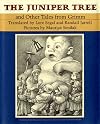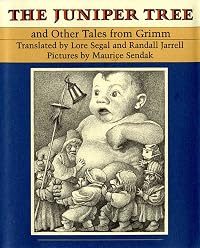
The Juniper Tree and Other Tales from Grimm
by Jacob Grimm, Wilhelm Grimm
On This Page
Description
Twenty-seven newly translated fairy tales from Grimm including many old favorites as well as such lesser-known tales as "The Juniper Tree," "Many-Fur," and "Brother Gaily."Tags
Recommendations
















Member Reviews
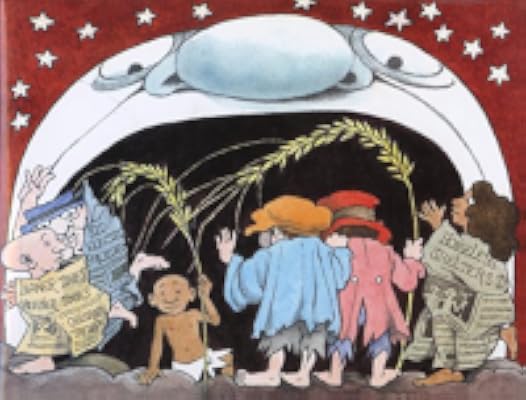
As much as I enjoy the Grimms' fairytales and Maurice Sendak's illustrations, this book fell a little flat for me. Likely this was because each story only had one illustration from Sendak, so the balance between potential illustrations and text felt quite off. Sendak's work is most fruitful when he's illustrating a whole story, and even though there is a certain value in condensing a story down into one powerful image it really doesn't give Sendak his usual freedom to develop the intimate details that make his pictures so stunning.
For some reason this collection is divided into two separate books. My library sent me volume one, which does not include the title story. I'll look for it online, and I won't care if it's been adapted. This collection prides itself on authenticity to the Grimm originals, but I don't think that's a good thing except for scholars... the nature of the folktale is to be adapted to fit the teller's contemporary audience (within reason). I did not actually enjoy very many of these stories, nor even the illustrations. Sendak's work here is, imo, too polished, even pretentious, and the ugly people are all shaped like toddlers and they all push out the edges of the pages. Blech.
Best for scholars and completists, not so much for children. Some of the tales were all too familiar, others were brand-new (at least to me, and I've read quite a bit). I did like some little bits, as for example the variation of the chant the fisherman uses to call the flounder, or the revelation that the dwarfs kept their cottage quite tidy and did cook, so didn't need Snow White but took her in out of kindness. It was interesting that some of the translations revealed a graceful and poetic storyteller's voice, and others were awkward and incomplete. Overall I'm glad this was a library book and I didn't pay for it. It would make a good companion to [b:I Saw Esau: The Schoolchild's Pocket Book|380645|I Saw Esau The Schoolchild's Pocket show more Book|Iona Opie|http://photo.goodreads.com/books/1174326665s/380645.jpg|1488774] on a scholar's shelf. show less
Grimm's folktales retold in a vibrant and engaging manner. This was my first time reading the tale called "The Juniper Tree", and it struck me as having that morbid edge that so many folktales contain.
This boxed set is one of my most prized possessions. I love the Sendak illustrations and old Grimm fairy tales.
I enjoyed this book. Some of the tales I knew others I did not. A few were very bleak. The illustrations were well done. I will be looking out for Vol I for this was Vol II.
Mint conditon
Members
- Recently Added By
Published Reviews
ThingScore 75
added by booksaplenty1949
Lists

Nice Anthologies for Kids
66 works; 3 members
Author Information

1,898+ Works 49,812 Members
Jacob W. Grimm (1785-1863) and his brother Wilhelm K. Grimm (1786-1859) pioneered the study of German philosophy, law, mythology and folklore, but they are best known for their collection of fairy tales. These include such popular stories as Red Riding Hood, Sleeping Beauty and The Frog Prince. Commonly referred to now as Grimm's Fairy Tales, show more their collection was published as Kinder-und-Hausmarchen (Children's and Household Tales, 1812-15). The brothers were born thirteen months apart in the German province of Hesse, and were inseparable from childhood. Throughout their lives they showed a marked lack of sibling rivalry. Most of their works were written together, a practice begun in childhood when they shared a desk and sustained throughout their adult lives. Since their lives and work were so collaborative, it is difficult now to differentiate between them, but of course there were differences.- Jacob, who studied for a time in Paris, was fascinated with variant spellings of older words. He articulated "Grimm's Law," the rules of which are still used today to determine correspondences between the consonants of German and languages in the Indo-European family. Jacob was bolder and more experimental than Wilhelm, and was rumored to be a lively dancer. Throughout his life, Jacob kept rigidly to schedule and could be extremely focused on work that demanded close attention to detail. He never married, but was a loving uncle to Wilhelm's children. Jacob and Wilhelm Grimm are buried side by side in Berlin. (Bowker Author Biography) show less

393+ Works 42,305 Members
All Editions
Awards and Honors
Awards
Work Relationships
Common Knowledge
- Canonical title
- The Juniper Tree and Other Tales from Grimm
- Original publication date
- 1973
- First words
- The Three Feathers
Once upon a time there was a king who had three sons; two were smart and clever but the third did not talk much, was simple, and they never called him anything but Dumbkin. - Last words
- (Click to show. Warning: May contain spoilers.)My tale is done, there is no more, but there's a mouse upon the floor--the first of you that catches her can make a great big cap from her fur.
- Disambiguation notice
- This is the complete edition of this work. Please don't combine with either volume 1 or 2!
Classifications
Statistics
- Members
- 685
- Popularity
- 41,922
- Reviews
- 8
- Rating
- (4.26)
- Languages
- English
- Media
- Paper, Ebook
- ISBNs
- 9
- ASINs
- 23