
Lore Segal (1928–2024)
Author of The Juniper Tree and Other Tales from Grimm
About the Author
Lore Segal is a writer, educator, and reviewer. She was born in Vienna, Austria, on March 8, 1928. Segal earned her B.A. in English from Bedford College, University of London, in 1948. Segal taught writing and English at Columbia University, Princeton University, Sarah Lawrence College, Bennington show more College, the University of Illinois, and The Ohio State University. She has published short stories, articles, and reviews in such periodicals as Partisan Review, The New Yorker, New Republic, and the New York Times Book Review. Segal also wrote fiction for both children and adults. Segal received grants from the Council of Arts and Humanities and the National Endowment for the Arts. She was a Guggenheim fellow in 1965-66 and received the Academy of Arts and Letters Award in 1986. Her book, Shakespeare's Kitchen, was a finalist for the Pulitzer Prize in 2008. (Bowker Author Biography) show less
Works by Lore Segal
The Bear and the Kingbird: A Tale From The Brothers Grimm (1979) — Translator — 30 copies, 3 reviews
The Story of Old Mrs. Brubeck and How She Looked for Trouble and Where She Found Him (1981) 13 copies, 1 review
Hans-mon-hérisson 1 copy
Associated Works
Genesis as It Is Written: Contemporary Writers on Our First Stories (1996) — Contributor — 69 copies
Gallows Songs. Translated by W.D. Snodgrass and Lore Segal. Illustrations by Paul Klee. (1966) — Translator — 4 copies
Tagged
Common Knowledge
- Legal name
- Segal, Lore Vailer
- Other names
- Groszmann, Lore (birth name)
- Birthdate
- 1928-03-09
- Date of death
- 2024-10-07
- Gender
- female
- Education
- University of London (Bedford College)
- Occupations
- professor
writer
translator
children's book author - Organizations
- Columbia University
- Awards and honors
- American Academy of Arts and Letters Academy Award (Literature ∙ 1986)
Guggenheim Fellowship (1965-1966)
Dorothy and Lewis B. Cullman Center Fellowship - Nationality
- Austria
USA - Birthplace
- Vienna, Austria
- Places of residence
- Vienna, Austria
England, UK
London, England, UK
Dominican Republic
New York, New York, USA
Members
Reviews
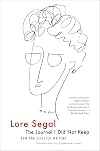
Last Christmas my husband gifted me a book of short stories by Lore Segal after he heard her interviewed on public radio. I enjoyed Ladies Lunch and was eager to read more of Segal’s work.
Segal’s writing is a delight. I love her humor and unique perspective, her quotable writing. “What has changed my living room into this New Yorker cartoon fully of chinless showoffs standing in groups or pairs?” “She aligned the napkin with the spiritual precision of a Mondrian.”
Segal was ten show more years old when she was sent to England through the Kindertransport program during the rise of Nazi Germany. The stories in Part I in this volume, The Journal I Did Not Keep, are about the experience from the child’s viewpoint. I found this section to be memorable, affecting, and real. “They were making plans for a tomorrow in which I would have no part. Already they seemed to be getting on very with without me and I was angry.”
Part II is new and uncollected fiction and selected fiction from her books, including Ladies Lunch. I loved the Ilka stories. Newly arrived in America, discovering her way, meeting her ‘first Americans,’ and later losing her husband.
Part III is Memoir writing, essays, and miscellaneous writing.
I had to read the essay Jane Austen on Our Unwillingness to be Parted From our Money. Segal considers Sense and Sensibility and John Dashwood’s frugality in helping his family financially. She and concludes, “This truism–that human being will not pay anything they can get out of–sheds light on some ancient and modern truths: that wealth fails to trickle down…”
The volume attests to Segal’s gift.
Thanks to the publisher for a free book through NetGalley show less
Segal’s writing is a delight. I love her humor and unique perspective, her quotable writing. “What has changed my living room into this New Yorker cartoon fully of chinless showoffs standing in groups or pairs?” “She aligned the napkin with the spiritual precision of a Mondrian.”
Segal was ten show more years old when she was sent to England through the Kindertransport program during the rise of Nazi Germany. The stories in Part I in this volume, The Journal I Did Not Keep, are about the experience from the child’s viewpoint. I found this section to be memorable, affecting, and real. “They were making plans for a tomorrow in which I would have no part. Already they seemed to be getting on very with without me and I was angry.”
Part II is new and uncollected fiction and selected fiction from her books, including Ladies Lunch. I loved the Ilka stories. Newly arrived in America, discovering her way, meeting her ‘first Americans,’ and later losing her husband.
Part III is Memoir writing, essays, and miscellaneous writing.
I had to read the essay Jane Austen on Our Unwillingness to be Parted From our Money. Segal considers Sense and Sensibility and John Dashwood’s frugality in helping his family financially. She and concludes, “This truism–that human being will not pay anything they can get out of–sheds light on some ancient and modern truths: that wealth fails to trickle down…”
The volume attests to Segal’s gift.
Thanks to the publisher for a free book through NetGalley show less

Ilka Weissnix is a twenty one year old immigrant from Vienna. Arriving in New York City for the very first time, she is hungry to learn everything she can about America. Her cousin, Litvak, arranges for her to travel cross country by train to the wild, wild west. It's in Nevada where Ilka meets her "first American", Carter Bayoux. This is the 1950s so meeting Carter is blessing and a curse. Being an intellectual he is eager to show Ilka the world of artists and scholars. Being a heavy show more drinker and a reckless romantic he also exposes her to jokes that aren't always funny and a world that sometimes is unfair and unpredictable. Needless to say she is confused a lot of the time. But, it's his drinking that really hit home for me. I live on the fringe of other people's addiction and Segal does an amazing job bringing that harsh reality into the spotlight with subtle grace. Carter's bouts of loneliness and helplessness are amplified through his constant summoning of Ilka to his hotel room as if there is a dire emergency. His brother's inability to be around him is an indication of the shame Carter has brought to his family. And yet, Carter is surrounded by friends who obviously adore him.
I found this to be a fascinating read. At times I caught myself pondering American slang and thinking how strange it must sound in the ears of a foreigner.
As an aside, I have no idea why Lore wanted Ilka to travel all the way to Nevada to meet Carter. They both live in New York City so wouldn't it have been easier to have them bump into each other there? The trip out west is just an odd blip in an otherwise mostly New York-centric story. show less
I found this to be a fascinating read. At times I caught myself pondering American slang and thinking how strange it must sound in the ears of a foreigner.
As an aside, I have no idea why Lore wanted Ilka to travel all the way to Nevada to meet Carter. They both live in New York City so wouldn't it have been easier to have them bump into each other there? The trip out west is just an odd blip in an otherwise mostly New York-centric story. show less
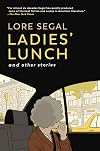
A perfect read for someone closing in on 70 myself.
I relate to these stories.
I relate to the struggle to find words, the struggles to even make a standing lunch date with old friends. I relate to the loss of a friendship and wonder what happened. I relate to the death of friends. I relate even to the long struggle with inanimate objects, like bedroom curtains that let in too much light. I relate to how once simple tasks can overwhelm an old lady.
I relate to the many changes in one's aging show more perspective, and abilities.
It took a little while for me to warm up to Lore's style. Her stories sometimes didn't seem to "go" anywhere. But reading on, I could see that when taken as a whole they cover a lot of living, a lot of aging, and much traversing of a mundane life. She also can be very funny.
In all the semi-linked short stories, though, there is one that was a stunning standout, "Dandelion," told by a woman remembering when she went on a mountain hike with her father. (It felt surely autobiographical.) The day was just a short time before she was sent as 9-10 year old child out of Austria while her parents remained and one assumes perished under the Third Reich. It's a painful memory for her in many ways, not just because it began as a beautiful day, the last summer with her parents but because the day also included intense childish embarrassment she felt on behalf of her father. He was cheerful, trying to be socialize with a group of robust blonde "Aryan" young people but only succeeded in being laughable to them. The story was just beautifully written. It first appeared in 2019's The New Yorker. No wonder she had such an iconic reputation. Even in her 70s, 80s, and up until her 90s she was writing and writing about important things. She died at 96, a year after this collection was published.
This book is a keeper. I plan to read it again, and more Segal's work, too. I need to live long enough to do that. show less
I relate to these stories.
I relate to the struggle to find words, the struggles to even make a standing lunch date with old friends. I relate to the loss of a friendship and wonder what happened. I relate to the death of friends. I relate even to the long struggle with inanimate objects, like bedroom curtains that let in too much light. I relate to how once simple tasks can overwhelm an old lady.
I relate to the many changes in one's aging show more perspective, and abilities.
It took a little while for me to warm up to Lore's style. Her stories sometimes didn't seem to "go" anywhere. But reading on, I could see that when taken as a whole they cover a lot of living, a lot of aging, and much traversing of a mundane life. She also can be very funny.
In all the semi-linked short stories, though, there is one that was a stunning standout, "Dandelion," told by a woman remembering when she went on a mountain hike with her father. (It felt surely autobiographical.) The day was just a short time before she was sent as 9-10 year old child out of Austria while her parents remained and one assumes perished under the Third Reich. It's a painful memory for her in many ways, not just because it began as a beautiful day, the last summer with her parents but because the day also included intense childish embarrassment she felt on behalf of her father. He was cheerful, trying to be socialize with a group of robust blonde "Aryan" young people but only succeeded in being laughable to them. The story was just beautifully written. It first appeared in 2019's The New Yorker. No wonder she had such an iconic reputation. Even in her 70s, 80s, and up until her 90s she was writing and writing about important things. She died at 96, a year after this collection was published.
This book is a keeper. I plan to read it again, and more Segal's work, too. I need to live long enough to do that. show less
Lore Segal is not a writer I'd heard of before - for anyone in the same camp, she's a 95 year old stalwart writer of the New Yorker, has written several novels and short story collections and has won numerous accolades (including being a Pulitzer finalist). Most of these stories have already been published either in the New Yorker or in another anthology, so if you're already familiar with Segal's work this collection may disappoint, but for a newbie like me it was terrific.
The first half of show more the book, and my favourite, was Ladies Lunch, a collection of interconnected stories about a group of sharp and spiky nonagenarian friends who have been lunching together for 40 years. It's not often that fiction is told (or written) from the perspective of someone in this age bracket so it felt original and poignant, particularly the story about one of the ladies being moved against her wishes by her children to a nursing home far from where her friends could visit. The second half was a collection of individual stories, the best of which was Making Good, a story about a week-long bridge-building class between New York Jews who had experienced the Holocaust and some younger people from Vienna, which was awkward and funny and thought provoking all at the same time.
I really enjoyed this book. Segal is a Viennese Jew who was part of the Kindertransport rescue mission to England in 1938 after Hitler annexed Austria, and has lived in New York City since 1951. The Holocaust is referenced in conversations and memories in many of the stories in this book, and although never handled with disrespect, Segal is clearly a great wit and woman not to be messed with. I adored the sass that was evident throughout each story - I'm sure she's quite a lady in the flesh.
4.5 stars - how much fun Lore Segal would be to lunch with. show less
The first half of show more the book, and my favourite, was Ladies Lunch, a collection of interconnected stories about a group of sharp and spiky nonagenarian friends who have been lunching together for 40 years. It's not often that fiction is told (or written) from the perspective of someone in this age bracket so it felt original and poignant, particularly the story about one of the ladies being moved against her wishes by her children to a nursing home far from where her friends could visit. The second half was a collection of individual stories, the best of which was Making Good, a story about a week-long bridge-building class between New York Jews who had experienced the Holocaust and some younger people from Vienna, which was awkward and funny and thought provoking all at the same time.
I really enjoyed this book. Segal is a Viennese Jew who was part of the Kindertransport rescue mission to England in 1938 after Hitler annexed Austria, and has lived in New York City since 1951. The Holocaust is referenced in conversations and memories in many of the stories in this book, and although never handled with disrespect, Segal is clearly a great wit and woman not to be messed with. I adored the sass that was evident throughout each story - I'm sure she's quite a lady in the flesh.
4.5 stars - how much fun Lore Segal would be to lunch with. show less
Lists
Jewish Books (2)
Writing (1)
Awards


You May Also Like


Associated Authors
Statistics
- Works
- 26
- Also by
- 8
- Members
- 2,412
- Popularity
- #10,632
- Rating
- 3.6
- Reviews
- 64
- ISBNs
- 99
- Languages
- 6
- Favorited
- 4