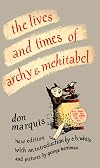
The Lives and Times of Archy and Mehitabel
by Don Marquis
Archy and Mehitabel (Collections and Selections — 1-3)
On This Page
Description
Of all the literary genres, humor has the shortest shelf life--except for Archy and Mehitabel, that is. First published in 1916, it is a classic of American literature. Archy is a cockroach, inside whom resides the soul of a free-verse poet; he communicates with Don Marquis by leaping upon the keys of the columnist's typewriter. In poems of varying length, Archy pithily describes his wee world, the main fixture of which is Mehitabel, a devil-may-care alley cat..
Tags
Recommendations
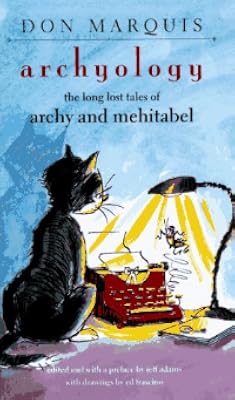






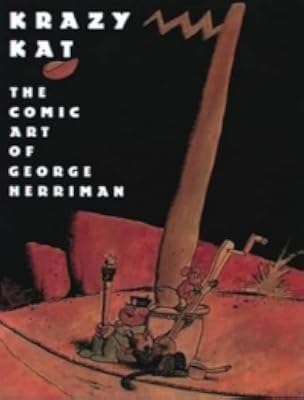




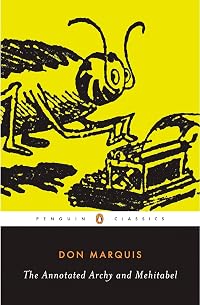
















Member Recommendations
aulsmith Freddy is a rural pig, and Archy is an urban cockroach, so they don't have that much in common, but there really aren't that many books written by animal authors and these are among the best
Member Reviews
This is the omnibus edition of the three books, archy & mehitabel (1927), archys life of mehitabel (1933), and archy does his part (1935), first collected in 1935, with White’s introduction added in the 1950 edition.
Mehitabel says “every time i go in for / a platonic friendship / it turns out plutonic,” but in fact her friendships are rarely platonic, and that’s why “life is just one damn kitten after another.” But she likes life on the town, in the cafés (she was dubbed “Puss café” early in life) and out on the fences and the garbage cans. Even at the worst of times, when she has to keep dancing to avoid freezing (“mehitabel dances with boreas”), her response is always “wotthehell” and “toujours gai” and show more “cheerio my deario,” “there’s a dance or two in the old dame yet,” and “ours is the zest of the alley cat.”
Archy has a number of themes that keep recurring. One is his need for self-expression; he believes that his soul once inhabited a vers libre poet before he transmigrated into a cockroach. Another is that human beings keep messing up wonderful civilizations and natural settings, so that cockroaches, ants, and other such creatures will eventually inherit it all (“what the ants are saying”). His point of view, he admits, is skewed: “i see things from / the under side” (‘ballade of the under side”). He can be a pretty acerbic observer; for example, he says “a man who is so dull / that he can learn only by personal experience / is too dull to learn / anything important by experience” (“archy on this and that”). Archy is a flâneur, a boulevardier who can go anywhere. He can always, as he says, go into a restaurant and drop into a beef stew “for a warm bath and a bite to eat.” He has the ultimate satiric spy perspective; he isn’t a fly on the wall but a cockroach on the baseboard.
Archy is a wannabe revolutionary. “archy declares war” begins “i am going to start / a revolution” and Archy vows here to organize the insects in a revolt unless they get better treatment from humans. He declares he has started a union called the Worms Turnverein. He returns to this theme often. In “the return of archy” he says
you thought i was only
an archy
but i am more than that
i am anarchy
He goes on to say he’s been organizing the insects, and there are other poems with titles such as “archy turns revolutionist.”
Archy quotes Horace’s ode that begins “eheu fugaces [Postume, Postume, labuntur anni] in “a roach of the taverns.” And there are lots of words that sent me to the dictionary (edacity, corybantic).
Archy and Mehitabel take note of the news and fashions, talking about Prohibition and its repeal, the Depression, Tutankhamen, reincarnation, vers libre, labor/management problems and strikes. show less
Mehitabel says “every time i go in for / a platonic friendship / it turns out plutonic,” but in fact her friendships are rarely platonic, and that’s why “life is just one damn kitten after another.” But she likes life on the town, in the cafés (she was dubbed “Puss café” early in life) and out on the fences and the garbage cans. Even at the worst of times, when she has to keep dancing to avoid freezing (“mehitabel dances with boreas”), her response is always “wotthehell” and “toujours gai” and show more “cheerio my deario,” “there’s a dance or two in the old dame yet,” and “ours is the zest of the alley cat.”
Archy has a number of themes that keep recurring. One is his need for self-expression; he believes that his soul once inhabited a vers libre poet before he transmigrated into a cockroach. Another is that human beings keep messing up wonderful civilizations and natural settings, so that cockroaches, ants, and other such creatures will eventually inherit it all (“what the ants are saying”). His point of view, he admits, is skewed: “i see things from / the under side” (‘ballade of the under side”). He can be a pretty acerbic observer; for example, he says “a man who is so dull / that he can learn only by personal experience / is too dull to learn / anything important by experience” (“archy on this and that”). Archy is a flâneur, a boulevardier who can go anywhere. He can always, as he says, go into a restaurant and drop into a beef stew “for a warm bath and a bite to eat.” He has the ultimate satiric spy perspective; he isn’t a fly on the wall but a cockroach on the baseboard.
Archy is a wannabe revolutionary. “archy declares war” begins “i am going to start / a revolution” and Archy vows here to organize the insects in a revolt unless they get better treatment from humans. He declares he has started a union called the Worms Turnverein. He returns to this theme often. In “the return of archy” he says
you thought i was only
an archy
but i am more than that
i am anarchy
He goes on to say he’s been organizing the insects, and there are other poems with titles such as “archy turns revolutionist.”
Archy quotes Horace’s ode that begins “eheu fugaces [Postume, Postume, labuntur anni] in “a roach of the taverns.” And there are lots of words that sent me to the dictionary (edacity, corybantic).
Archy and Mehitabel take note of the news and fashions, talking about Prohibition and its repeal, the Depression, Tutankhamen, reincarnation, vers libre, labor/management problems and strikes. show less
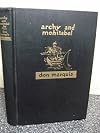
Three Archy and Mehitabel books in a 1940 omnibus edition, with the illustrations by George Herriman. The point of Archy and Mehitabel for me has always been Mehitabel -- the indomitable cat who deals with endless reverses of fortune, and with the major consequences of minor misteps (just one damned kitten after another), but remains toujours gai, toujours gai. (I inherited this book from my mother, who loved it dearly, and may have overidentified with Mehitabel). But there is much more to Archy and Mehitabel than one proto-feminist cat. It captures an era that in some ways feels as distant as colonial days; it is fiction written in eminently readable verse (not a easy trick), and it has those great illustrations. Also, this volume has show more one of the great dedications of all times: "dedicated to babs
with babs knows what and babs knows why". show less
with babs knows what and babs knows why". show less
for some reason a copy of this was in my parents home forever though i don't think they ever read it and probably never knew it was there. i discovered it one day when i was in my late teens. i read it and loved it and eventually just took it when i left home because nobody else even knew it was there. i still have it. and i bought another copy with a dust jacket so now i own two.
this is a real classic of early 20th century newspaper columnar poetry. it's definitely worth looking into for anyone who has a bit of nostalgia for the days when real cockroaches used manual typewriters and pounded out work by the serious sweat of their little brows, night after night.
this is a real classic of early 20th century newspaper columnar poetry. it's definitely worth looking into for anyone who has a bit of nostalgia for the days when real cockroaches used manual typewriters and pounded out work by the serious sweat of their little brows, night after night.
This collection of verse libre, purportedly by a cockroach named archy, is a delightful time piece from the 20s, with excellent illustrations by George Herriman of 'Krazy Kat' fame.
Fun old skool humor. George Herriman's illustrations of Archy, the cockroach with the transmigrated soul of a vers libre poet, and Mehitabel, the alley cat with the morals of , well...an alley cat (what in ---- have I done to deserve all these kittens"), are priceless.
This has been in my TBR for over 15 years and I figured that as I'm home and need a break from cleaning, organizing, & moving furniture that I'd take the time to read it... Also I haven't been to the Library in about a week, so I'm out of my current interests.
Archy is a cockroach (who in another life was a famous poet) that writes poetry & a journal of sorts..... he does this by using a typewriter, jumping on the keys in order to strike a letter. Because he is only able to hit one key at a time, there is not punctuation or capital letters used in his prose.
Archy has a friend, Mehitabel, an stray cat who in a previous life was Cleopatra. Archy write a lot about his friendship w/ Mehitable and her life as well as writing about rats, other show more insects, people, and other cats.
I'm not going to say that I "liked" this, but considering when it was written it is extremely clever & entertaining.... Therefore the number of stars. show less
Archy is a cockroach (who in another life was a famous poet) that writes poetry & a journal of sorts..... he does this by using a typewriter, jumping on the keys in order to strike a letter. Because he is only able to hit one key at a time, there is not punctuation or capital letters used in his prose.
Archy has a friend, Mehitabel, an stray cat who in a previous life was Cleopatra. Archy write a lot about his friendship w/ Mehitable and her life as well as writing about rats, other show more insects, people, and other cats.
I'm not going to say that I "liked" this, but considering when it was written it is extremely clever & entertaining.... Therefore the number of stars. show less
A redundant volume combining the first two of Don Marquis' "archy and mehitabel" books. See the reviews of the other two books, which are compiled in this volume.
Members
- Recently Added By
Author Information

47+ Works 2,394 Members
Some Editions
Awards and Honors
Notable Lists
Series

Work Relationships
Common Knowledge
Classifications
Statistics
- Members
- 407
- Popularity
- 76,491
- Reviews
- 8
- Rating
- (4.43)
- Languages
- English
- Media
- Paper, Ebook
- ISBNs
- 4
- ASINs
- 20