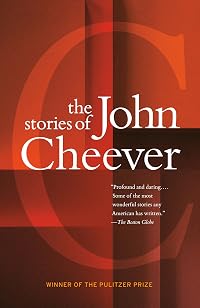
The Stories of John Cheever
by John Cheever
On This Page
Description
"When The Stories of John Cheever was originally published, it became an immediate national bestseller and won the Pulitzer Prize. In the years since, it has become a classic. Vintage Books is proud to reintroduce this magnificent collection. Here are sixty-one stories that chronicle the lives of what has been called "the greatest generation." From the early wonder and disillusionment of city life in "The Enormous Radio" to the surprising discoveries and common mysteries of suburbia in "The show more Housebreaker of Shady Hill" and "The Swimmer," Cheever tells us everything we need to know about "the pain and sweetness of life."--Publisher's description. show lessTags
Recommendations






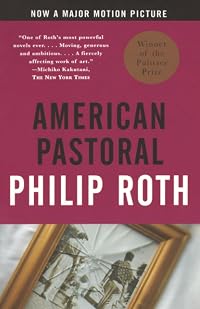
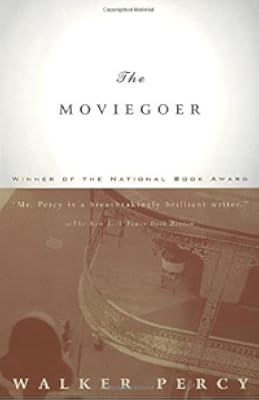


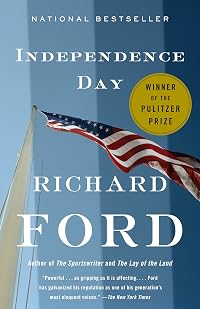
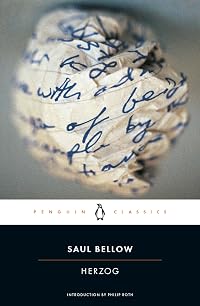


Member Recommendations

bluepiano More well-written stories of the same sort from the same period and mileu. Martinis, unfiltered cigarettes, camel-hair overcoats, suburban malaise.
Member Reviews
It's been too long, but I remember loving Cheever in high school for the way his latent, existential dread spoke to me(cue "The Swimmer" and watching Burt Lancaster getting out of a pool while I was living in what was proto-Trump Country), but for years now my flippant mind always conjures up this specific sentence: "Cheever writes stories about people who drank too much last night and lie around complaining to their darlings about it". It's been too long, but I do remember loving Cheever in high school.
For the most part, the stories in this collection are character studies of individuals facing a moral dilemma or a psychological crisis, and they left this reader feeling unsettled. They make you wonder what is going on underneath the surface presented by strangers and casual acquaintances, and maybe even one’s close friends. The stories seem to be a product of their time, written over the decades of the mid-20th century from post-World War II through the mid- to late 1970s. In a way, they seem like the literary equivalent of mid-20th century television shows like Alfred Hitchcock Presents and The Twilight Zone. Many of the stories evoke the same kind of atmosphere as these television shows.
Without a doubt, Cheever's stories are an important landmark, not just in the annals of American literature, but in literature written in English. Simply put, this book is a fundamental text and must be read by anyone who claims expertise in the realm of literary fiction, and certainly by anyone who teaches literature or creative writing. Cheever's talent was prodigious and did not diminish with age. If anything, a life filled with personal struggles--a weakness for alcohol, a volatile marriage, a sexually conflicted nature--brought him into intimate contact with his own humanity and made his fiction honest and memorable. These are stories that tell us what it means to be human in the modern world--what it means to suffer and triumph show more and endure. It is irrelevant that they were written anywhere from 50 to 70 years ago, these stories speak in a voice that is contemporary and wise and will continue to speak meaningfully to those who come after us. John Cheever was self taught and the prose that flowed from his pen is distinctive and original. His moral outlook is ironic and Biblical. It is pointless to try to sum up this volume in a paragraph. Highlights include "The Country Husband," "The Housebreaker of Shady Hill," and "The Enormous Radio." If you are a student of modern literature or a writer of fiction and have not heard of John Cheever, buy, borrow or steal this book and read every page. Then read it again. It will challenge you to be a better writer and maybe even make you a better person. show less
The Stories of John Cheever, which won the National Book Critics Circle award in 1978 and the Pulitzer in 1979, is a chronological collection that spans Cheever’s short story career, from pre-WWII up to 1973. To read this collection – just shy of 700 pages – is to live in Cheever’s head, tracking his artistic and personal development in a way that a single novel or volume of stories doesn’t allow.
These are not happy stories. The earlier pieces are particularly bleak and raw. While the later stories are deeper and more nuanced, they are still pretty dark. Precious few have cheerful resolutions. The best Cheever’s characters seem to achieve is contentment despite imperfect circumstances.
Cheever’s is a world of commuter show more trains and cocktail parties, where everyone wears hats, has a cook, drinks martinis at lunch, summers, sails, and commits adultery. Not everyone is rich; in fact, money problems are a continuing theme. But the trappings, however tarnished, of a mid-century, Northeast corridor, upper crust way of life hang on all the stories. And that is Cheever at his best. He can bring us so deep into that world that it feels like living it. show less
These are not happy stories. The earlier pieces are particularly bleak and raw. While the later stories are deeper and more nuanced, they are still pretty dark. Precious few have cheerful resolutions. The best Cheever’s characters seem to achieve is contentment despite imperfect circumstances.
Cheever’s is a world of commuter show more trains and cocktail parties, where everyone wears hats, has a cook, drinks martinis at lunch, summers, sails, and commits adultery. Not everyone is rich; in fact, money problems are a continuing theme. But the trappings, however tarnished, of a mid-century, Northeast corridor, upper crust way of life hang on all the stories. And that is Cheever at his best. He can bring us so deep into that world that it feels like living it. show less
Picked this up at a half-price sale at a large chain bookstore in Tokyo as a kind of warm up to going home (New York / New England - ground well covered in this book) and was pleasantly caught off guard by how hooked I got on these stories. I've never been a short story lover, but I find that over time I've come to really appreciate the form and this collection is a wonderful collection of them. Not all of them worked for me (the ones set in Italy, by and large), but most of them were good or great and the whole collection are certainly worth the time. And give them time! This isn't something to be read quickly...
Says Cheever in his preface, "These stories seem at times to be stories of a long-lost world when the city of New York was still filled with a river light, when you heard Benny Goodman quartets from a radio in the corner of the stationery store, and when almost everybody wore a hat. Here is the last of that generation of chain smokers who woke the world coughing, who used to get stoned at cocktail parties and perform obsolete dance steps like “the Cleveland Chicken,” sail for Europe on ships, who were truly nostalgic for love and happiness, and whose gods were as ancient as yours and mine, whoever you are. The constants that I look for in this sometimes dated paraphernalia are a love of light and a determination to trace some moral show more chain of being. Calvin played no part at all in my religious education, but his presence seemed to abide in the barns of my childhood and to have left me with some undue bitterness."
I find his nostalgic evocations in his imagined Shady Hill is rather drab and lacking in color, even claustrophobic to me - but Cheever defends his location: "There’s been too much criticism of the middle-class way of life. Life can be as good and rich there as anyplace else. I am not out to be
a social critic, however, nor a defender of suburbia. It goes without saying that the people in my stories and the things that happen to them could take place anywhere." (Saturday Review, 1958)
For me, the 61 stories here, then, became a slog - but I fine almost all short story collections eventually formulaic and predictable. I wanted to read this collection ever since enjoying thoroughly the dreamlike film The Swimmer at a repertory film theater twenty-plus years ago. This magical element - more dramatic and affecting for me in the film - marks the most memorable stories here as well as the unavoidable fact that adultery and furtive assignations feature prominently. "Mild-mannered librarian and humorist " [author:Roz Warren|78986] sums this up best: "...John Cheever happens to be one of my favorite authors, and it’s certainly true that if you remove all the extra-marital shenanigans from his ouevre, you wouldn’t be left with much more than a symbolic swimming pool and a magic radio."
The magic radio is from "The Enormous Radio" which stands out for in the first part of this book - where the stories seem the most formulaic and this bit of whimsy stands out from the other which blur together. It also reminds me of "Static", episode 56 of The Twilight Zone. Stories I did like in the first part include “The Five-Forty-Eight” which is like a Hitchcock-ian noir. "John Cheever, brilliant chronicler of American suburbia led a tortured double life filled with sexual guilt, alcoholism and self-loathing." ("The demons that drove John Cheever", https://www.theguardian.com/books/2009/oct/18/john-cheever-blake-bailey) This seems to be why the stories featuring sexual guilt, alcoholism, and self-loathing seem the most effective to me -but even that soggy well begins to run dry in the re-telling. At best I can say Cheever here in the first part proves he can delineate the indescribable - the vagaries of loss and inexplicable self-destructible impulse in the human condition
Part two starts for me with "A Miscellany of Characters That Will Not Appear", which seems to me to be Cheever making a clean break with the past formula and giving me hope in the tedium. This part has the most experimental and varied stories of the collection which are thus, to me, the most entertaining. Highpoints for me included the fantasy "Metamorphoses", the graffiti vision "Mene, Mene, Tekel, Upharsin", and of course "The Swimmer".
Also, I feel comfort in knowing I am not the only one thinking Cheever is not standing the test of time. show less
I find his nostalgic evocations in his imagined Shady Hill is rather drab and lacking in color, even claustrophobic to me - but Cheever defends his location: "There’s been too much criticism of the middle-class way of life. Life can be as good and rich there as anyplace else. I am not out to be
a social critic, however, nor a defender of suburbia. It goes without saying that the people in my stories and the things that happen to them could take place anywhere." (Saturday Review, 1958)
For me, the 61 stories here, then, became a slog - but I fine almost all short story collections eventually formulaic and predictable. I wanted to read this collection ever since enjoying thoroughly the dreamlike film The Swimmer at a repertory film theater twenty-plus years ago. This magical element - more dramatic and affecting for me in the film - marks the most memorable stories here as well as the unavoidable fact that adultery and furtive assignations feature prominently. "Mild-mannered librarian and humorist " [author:Roz Warren|78986] sums this up best: "...John Cheever happens to be one of my favorite authors, and it’s certainly true that if you remove all the extra-marital shenanigans from his ouevre, you wouldn’t be left with much more than a symbolic swimming pool and a magic radio."
The magic radio is from "The Enormous Radio" which stands out for in the first part of this book - where the stories seem the most formulaic and this bit of whimsy stands out from the other which blur together. It also reminds me of "Static", episode 56 of The Twilight Zone. Stories I did like in the first part include “The Five-Forty-Eight” which is like a Hitchcock-ian noir. "John Cheever, brilliant chronicler of American suburbia led a tortured double life filled with sexual guilt, alcoholism and self-loathing." ("The demons that drove John Cheever", https://www.theguardian.com/books/2009/oct/18/john-cheever-blake-bailey) This seems to be why the stories featuring sexual guilt, alcoholism, and self-loathing seem the most effective to me -but even that soggy well begins to run dry in the re-telling. At best I can say Cheever here in the first part proves he can delineate the indescribable - the vagaries of loss and inexplicable self-destructible impulse in the human condition
Part two starts for me with "A Miscellany of Characters That Will Not Appear", which seems to me to be Cheever making a clean break with the past formula and giving me hope in the tedium. This part has the most experimental and varied stories of the collection which are thus, to me, the most entertaining. Highpoints for me included the fantasy "Metamorphoses", the graffiti vision "Mene, Mene, Tekel, Upharsin", and of course "The Swimmer".
Also, I feel comfort in knowing I am not the only one thinking Cheever is not standing the test of time. show less
Like most people, prior to picking up this at-times masterful, at-times leaden collection, I had read perhaps two short stories written by John Cheever. “The Enormous Radio,” one of Cheever’s earliest, remains a popularly anthologized slice of horror dished up to high schoolers, while “The Swimmer,” one of his latest, retains its popularity in part due to the 1968 Burt Lancaster film adaptation. In this latter piece, a man notices that every back yard in his town has a swimming pool. He concocts a plan to “swim home,” and each new dip is a microcosm of his relations and his life.My opinions of Cheever have, over the years, largely been influenced by these two stories, which are decent enough in their way, but something show more that youth can appreciate only slightly due to their peculiar subject matter. I may even have read The Wapshot Chronicle in college at some point, though if I have all memory of it has disappeared. Cheever is, and I write this as a specific kind of compliment, a writer for adults.One may easily think that many authors write for adults. It’s quite likely even part of their conscious decision-making, but what I mean is something different. There is something in the viewpoint, in the aesthetic of Cheever’s writing that only profoundly begins to make sense once you yourself have obtained adulthood. This is not to say that his stories are merely stale accounts of mortgages and careers that slowly stifle your passions, but there is something of Thoreau’s “lives of quiet desperation” to be found throughout. Perhaps to fully get their flavor you have to reach that point in your life where you make terms with the conflicting reality of your potential and the promise of your dreams.In any case, the collection is astoundingly first-rate. I’ve been unable to determine if this is definitive, if there exists a sizable body of Cheever stories that didn’t make the cut. It’s one of the things I’d like to see publishing houses develop consistent standards on. One may buy The Short Stories of Ernest Hemingway or [b:The Complete Stories|4671|The Great Gatsby|F. Scott Fitzgerald|http://photo.goodreads.com/books/1218672960s/4671.jpg|245494] of Ernest Hemingway and not realize that these are not the same volumes. There is a slender edition of more political stories Cheever wrote for leftist magazines in the thirties, though none of these appear in this particular trove.As I began to read, Cheever’s world needed some getting used to. It is hard to remember that once upon a time such was our economy and our outlook that month long summer vacations to seaside cottages were not solely the province of the upper classes, but that middle class families did so as well. Dad often took the train back to the city for a few days out of that month to check in and so forth, but for the most part leisure was part of the equation. It is hard to credit a world in which husbands and wives regularly quaff martinis and go to parties and “get tight” with three dimensional reality when for so many of us this world exists primarily as a black and white era film.Cheever’s stories, however, are anything but that kind of celluloid thinness. In his way, Cheever mined a rich vein of existential angst felt by characters at times too numb to the world around them to recognize their own despair. As in the aforementioned “The Enormous Radio,” our protagonist, Irene Westcott is so delighted at first in eavesdropping on her neighbors that she doesn’t realize that her very action makes her even more despicable and loathsome than they are with their petty thievery and their affairs. It is the brutal gift of the radio that allows her to be stripped of her pleasant “good people” veneer, and by the closing paragraphs she and her husband are revealed to be no better than anyone around them. This laying bare is done unsparingly, unsentimentally, and with delightfully wicked wit.That’s part of the secret of Cheever’s literary charm. Put quite bluntly, his stories are often about characters coming to the realization that their shit does in fact stink. The opening story “Goodbye, My Brother” introduces us to the Pommeroy family, and at first our sympathies lie with the narrator against his brother, the prig Lawrence. As the tale unfolds, though, Cheever manages the neat trick of exposing the narrator for what he is – a judgmental, sanctimonious prick in his own right – but the author entirely withholds that self-revelation from his character. It’s wonderfully done, almost a kind of literary photo-realism.The term “painterly” is often applied to Cheever’s style due to the diligence he applies to the detailed creation of his characters and their worlds. It’s not inapt, but it is suggestive of a kind of transparent effect, an obvious trick to what he’s doing that becomes readily apparent once you’ve gotten close enough to the canvas. At times, yes, Cheever’s prose can be shudder-inducingly dated in its stylistic mannerisms, let alone its subject matter. While these are the kinds of stories in which husbandly affairs in the city are glossed over matter-of-factly, wives who get hysterical are psychologically cured with a little backhand, and the darkest shade of melanin runs to minor Italian characters, those are merely artifacts of the time.To our jaded, post-modern sensibilities, there is at times something a little maudlin in Cheever’s straight-up New Criticism stylings. “O Youth and Beauty!” is a perfect example of a story that fits this bill to a T, even its O. Henry conclusion being a perfect set piece of its times. The decline into disrepute of a once handsome popular man and the failure of his usual party trick is a thumbnail sketch of agonized personal tragedy that like much of our own melodramatic feelings is completely alien and unrecognizable to others. Similarly, “The Housebreaker of Shady Hill” is a wonderful examination of another buttoned-down crack up. Stripped of his usual morals and ethics by desperation and shame, a man finds himself becoming almost addicted to robbing his neighbors.“Just Tell Me Who It Was” bristles with a prickly private agony as well, as in the best of Cheever’s tales. In this, an older man worries about his being cuckolded by his younger wife, though evidence in any direction remains tantalizingly elusive. If you’ve ever been bitten particularly hard by the twin fangs of deep love and deep jealousy, you’re sure to recognize Will Pym’s high velocity see-saw of emotions.One of the strongest, weirdest stories of the lot, and for many reasons my favorite in the collection is “The Five-Forty-Eight.” Blake, one of Cheever’s countless husbands who work in the city, decides to go home with an obviously unbalanced new secretary at his firm, Miss Denton. “Most of the many women he had known had been picked for their lack of self esteem,” we are told. After he satisfies himself with her, he has the personnel department fire the woman. Her confrontation with him that makes up the bulk of the plot is one of the most unforgettably tense and poetic pieces of Cheever’s writing. The tautness is there from the very first line of the story and it only gets worse as Miss Denton follows Blake to the train station and sits down next to him with a gun. Her revenge is perfectly written, a shaming so profound that even Cheever’s typical male will be sure to get it.The collection remains a 700-page treasure of riches, most of them small, and in our era of oversized reading tastes, when only the most grandiose experimentation will cut literary ice and only the most tawdry and vicious serial murderers will garner much in the way of sales, these small pleasures have become something of a refinement. The world has traveled much and changed even more since John Cheever was a household name. Most have likely never heard of him, or heard of him in passing only, a glancing memory of “that story we read in high school about the radio.”It is impossible to crack the spine on this collection and not be swept back in time, not feel the confines of an era that was paradoxically smaller and yet still bigger. As our external horizons seem to have regressed to a point approaching infinity, it seems our internal horizons have diminished to a point closing in on nil. Cheever has a bracing tonic effect on both tendencies, giving us slices of life from an age when even Boston felt like a small town, served right alongside the grand pageant of an inner monologue whose richness and variety might strike a twenty-something of today as bizarrely complex. The term “escapism” is often used to denigrate certain kinds of genre fiction. I can bestow no higher compliment on Cheever’s work than to proclaim it escapism of a very, very satisfying kind. show less
Members
- Recently Added By
Published Reviews
ThingScore 88
So look closely at his pages, no matter if you’re studying my tattered version, or if you have a clean copy in hand. Look at the perspectives—cockeyed but exacting. Look at the characters—messy and mesmerizing. Look at the sentences— they’re full of scribbled stars.
added by Shortride
...There are colder, less hospitable places, of course. The tricks memory plays are usually flattering. But one of the surprises to be found in The Stories of John Cheever is that the stories are almost always better than people remember. Never before has it been possible to see so much of his short work so steadily and so whole. Never before has the received notion of a "typical" Cheever show more story—a satire on suburbia, based on fading Protestant morality —seemed further from the more complex and entertaining truth. This massive retrospective of 61 stories (selected by Cheever) is not only splendid from beginning to end paper; it charts one of the most important bodies of work in contemporary letters... show less
added by amorabunda
Lists

Pulitzer Prize Winners for Fiction
102 works; 54 members

501 Must-Read Books
529 works; 72 members

Classics you know you should have read but probably haven't
421 works; 407 members

Books Set in New York City
127 works; 21 members

Short Story Collections and Anthologies
261 works; 42 members

Canon de la narrativa universal del siglo XX
254 works; 6 members

1970s
657 works; 23 members
National Book Award Finalists - Fiction
377 works; 12 members

Pulitzer Prize-Winning Books
42 works; 10 members

Short Story and Novella Collections
47 works; 6 members
Harold Bloom - The Western Canon: D. The Chaotic Age
833 works; 24 members

Books Read in 2021
5,361 works; 114 members

the preppy handbook
36 works; 1 member

Makes Me Want to Eat (or Drink)
39 works; 12 members

Mustich's 1000 Books to Read Before You Die: A Life Changing List
1,001 works; 20 members
Franklit
95 works; 1 member

The 150 Greatest Novels of All Time
150 works; 6 members

.
194 works; 2 members
Author Information

163+ Works 11,548 Members
John Cheever, best known for his short stories dealing with upper-middle-class suburban life, was born in Quincy, Massachusetts, in 1912. Cheever published his first short story at the age of 17, and in 1979, he won the Pulitzer Prize for his collected edition of short stories, titled Stories of John Cheever. Cheever also wrote screenplays, and show more five novels, including The Wapshot Chronicle, which won the National Book Award in 1957. Cheever died in 1982, at the age of 70. (Bowker Author Biography) show less
Some Editions
Awards and Honors
Awards
Distinctions
Notable Lists
Series
Belongs to Publisher Series
De twintigste eeuw (68)
rororo (13326)
Work Relationships
Is contained in
Has the adaptation
Is abridged in
Common Knowledge
- Canonical title*
- Der Schwimmer : stories
- Original title
- The Stories of John Cheever
- Alternate titles
- Stories of John Cheever
- Original publication date
- 1978
- People/Characters
- The Swimmer
- Related movies
- The Swimmer (1968 | IMDb)
- First words
- Das grauenvolle Radio: Jim und Irene Westcott schienen jenen zufriedenstellenden Durchschnitt von Einkommen, Strebsamkeit und Ansehen erreicht zu haben, der in den Mitteilungsblättern ehemaliger Collegestudenten statistisch ... (show all)errechnet wird.
Der Schwimmer: Es war einer jener Sonntage im Hochsommer, an denen alle Leute herumsitzen und sagen: "Ich hab gestern abend zuviel getrunken."
Der Brigadekommandeur und die Golf-Witwe: Ich möchte weiss Gott nicht zu den Schriftstellern gehören, die jeden Morgen mit dem Ausruf beginnen: "O Gogol, o Tschechow, o Thackeray und Dickens, was hättet ihr nur zu einem At... (show all)ombunker gesagt, der sich hinter vier Gipsenten, einem Vogelbad und einer Gruppe von drei Zwergen mit langen Bärten und roten Zipfelmützen aus dem Boden erhebt?"
Der Einbrecher von Shady Hill: Ich heisse Johnnie Hake.
O Jugend, o Schönheit: Wenn eine jener langen, zahlreichen Samstagabendpartys in Shady Hill sich dem Ende zuneigte, wenn alle, die am nächsten Morgen Golf oder Tennis spielen wollten, schon vor Stunden nach Hause gegangen w... (show all)aren und die zehn oder zwölf Zurückgebliebenen ausserstande zu sein schienen, Schluss zu machen, obwohl Gin und Whiskey bereits zur Neige gingen und hier und da eine Ehefrau, die nur noch bis zum Aufbruch ihres Mannes durchhalten wollte, dazu übergegangen war, Milch zu trinken; wenn alles das Zeitgefühl abhanden gekommen war und ...
Die richtige Zeit für eine Scheidung: Meine Frau hat braunes Haar, dunkle Augen und ist von sanfter Gemütsart.
Die Kinder: Mr. Hatherly hatte in vielen Dingen altmodische Vorstellungen.
Stadt der Enttäuschungen: Als der Zug aus Richtung Chicago Albany passiert hatte und durch das Flusstal nach New York hinunterzudonnern begann, spürten die Malloys, die schon eine ganze Skala von Aufregungen hinter sich geb... (show all)racht hatten, wie ihre Atemzüge sich beschleunigten, als wäre nicht genug Luft im Wagen.
Der Hausverwalter: Das Alarmsignal ertönte um sechs Uhr morgens.
Der Sommerfarmer: Der "Nor'easter" ist ein Zug, dem die Eisenbahngesellschaft diesen Namen zu einer Zeit gegeben hatte, als ihre Direktoren noch vom Mysterium des Reisens durchdrungen waren.
Für die Armen ist Weihnachten ein trauriges Fest: Weihnachten ist ein trauriges Fest.
Im Schatten der Ginflasche: Es war Sonntag nachmittag, und Amy konnte von ihrem Schlafzimmer aus hören, wie die Beardens eintrafen, kurz darauf gefolgt von den Farquarsons und den Parminters.
We are a family that has always been very close in spirit. - Last words
- (Click to show. Warning: May contain spoilers.)Das grauenvolle Radio: Die Temperatur beträgt acht Grad, die relative Luftfeuchtigkeit neunundachtzig Prozent.
(Click to show. Warning: May contain spoilers.)Der Schwimmer: Er schrie, er hämmerte auf die Tür ein, er versuchte sie mit der Schulter einzudrücken, und dann, als er durch die Fenster hineinblickte, sah er auf einmal, dass das Haus leer war.
(Click to show. Warning: May contain spoilers.)Der Brigadekommandeur und die Golf-Witwe: So schickte Mrs. Willoughby ihr Mädchen raus, und ich sah, wie das Mädchen Mrs. Flannagan bat zu gehen, und kurz darauf ging Mrs. Flannagan durch den Schnee zurück zum Bahnhof."
(Click to show. Warning: May contain spoilers.)Der Einbrecher von Shady Hill: "Hierher, Toby! Hierher, Toby! Hierher, Toby! Guter Hund!" rief ich, machte, dass ich weiterkam, und pfiff im Dunkeln fröhlich vor mich hin.
(Click to show. Warning: May contain spoilers.)O Jugend, o Schönheit: Er war sofort tot.
(Click to show. Warning: May contain spoilers.)Die richtige Zeit für eine Scheidung: Sie zündet die vier Kerzen an, und wir setzen uns zu Tisch, um zu Abend zu essen.
(Click to show. Warning: May contain spoilers.)Die Kinder: Aber es war ein gemütliches Haus und ein strahlend schöner Tag, und am Ende würden sie Victor als das nehmen, was er zu sein schien, und er schien sehr glücklich zu sein.
(Click to show. Warning: May contain spoilers.)Stadt der Enttäuschungen: Man sieht sie vor sich, wie sie auf der Fahrt durch Kansas und Nebraska im Salonwagen Whist spielen und an den Bahnstationen Käsebrote essen - auf ihrer Fahrt über das Gebirge und zur Küste hinunter.
(Click to show. Warning: May contain spoilers.)Der Hausverwalter: Aber der Himmel sagte ihm nur, dass es ein langer Tag gegen Ende des Winters gewesen war und dass es spät war und Zeit hineinzugehen.
(Click to show. Warning: May contain spoilers.)Der Sommerfarmer: ..., Spuren des Alters auf der verwirrt gerunzelten Stirn, ein Sommerfarmer mit Blasen an den Händen, mit einem Sonnenbrand und hängenden Schultern, so sichtbar aus dem Gleis gebracht durch den eben erlittenen Verlust eines Grundsatzes, dass es sogar ein Fremder über den Gang hinweg bemerkt haben würde.
(Click to show. Warning: May contain spoilers.)Für die Armen ist Weihnachten ein trauriges Fest: Sie war müde, aber an Ausruhen war nicht zu denken, an Ausruhen war nicht zu denken.
(Click to show. Warning: May contain spoilers.)Im Schatten der Ginflasche: Wie konnte er ihr nur beibringen, dass es zu Hause, im gemütlichen Heim, am schönsten war?
(Click to show. Warning: May contain spoilers.)On the last day I swam in the Nile- overhand- and they drove me to the airport, where I kissed Geneva - and the Cabots- goodbye. - Original language
- English
- Disambiguation notice
- A collection of 61 short stories. See the Community description or the Wikipedia link above for the complete contents.
*Some information comes from Common Knowledge in other languages. Click "Edit" for more information.
Classifications
Statistics
- Members
- 3,700
- Popularity
- 4,372
- Reviews
- 47
- Rating
- (4.18)
- Languages
- 10 — Czech, Dutch, English, French, German, Italian, Portuguese, Russian, Spanish, Swedish
- Media
- Paper, Audiobook, Ebook
- ISBNs
- 28
- ASINs
- 21