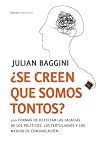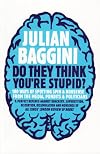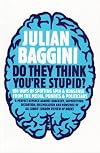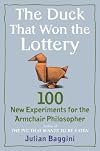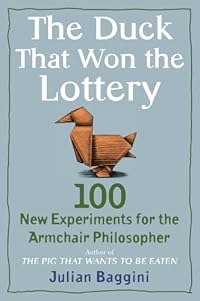
The Duck That Won the Lottery: 100 New Experiments for the Armchair Philosopher
by Julian Baggini
Experiments for the Armchair Philosopher (2)
On This Page
Description
More addictive mental workouts from the author of the bestselling The Pig that Wants to Be Eaten.Tags
Recommendations





Member Recommendations
vguy Goes into greater depth on a selected number of issues (eg Homeopathy, MMR vaccine). Helps one understand scientific method, specifically blind controlled randomised trials. For all that, an amusing and popular approach.
Member Reviews
A good introduction to critical thinking, using actual quotes and incidents to demonstrate his points. The main problem I might express is his obvious lack of knowledge of biology creates some that are questionable; it appears likely he has never heard of biomagnification or bioaccumulation. Of course, it is rare to get the biology correct in a book of philosophy, but if he doesn't know those things, he might want to leave those examples out until he checks if what he is saying is relevant or accurate. Otherwise, he writes well (a few editing problems, mostly with inaccurate plurals, but that might be the British English working; I'm not an expert). Overall, I recommend the book highly.
Another great bathroom book, or for short-attention span readers. I did not enjoy it as much as The Pig Who Wants to be Eaten but it was still a thought-provoking read. Instead of touching on classic philosophical ideas, it covers common logical fallacies.
Great fun; how we all fall into error thro sloppy thinking, and how the media and urban legendists build on that. Somewhat similar slant to Goldacre's Bad Science, but less sustained and angry. Uses wide range of refernce both in examples and in deconstructing them, incl his background as a Philosopher. Almost makes one see a point in philosophy after all. Realised how my own thinking is less rigorous than I'd like to think!
About: Baggini describes and provides examples of 100 logical fallacies such as "quantity doesn't equal quality", "forced choice" and "begging the question."
Pros: Thought provoking. Made me think of how many of these fallacies I use. It's cool learning about fallacies I used to think were good arguments. 100 2-4 page chapters leads to quick reading. Sources cited.
Cons: 100 fallacies can seem overwhelming, I almost felt that there's no such thing as a valid argument. Hard to keep them all straight.
Grade: B
Pros: Thought provoking. Made me think of how many of these fallacies I use. It's cool learning about fallacies I used to think were good arguments. 100 2-4 page chapters leads to quick reading. Sources cited.
Cons: 100 fallacies can seem overwhelming, I almost felt that there's no such thing as a valid argument. Hard to keep them all straight.
Grade: B
Most of these were already familiar to me, which diminished the enjoyment somewhat. However, the examples are well-chosen and illustrative
Ratings
Members
- Recently Added By
Author Information

55+ Works 5,342 Members
Julian Baggini is the author, co-author or editor of over twenty books including How the World Thinks: A Global History of Philosophy (2018); A Short History of Truth: Consolations for a Post-Truth World (2018); The Edge of Reason: A Rational Skeptic in an Irrational World (2017), and The Pig that Wants to be Eaten and 99 other thought experiments show more (2010). He was the founding editor of The Philosopher's Magazine and has worked with the think tanks The Institute of Public Policy Research, Demos and Counterpoint. He has written for numerous newspapers and magazines, including the Guardian, Prospect and Aeon, and makes regular appearances on radio and television. He is Academic Director of the Royal Institute of Philosophy and an Honorary Research Fellow at the University of Kent. His website is www.microphilosophy.net. show less
Series

Common Knowledge
- First words
- Doing things right is simple: just eliminate all your mistakes and then you'll be perfect.
- Last words
- (Click to show. Warning: May contain spoilers.)If we do this, the bad arguments will identify themselves, and we will become better, if still imperfect, thinkers.
- Disambiguation notice
- "Do they think you're stupid was First published as "the Duck that won the Lottery: and 99 other bad arguments" hence the reason i've combined them.
Classifications
Statistics
- Members
- 270
- Popularity
- 119,239
- Reviews
- 5
- Rating
- (3.82)
- Languages
- English, Korean, Spanish
- Media
- Paper, Audiobook, Ebook
- ISBNs
- 11
- ASINs
- 5