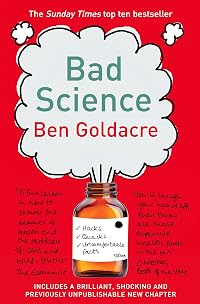
Bad Science: Quacks, Hacks, and Big Pharma Flacks
by Ben Goldacre
On This Page
Description
While exposing quack doctors and nutritionists, bogus credentialing programs, and biased scientific studies, the author takes the media to task for its willingness to throw facts and proof out the window in its quest to sell more copies. He also teaches you how to evaluate placebo effects, double-blind studies, and sample size, so that you can recognize bad science when you see it.Tags
Recommendations


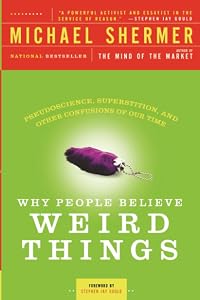

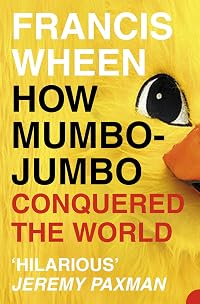


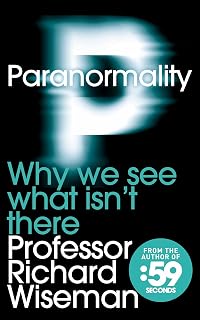


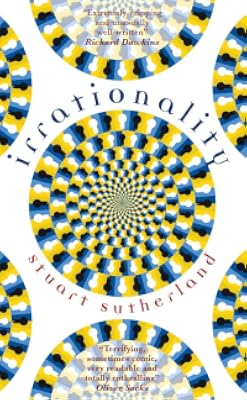

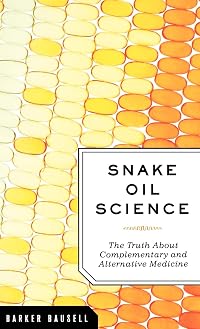
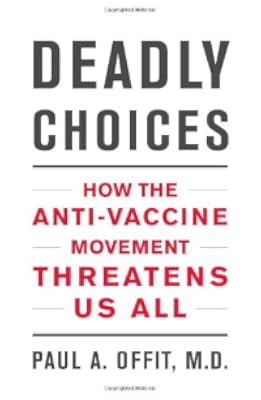
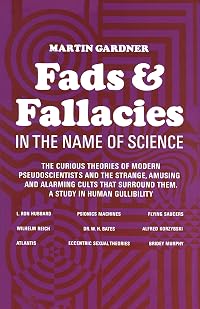
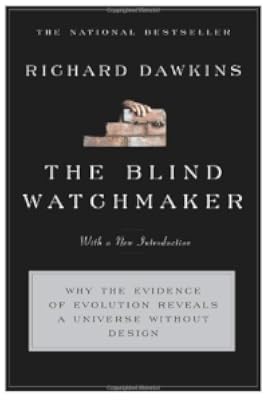


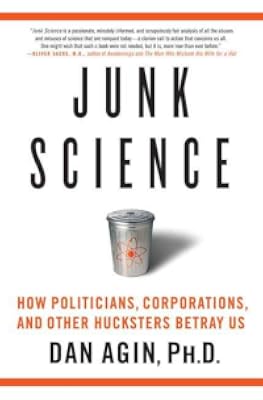
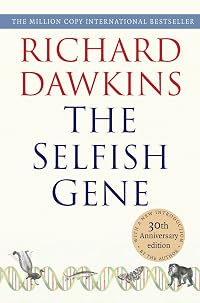
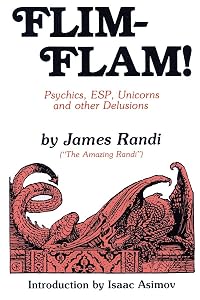

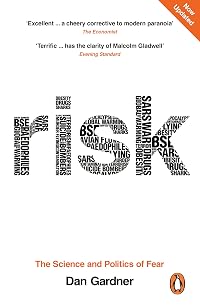

Member Recommendations
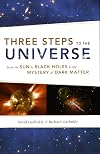
Three Steps to the Universe: From the Sun to Black Holes to the Mystery of Dark Matter by David Garfinkle
nsblumenfeld Although they write about astronomy rather than medicine, the authors share Goldacre's interest in process and methodology as well as results; they make how we know what we know in the field a primary concern and are interested in giving their readers the tools to avoid pseudoscience and bogus "sciencey" claims.
nsblumenfeld Why does bad science get so much exposure?

vguy Goes into greater depth on a selected number of issues (eg Homeopathy, MMR vaccine). Helps one understand scientific method, specifically blind controlled randomised trials. For all that, an amusing and popular approach.
Member Reviews
Every day, it seems, arrives with a flurry of articles about the latest scientific studies. How accurate are these reports, and how sound are the studies themselves? Doctor and science writer Ben Goldacre uses this book to demonstrate how to pick apart the stories and discover the truth (or the places where the truth is missing). It's all delivered with plenty of asides and fiery enthusiasm, as well as some laugh-out-loud moments (e.g. demonstrating how useless a certain diploma is by obtaining one for his dead cat). Worth reading, and then rereading.
I adore books about modern myths and this is among the best. Though the title is fairly generic, the science in question here is largely related to health: medicine, disease, and diet, and the media's role in the spread of misinformation. I was surprised both by the debunking of myths I'd long thought to be true, as well as those myths and charlatans I'd never even heard of. As an American, reading about the British perspective was extra fascinating. Goldacre also has quite an amusing way with words, which helped dilute some of the anger a bit. Exasperation can be exhausting, but when tempered with humor it's much more enjoyable. Sure, there are some tales, like the AIDS denial in South Africa, that are simply horrifying, but by and show more large it's more eye-opening than depressing. Definitely recommended to anyone who's ever had any interest in those big "such-and-such causes/cures cancer" tales constantly blasted over the airwaves. show less
Bad Science is an exposé of the ways in which science is misused, misrepresented, and misunderstood in modern society. As a physician and science writer, his primary goal is to help readers distinguish between legitimate science and the pseudoscientific or slanted claims that often grab the headlines. He advocates evidence-based decision-making. The author systematically dismantles various forms of bad science, beginning with relatively harmless but scientifically baseless health fads like detox footbaths and homeopathy, before escalating to more dangerous instances where misunderstood statistics and cherry-picked data have led to genuine public health crises.
Goldacre's analysis of the MMR vaccine controversy is particularly show more compelling, and he explains how it led to the reoccurrence of these diseases in Great Britain. He takes on several individuals that have blatantly tried to profit from sales of their own products while producing great harm in the process (such as the withholding of AIDS medications in South Africa, where HIV was rampant). What makes this book particularly effective is Goldacre's ability to equip readers with the critical thinking tools needed to evaluate scientific claims on their own. He explains concepts like the placebo effect, randomized controlled trials, meaningful statistics, peer reviews of publicized articles, and publication bias. His writing style sprinkles in humor to go along with the more scientific explanations. His passion for scientific integrity is evident.
Published in 2008, it remains relevant, especially with the recent rise in science denial. He examines problems that are still with us (perhaps even more so than before), such as media sensationalism, scientific illiteracy, outrageous claims by people in positions of power, and the exploitation of people's health anxieties. These factors continue to shape public discourse. Recommended to anyone who wants to become more informed about the scientific process, and better able to make informed decisions. This book provides a wealth of valuable information. It is too bad that “You cannot reason people out of positions they did not reason themselves into.” show less
Goldacre's analysis of the MMR vaccine controversy is particularly show more compelling, and he explains how it led to the reoccurrence of these diseases in Great Britain. He takes on several individuals that have blatantly tried to profit from sales of their own products while producing great harm in the process (such as the withholding of AIDS medications in South Africa, where HIV was rampant). What makes this book particularly effective is Goldacre's ability to equip readers with the critical thinking tools needed to evaluate scientific claims on their own. He explains concepts like the placebo effect, randomized controlled trials, meaningful statistics, peer reviews of publicized articles, and publication bias. His writing style sprinkles in humor to go along with the more scientific explanations. His passion for scientific integrity is evident.
Published in 2008, it remains relevant, especially with the recent rise in science denial. He examines problems that are still with us (perhaps even more so than before), such as media sensationalism, scientific illiteracy, outrageous claims by people in positions of power, and the exploitation of people's health anxieties. These factors continue to shape public discourse. Recommended to anyone who wants to become more informed about the scientific process, and better able to make informed decisions. This book provides a wealth of valuable information. It is too bad that “You cannot reason people out of positions they did not reason themselves into.” show less
Ben Goldacre writes an incredibly intelligent and accessible deconstruction of homeopathy, nutrionism, and big pharma, and how they all abuse science and play on people's hopes and fears with only one real goal - money.
Goldacre doesn't actually cover the money angle too much, though, as that is incidental to the more insidious aspects of this 'bad science'. The twisting of facts, hiding of methods, and bald-faced lying in reporting is making people distrustful of any science, and is ultimately causing deaths (I read with open-mouthed amazement at the stupidity of the South African authorities who listened to nutrionists advocating vitamin C instead of the anti-retro virals backed up by large-scale trial-based evidence).
Ultimately, show more Goldacre's goal is make the general public aware of how science should be conducted, and how scientific evidence should be presented - and if methods are hidden, or references obscured, then this should all be a big red flag to warn you off.
Its a shame, then, that this book will likely be dismissed by that same general public as they want to believe in the miracle pill that will never come. show less
Goldacre doesn't actually cover the money angle too much, though, as that is incidental to the more insidious aspects of this 'bad science'. The twisting of facts, hiding of methods, and bald-faced lying in reporting is making people distrustful of any science, and is ultimately causing deaths (I read with open-mouthed amazement at the stupidity of the South African authorities who listened to nutrionists advocating vitamin C instead of the anti-retro virals backed up by large-scale trial-based evidence).
Ultimately, show more Goldacre's goal is make the general public aware of how science should be conducted, and how scientific evidence should be presented - and if methods are hidden, or references obscured, then this should all be a big red flag to warn you off.
Its a shame, then, that this book will likely be dismissed by that same general public as they want to believe in the miracle pill that will never come. show less
Ben Goldacre,a doctor and British journalist, warns us to be very skeptical of the news and information we get about health treatments and corresponding drugs. Besides scaring the reader to death he tries to help develop skills in perceiving fraudulent and misleading presentations. One might suspect big pharma of playing with the facts in many ways from its trials to advertising and there is always the quack but the surprise is the lambasting the general and sometimes respectable press get for forwarding rubbish that in some cases can be extremely detrimental to the general populations' health. There are things said here that one might have vaguely suspected but Goldacre puts a lazor beam on them and helps sharpen your wits.
Quotes: show more (page 20) “The second them is perhaps more interesting: the proprietorialization of common sense. You can take a perfectly sensible intervention, like a glass of water and an exercise break, but add nonsense, make it sound more technical, and make yourself sound clever. This will enhance the placebo effect, but you might also wonder if the primary goal is something more cynical and lucrative: to make commonsense copyrightable, unique, patented, and owned.
We will see this time and again, on a grander scale, in the work of dubious health care practicioners and specifically in the field of 'nutritionism' because scientific knowledge---and sensible dietary advice--- are free and in the public domain.”
(page 99) “This is what the Cochrane Collaboration does on all the health care topics that it can find. It even invites people to submit new clinical questions that need answers. This careful sifting of information has revealed huge gaps in knowledge it has revealed that 'best practices' were sometime murderously flawed, and simply by sifting methodically through the preexisting data, it has saved more lives that you could possibly imagine. In the nineteenth century, as public health doctor Muir Gray has said, we made great advances through the provision of clean, clear water, in the twenty-first century we will make the same advances through clean, clear information. Systematic reviews are one of the great ideas of modern thought. They should be celebrated.”
(pages 126-127) “There's nothing very professional or proprietary about 'Eat you greens,' so they have had to push things farther. But unfortunately for them, the technical, confusing, overcomplicated, tinkering interventions that they promote---the enzymes, the exotic berries---are very frequently not supported by convincing evidence.
That's not for looking. This is not the case of the medical hegemony's neglecting to address the holistic needs of the people. In many cases the research has been done and has shown that the more specific claims of nutritionists are actually wrong. The fairy tale of antioxidants is a perfect example. Sensible dietary practices, which all know about, still stand. But the unjustified, unnecessarily overcomplicated of this basic dietary advice is, to my mind, one of the greatest crimes of the nutritionist movement. As I have said, I don't think it's excessive to talk about consumers paralyzed with confusion in supermarkets.”
(page 137) “It's an eerily familiar catchphrase. Tshabalala-Msimang also went on record to praise the work of Matthias Rath and refused to investigate his activities. Most joyfully of all, she was a staunch advocate of the kind of weekend glossy magazine-style nutritionism that will by now be very familiar to you.
The remedies she advocated for AIDS are beetroot, garlic, lemons, and African potatoes. A fairly typical quote, from from the health minister in a country where eight hundred people die every day from AIDS, was this....” show less
Quotes: show more (page 20) “The second them is perhaps more interesting: the proprietorialization of common sense. You can take a perfectly sensible intervention, like a glass of water and an exercise break, but add nonsense, make it sound more technical, and make yourself sound clever. This will enhance the placebo effect, but you might also wonder if the primary goal is something more cynical and lucrative: to make commonsense copyrightable, unique, patented, and owned.
We will see this time and again, on a grander scale, in the work of dubious health care practicioners and specifically in the field of 'nutritionism' because scientific knowledge---and sensible dietary advice--- are free and in the public domain.”
(page 99) “This is what the Cochrane Collaboration does on all the health care topics that it can find. It even invites people to submit new clinical questions that need answers. This careful sifting of information has revealed huge gaps in knowledge it has revealed that 'best practices' were sometime murderously flawed, and simply by sifting methodically through the preexisting data, it has saved more lives that you could possibly imagine. In the nineteenth century, as public health doctor Muir Gray has said, we made great advances through the provision of clean, clear water, in the twenty-first century we will make the same advances through clean, clear information. Systematic reviews are one of the great ideas of modern thought. They should be celebrated.”
(pages 126-127) “There's nothing very professional or proprietary about 'Eat you greens,' so they have had to push things farther. But unfortunately for them, the technical, confusing, overcomplicated, tinkering interventions that they promote---the enzymes, the exotic berries---are very frequently not supported by convincing evidence.
That's not for looking. This is not the case of the medical hegemony's neglecting to address the holistic needs of the people. In many cases the research has been done and has shown that the more specific claims of nutritionists are actually wrong. The fairy tale of antioxidants is a perfect example. Sensible dietary practices, which all know about, still stand. But the unjustified, unnecessarily overcomplicated of this basic dietary advice is, to my mind, one of the greatest crimes of the nutritionist movement. As I have said, I don't think it's excessive to talk about consumers paralyzed with confusion in supermarkets.”
(page 137) “It's an eerily familiar catchphrase. Tshabalala-Msimang also went on record to praise the work of Matthias Rath and refused to investigate his activities. Most joyfully of all, she was a staunch advocate of the kind of weekend glossy magazine-style nutritionism that will by now be very familiar to you.
The remedies she advocated for AIDS are beetroot, garlic, lemons, and African potatoes. A fairly typical quote, from from the health minister in a country where eight hundred people die every day from AIDS, was this....” show less
There are a great many (universally ignored and unread) books on this subject that exist and that I've enjoyed. This particular one stands out for two reasons: 1) The writer has a huge humor-flecked chip on his shoulder that is readily apparent from his clever and smarmy affronts to the quacks and hacks. 2) He largerly discusses phenomena that the reader can either test for him/herself or read the available data to allow one to come to a logical and responsible conclusion. The final chapter, The Media MMR Hoax, is paramount reading for all of humanity, and once again proves my theory that Jenny McCarthy should go to hell, to take her literal and figurative boobs with her, and leave the rest of us to clean up the mess she created.
An engaging read and another upgrade to your bullshit detection meter. Goldacre makes the case with his informal but crystal-clear prose style for just how abysmal the public understanding has become on the subjects of medical science, nutrition, and risk assessment. The sections on how medical procedure and drug studies are manipulated to provide support for pseudoscience and large pharmaceutical companies were fantastic, and I found his chapter on applied statistics lucid and easy to follow. Best of all were the moments when I could feel Goldacre's incandescent outrage seeping through his prose, especially when discussing Matthias Rath, the MMR vaccine scare, and what passes for health and medical journalism in the USA and UK. show more Bracing.
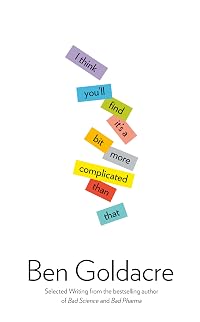
To quote the author:
Well put, and reading this book will have you picking apart the credulous stories you read in blogs, in the newspaper, hear from others... show less
To quote the author:
If I had a T-shirt slogan for this whole book, it would be "I think you'll find it's a bit more complicated than that."
Well put, and reading this book will have you picking apart the credulous stories you read in blogs, in the newspaper, hear from others... show less
Members
- Recently Added By
Lists

Non-Fiction Worth Reading
1,016 works; 256 members

Books That Changed Me
158 works; 47 members

Recommend the 20 best books you've read in the last five years
2,168 works; 606 members

Books Read in 2011
684 works; 20 members

Eton's list - the books every bright 16 year-old should read
40 works; 6 members

Books Read in 2018
4,360 works; 110 members

The Great Courses: Your Deceptive Mind
60 works; 1 member
Author Information

8 Works 4,991 Members
Ben Goldacre has made a point of exposing quack doctors and nutritionists, bogus credentialing programs, and biased scientific studies. He has also taken the media to task for its willingness, to throw facts and proof out the window. But he's not here just to tell you what's wrong. Goldacre is here to teach so that you can recognize bad science show more when you see it. you're about to feel a whole lot better. show less
Awards and Honors
Awards
Distinctions
Notable Lists
Work Relationships
Common Knowledge
- Canonical title
- Bad Science: Quacks, Hacks, and Big Pharma Flacks
- Original title
- Bad Science
- Original publication date
- 2008-09-01
- People/Characters
- Gillian McKeith; Patrick Holford; Andrew Wakefield; Matthias Rath; Zackie Achmat; Bjorn Andersen (show all 104); Solomon Asch; Richard Asher; Amedeo Avogadro; Francis Bacon; Henry Beecher; Sheila Bingham; Cherie Blair; Leo Blair; Tony Blair; Rosie Boycott; Anthony Brink; Stephen Bustin; Carole Caplin; Sylvia Caplin; Jim Carrey; Nick Chadwick; Iain Chalmers; Sally Clark; Bill Clinton; Archie Cochrane; Lucia de Berk; David P. de Bono; Brian Deer; Roni DeLuz; Angela Dowden; Peter Duesberg; Owen Epstein; Edzard Ernst; Imogen Evans; Richard Feynman; Ronald Fisher; Mike Fitzpatrick; John Forbes; Peter Foster; Harry Frankfurt; Lorraine Fraser; John Garrow; Thoma Gilovich; Eric Goemaere; Stephen Jay Gould; Sylvester Graham; Muir Gray; Trisha Greenhalgh; Samuel Hahnemann; Jerry Hall; Austin Bradford Hill; Luke Jackson; Edward Jenner; Alan Johnson; John Harvey Kellogg; Paul Knipschild; Theodor Kocher; Arthur Krigsman; Nigella Lawson; Dudley LeBlanc; Lynda Lee-Potter; Claude Lévi-Strauss; Bernarr Macfadden; Howard Magaziner; Nelson Mandela; Thabo Mbeki; William McBride; Gillian McKeith; Roy Meadow; Kylie Minogue; Daniel Moerman; Suzanne Moore; John O'Leary; Nancy Olivieri; Peter Parker; Louis Pasteur; Ivan Pavlov; Richard Peto; Melanie Phillips; Robert Pirsig; Plato, ca. 428-347 BC; Karen Prosser; Ryan Prosser; Libby Purves; James Randi; David Rasnick; Gary Schwitzer; Edward Scolnick; Ignaz Semmelweis; Ally Shapiro; Paul Shattock; C. P. Snow; John Snow; Benjamin Spock; Raymond Tallis; Jack Temple; Elizabeth Thompson; Hazel Thornton; Martin Tramer; Michael van Straten; Voltaire; H. G. Wells; Jeanette Winterson
- Important places
- Angola; Australia; Botswana; University of Bristol, Bristol, England, UK; University of Cambridge, Cambridge, Cambridgeshire, England, UK; Canada (show all 49); China; Clayton College of Natural Health, Birmingham, Alabama, USA; Denmark; Dominican University, River Forest, Illinois, USA; Durban, South Africa; European Union; Finland; France; Germany; Great Ormond Street Hospital, London, England, UK; Harvard University; Ireland; Italy; Johns Hopkins Hospital, Baltimore, Maryland, USA; Kano, Nigeria; Khayelitsha, Western Cape, South Africa; Latin America; Linus Pauling Institute, Oregon State University, Corvallis, Oregon, USA; London, England, UK; University of London, London, England, UK; London Homeopathic Hospital, London, England, UK; Maastricht University, Maastricht, Limburg, Netherlands; New York, New York, USA; Mars; Melanesia; Mozambique; Namibia; The Netherlands; New Zealand; Nigeria; Oxford University; Portland, Oregon, USA; Scandinavia; South Africa; Soviet Union; Stellenbosch University, Stellenbosch, Western Cape, South Africa; Sweden; Switzerland; Tanzania; United Nations Headquarters, New York, New York, USA; Western Cape, South Africa; Zürich, Zürich, Switzerland; Russia
- Important events
- Declaration of Helsinki; Durban Declaration; Iraq War; Tuskegee syphilis study; Vietnam War; World War II
- Dedication
- To whom it may concern
- First words
- Let me tell you how bad things have become.
- Quotations
- The aim of this book is that you should be future-proofed against new variants of bullshit.
My aim here is by no means to suggest that antioxidants are entirely irrelevant to health. If I had a T-shirt slogan for this whole book, it would be: 'I think you'll find it's a bit more complicated than that'.
Under his [Harry Frankfurt, Princeton University] model, "bullshit" is a form of falsehood distinct from lying: the liar knows and cares about the truth but deliberately sets out to mislead; the truth speaker knows the truth ... (show all)and is trying to give it to us; the bullshitter, meanwhile, does not care about the truth and is simply trying to impress us. - Last words
- (Click to show. Warning: May contain spoilers.)You will do it because you know that knowledge is beautiful, and because if only a hundred people share your passion, that is enough.
- Blurbers
- Brooker, Charlie; Harford, Tim; Ferriss, Timothy; Roach, Mary; Singh, Simon; Philips, Trevor (show all 8); Hawkes, Nigel; Jauhar, Sandeep
- Original language
- English
- Canonical DDC/MDS
- 500
- Canonical LCC
- Q172.5.E77
Classifications
Statistics
- Members
- 3,517
- Popularity
- 4,697
- Reviews
- 114
- Rating
- (4.15)
- Languages
- 13 — Czech, Dutch, English, Estonian, German, Greek, Hungarian, Italian, Korean, Polish, Portuguese, Romanian, Spanish
- Media
- Paper, Audiobook, Ebook
- ISBNs
- 38
- ASINs
- 16