
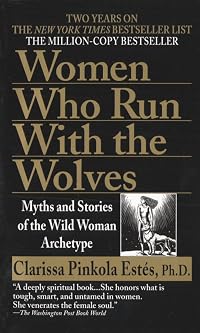
Women Who Run with the Wolves: Myths and Stories of the Wild Woman Archetype
by Clarissa Pinkola Estés
On This Page
Description
First published three years before the print edition of Women Who Run With the Wolves made publishing history, this original audio edition quickly became an underground bestseller. For its insights into the inner life of women, it established Dr. Clarissa Pinkola Estés as one of the most important voices of our time in the fields of Jungian psychology, myth, and women's mysteries.Drawing from her work as a psychoanalyst and cantadora ("keeper of the old stories"), Dr. Estés uses myths and show more folktales to illustrate how societies systematically strip away the feminine spirit. Through an exploration into the nature of the wild woman archetype, Dr. Estés helps listeners rediscover and free their own wild nature.
The magical storytelling, myths, and commentary on Women Who Run With the Wolves continue to inspire a new level of self-knowledge among listeners young and old.
Note: These CD-ROM-format enhanced CDs contain audio, music, and video clips and are meant to be played on your computer, using an Internet connection, speakers, and Real Player programs, which are free for download. Enhanced content is exclusive to CD version
. show less
Tags
Recommendations




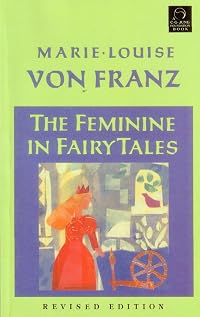

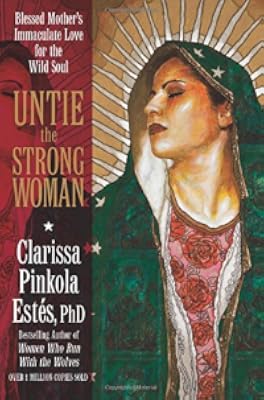
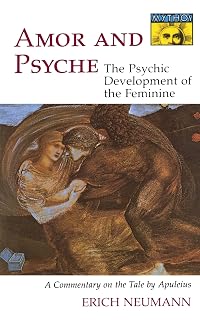
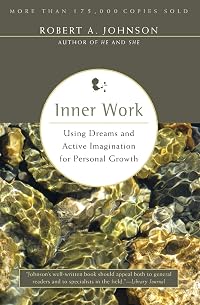




Member Recommendations

Member Reviews
Sometimes the universe delivers just the book you need, at just the right time, and for me this is one of those books. Spotted in the non-fiction section at our local charity book sale, I hadn’t heard of this book before, but something drew me to pick it up and take it home. Maybe it was the mythology promised on the front cover, or maybe it was the wolves and Wild Women that I knew hid within. Either way, this was just the transformational book that I needed this year - irregardless of the fact that it took me almost 5 months to read. In each chapter author Estés shares a folkloric tale and then proceeds to examine it in terms of feminist theory, psychology, and for its storytelling mythos. Throughout the stories the emergence of show more the Wild Woman is prominent, and while the book may begin as a collection of tales and anecdotes it quickly moves into the realm of self-affirming ethos. For me, at this particular point in my life, the book served as a reminder of the Wild Woman inside that was buried for far too long. So now it’s time to collect the bones, rove the world, and most importantly to Howl at what brings me joy. show less
I picked up this book because I love folklore, mythology and stories. I was unprepared for the tidal wave of ancestral knowledge that each familiar tale could offer me. The author examines a collection of popular stories in granular detail. She lovely isolates each piece and shares both its history at how it can be applied to the psychology of women. What do these stories tell us about how to love, how to grow, how to grow old? What do the warn us of? What can they teach us about ourselves?
This text is deep and even after the hundreds of pages in this volume, I felt like there was still so much more to learn. These cultural stories are not shared merely as a means of entertainment on a dark night, but as an ever evolving guide for those show more with a willingness to hear. show less
This text is deep and even after the hundreds of pages in this volume, I felt like there was still so much more to learn. These cultural stories are not shared merely as a means of entertainment on a dark night, but as an ever evolving guide for those show more with a willingness to hear. show less
I bought this book way back when it first exploded the world when it came out, back in the late 1990s. But never got around to reading it. But then my new Bitches with Bookmarks group picked it for our first group read and I was elated that it was something that I already had on my shelves.
I had a lot of feelings about this, and to be honest, I might not have slogged through if it hadn't been for the book club. I understand that she's dealing in achetypes, and that those of course have to match up to stereotypes to a certain extent, but the amount of hetero-, cis- and gender binary normativity here sometimes had me rolling my eyes.
I do, however, believe in the power of stories to help us explain, interpret, and reimagine our lives. I am show more certain it is more effective in a one-on-one session, as with a Jungian therapist, and it's hard to make a one-size-fits-all interpretation as with this book.
So I tried to read with an open mind and find the things that related to me and brush by the rest. Of course, much of the bits on breaking free from a life that's slowly strangling you and embracing your creativity resonated with me. It was a worthwhile read in the end, in that it prompts a lot of reflection on the authenticity of your life choices. show less
I had a lot of feelings about this, and to be honest, I might not have slogged through if it hadn't been for the book club. I understand that she's dealing in achetypes, and that those of course have to match up to stereotypes to a certain extent, but the amount of hetero-, cis- and gender binary normativity here sometimes had me rolling my eyes.
I do, however, believe in the power of stories to help us explain, interpret, and reimagine our lives. I am show more certain it is more effective in a one-on-one session, as with a Jungian therapist, and it's hard to make a one-size-fits-all interpretation as with this book.
So I tried to read with an open mind and find the things that related to me and brush by the rest. Of course, much of the bits on breaking free from a life that's slowly strangling you and embracing your creativity resonated with me. It was a worthwhile read in the end, in that it prompts a lot of reflection on the authenticity of your life choices. show less
I read this book long before I was probably meant too - I was too young, and reading for an age far beyond my real life age. However, this book stuck with me throughout adolescence and 20's and I often found myself referring to it when talking to others. After recently re-visiting it, I was still as taken with it, and it still spoke to me: about knowing yourself and those around you, about the stories we tell ourselves and each other, and about the strength and resilience of women throughout time and history. It encouraged me to embrace the role of storyteller and memory keeper, and that this does not mean being maudlin and living in the past, but rather using the past to protect the future. Do read it - I hope it impresses on you as show more much it did on me! show less
Within every woman there lives a powerful force, filled with good instincts, passionate creativity, and ageless knowing. She is the Wild Woman, who represents the instinctual nature of women. But she is an endangered species. For though the gifts of wildish nature belong to us at birth, society’s attempt to “civilize” us into rigid roles has muffled the deep, life-giving messages of our own souls. In Women Who Run with the Wolves, Dr. Clarissa Pinkola Estés unfolds rich intercultural myths, fairy tales, folk tales, and stories, many from her own traditions, in order to help women reconnect with the fierce, healthy, visionary attributes of this instinctual nature. Through the stories and commentaries in this remarkable book, we show more retrieve, examine, love, and understand the Wild Woman, and hold her against our deep psyches as one who is both magic and medicine.
Dr. Estés has created a new lexicon for describing the female psyche. Fertile and life-giving, it is a psychology of women in the truest sense, a knowing of the soul. Source: Publisher show less
Dr. Estés has created a new lexicon for describing the female psyche. Fertile and life-giving, it is a psychology of women in the truest sense, a knowing of the soul. Source: Publisher show less
This is a heavy book. Rich indeed. One you have to read slowly, take in pieces, ponder over. Estes examines and analyzes fairy tales, myths and folktales in the context of what they can teach about the inner lives of women. In each segment of the book, Estes examines a particular fairy tale (often several related tales or different versions as well) and goes into great depth about the wisdom and insight it can convey about such things as finding inner strength, recognizing things that take you away from your true self, enduring and continuing on in the face of difficulties, recognizing people you feel kinship with, finding and drawing upon your creative energy and so on. The ways and manners in which women expresses themselves and mine show more their inner strengths are myriad, and Estes recognizes that. She presents a lot of tales I was completely unfamiliar with, and explains others in ways I had never considered before. I was a bit surprised to find some other reviewers disagreed entirely with her viewpoint, said she forced and changed the stories to say what she wanted, diverted from their original meaning. But I just took it to be part of the power of storytelling, to use stories and word imagery to communicate something strong and lasting. Oh, and there are many comparisons to wolves and how they live. Estes calls the feminine soul your inner Wild Woman, who is keen and responsive and fierce in ways like the wolf... I found quite a bit to take away and ponder at length, and I am keeping this book on my shelf to delve into again someday.
from the Dogear Diary show less
from the Dogear Diary show less
Not an easy book to explain or review but I'll try. I've heard of this book before (it was first published in 1992 and I know back then I would not have been interested), and recently found it at a local used bookstore. The cashier said, "Oh, this is a wonderful book! I loved it!" I can't remember the last time a bookseller raved about a book that I had up for purchasing.
The author is a Jungian analyst and also a storyteller. What this means for this book and its readers is that she tells the story of many myths -- there were just a few that I was familiar with, such as "Bluebeard" and "The Ugly Duckling" -- and re-interprets these stories in how it applies to the inner lives of women. The Wild Woman is her way of describing the soul show more of a woman.
While I question whether these old stories were actually meant as Pinkola Estes interprets them, I found them fascinating analogies of how women, from birth, are constantly told by others in words and/or actions that they should be "this way" or "not that way". This is a never-ending message to women that they cannot simply be themselves. It is not just men, but also other women, who can negatively influence the female soul. The author often uses the behavior of wolves to show how we can learn from them.
There's a lot to think about here and process, so much so that I feel that it deserves a re-read by me. It is not a quick read and it is the type of book that would need to be read at the right time. I would recommend it to others only if I thought they were ready for it -- if not, it would just be something that would be set aside because this book is far more than just re-telling of ancient myths from all over the world.
I have many folded-over pages in this book -- I am averse to folding pages as book-marking, but don't mind doing it (tiny corners!!) when I want to be able to refer back to something. Here are a few excerpts from those folded-over pages.
(note: for the first quote below, the [...] is the author's, and not an indication that I left out part of the quote. The "work" she refers to is helping with psychic development).
"The 'craft of making' is an important part of the work, I work to empower my clients by teaching them the age-old crafts of the hands...among them fetish and talisman making, these being anything from simple ribbon sticks to elaborate sculpture. Art is important for it commemorates the seasons of the soul, or a special or tragic event in the soul's journey. Art is not just for oneself, not just a marker of one's own understanding. It is also a map for those who follow after us". (p. 15)
"At a very mundane level, it is important for a woman having dark man and Bluebeardian sorts of dreams to cleanse her life of as much negativity as she can. Sometimes it is necessary to limit or thin out certain relationships, for if a woman is outwardly surrounded by persons who are antagonistic to or careless about her deep life, her interior predator is fed by this and develops extra muscle within her psyche, and more aggression toward her." (p.71)
"Friends who love you and have warmth for your creative life are the very best suns in the world. When a woman, like the Little Match Girl, has no friends she also becomes frozen by anguish, and sometimes by anger as well. Even if one has friends, those friends may not be suns. They may give comfort instead of informing the woman about her increasingly frozen circumstances. They comfort her -- but that is far different from nurture. Nurture moves you from one place to another. Nurture is like psychic Wheaties.
The difference between comfort and nurture is this: if you have a plant that is sick because you keep it in a dark closet, and you say soothing words to it, that is comfort. If you take the plant out of the closet and put it in the sun, give it something to drink, and then talk to it, that is nurture." (p. 323) show less
The author is a Jungian analyst and also a storyteller. What this means for this book and its readers is that she tells the story of many myths -- there were just a few that I was familiar with, such as "Bluebeard" and "The Ugly Duckling" -- and re-interprets these stories in how it applies to the inner lives of women. The Wild Woman is her way of describing the soul show more of a woman.
While I question whether these old stories were actually meant as Pinkola Estes interprets them, I found them fascinating analogies of how women, from birth, are constantly told by others in words and/or actions that they should be "this way" or "not that way". This is a never-ending message to women that they cannot simply be themselves. It is not just men, but also other women, who can negatively influence the female soul. The author often uses the behavior of wolves to show how we can learn from them.
There's a lot to think about here and process, so much so that I feel that it deserves a re-read by me. It is not a quick read and it is the type of book that would need to be read at the right time. I would recommend it to others only if I thought they were ready for it -- if not, it would just be something that would be set aside because this book is far more than just re-telling of ancient myths from all over the world.
I have many folded-over pages in this book -- I am averse to folding pages as book-marking, but don't mind doing it (tiny corners!!) when I want to be able to refer back to something. Here are a few excerpts from those folded-over pages.
(note: for the first quote below, the [...] is the author's, and not an indication that I left out part of the quote. The "work" she refers to is helping with psychic development).
"The 'craft of making' is an important part of the work, I work to empower my clients by teaching them the age-old crafts of the hands...among them fetish and talisman making, these being anything from simple ribbon sticks to elaborate sculpture. Art is important for it commemorates the seasons of the soul, or a special or tragic event in the soul's journey. Art is not just for oneself, not just a marker of one's own understanding. It is also a map for those who follow after us". (p. 15)
"At a very mundane level, it is important for a woman having dark man and Bluebeardian sorts of dreams to cleanse her life of as much negativity as she can. Sometimes it is necessary to limit or thin out certain relationships, for if a woman is outwardly surrounded by persons who are antagonistic to or careless about her deep life, her interior predator is fed by this and develops extra muscle within her psyche, and more aggression toward her." (p.71)
"Friends who love you and have warmth for your creative life are the very best suns in the world. When a woman, like the Little Match Girl, has no friends she also becomes frozen by anguish, and sometimes by anger as well. Even if one has friends, those friends may not be suns. They may give comfort instead of informing the woman about her increasingly frozen circumstances. They comfort her -- but that is far different from nurture. Nurture moves you from one place to another. Nurture is like psychic Wheaties.
The difference between comfort and nurture is this: if you have a plant that is sick because you keep it in a dark closet, and you say soothing words to it, that is comfort. If you take the plant out of the closet and put it in the sun, give it something to drink, and then talk to it, that is nurture." (p. 323) show less
Members
- Recently Added By
Lists

Bibliography for How to be a Heroine
148 works; 12 members

Neuro Pride Book Club Book Shares
98 works; 1 member

Books Read in 2022
5,166 works; 114 members

Our Favorite Comfort Reads
334 works; 200 members

Healing resources for women
587 works; 1 member

Mythology
9 works; 2 members

el
1,139 works; 1 member

Unread books
1,063 works; 84 members
Author Information

51+ Works 9,493 Members
Clarissa Pinkola Estes was born in Indiana in 1943 to parents of Spanish and Mexican ancestry, but was later adopted by Hungarian immigrants. She received her Ph.D. from the Union Institute in Cincinnati, Ohio, and was certified as a Jungian analyst in 1984. She worked as a psychoanalyst in private practice and developed and taught the Writing as show more Liberation of the Spirit program in state and federal prisons. Estes served as executive director of the C.G. Jung Center for Education and Research and cofounded and codirected Colorado Authors for Gay and Lesbian Equal Rights. One of Estes's better-known writings, Women Who Run with the Wolves: Myths and Stories of the Wild Woman Archetype (1992), is drawn from tales and myths she heard firsthand from members of such cultures as Asian, Mexican, African, and Greek. She also wrote The Gift of Story (1993). Her books can be found indexed under Psychology, Women's Studies, Mythology, Spiritual Development, and Poetry. (Bowker Author Biography) show less
Some Editions
Awards and Honors
Distinctions
Notable Lists
Series
Belongs to Publisher Series
Heyne Allgemeine Reihe (10115)
Common Knowledge
- Canonical title*
- Kvinner som løper med ulver : myter og fortellinger om Villkvinne-arketypen
- Original title
- Women Who Run with the Wolves
- Alternate titles
- Women Who Run with the Wolves: Myths and Stories of the Wild Woman Archetype
- Original publication date
- 1992-06-05
- Epigraph
- A kedves szüleimnek
Mária és Joszef,
Maria and Joseph,
Szeretlek benneteket.
y
Para todos los que yo amo
que continúan desaparecidos. - First words
- Dzikie zwierzęta i Dzika Kobieta to zagrożone gatunki.
[Introduction, English] Wildlife and the Wild Woman are both endangered species.
[Chapter 1, English] I must reveal to you that I am not of the Divine who march into the desert and return gravid with wisdom. - Quotations
- Women Who Run With the Wolves is the first part of a five-part series encompasing one hundred tales on the inner life. The entire twenty-two hundred pages of work took just over twenty years to write. In its essence,... (show all) the work strives to de-pathologize the integral instinctual nature, and to demonstrate its soulful and essential psychic ties to the natural world. The basic premise that runs through all my work asserts that all human beings are born gifted.
- Last words
- (Click to show. Warning: May contain spoilers.)W podróży do "prawdziwego domu", choć czasem patrzymy za siebie, by spojrzeć tam, skąd przyszłyśmy, nigdy nie odwracamy się, by zawrócić.
(Click to show. Warning: May contain spoilers.)That is the work. The only work. - Original language
- English
*Some information comes from Common Knowledge in other languages. Click "Edit" for more information.
Classifications
- Genres
- Sexuality and Gender Studies, General Nonfiction, Nonfiction, Religion & Spirituality
- DDC/MDS
- 398.082 — Society, government, & culture Customs, etiquette & folklore Folklore & Folktales
- LCC
- GR470 .E88 — Geography, Anthropology and Recreation Folklore Folklore By subject Folklore relating to private life
- BISAC
Statistics
- Members
- 8,103
- Popularity
- 1,366
- Reviews
- 98
- Rating
- (4.01)
- Languages
- 26 — Chinese, Czech, Danish, Dutch, English, Estonian, French, German, Hebrew, Hungarian, Italian, Korean, Lithuanian, Norwegian (Bokmål), Norwegian, Farsi/Persian, Polish, Romanian, Russian, Croatian, Slovenian, Spanish, Swedish, Turkish, Ukrainian, Portuguese (Brazil)
- Media
- Paper, Audiobook, Ebook
- ISBNs
- 98
- UPCs
- 1
- ASINs
- 39