
On This Page
Description
The author of the international bestseller The Rise and Fall of the Third Reich offers a personal account of life in Nazi Germany at the start of WWII. By the late 1930s, Adolf Hitler, Führer of the Nazi Party, had consolidated power in Germany and was leading the world into war. A young foreign correspondent was on hand to bear witness. More than two decades prior to the publication of his acclaimed history, The Rise and Fall of the Third Reich, William L. Shirer was a journalist stationed show more in Berlin. During his years in the Nazi capital, he kept a daily personal diary, scrupulously recording everything he heard and saw before being forced to flee the country in 1940. Berlin Diary is Shirer's first-hand account of the momentous events that shook the world in the mid-twentieth century, from the annexation of Austria and Czechoslovakia to the fall of Poland and France. A remarkable personal memoir of an extraordinary time, it chronicles the author's thoughts and experiences while living in the shadow of the Nazi beast. Shirer recalls the surreal spectacles of the Nuremberg rallies, the terror of the late-night bombing raids, and his encounters with members of the German high command while he was risking his life to report to the world on the atrocities of a genocidal regime. At once powerful, engrossing, and edifying, William L. Shirer's Berlin Diary is an essential historical record that illuminates one of the darkest periods in human civilization. show lessTags
Recommendations
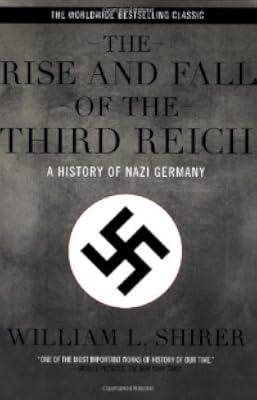


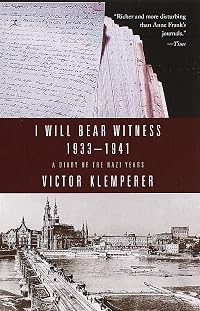

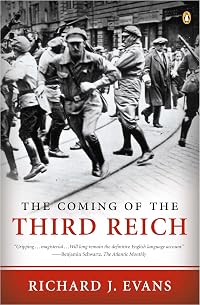





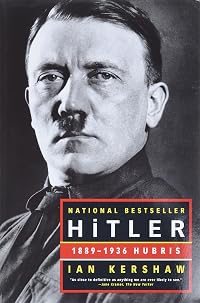












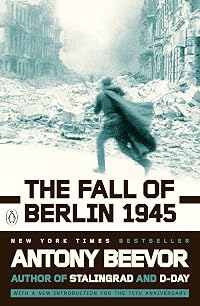
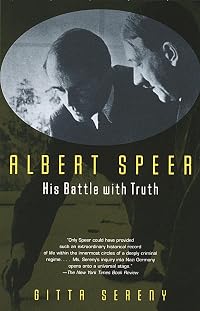


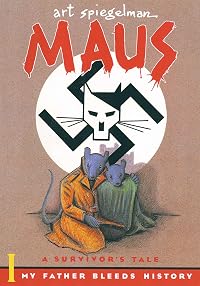



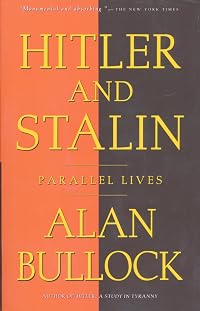



Member Recommendations



by marieke54
Member Reviews
I've read this book twice now (and am considering a third time through). What fascinates me about this book is the immediacy, the electric current of "this is happening NOW" that runs through it. Yes, it's full of facts and observations of Germany during the rise of the Nazis, but it's also a glimpse into the life of a man creating a new form of communication -- the radio news broadcast, which Shirer is credited with practically inventing along with Edward R. Murrow. The highest recommendation I can give this book is that, both times that I read it, at the end I spend a few seconds worried about who would win WWII.
William L Shirer was an American journalist who played a major role, alongside Ed Murrow, in waking his fellow countrymen up to the dangers of Nazism and the impossibility of US neutrality in the face of the existential threat to the liberal democratic world posed by Hitler. His most famous work is The Rise and Fall of the Third Reich, in my view one of the best works of narrative history/journalism ever written. This book contains his diaries from when he was correspondent in Berlin, initially for two of Randolph Hearst's wire services, then for CBS. He arrives in the German capital at a time when "Hitler and the Nazis have lasted out a whole year in Germany and our friends in Vienna write that fascism, both of a local clerical brand show more and of the Berlin type, is rapidly gaining ground in Austria". World war is still of course, well over five years away, but Shirer is more prescient than many.
He chronicles the rise of fascism and collapse of social democracy in Austria, then the familiar litany of Hitler's advances, the Rhineland, Austria, the Sudetenland, the rest of Czechoslovakia, and finally Poland before Britain and France wake up to the threat and finally abandon appeasement and stand up to Hitler. He is an excellent writer and brings home clearly the drama and horror of events as they unfold, in the sheer rapidity of the German advance into Poland and of the Blitzkrieg across northern and western Europe in 1940, which year covers half of the entire text of the book. Reading this account as the events unfold is very different from reading a historical account written with the hindsight knowledge of Nazi defeat in 1945.
While Shirer acknowledges that Hitler could never totally control Europe as long as Britain remained free, he thinks it plausible that Hitler could effectively control the world: "I am firmly convinced that he does contemplate [invading the USA] and that if he wins in Europe and Africa he will in the end launch it unless we are prepared to give up our way of life and adapt ourselves to a subservient place in his totalitarian scheme of things". He marks the contrast between the old world and the new in these striking words: "How dim in memory the time when there was peace. That world ended, and for me, on the whole, despite its faults, its injustices, its inequalities, it was a good one. I came of age in that one, and the life it gave was free, civilized, deepening, full of minor tragedy and joy and work and leisure, new lands, new faces—and rarely commonplace and never without hope. And now darkness. A new world. Black-out, bombs, slaughter, Nazism. Now the night and the shrieks and barbarism".
Despite this bleakly pessimistic vision, he thinks that "even if Germany should win the war it will lose its struggle to organize Europe". This derives from his belief that, contrary to the assertions of some that Hitler and the Nazis imposed their creed on a wholly unwilling populace, "the Nazi regime has expressed something very deep in the German nature and in that respect it has been representative of the people it rules". He believes that "the German.......is incapable of organizing Europe. His lack of balance, his bullying sadism when he is on top, his constitutional inability to grasp even faintly what is in the minds and hearts of other peoples, his instinctive feeling that relations between two peoples can only be on the basis of master and slave and never on the basis of let-live equality—these characteristics of the German make him and his nation unfit for the leadership in Europe they have always sought and make it certain that, however he may try, he will in the long run fail". So while he accepts that only Hitler made this appalling war possible, in doing so the dictator was, in the author's view, drawing on the dark side of the nature of a critical mass of German people who craved submission and who had "almost joyfully, almost masochistically, ...... turned to an authoritarianism which releases them from the strain of individual decision and choice and thought and allows them what to a German is a luxury—letting someone else make the decisions and take the risks, in return for which they gladly give their own obedience". At the same time, this weakness caused Germany to underrate the infuriating stubbornness of British resistance, as the latter "won’t admit they’re licked. [The Germans] cannot repress their rage against Churchill for still holding out hopes of victory to his people, instead of lying down and surrendering, as have all of Hitler’s opponents up to date".
Shirer finally leaves Berlin towards the end of 1940 when the censorship has got so bad once Hitler has abandoned his plans to invade Britain and the Nazis are for the first time not having everything their own way, that he is virtually restricted to reading out the communiques of the High Command verbatim, without analysis or comment. He can do no more to raise the awareness of his American audience to the realities of Nazism. He concludes his diaries as follows:
"I stood against the rail watching the lights recede on a Europe in which I had spent all fifteen of my adult years, which had given me all of my experience and what little knowledge I had. It had been a long time, but they had been happy years, personally, and for all people in Europe they had had meaning and borne hope until the war came and the Nazi blight and the hatred and the fraud and the political gangsterism and the murder and the massacre and the incredible intolerance and all the suffering and the starving and cold and the thud of a bomb blowing the people in a house to pieces, the thud of all the bombs blasting man’s hope and decency."
Superb writing and just a brilliant piece of narrative of these world-shattering events. 5/5 show less
He chronicles the rise of fascism and collapse of social democracy in Austria, then the familiar litany of Hitler's advances, the Rhineland, Austria, the Sudetenland, the rest of Czechoslovakia, and finally Poland before Britain and France wake up to the threat and finally abandon appeasement and stand up to Hitler. He is an excellent writer and brings home clearly the drama and horror of events as they unfold, in the sheer rapidity of the German advance into Poland and of the Blitzkrieg across northern and western Europe in 1940, which year covers half of the entire text of the book. Reading this account as the events unfold is very different from reading a historical account written with the hindsight knowledge of Nazi defeat in 1945.
While Shirer acknowledges that Hitler could never totally control Europe as long as Britain remained free, he thinks it plausible that Hitler could effectively control the world: "I am firmly convinced that he does contemplate [invading the USA] and that if he wins in Europe and Africa he will in the end launch it unless we are prepared to give up our way of life and adapt ourselves to a subservient place in his totalitarian scheme of things". He marks the contrast between the old world and the new in these striking words: "How dim in memory the time when there was peace. That world ended, and for me, on the whole, despite its faults, its injustices, its inequalities, it was a good one. I came of age in that one, and the life it gave was free, civilized, deepening, full of minor tragedy and joy and work and leisure, new lands, new faces—and rarely commonplace and never without hope. And now darkness. A new world. Black-out, bombs, slaughter, Nazism. Now the night and the shrieks and barbarism".
Despite this bleakly pessimistic vision, he thinks that "even if Germany should win the war it will lose its struggle to organize Europe". This derives from his belief that, contrary to the assertions of some that Hitler and the Nazis imposed their creed on a wholly unwilling populace, "the Nazi regime has expressed something very deep in the German nature and in that respect it has been representative of the people it rules". He believes that "the German.......is incapable of organizing Europe. His lack of balance, his bullying sadism when he is on top, his constitutional inability to grasp even faintly what is in the minds and hearts of other peoples, his instinctive feeling that relations between two peoples can only be on the basis of master and slave and never on the basis of let-live equality—these characteristics of the German make him and his nation unfit for the leadership in Europe they have always sought and make it certain that, however he may try, he will in the long run fail". So while he accepts that only Hitler made this appalling war possible, in doing so the dictator was, in the author's view, drawing on the dark side of the nature of a critical mass of German people who craved submission and who had "almost joyfully, almost masochistically, ...... turned to an authoritarianism which releases them from the strain of individual decision and choice and thought and allows them what to a German is a luxury—letting someone else make the decisions and take the risks, in return for which they gladly give their own obedience". At the same time, this weakness caused Germany to underrate the infuriating stubbornness of British resistance, as the latter "won’t admit they’re licked. [The Germans] cannot repress their rage against Churchill for still holding out hopes of victory to his people, instead of lying down and surrendering, as have all of Hitler’s opponents up to date".
Shirer finally leaves Berlin towards the end of 1940 when the censorship has got so bad once Hitler has abandoned his plans to invade Britain and the Nazis are for the first time not having everything their own way, that he is virtually restricted to reading out the communiques of the High Command verbatim, without analysis or comment. He can do no more to raise the awareness of his American audience to the realities of Nazism. He concludes his diaries as follows:
"I stood against the rail watching the lights recede on a Europe in which I had spent all fifteen of my adult years, which had given me all of my experience and what little knowledge I had. It had been a long time, but they had been happy years, personally, and for all people in Europe they had had meaning and borne hope until the war came and the Nazi blight and the hatred and the fraud and the political gangsterism and the murder and the massacre and the incredible intolerance and all the suffering and the starving and cold and the thud of a bomb blowing the people in a house to pieces, the thud of all the bombs blasting man’s hope and decency."
Superb writing and just a brilliant piece of narrative of these world-shattering events. 5/5 show less
Unlike most histories, this cuts off halfway through the war, and was published in 1941 when the outcome was still undetermined. Winston Churchill and Shirer himself come out as fairly prescient prophets of doom, and there doesn't seem to have been much retrospective tweaking, just some commentary from 1941. (Later I discovered Shirer rewrote or created most of the 1934–1938 content years later, and toned down his naive admiration of Hitler c. 1935 with the benefit of hindsight.) What's notable is the feeling of being at the centre of a widening gyre, the speed with which events unfolded, the cowardly choices made by many of the politicians, and the complacency and passivity of the German people as this unfolds around them. Of course show more we can't help but compare this to Putin's machinations and invasions in the present day, and the similarly cowardly choices being made. One also has to imagine oneself in the thick of this, and how you yourself would act as society slowly fell apart—one would hope to be as principled as Shirer, who stuck it out attempting to broadcast what was really going on to Americans despite heavy censorship, until he recognised when the compromises were too great and packed it in, only narrowly escaping to the US.
Notes: a sense at the beginning that Hitler might back down, and we could be reading a counterfactual alternative history of Europe—but sadly no • Shirer predicts Constantine Oumansky, Soviet ambassador to the US, will come to a sticky end: "I have known many Soviet diplomats, but they have all been liquidated sooner or later." Oumansky in fact became ambassador to Mexico, and was killed in a plane crash in 1945. • Appearances by the delightfully-named isolationist Representative Ham Fish (actually Hamilton Stuyvesant Fish III) • references to the World War (meaning WWI), and one mention that this will be a "second World War" • Repeating the myth that a division of Polish cavalry made a fruitless charge against hundreds of German tanks—the Charge at Krojanty, well debunked now • encountering Phillip Johnson, an American fascist—the same Phillip Johnson who became a well-respected architect after the war, and disavowed all his silly Hitler fanboy activities (but I bet he'd have been happy to become America's Albert Speer if Hitler had won) • The Führer's favourite movies were It Happened One Night, and Gone With The Wind • watching the rise of radio journalism, and its struggle to be taken seriously by other media, rather like the Internet in its early days • Shirer escaping via unoccupied France, Barcelona, and Lisbon—just like the opening to Casablanca. show less
Notes: a sense at the beginning that Hitler might back down, and we could be reading a counterfactual alternative history of Europe—but sadly no • Shirer predicts Constantine Oumansky, Soviet ambassador to the US, will come to a sticky end: "I have known many Soviet diplomats, but they have all been liquidated sooner or later." Oumansky in fact became ambassador to Mexico, and was killed in a plane crash in 1945. • Appearances by the delightfully-named isolationist Representative Ham Fish (actually Hamilton Stuyvesant Fish III) • references to the World War (meaning WWI), and one mention that this will be a "second World War" • Repeating the myth that a division of Polish cavalry made a fruitless charge against hundreds of German tanks—the Charge at Krojanty, well debunked now • encountering Phillip Johnson, an American fascist—the same Phillip Johnson who became a well-respected architect after the war, and disavowed all his silly Hitler fanboy activities (but I bet he'd have been happy to become America's Albert Speer if Hitler had won) • The Führer's favourite movies were It Happened One Night, and Gone With The Wind • watching the rise of radio journalism, and its struggle to be taken seriously by other media, rather like the Internet in its early days • Shirer escaping via unoccupied France, Barcelona, and Lisbon—just like the opening to Casablanca. show less
I have read and reread Shirer book three or four times during different periods in my life. While his own personal story as a journalist is very compelling, because of his adventures and experiences in Nazi Germany, even more interesting to me was the reaction of the German people to Hitler. It's hard to believe that a civilized and cultured nation would allow a mediocre man to be the leader of their country and to plunge them into war and self-destruction.
The reader wonders if something like that could happen in the United States. Until this election cycle, I would have said no – – there are more smarter and wiser people than dumbing evil ones in this country. Now I'm not so sure…
I would list this book as one of the most show more influential ones in my lifetime. It is a long book – – over 600 pages but the story is very compelling and needs to be shared. show less
The reader wonders if something like that could happen in the United States. Until this election cycle, I would have said no – – there are more smarter and wiser people than dumbing evil ones in this country. Now I'm not so sure…
I would list this book as one of the most show more influential ones in my lifetime. It is a long book – – over 600 pages but the story is very compelling and needs to be shared. show less
This diary was a fascinating look at the build-up and start of World War II. I have always been interested in how Nazi Germany was able to happen but given the current political climate, I am becoming fixated on history not repeating itself. This diary gives you an American journalist's day-to-day perspective on the Nazi's from inside Berlin. I felt almost as if I was living through those times in Nazi Germany itself. The commentary on the take-over of the press and the bald-faced lies that the Nazi press told the German people about the war were particularly chilling. We can't let that happen here!
History brilliantly recorded in the making, with the immediacy and urgency of journalism, which you don’t encounter in academic history books.
This journal published in 1941 starts with episodes from Shirer’s three years reporting as an American journalist from Berlin in 1934. He then moves to Vienna in 1938 to work for an American broadcaster, describing breathlessly the Anschluss on 12 March.
Following the Anschluss he moves to Geneva for safety from censorship, but travels to Prague for the Sudetenland crisis in September 1938, and then moves back to Berlin.
As you would expect, Shirer’s journalistic style is highly readable, even when he is listing the names of politicians or generals attending “peace” conferences. As show more published in 1941, there is a little hindsight in Shirer’s comments, but nevertheless what comes across as the moral cowardice of Britain and France in the face of Nazi aggression is notable, especially with regards the Sudetenland. In particular, as time passes and Shirer’s entries more frequent, the “breathlessness” of the history becomes greater, even though you know the overall story.
Several times during this book Shirer mentions people committing suicide, or threatening to commit suicide, over the political situation; often these are Jews but also left wing individuals, and often due to their becoming refugees.
The book starts with what might be read as a “humble brag” by Shirer after spending a year of leisure in Spain in 1933:
I’ve regained the health I lost in India and Afghanistan in 1930–1 from malaria and dysentery. I’ve recovered from the shock of the skiing accident in the Alps in the spring of 1932, which for a time threatened me with a total blindness but which, happily, in the end, robbed me of the sight of only one eye.
Having finished this journal, you can only admire his personal bravery once the fighting begins in trying to report what the censors allowed. show less
This journal published in 1941 starts with episodes from Shirer’s three years reporting as an American journalist from Berlin in 1934. He then moves to Vienna in 1938 to work for an American broadcaster, describing breathlessly the Anschluss on 12 March.
Following the Anschluss he moves to Geneva for safety from censorship, but travels to Prague for the Sudetenland crisis in September 1938, and then moves back to Berlin.
As you would expect, Shirer’s journalistic style is highly readable, even when he is listing the names of politicians or generals attending “peace” conferences. As show more published in 1941, there is a little hindsight in Shirer’s comments, but nevertheless what comes across as the moral cowardice of Britain and France in the face of Nazi aggression is notable, especially with regards the Sudetenland. In particular, as time passes and Shirer’s entries more frequent, the “breathlessness” of the history becomes greater, even though you know the overall story.
Several times during this book Shirer mentions people committing suicide, or threatening to commit suicide, over the political situation; often these are Jews but also left wing individuals, and often due to their becoming refugees.
The book starts with what might be read as a “humble brag” by Shirer after spending a year of leisure in Spain in 1933:
I’ve regained the health I lost in India and Afghanistan in 1930–1 from malaria and dysentery. I’ve recovered from the shock of the skiing accident in the Alps in the spring of 1932, which for a time threatened me with a total blindness but which, happily, in the end, robbed me of the sight of only one eye.
Having finished this journal, you can only admire his personal bravery once the fighting begins in trying to report what the censors allowed. show less
A real and only slightly edited diary that documented Shirer’s life as a foreign correspondent in Nazi Germany provides a day-to-day observations into various aspects of the country that started WW2.
Though sometimes Shirer is too judgmental and biased towards the German people or various Europeans governments and is not understanding or attentive enough of the prosecution of the Jews, the book describes a society built on lies, propaganda and promotion of false values. It reads as a cautionary tale, especially nowadays, when Putin’s Russia employs the same strategy and the same justification while invading Ukraine.
Though sometimes Shirer is too judgmental and biased towards the German people or various Europeans governments and is not understanding or attentive enough of the prosecution of the Jews, the book describes a society built on lies, propaganda and promotion of false values. It reads as a cautionary tale, especially nowadays, when Putin’s Russia employs the same strategy and the same justification while invading Ukraine.
Members
- Recently Added By
Lists

Top Five Books of 2013
1,562 works; 721 members

Top Five Books of 2021
604 works; 181 members

Books about World War II
241 works; 22 members

2015 UpROOTed
28 works; 1 member

Mustich's 1000 Books to Read Before You Die: A Life Changing List
1,001 works; 19 members

Publisher's Weekly NON-Fiction list - 1912 - 1975
486 works; 4 members
Author Information

68+ Works 15,823 Members
William Lawrence Shirer (February 23, 1904 - December 28, 1993) was an American journalist, war correspondent, and historian, who wrote The Rise and Fall of the Third Reich, a history of Nazi Germany that has been read by many and cited in scholarly works for more than 50 years. Shirer was born in Chicago and graduated from Coe. Originally a show more foreign correspondent for the Chicago Tribune and the International News Service, Shirer was the first reporter hired by Edward R. Murrow for what would become a CBS radio team of journalists, and he became known for his broadcasts from Berlin, from the rise of the Nazi dictatorship through the first year of World War II (1940). With Murrow, he organized the first broadcast world news roundup, a format still followed by news broadcasts. Shirer wrote more than a dozen books including Berlin Diary (published in 1941); The Collapse of the Third Republic (1969) and a three-volume autobiography, Twentieth Century Journey (1976 to 1990). Shirer received a 1946 Peabody Award for Outstanding Reporting and Interpretation of News for his work at CBS. His book, The Rise and Fall of the Third Reich, won the 1961 National Book Award for Nonfiction and Carey-Thomas Award for non-fiction. (Bowker Author Biography) show less
Awards and Honors
Awards
Distinctions
Notable Lists
Series

Common Knowledge
- Canonical title
- Berlin Diary: The Journal of a Foreign Correspondent 1934-1941
- Original title
- Berlin Diary: The Journal of a Foreign Correspondent 1934-1941
- Original publication date
- 1941
- People/Characters
- William Shirer; Adolf Hitler
- Important places
- Berlin, Germany; Germany
- Important events
- Rise of Nazi Germany; World War II
- Dedication
- TO TESS
Who Shared So Much - First words
- Lloret de Mar, Spain, January 11, 1934: Our money is gone.
[Foreword] Most diaries, it may well be, are written with no thought of publication. - Last words
- (Click to show. Warning: May contain spoilers.)It had been a long time, but they had been happy years, personally, and for all people in Europe they had had meaning and borne hope until the war came and the Nazi blight and the hatred and the fraud and the political gangsterism and the murder and the massacre and the incredible intolerance and all the suffering and the starving and cold and the thud of a bomb blowing the people in a house to pieces, the thud of all the bombs blasting man's hope and decency.
(Click to show. Warning: May contain spoilers.)[Foreword] The Gestapo will find no clues. - Blurbers
- Cowley, Malcolm; Reynolds, Quentin; Weeks, Edward
- Disambiguation notice
- See separate LT work pages for Berlin Diary (1941) and End of a Berlin Diary (1947). Please do not combine the separate works; thank you.
Classifications
- Genres
- History, Nonfiction, General Nonfiction, Biography & Memoir
- DDC/MDS
- 943.086 — History & geography History of Europe Central Europe: Germany, Austria, Switzerland, Czech, Poland, Hungary Historical periods of Germany Germany 1866- Third Reich 1933-1945
- LCC
- D811.5 .S5 — History of Europe, Asia, Africa and Oceania History (General) World War II (1939-1945)
- BISAC
Statistics
- Members
- 1,683
- Popularity
- 13,238
- Reviews
- 21
- Rating
- (4.23)
- Languages
- 8 — Danish, English, French, German, Italian, Russian, Spanish, Swedish
- Media
- Paper, Audiobook, Ebook
- ISBNs
- 36
- UPCs
- 1
- ASINs
- 59