Non-Violent Resistance (Satyagraha)
by M. K. Gandhi
On This Page
Description
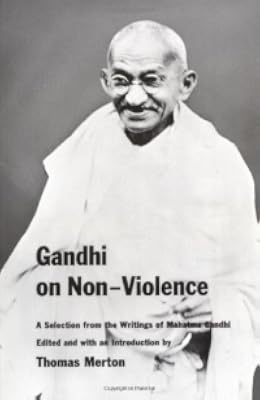
The gathering storm of new social forces and aspirations in America today has turned fresh attention to Gandhi's ideas on non-violence. That Gandhi draws in part on Emerson and Thoreau gives him a further relevance to the American scene. But the system of passive resistance which he pioneered is broad in its application and manysided in form. The self-training which he describes in these pages has welded inert groups into powerful social movements. Gandhi himself does not claim finality for show more his methods; he traces their evolution as they were applied in successive situations. But his teachings and experience, told here in his own words, are invaluable for all future students and participants in the struggle for social reform. show lessTags
Recommendations






















Member Reviews
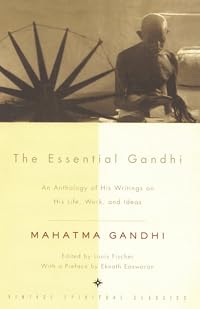
I just finished reading The Essential Gandhi, so my rating is affected by a comparison with that book which, I think, is far better.
The selections in this collection of writings is just as meaningful and important, but it's more confusing, because it incorporates writings from people other than Gandhi and it was not always very clear whose words I was reading. The writings also seemed a bit disjointed and in no particular order. Since Gandhi describes Satyagraha as a progressively more refined experiment, it would probably make more sense to have given his writings in chronological order, so that progression is more apparent. Maybe label the chapters by time period with sub-headings that describe the topic.
The selections in this collection of writings is just as meaningful and important, but it's more confusing, because it incorporates writings from people other than Gandhi and it was not always very clear whose words I was reading. The writings also seemed a bit disjointed and in no particular order. Since Gandhi describes Satyagraha as a progressively more refined experiment, it would probably make more sense to have given his writings in chronological order, so that progression is more apparent. Maybe label the chapters by time period with sub-headings that describe the topic.
a selection of passages by Gandhi on this subject, from a multitude of sources
Ghandi's vision of effective change process. ucb s14
> Babelio : https://www.babelio.com/livres/Gandhi-Resistance-non-violente/371534
> Un bon livre à lire à dose, beaucoup de passages ne sont pas forcément facile à intégrer. le message reste beau et plein d'espoir. Pour lecteur connaissant le sujet au préalable.
—Danieljean (Babelio)
> Un bon livre à lire à dose, beaucoup de passages ne sont pas forcément facile à intégrer. le message reste beau et plein d'espoir. Pour lecteur connaissant le sujet au préalable.
—Danieljean (Babelio)
Feb 22, 2021 (Edited)French
Ratings
Members
- Recently Added By
Lists

New York Public Library's Books of the Century
120 works; 20 members

New York Public Library's Books of the Century - All
170 works; 14 members

Blue Pyramid 1,276 Best Books of All Time
1,248 works; 32 members
Author Information

625+ Works 9,690 Members
Mohandas Gandhi is well known as a political activist and pacifist who played a key role in achieving India's independence from Great Britain. Although born in Porbandar, India, to parents of the Vaisya (merchant) caste, he was given a modern education and eventually studied law in London. After returning briefly to India, Gandhi went to South show more Africa in 1893, where he spent the next 20 years working to secure Indian rights. It was during this time that he experimented with and developed his basic philosophy of life. Philosophically, Gandhi is best known for his ideas of satyagraha (truth-force) and ahimsa (nonharming). Intrinsic to the idea of truth-force is the correlation between truth and being; truth is not merely a mental correspondence with reality but a mode of existence. Hence, the power of the truth is not what one argues for but what one is. He developed this idea in conjunction with the principle of nonviolence, showing in his nationalist activities that the force of truth, expressed nonviolently, can be an irresistible political weapon against intolerance, racism, and social violence. Although his basic terminology and conceptual context were Hindu, Gandhi was impressed by the universal religious emphasis on the self-transformative power of love, drawing his inspiration from Christianity, Western philosophy, and Islam as well. (Bowker Author Biography) show less
Awards and Honors
Classifications
- Genres
- Nonfiction, General Nonfiction, Philosophy, Politics and Government, Religion & Spirituality, Biography & Memoir
- DDC/MDS
- 322.4 — Society, government, & culture Political science Relation of the state to organized groups and their members Political action groups
- LCC
- HM278 — Social sciences Sociology (General) Sociology These are obsolete numbers no longer used
- BISAC
Statistics
- Members
- 349
- Popularity
- 90,597
- Reviews
- 4
- Rating
- (4.00)
- Languages
- English, French, Spanish
- Media
- Paper, Ebook
- ISBNs
- 12
- UPCs
- 1
- ASINs
- 8