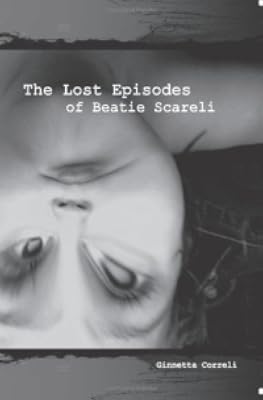
The Lost Episodes of Beatie Scareli
by Ginnetta Correli 
On This Page
Description
"The Lost Episodes of Beatie Scareli" is a novel written as a hybrid of a bizarre television script with prose resulting in quick, readable, deftly crafted scenes.Tags
Recommendations





Member Recommendations
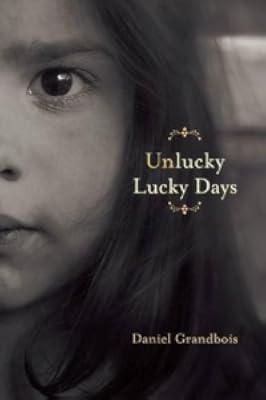
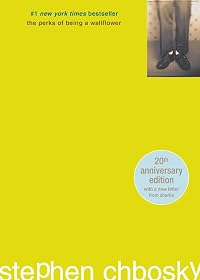
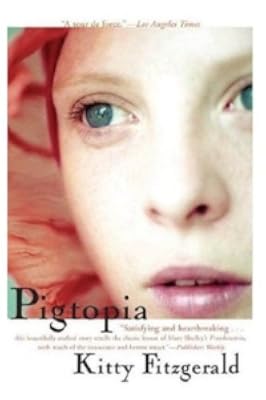
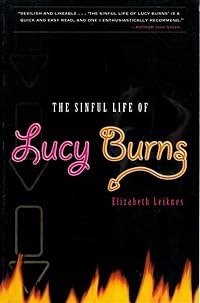
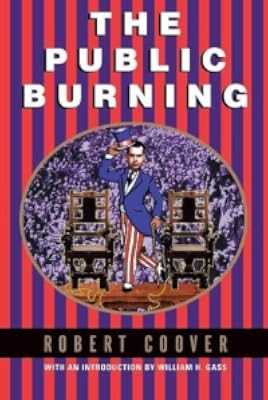
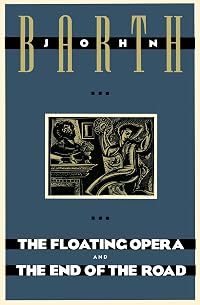
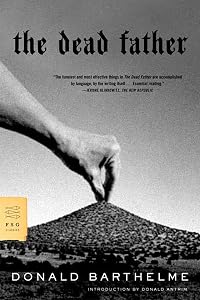
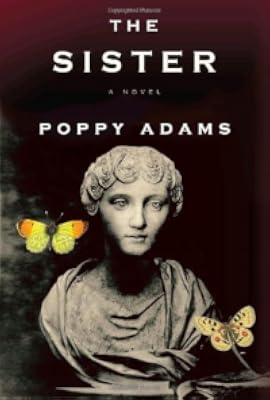
Jacey25 another novel where things are vaguely unsettling and the concept of being watched on television takes an interesting twist- a fantastic quick read
Member Reviews
Imagine a lower middle class, sensitive and somewhat gifted preteen girl making a movie of her life. Her dad is a real estate agent; her mom is a housewife. Should we anticipate a bland sitcom? An awkward, gawky You-Tube blog? Another, oh-god-please-not-another, reality series? But then imagine Vincent Gallo - in all his sleazy tank top glory - as her Dad. And add Britney Spears - eerily smiling, bald-headed, chattering at the paramedics - as her Mom. Use a tender-ugly beach scene for an establishing shot. "You da stuff, you beached whale" And let it roll and roll and roll. And you've got "The Lost Episodes of Beatie Scareli".
Ginnetta Correli writes short, like Hemingway, and sweet, like Bukowski. The publicity for the book makes a bit show more of a fuss about the script-like format of the book. I barely noticed it. The dialogue and action was so natural, vivid, and compelling, that I was finished with the book before I had a chance to think about its construction. The heroine, Beatie Scarelli, is a poignant, sad lost, postmodern Jane Eyre who finds no Rochester and hitches a ride, off into oblivion, with a stranger in a red Trans Am. Her heart gets sharded in one long slow train wreck of a childhood. I shall remember her, with a wish that a Holden Caufield might still catch her before the cliff... coming through the rye. But I think, in a way, maybe you and I and her imaginary friend Petey will do just that. show less
Ginnetta Correli writes short, like Hemingway, and sweet, like Bukowski. The publicity for the book makes a bit show more of a fuss about the script-like format of the book. I barely noticed it. The dialogue and action was so natural, vivid, and compelling, that I was finished with the book before I had a chance to think about its construction. The heroine, Beatie Scarelli, is a poignant, sad lost, postmodern Jane Eyre who finds no Rochester and hitches a ride, off into oblivion, with a stranger in a red Trans Am. Her heart gets sharded in one long slow train wreck of a childhood. I shall remember her, with a wish that a Holden Caufield might still catch her before the cliff... coming through the rye. But I think, in a way, maybe you and I and her imaginary friend Petey will do just that. show less
 This review was written for LibraryThing Early Reviewers.
I was pleasantly surprised by this self-published novel by Ginnetta Correli. The back cover states that it is an “experimental novel written as a hybrid of a bizarre television script.” I’m not sure that it succeeds as a bizarre television script, but it does come across as an engaging postmodern novel about a young girl who finds herself surrounded by madness and indifference.
Beatie Scareli’s mother is schizophrenic. She thinks she’s Lucille Ball and Beatie’s father is Ricky Ricardo. What seems slightly amusing at first quickly becomes a very twisted reality for Beatie. Her mother is in and out of the asylum. Her father is unsympathetic. Beatie is forced to go back and forth between her mother and father once her parents show more divorce. She pretends that nothing is wrong at school. She has imaginary friends, one of which happpens to be the reader. And Beatie handles it all the way I imagine most young people who know no other reality would handle it- nonchalantly looking for help, desperately trying to keep her childhood, and ultimately trying to escape from the situation.
Ginnetta Correli captures Beatie’s voice in short, minimalist sentences. Beatie’s character and voice draw the reader into this novel. The vignettes capture Beatie’s childlike perspective perfectly and frame the scenes of madness that make up her life. The combination of these elements make this novel hard to put down. I wanted to know what craziness could possibly happen to this girl next and how she was going to survive it all.
I only have a few complaints about the book. Correli thanks an friend and “editor” in the end notes, but I think the book could use a professional editor to help emphasize elements of theme and character development, while at the same time eliminate some unnecessary repetitiveness. For example, in one section of the book, Beatie mentions going to the bathroom repeatedly over several pages and several scenes. The character even mentions that she goes to the bathroom a lot. It doesn’t move the action or give any insight into her character besides the fact that she is presumably human and uses the bathroom. An editor would help focus the book and accentuate the elements that make it a good read to being with.
I think this book has something to say about the human condition, which is what defines good literature. Some scenes contain things some may find offensive, but Correli’s writing and Beatie’s character give those disturbing scenes validity and poignancy. show less
Beatie Scareli’s mother is schizophrenic. She thinks she’s Lucille Ball and Beatie’s father is Ricky Ricardo. What seems slightly amusing at first quickly becomes a very twisted reality for Beatie. Her mother is in and out of the asylum. Her father is unsympathetic. Beatie is forced to go back and forth between her mother and father once her parents show more divorce. She pretends that nothing is wrong at school. She has imaginary friends, one of which happpens to be the reader. And Beatie handles it all the way I imagine most young people who know no other reality would handle it- nonchalantly looking for help, desperately trying to keep her childhood, and ultimately trying to escape from the situation.
Ginnetta Correli captures Beatie’s voice in short, minimalist sentences. Beatie’s character and voice draw the reader into this novel. The vignettes capture Beatie’s childlike perspective perfectly and frame the scenes of madness that make up her life. The combination of these elements make this novel hard to put down. I wanted to know what craziness could possibly happen to this girl next and how she was going to survive it all.
I only have a few complaints about the book. Correli thanks an friend and “editor” in the end notes, but I think the book could use a professional editor to help emphasize elements of theme and character development, while at the same time eliminate some unnecessary repetitiveness. For example, in one section of the book, Beatie mentions going to the bathroom repeatedly over several pages and several scenes. The character even mentions that she goes to the bathroom a lot. It doesn’t move the action or give any insight into her character besides the fact that she is presumably human and uses the bathroom. An editor would help focus the book and accentuate the elements that make it a good read to being with.
I think this book has something to say about the human condition, which is what defines good literature. Some scenes contain things some may find offensive, but Correli’s writing and Beatie’s character give those disturbing scenes validity and poignancy. show less
This review was written for LibraryThing Early Reviewers.Surreality Rewind
Fear is palpable, darkness looming; the netherworld of the darkness never sleeps. Beatie Scareli indeed has her hands full. An abusive father, a mother slowly slipping into Schizophrenia, a twelve year old girl hanging on for the terror trip as her world collapses, bring us face to face with a most unforgiving tableau. Emotional and physical abuse run rampant, while implications of sex, molestation, and potential rape are perceptively on the slow simmer. But the boil never arrives, just the uncomfortable tingling that something forbidden has almost, but not quite, been witnessed. I know this Beatie character. Have met many cast in her mold. A sullen, meandering, brooding sort whose very aura makes the heart bleed. What show more can I do? How can I help? What SHOULD I do? Call somebody? Anybody? Oh crikey! Somebody help me with this help thing!
The primary expedient of impending doom and destruction are ever present in the narrow myopic universe Correli has created. One will not find much in the way of revelatory joy within the pages of this tale. Though told from a child’s perspective, we are given a clear eyed emotional view that maintains a safe distance, allowing the child narrator the compensatory luxury of imparting a humorous accounting. We can applaud her courage. What one finds in abundance is an uncomfortable series of questions. As expected. On any given day, we may witness the most unspeakable, untenable, unbelievable morass of twisted and oppressive unions; mother, father, child. Within each fractured tango, we have two dancers and at least one terrified spectator. In each case, no matter the emotional and physical artillery dispensed, the innocent and defenseless are the direct hits. Beatie Scareli is one of these unfortunates. Gracing the book’s rear cover, an assertion is made that this is an experimental novel written as “a hybrid of prose and television script,” as if the two are mutually exclusive, while at the same time we are told, “a woman watches the young girl’s difficult past on her television.” This same conceit is alluded to in the front pages as the dramatis personae are listed. The character, “Woman,” is apparently the selfsame one who is simultaneously watching “the young girl’s difficult past” as this tale unfolds. So I suppose we are to simply imagine this woman watching “the episodes of our past.” From this assertation, it appears that the woman watching the episodes of her past on television is none other than the author in fictional construct, making the tale all the more poignant; an autobiografiction. Truth is easiest told through fiction. Whether or not this tale is autobiographical, only its author can tell. At any rate, the twisting tale is indeed compelling.
Now, the binary depiction alluded to, if employing the right mechanism, could result in a most brilliant and stunning coup de gras. Alternating chapters, POV changes, an array of components juxtaposed and woven in tight weave. Were this promised literary gymnastics attempted, I could, if finding the result wanting, at least give props for a valiant attempt. Unfortunately, the alluded to binary depiction was perhaps intended, but not delivered. Granted, I admit to being disappointed at not receiving the expected literary feat of Copperfieldian legerdemain. Yet at the same time, I was so stunned and enchanted by the raw emotional power, acuity, and verve employed by Correli, the expectation of literary back flips waned as I was pulled close and deep into the austere tragedy of this horrific tale. And thus the magician’s hand was seen at work; present a sympathetic character, throw in some fears and idiosyncrasies, place them in a hostile setting, and the reader is immediately cast in the messianic role.
Perhaps this then was the author’s intention, a realization of her stated objective ultimately attained in a roundabout manner. The reader effectively becoming the woman watching the girl’s difficult past on her television through the mechanism of reading, one chapter (episode) at a time, staying resolutely tuned to the broadcast in order to assure her safety. One might scoff and counter that this is in no way an innovative or unique accomplishment, that the tale’s antagonist is always foremost in the reader’s mind as the one for whom he or she must root. True enough. However, to accomplish this feat in such a way that one so vividly sees and feels the said antagonist is nothing short of spectacular. If you are one of the millions who witnessed the trials and travails of Dorothy in the Wizard of Oz; sympathized, supported, rooted for her throughout, then you have some sense of the Beatie Scareli effect. Correli presents us a twelve year old girl in an unforgiving and apathetic world where each step could be the one to send her tumbling into the abyss. With such a character, the heart and mind of the reader are immediately engaged and won over. Would that we could comfort and console her, tell her everything will be alright, rescue her from her horrific surroundings and bring an end to her trail of tears. Would that we could. Alas, we cannot.
The creation of this character wrapped inside this compelling tale announces the arrival of a new voice, a new perspective, echoing an all too familiar metaphor. The fictional future is here: Ginnetta Correli, emotive talespinner ne plus ultra. show less
Fear is palpable, darkness looming; the netherworld of the darkness never sleeps. Beatie Scareli indeed has her hands full. An abusive father, a mother slowly slipping into Schizophrenia, a twelve year old girl hanging on for the terror trip as her world collapses, bring us face to face with a most unforgiving tableau. Emotional and physical abuse run rampant, while implications of sex, molestation, and potential rape are perceptively on the slow simmer. But the boil never arrives, just the uncomfortable tingling that something forbidden has almost, but not quite, been witnessed. I know this Beatie character. Have met many cast in her mold. A sullen, meandering, brooding sort whose very aura makes the heart bleed. What show more can I do? How can I help? What SHOULD I do? Call somebody? Anybody? Oh crikey! Somebody help me with this help thing!
The primary expedient of impending doom and destruction are ever present in the narrow myopic universe Correli has created. One will not find much in the way of revelatory joy within the pages of this tale. Though told from a child’s perspective, we are given a clear eyed emotional view that maintains a safe distance, allowing the child narrator the compensatory luxury of imparting a humorous accounting. We can applaud her courage. What one finds in abundance is an uncomfortable series of questions. As expected. On any given day, we may witness the most unspeakable, untenable, unbelievable morass of twisted and oppressive unions; mother, father, child. Within each fractured tango, we have two dancers and at least one terrified spectator. In each case, no matter the emotional and physical artillery dispensed, the innocent and defenseless are the direct hits. Beatie Scareli is one of these unfortunates. Gracing the book’s rear cover, an assertion is made that this is an experimental novel written as “a hybrid of prose and television script,” as if the two are mutually exclusive, while at the same time we are told, “a woman watches the young girl’s difficult past on her television.” This same conceit is alluded to in the front pages as the dramatis personae are listed. The character, “Woman,” is apparently the selfsame one who is simultaneously watching “the young girl’s difficult past” as this tale unfolds. So I suppose we are to simply imagine this woman watching “the episodes of our past.” From this assertation, it appears that the woman watching the episodes of her past on television is none other than the author in fictional construct, making the tale all the more poignant; an autobiografiction. Truth is easiest told through fiction. Whether or not this tale is autobiographical, only its author can tell. At any rate, the twisting tale is indeed compelling.
Now, the binary depiction alluded to, if employing the right mechanism, could result in a most brilliant and stunning coup de gras. Alternating chapters, POV changes, an array of components juxtaposed and woven in tight weave. Were this promised literary gymnastics attempted, I could, if finding the result wanting, at least give props for a valiant attempt. Unfortunately, the alluded to binary depiction was perhaps intended, but not delivered. Granted, I admit to being disappointed at not receiving the expected literary feat of Copperfieldian legerdemain. Yet at the same time, I was so stunned and enchanted by the raw emotional power, acuity, and verve employed by Correli, the expectation of literary back flips waned as I was pulled close and deep into the austere tragedy of this horrific tale. And thus the magician’s hand was seen at work; present a sympathetic character, throw in some fears and idiosyncrasies, place them in a hostile setting, and the reader is immediately cast in the messianic role.
Perhaps this then was the author’s intention, a realization of her stated objective ultimately attained in a roundabout manner. The reader effectively becoming the woman watching the girl’s difficult past on her television through the mechanism of reading, one chapter (episode) at a time, staying resolutely tuned to the broadcast in order to assure her safety. One might scoff and counter that this is in no way an innovative or unique accomplishment, that the tale’s antagonist is always foremost in the reader’s mind as the one for whom he or she must root. True enough. However, to accomplish this feat in such a way that one so vividly sees and feels the said antagonist is nothing short of spectacular. If you are one of the millions who witnessed the trials and travails of Dorothy in the Wizard of Oz; sympathized, supported, rooted for her throughout, then you have some sense of the Beatie Scareli effect. Correli presents us a twelve year old girl in an unforgiving and apathetic world where each step could be the one to send her tumbling into the abyss. With such a character, the heart and mind of the reader are immediately engaged and won over. Would that we could comfort and console her, tell her everything will be alright, rescue her from her horrific surroundings and bring an end to her trail of tears. Would that we could. Alas, we cannot.
The creation of this character wrapped inside this compelling tale announces the arrival of a new voice, a new perspective, echoing an all too familiar metaphor. The fictional future is here: Ginnetta Correli, emotive talespinner ne plus ultra. show less
The Lost Episodes of Beatie Scareli is a story about a girl who is trying to survive childhood with an abusive father and a schizophrenic mother. Sure, we've heard similar stories from other writers, but what makes Correli's writing unique is the screenplay format. This allows for vivid scenes that get straight to the point. We feel Beatie's pain without her telling us so, and we come to understand why she has developed a thick skin and has separated herself from her emotions. As sad as the tale is, there are moments of humor as we watch her deal with normal “tween” anxieties--clothes, make-up and popularity. It makes us want to read every page, as quickly as possible, to see if Beatie can survive long enough to escape her show more tumultuous home life. Quirky, yet deep, Correli’s story-telling is memorable and an interesting read. show less
(Reprinted from the Chicago Center for Literature and Photography [cclapcenter.com]. I am the original author of this essay, as well as the owner of CCLaP; it is not being reprinted here illegally.)
Regular readers will know that I maintain about as liberal a review policy here at CCLaP as I possibly can; specifically, that I promise to review any book that any author bothers to take the time to send to me, even self-published ones, and in fact to give it the same thousand-word sometimes humorously devastating treatment that I give any other novel here at the site (an attitude which has occasionally gotten me flack from said self-publishing authors...but I digress). And in fact, after 15 months now of writing regular book reviews, around show more 165 of them now at last count, I've come to realize that it is precisely these tiny books that most keep me on my toes as a critic; because there are actually all kinds of delicate issues that come with reviewing such books, at least if you want to be known as a fair and insightful reviewer, issues a critic simply doesn't have to deal with regarding much better-known books published in much larger numbers. For example, it's unfair to just glibly toss off a poorly-written review of a self-published book on a day, for example, when you might be in a bad personal mood; because your review might very well end up being the only single one on the planet ever written about that book by a person not related to that author, and thus carry an enormous amount of weight with whoever in the future is interested in that book. But on the other hand, it's unfair as well to not acknowledge legitimate problems with such books, or to "pad it up" in order to cut that author a break; as I've said here before, that's basically the literary equivalent of asking your grandmother for a review, and getting in return, "Oh, my little babooshka has written a book! Oh, how adorable! I'm so proud of my little artist!"
And thus do we come to today's book under review, the darkly comic (comically dark?) coming-of-age tale The Lost Episodes of Beatie Scareli by Ginnetta Correli, a wife and mom in Las Vegas who has only been writing seriously now for three years, and who essentially self-published the tale by being the owner of the basement press that put it out. Because the fact is that when you acknowledge the circumstances behind the book and its release, when you cut the manuscript just a bit of a break, it's actually a pretty great novel indeed, a pitch-black and obsessively compelling combination of Judy Blume and Kathy Acker; but you could also be quite critical of this book as well if you wanted, and rightly so, precisely for the problems concerning editing and cohesiveness that dog so many self-published novels. Ultimately I think it boils down a lot to simply what kind of reader you are, what kind of book fan you are; if you're the type, for example, who enjoys well-done yet flawed stories that required a lot of extra work to even exist, the type who enjoys purchasing such books as a way of subtly telling that beginning artist, "Keep doing what you're doing, because you're on the right track," then this is definitely a book you'll want to check out. And if you're not, then I guess you're not, and I guess you can go back to your vindictive little troll-like comments over at Amazon about how all self-publishers should be lined up in front of a wall and shot.
In fact, as unusual a way as this might be to begin a book review, it might actually be most helpful to start with the promotional video Correli put out for Scareli, which those of you with Flash Player on your computer or device should be seeing at the beginning of today's entry, or can always stop by YouTube to see at a later time. This has become a staple of the self-publishing author recently, in fact, the "Promotional Video At YouTube" to go with the "Virtual Litblog Book Tour" and the "Obligatory MySpace Profile;" but in Correli's case, she actually uses the opportunity in a much better way than most authors do, putting together not so much a cutesy commercial for the book but rather a cinematic explanation of what it's about, done in the style of a movie trailer and featuring one creepy-ass soundtrack. It ends up exactly reflecting what I thought of the book in general, which is hard to get across in just words alone but that the video does a great job of capturing quickly; it is slightly childish, unsettling in a way that's hard to pinpoint, both realistic and surrealistic at the same time, kind of a fairytale or maybe a nightmare but also a much deeper thing than simply that.
The book's named after our long-suffering hero, who starts the story as a twelve-year-old constantly cringing under the rule of a truly insane set of parents, a sexually abusive father who constantly speaks in a cartoonish Italian dialect and a mother who's both schizophrenic and who refuses to take her meds. The novel itself, then, takes on the Vonnegutian form of tiny but related short stories (one page, two pages) written in a deliberately simple voice; Correli also starts by using the metaphor of television scripts, taking the stance that these are "lost episodes" of a bizarre '80s family show that never aired (hence the novel's title), although sort of slowly gives up on the idea over the course of the manuscript. And in fact, it's very deliberate that I mention Kurt Vonnegut in this case, because I kept thinking of that controversial, hard-to-classify author when reading Scareli; because the truth is that parts of this book become so simple at points, reflect this cartoonishly surreal viewpoint of a child in the middle of it all so much, it actually threatens to turn legitimately juvenile, not just affected juvenilia by a smart adult in the service of a literary goal. But see, there are lots of other moments when Correli turns that around, when like Vonnegut she offers up a scene of just such unexpected power and complexity, one that could only happen precisely by using deceptively simple language and words.
It's at once the most interesting thing about the novel and its most frustrating, which is why I say that like most self-publishers, Correli could've really benefited from having a professional editor working with her on it; because when she gets things right in Scareli she gets them really right, showing us a glimpse of the truly powerful and mature writer that Correli one day might become. But like many first-time novelists, although technically proficient, there is something within the grand scheme of things that Correli simply misses here; the novel doesn't exactly hold together as a unified project of decent quality, but rather like I said as a series of surprisingly great scenes that are padded liberally with the typical problems of beginning writers. As mentioned, a lot of it could've simply be solved with the help of a smart and judicious editor, one for example who could've gotten in there and cut the 75 most superfluous pages before publication itself; and this is simply a problem about self-publishing you either accept or don't, that you either naturally forgive in a tiny self-done project or naturally don't.
That's why I say that it's so important in my opinion to understand the context by which any particular book comes out, and that to get as much enjoyment out of books as possible you need to take the details of that context in mind while reading it. Because the fact is that if you wanted to, like I said, you could be quite harsh on Scareli for the exact things you can imagine a person could be harsh about concerning a first-time self-published novelist; or you can simply accept that authors under those circumstances face challenges that more well-funded, veteran authors don't -- including not only a lack of editor, proofreader and fact-checker, but even long interrupted stretches of time to write. If you accept this, if you forgive an author like Correli in advance for such things, like me you'll find a surprisingly sophisticated tale, with images that haunt the mind long after the book is over, the sign of a promising new author who now simply needs some time, some experience, and a good support staff. And isn't that a much more fun way to go about reading a book? Why even read books if all you're looking for are excuses to be cranky and pissy about them?
As you can tell, The Lost Episodes of Beatie Scareli is one of those occasional books I love getting the chance to review here; a virtually unknown one, definitely with its flaws but well worth your time, from a struggling writer at the beginning of their career who could really use your support. It comes much recommended today, but only for the patient reader who enjoys approaching books with an open mind.
Out of 10:
Story: 8.4
Characters: 7.8
Style: 9.0
Overall: 8.2 show less
Regular readers will know that I maintain about as liberal a review policy here at CCLaP as I possibly can; specifically, that I promise to review any book that any author bothers to take the time to send to me, even self-published ones, and in fact to give it the same thousand-word sometimes humorously devastating treatment that I give any other novel here at the site (an attitude which has occasionally gotten me flack from said self-publishing authors...but I digress). And in fact, after 15 months now of writing regular book reviews, around show more 165 of them now at last count, I've come to realize that it is precisely these tiny books that most keep me on my toes as a critic; because there are actually all kinds of delicate issues that come with reviewing such books, at least if you want to be known as a fair and insightful reviewer, issues a critic simply doesn't have to deal with regarding much better-known books published in much larger numbers. For example, it's unfair to just glibly toss off a poorly-written review of a self-published book on a day, for example, when you might be in a bad personal mood; because your review might very well end up being the only single one on the planet ever written about that book by a person not related to that author, and thus carry an enormous amount of weight with whoever in the future is interested in that book. But on the other hand, it's unfair as well to not acknowledge legitimate problems with such books, or to "pad it up" in order to cut that author a break; as I've said here before, that's basically the literary equivalent of asking your grandmother for a review, and getting in return, "Oh, my little babooshka has written a book! Oh, how adorable! I'm so proud of my little artist!"
And thus do we come to today's book under review, the darkly comic (comically dark?) coming-of-age tale The Lost Episodes of Beatie Scareli by Ginnetta Correli, a wife and mom in Las Vegas who has only been writing seriously now for three years, and who essentially self-published the tale by being the owner of the basement press that put it out. Because the fact is that when you acknowledge the circumstances behind the book and its release, when you cut the manuscript just a bit of a break, it's actually a pretty great novel indeed, a pitch-black and obsessively compelling combination of Judy Blume and Kathy Acker; but you could also be quite critical of this book as well if you wanted, and rightly so, precisely for the problems concerning editing and cohesiveness that dog so many self-published novels. Ultimately I think it boils down a lot to simply what kind of reader you are, what kind of book fan you are; if you're the type, for example, who enjoys well-done yet flawed stories that required a lot of extra work to even exist, the type who enjoys purchasing such books as a way of subtly telling that beginning artist, "Keep doing what you're doing, because you're on the right track," then this is definitely a book you'll want to check out. And if you're not, then I guess you're not, and I guess you can go back to your vindictive little troll-like comments over at Amazon about how all self-publishers should be lined up in front of a wall and shot.
In fact, as unusual a way as this might be to begin a book review, it might actually be most helpful to start with the promotional video Correli put out for Scareli, which those of you with Flash Player on your computer or device should be seeing at the beginning of today's entry, or can always stop by YouTube to see at a later time. This has become a staple of the self-publishing author recently, in fact, the "Promotional Video At YouTube" to go with the "Virtual Litblog Book Tour" and the "Obligatory MySpace Profile;" but in Correli's case, she actually uses the opportunity in a much better way than most authors do, putting together not so much a cutesy commercial for the book but rather a cinematic explanation of what it's about, done in the style of a movie trailer and featuring one creepy-ass soundtrack. It ends up exactly reflecting what I thought of the book in general, which is hard to get across in just words alone but that the video does a great job of capturing quickly; it is slightly childish, unsettling in a way that's hard to pinpoint, both realistic and surrealistic at the same time, kind of a fairytale or maybe a nightmare but also a much deeper thing than simply that.
The book's named after our long-suffering hero, who starts the story as a twelve-year-old constantly cringing under the rule of a truly insane set of parents, a sexually abusive father who constantly speaks in a cartoonish Italian dialect and a mother who's both schizophrenic and who refuses to take her meds. The novel itself, then, takes on the Vonnegutian form of tiny but related short stories (one page, two pages) written in a deliberately simple voice; Correli also starts by using the metaphor of television scripts, taking the stance that these are "lost episodes" of a bizarre '80s family show that never aired (hence the novel's title), although sort of slowly gives up on the idea over the course of the manuscript. And in fact, it's very deliberate that I mention Kurt Vonnegut in this case, because I kept thinking of that controversial, hard-to-classify author when reading Scareli; because the truth is that parts of this book become so simple at points, reflect this cartoonishly surreal viewpoint of a child in the middle of it all so much, it actually threatens to turn legitimately juvenile, not just affected juvenilia by a smart adult in the service of a literary goal. But see, there are lots of other moments when Correli turns that around, when like Vonnegut she offers up a scene of just such unexpected power and complexity, one that could only happen precisely by using deceptively simple language and words.
It's at once the most interesting thing about the novel and its most frustrating, which is why I say that like most self-publishers, Correli could've really benefited from having a professional editor working with her on it; because when she gets things right in Scareli she gets them really right, showing us a glimpse of the truly powerful and mature writer that Correli one day might become. But like many first-time novelists, although technically proficient, there is something within the grand scheme of things that Correli simply misses here; the novel doesn't exactly hold together as a unified project of decent quality, but rather like I said as a series of surprisingly great scenes that are padded liberally with the typical problems of beginning writers. As mentioned, a lot of it could've simply be solved with the help of a smart and judicious editor, one for example who could've gotten in there and cut the 75 most superfluous pages before publication itself; and this is simply a problem about self-publishing you either accept or don't, that you either naturally forgive in a tiny self-done project or naturally don't.
That's why I say that it's so important in my opinion to understand the context by which any particular book comes out, and that to get as much enjoyment out of books as possible you need to take the details of that context in mind while reading it. Because the fact is that if you wanted to, like I said, you could be quite harsh on Scareli for the exact things you can imagine a person could be harsh about concerning a first-time self-published novelist; or you can simply accept that authors under those circumstances face challenges that more well-funded, veteran authors don't -- including not only a lack of editor, proofreader and fact-checker, but even long interrupted stretches of time to write. If you accept this, if you forgive an author like Correli in advance for such things, like me you'll find a surprisingly sophisticated tale, with images that haunt the mind long after the book is over, the sign of a promising new author who now simply needs some time, some experience, and a good support staff. And isn't that a much more fun way to go about reading a book? Why even read books if all you're looking for are excuses to be cranky and pissy about them?
As you can tell, The Lost Episodes of Beatie Scareli is one of those occasional books I love getting the chance to review here; a virtually unknown one, definitely with its flaws but well worth your time, from a struggling writer at the beginning of their career who could really use your support. It comes much recommended today, but only for the patient reader who enjoys approaching books with an open mind.
Out of 10:
Story: 8.4
Characters: 7.8
Style: 9.0
Overall: 8.2 show less
The Lost Episodes of Beatie Scareli is equal parts disturbing, hopeful and unresolved.
It is the story of a young girl who does her best to negotiate her life without healthy role models. Her father is incestuously flawed and her mother is a poorly treated schizophrenic.
I found the book easy to read. While I was not distracted by the screenplay format, it leads me to question why it was chosen. Does it help the reader stay detached from Beatie and therefore maintain an emotional distance from her traumas? Is it meant to objectify her, as her family and "friends" do in the book? I feel it most likely is supposed to make the reader feel as though they ARE Beatie, somehow disjointedly, remembering past experiences.
The lack of resolution is show more somewhat frustrating, but I was grateful for the follow up found at the website (www.beatiescareli.com). show less
It is the story of a young girl who does her best to negotiate her life without healthy role models. Her father is incestuously flawed and her mother is a poorly treated schizophrenic.
I found the book easy to read. While I was not distracted by the screenplay format, it leads me to question why it was chosen. Does it help the reader stay detached from Beatie and therefore maintain an emotional distance from her traumas? Is it meant to objectify her, as her family and "friends" do in the book? I feel it most likely is supposed to make the reader feel as though they ARE Beatie, somehow disjointedly, remembering past experiences.
The lack of resolution is show more somewhat frustrating, but I was grateful for the follow up found at the website (www.beatiescareli.com). show less
This review was written for LibraryThing Early Reviewers.This is an interesting book with just enough typos in it for me to suspect it is self-published. It tells the story of a seriously messed up family and a similarly damaged girl. It's a quick read and I enjoyed it quite a bit.
Members
- Recently Added By
Author Information

1 Work 42 Members
Ginnetta Correli is a LibraryThing Author, an author who lists their personal library on LibraryThing.
Classifications
Statistics
- Members
- 42
- Popularity
- 704,123
- Reviews
- 21
- Rating
- (3.54)
- Languages
- English
- Media
- Paper, Ebook
- ISBNs
- 1
- ASINs
- 1