On This Page
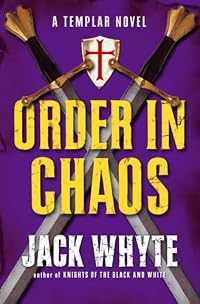
Description
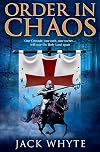
After King Philip IV of France declares the Templar knights outlaws and by way of murder and imprisonment seizes their assets, Sir William Sinclair leads the survivors to temporary sanctuary in Scotland, where they team up with Robert Bruce and after a rousing victory at Bannockburn seek out the fabled land of Templar lore--Merica.Tags
Recommendations




Member Reviews
It's been a while since I read the previous one in this series, 'Standard of Honour'. I did actually enjoy the first two, even if I do remember thinking that the jump between one and two was a bit much and 'Standard of Honour' seemed to lose a lot of the momentum built up in 'Knights of the Black and White.' Having said all that, I couldn't really remember what happened in the second volume, I'll admit, but it didn't seem to matter. And I'd forgotten what happened at the start of this one by the time I'd finished, so no great loss.
Yes, there's once again way too much talking and discussion and general dialogue and way too little of...well, pretty much anything else. Sure, it starts well, with a bang of a start in the first few pages, show more but after that, very little. Really, you might as well wade through the Templars Wikipedia page, if all this is going to be about is their final days and dissolution. The lack of anything other than flannel, is surprising though, as the book covers a reasonably tumultuous event, namely the French King's destruction of the Templars. The very first Friday the 13th. October 1307.
Sir William St. Clair and the other Templar-folk who get forewarned of their impending doom, are (unfortunately for those action-lovers amongst us and typically for this book) not around when this happens. Having received a tip-off to set sail a few hours before, they watch the event from out at sea off the coast of La Rochelle. Even later in the story, the now disbanded Templars turning up late for one last ride to save the day by chasing off the English at Bannockburn, is related as a chat, after the event, between Sinclair, Robert the Bruce and various aristocratic friends. I mean, look at Robert Low's trilogy covering the self-same period on Robert The Bruce. I haven't actually read them (yet), but you're not telling me, looking at those covers, they're sitting around in front of roaring log fires talking? As they do here. So all we get are hours of fat-chewing before and after. Generally, all the way through, all we get is talk, talk, change of scenery, talk, talk, change of people, talk, sail to Scotland, discussion, talk. Etc. Reminded me of later 'Wheel of Time' nonsense. That's not good, by the way.
Then some of their 'conversations', many actually, are not between characters, as characters might have had the same conversations if we weren't reading what they were saying in real life. What they say, is clearly aimed at us. Imparting knowledge that surely the character knows, and the character doing the telling, knows they know. But we - the reader don't know. So it's really us that is being told. And that makes it over long, forced and stilted. Like reading a bad Wikipedia entry.
So what else could it be? A romance? A very long-winded one, if it is. You know from the off, in the first few pages where the two meet, how it will end. That is telegraphed in the usual way - they can't abide each other. So of course they're bound to fall in love. The older, stuck in his ways, monastic (and more importantly, life-long celibate) Templar fighting monk and the headstrong, newly widowed, baroness with a whole load of boxes crammed full with gold coins, Scottish noble-lady. Their 'romance', which isn't actually underway until the final hundred pages, develops as the Templars society crumbles. That's what this must be about. Romance and new beginnings. Yes, the lead up to and the realisation that it must be love from Will Sinclair's side, is nicely and deftly done. Though, I remember feeling that the moment of admission on his side, the end of anticipation on her side and the joy on both sides, could have been more forcefully written. But you can't have anything, when Templars need to sort out stocks and supplies and … At least we do get a marriage. Well, that'll please those who think Historical Fiction is only written about luv between people wearing funny, old-fashioned clothes. Hello Amazon and Goodreads!
To again be more fair than this deserves, when you strip out much of the endless detail about how to run a Templar community on a previously almost deserted Scottish island, then it is pretty well-written. The descriptions of Scotland are lovely and clearly written by a Scot living abroad. But that's too little to affect the overall meandering. And with that stripped out, you'd have very little else.
Could have been a lot better. Should have been a whole lot shorter. show less
Yes, there's once again way too much talking and discussion and general dialogue and way too little of...well, pretty much anything else. Sure, it starts well, with a bang of a start in the first few pages, show more but after that, very little. Really, you might as well wade through the Templars Wikipedia page, if all this is going to be about is their final days and dissolution. The lack of anything other than flannel, is surprising though, as the book covers a reasonably tumultuous event, namely the French King's destruction of the Templars. The very first Friday the 13th. October 1307.
Sir William St. Clair and the other Templar-folk who get forewarned of their impending doom, are (unfortunately for those action-lovers amongst us and typically for this book) not around when this happens. Having received a tip-off to set sail a few hours before, they watch the event from out at sea off the coast of La Rochelle. Even later in the story, the now disbanded Templars turning up late for one last ride to save the day by chasing off the English at Bannockburn, is related as a chat, after the event, between Sinclair, Robert the Bruce and various aristocratic friends. I mean, look at Robert Low's trilogy covering the self-same period on Robert The Bruce. I haven't actually read them (yet), but you're not telling me, looking at those covers, they're sitting around in front of roaring log fires talking? As they do here. So all we get are hours of fat-chewing before and after. Generally, all the way through, all we get is talk, talk, change of scenery, talk, talk, change of people, talk, sail to Scotland, discussion, talk. Etc. Reminded me of later 'Wheel of Time' nonsense. That's not good, by the way.
Then some of their 'conversations', many actually, are not between characters, as characters might have had the same conversations if we weren't reading what they were saying in real life. What they say, is clearly aimed at us. Imparting knowledge that surely the character knows, and the character doing the telling, knows they know. But we - the reader don't know. So it's really us that is being told. And that makes it over long, forced and stilted. Like reading a bad Wikipedia entry.
So what else could it be? A romance? A very long-winded one, if it is. You know from the off, in the first few pages where the two meet, how it will end. That is telegraphed in the usual way - they can't abide each other. So of course they're bound to fall in love. The older, stuck in his ways, monastic (and more importantly, life-long celibate) Templar fighting monk and the headstrong, newly widowed, baroness with a whole load of boxes crammed full with gold coins, Scottish noble-lady. Their 'romance', which isn't actually underway until the final hundred pages, develops as the Templars society crumbles. That's what this must be about. Romance and new beginnings. Yes, the lead up to and the realisation that it must be love from Will Sinclair's side, is nicely and deftly done. Though, I remember feeling that the moment of admission on his side, the end of anticipation on her side and the joy on both sides, could have been more forcefully written. But you can't have anything, when Templars need to sort out stocks and supplies and … At least we do get a marriage. Well, that'll please those who think Historical Fiction is only written about luv between people wearing funny, old-fashioned clothes. Hello Amazon and Goodreads!
To again be more fair than this deserves, when you strip out much of the endless detail about how to run a Templar community on a previously almost deserted Scottish island, then it is pretty well-written. The descriptions of Scotland are lovely and clearly written by a Scot living abroad. But that's too little to affect the overall meandering. And with that stripped out, you'd have very little else.
Could have been a lot better. Should have been a whole lot shorter. show less
I enjoyed this third and final book of The Templar series, to my mind it was the best, maybe because there was a female as one of protagonists. It softened the story and made it more appealing (to me anyway!)
The story starts in La Rochelle in France where on 13th October 1307 King Phillip Cabat decides to arrest every member of the Templar order that can be found, on completely bogus charges. The order have to escape to The Arran Isles and seek sanctuary fro Robert the Bruce, who gladly helps the men The story details their experiences on the Island and how the Order clawed back harmony to the Chaos that they have been cast into, the changes they have to make in order to survive.
The female input makes the book a much more rounded story, show more Maybe not with the impact or adventure of the Camulod Chronicles which is really a fabulous peace of work, but a story worth reading anyway. show less
The story starts in La Rochelle in France where on 13th October 1307 King Phillip Cabat decides to arrest every member of the Templar order that can be found, on completely bogus charges. The order have to escape to The Arran Isles and seek sanctuary fro Robert the Bruce, who gladly helps the men The story details their experiences on the Island and how the Order clawed back harmony to the Chaos that they have been cast into, the changes they have to make in order to survive.
The female input makes the book a much more rounded story, show more Maybe not with the impact or adventure of the Camulod Chronicles which is really a fabulous peace of work, but a story worth reading anyway. show less
Tedious, melodramatic in places. Starts out with a coherent story but devolves into a meandering, mediocre story that just goes on and on with no apparent goal in sight. Could have been so much better with a more exciting story and a great deal of editing. Too many insignificant details. I actually had to quit reading it 3/4 the way through. A real disappointment with a less than believable main character.
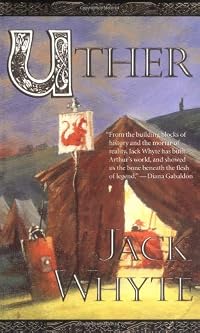
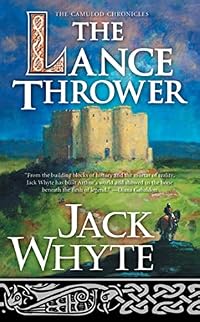
After reading the Camulod books, by Jack Whyte, I was really excited to read the Templar Trilogy books. This is the third book in the series, and I have now read all three books. This third book does not seem to tie into the first two at all. The secret society is essentially non-existant in the story, and that is the entire premise behind the trilogy. I found the entire Trilogy disappointing in general, as it did not hold my attention, nor have a very well developed plot.
I found there to be far too much talking to hold my interest. I gave up at about page 240.
Ratings
Members
- Recently Added By
Author Information

Writer Jack Whyte was born in Scotland in 1940. He was raised in Scotland, but educated in England and France before migrating to Canada in 1967. He spent one year teaching English in high school, before focusing on a career as a professional singer, musician, and actor. He wrote, directed and appeared in a one man show about Scotland's national show more poet Robert Burns in the early 1970's. Due to the show's success, he started writing for CBC national television and eventually went into advertising. He is the author of The Camulod Chronicles or A Dream of Eagles series which sets the tales of King Arthur in Roman Britain and Templar Trilogy which deals with the rise and fall of the Order of the Knights of the Temple of Solomon. (Bowker Author Biography) show less
Series

Work Relationships
Is contained in
Common Knowledge
- Canonical title
- Order in Chaos
- Original title
- Order in Chaos
- Original publication date
- 2009-08-06
Classifications
- Genres
- Fiction and Literature, General Fiction, Historical Fiction, Fantasy
- DDC/MDS
- 813.54 — Literature & rhetoric American literature in English American fiction in English 1900-1999 1945-1999
- LCC
- PR9199.3 .W4589 .O73 — Language and Literature English English Literature English literature: Provincial, local, etc.
- BISAC
Statistics
- Members
- 348
- Popularity
- 90,388
- Reviews
- 6
- Rating
- (3.40)
- Languages
- English, German, Italian, Portuguese
- Media
- Paper, Ebook
- ISBNs
- 15
- UPCs
- 1
- ASINs
- 9