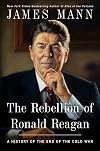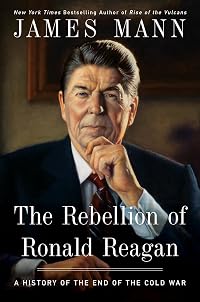
The Rebellion of Ronald Reagan: A History of the End of the Cold War
by James Mann
On This Page
Description
Drawing on new interviews and previously unavailable documents, Mann finally answers the troubling questions about Reagan's actual role in the crumbling of Soviet power; and concludes that by recognizing the significance of Gorbachev, Reagan helped bring the Cold War to a close.Tags
Recommendations




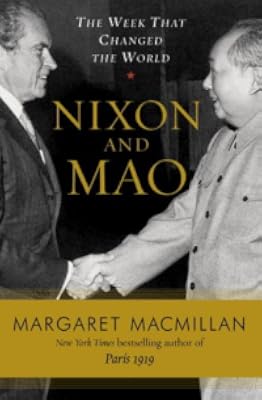




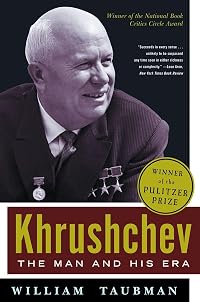
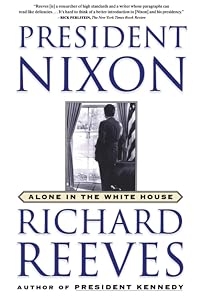
Member Recommendations

JayChaCha Useful in understanding how Reagan and Gorbachev overcame their own and each other's national security bureaucracies to end the Cold War.
JayChaCha Essential insight into how Reagan helped Gorbachev and himself escape from their national security bureaucracies to negotiate an end to the Cold War.
Member Reviews
What Reagan Knew that Everyone Else Didn't
While arguing for a more nuanced interpretation of both Ronald Reagan the President and his role in the collapse of the Soviet Union, James Mann attempts to show that while Reagan was not the central figure in ending the Cold War but allowed Gorbachev the political space to reform the Soviet system.
The so-called "rebellion" wasn't so much as stated but more like a deviation from the anti-communist right who saw Gorbachev as just another iron-fisted Soviet ruler intent on crushing the capitalist west. Reagan started out from the same stance, but steadily moved to a middle position. Mann seems to put a large emphasis on the role of Suzanne Massie for Reagan's shift on Soviet policy but a more show more likely explanation was the many tete-a-tete meetings the Reagans had with the Gorbachevs.
One point that would seem to contradict Mann's central argument was the "tear down this wall" speech, of which Mann spends a great deal of time explaining. First off, Gorbachev's reforms of Glasnost and Perestroika had been initiated before Reagan's Berlin speech, therefore any linkage between the 2 does not fit the chronology. Second, the speech was mostly received by the Soviet bloc as a provocation, a dare, if so, how does this advance Mann's thesis that Reagan allowed for political deference to Gorbachev?
Mann generally does a good job covering the many summits between the two leaders and the discussions over arms reduction and missile-defense, the so-called Star Wars program (SDI). However, Mann fails to mention 2 points. The desire to reduce medium-range missiles was due to the fact that they were no long tactically necessary. With the advent of inter-continental ballistic missiles (ICBMs), the U.S. could launch missiles from the continental U.S. and reach Russia, and vice-versa. Thus, the primary reason the war hawks were so intent on keeping the medium-range missiles was to protect the military-industrial-complex and maintain the defense budget -- any reduction would mean decreased production and therefore decreased profits for defense corporations -- and not because of any ideological anti-communist bent. The reason why Gorbachev and the USSR were so adamant on halting SDI was because it would prevent second-strike retaliation capability, fundamentally altering the balance of power to the U.S., a minor or major point (depending on how you look at it) that Mann neglects to mention.
And while you may ultimately find that Mann is unable to provide sufficient evidence to indicate exactly how much effect Reagan's political accommodation had if any, Reagan's role in ending the Cold War is best summed up by simply stating that: Reagan empathized with Gorbachev, due to the privileged information about Gorbachev's humanism gained through their several intimate meetings of which the political punditry the likes of Nixon, Kissinger, and George Will were never privy to.
Overall, this is a good book explaining from the American perspective how Reagan's foreign policy was implemented in the final crucial years leading up to the end of the cold war. And while Mann's interpretation does not disclose anything new, his presentation of the facts are clear and concise and can only add to our understanding of one of the most momentous moments in the history of the world. show less
While arguing for a more nuanced interpretation of both Ronald Reagan the President and his role in the collapse of the Soviet Union, James Mann attempts to show that while Reagan was not the central figure in ending the Cold War but allowed Gorbachev the political space to reform the Soviet system.
The so-called "rebellion" wasn't so much as stated but more like a deviation from the anti-communist right who saw Gorbachev as just another iron-fisted Soviet ruler intent on crushing the capitalist west. Reagan started out from the same stance, but steadily moved to a middle position. Mann seems to put a large emphasis on the role of Suzanne Massie for Reagan's shift on Soviet policy but a more show more likely explanation was the many tete-a-tete meetings the Reagans had with the Gorbachevs.
One point that would seem to contradict Mann's central argument was the "tear down this wall" speech, of which Mann spends a great deal of time explaining. First off, Gorbachev's reforms of Glasnost and Perestroika had been initiated before Reagan's Berlin speech, therefore any linkage between the 2 does not fit the chronology. Second, the speech was mostly received by the Soviet bloc as a provocation, a dare, if so, how does this advance Mann's thesis that Reagan allowed for political deference to Gorbachev?
Mann generally does a good job covering the many summits between the two leaders and the discussions over arms reduction and missile-defense, the so-called Star Wars program (SDI). However, Mann fails to mention 2 points. The desire to reduce medium-range missiles was due to the fact that they were no long tactically necessary. With the advent of inter-continental ballistic missiles (ICBMs), the U.S. could launch missiles from the continental U.S. and reach Russia, and vice-versa. Thus, the primary reason the war hawks were so intent on keeping the medium-range missiles was to protect the military-industrial-complex and maintain the defense budget -- any reduction would mean decreased production and therefore decreased profits for defense corporations -- and not because of any ideological anti-communist bent. The reason why Gorbachev and the USSR were so adamant on halting SDI was because it would prevent second-strike retaliation capability, fundamentally altering the balance of power to the U.S., a minor or major point (depending on how you look at it) that Mann neglects to mention.
And while you may ultimately find that Mann is unable to provide sufficient evidence to indicate exactly how much effect Reagan's political accommodation had if any, Reagan's role in ending the Cold War is best summed up by simply stating that: Reagan empathized with Gorbachev, due to the privileged information about Gorbachev's humanism gained through their several intimate meetings of which the political punditry the likes of Nixon, Kissinger, and George Will were never privy to.
Overall, this is a good book explaining from the American perspective how Reagan's foreign policy was implemented in the final crucial years leading up to the end of the cold war. And while Mann's interpretation does not disclose anything new, his presentation of the facts are clear and concise and can only add to our understanding of one of the most momentous moments in the history of the world. show less
I'm keeping this book because it may have a different slant on the fall of the Communist Evil Empire. Everybody has an axe to grind, I doubt that the truth of the matter can be established in our world as it is. I think nobody knows really "why" (treacherous word) this world event, the most surprising of my lifetime, occurred.
This is not a balanced book. It appear to me that the journalist/author is just another of Reagan's many liberal detractors with an agenda.. I am grateful that the United States during these most critical times had a president of Reagan's stature. His refusal to bargan away our Strategic Defence Initiative at Geneva and Reykjavic was indicative of his character and was an act that greatly hastened the "fall of an evil empire".Good for Reagan. I have nothing but contempt for his many pusillanimous liberal detractors, including this journalist /author with an agenda. They grow on trees.
Ratings
Members
- Recently Added By
Lists

The Cold War
54 works; 2 members

Books on Ronald Reagan and His Administration
37 works; 2 members

Read in 2013
28 works; 2 members
Author Information

8 Works 1,091 Members
James Mann is senior writer-in-residence at the Center for Strategic and International Studies
Awards and Honors
Awards
Common Knowledge
- People/Characters
- Ronald Reagan
- Important events
- Cold War
- Blurbers
- Solomon, Richard H.; Mitchell, Andrea; Shogan, Robert; Goldgeier, James; Scoblic, Peter; Kessler, Glenn
Classifications
- Genres
- Nonfiction, History, General Nonfiction, Politics and Government, Biography & Memoir
- DDC/MDS
- 973.927092 — History & geography History of North America United States 1901- Cold War, Vietnam War, Digital Age (1953-2001) Ronald Reagan (1981-1989) Reaganomics, Cold War Escalation, Iran-Contra Affair Biography
- LCC
- E877.2 .M36 — History of the United States United States Later twentieth century, 1961-2000 Reagan's administrations, 1981-1989
- BISAC
Statistics
- Members
- 187
- Popularity
- 175,761
- Reviews
- 3
- Rating
- (4.00)
- Languages
- English
- Media
- Paper, Audiobook, Ebook
- ISBNs
- 8
- ASINs
- 6