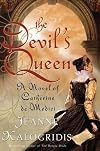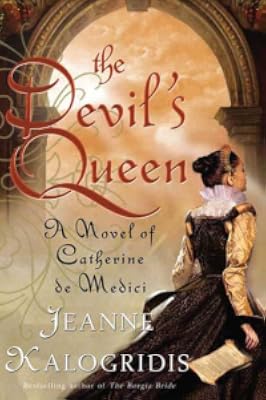
The Devil's Queen: A Novel of Catherine de Medici
by Jeanne Kalogridis
On This Page
Description
Catherine de Medici is one of the most maligned monarchs in history: blamed for the St. Bartholomew's Day Massacre in which hundreds of innocents died. What motivated this Renaissance woman who was born of Florence's most powerful family, and one day came to rule France?In her latest historical fiction bestseller, Jeanne Kalogridis tells the story of Catherine, a tender young girl, destined to be a pawn in Machiavellian games. Left a fabulously rich heiress, imprisoned and threatened by her show more family's enemies, she was finally married off to a handsome prince of France.
Overshadowed by her husband's mistress, the conniving Diane de Poitiers, and now consort to a King, Catherine resorted to sorcery to win his love, enhance her fertility and foil her enemies. Against the lavish and decadent backdrop of the French court, and Catherine's visions induced by the black arts, Kalogoris reveals the great love and desire Catherine bore for her husband Henry, and her stark determination to keep her sons on the throne.
. show less
Tags
Recommendations

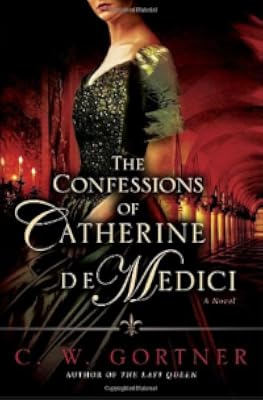
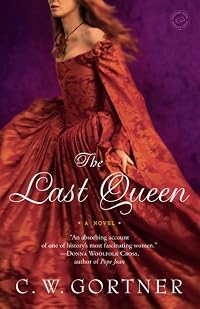
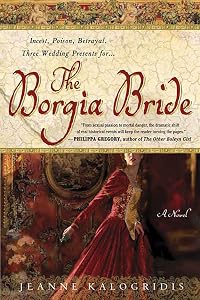
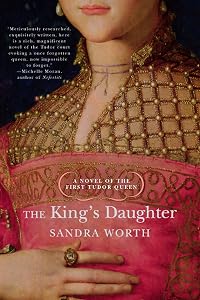




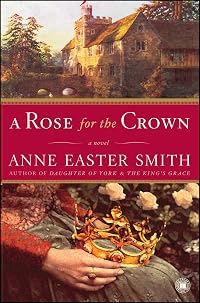
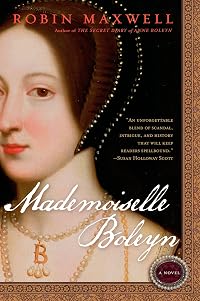
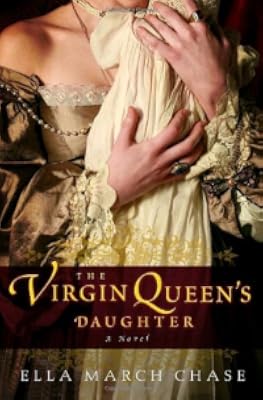
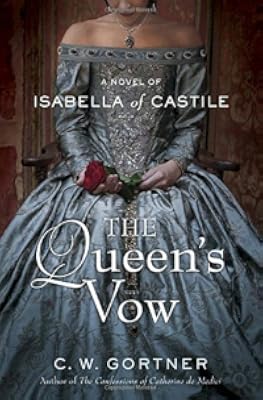

Member Recommendations
Member Reviews
It is hard to make a Queen who shoulders the blame for a religious massacre sympathetic, so Jeanne Kalogridis doesn’t try. Instead she goes the complete opposite direction. Giving us an unsentimental Queen who would commit any atrocity to save herself or someone she loves. Even as a girl she is already murdering and dabbling in black magic. For those of you unfamiliar with Catherine de Medici, the Italian born duchess was reduced to living in a convent after her family was deposed in Florence. In a true Cinderella story she marries the second son, Henry, of King Francoise of France. She ends up the Queen of France, and though a mere figurehead during her husbands rule, she has a great influence over the reigns of her sons. Because show more Catherine ruled France during such a tumultuous time, (religious upheaval, civil wars, weak kings), her reign was marked with political gaffes and intrigues, the most notably, The ST. Bartholomew’s Massacre leading to the deaths of tens of thousands of Huguenots (French Protestants). Never faltering and with clear determination, Catherine meets rivals for her husbands heart and traitors seeking to claim the throne.
Kalogridis’ Catherine is decidedly evil which makes for entertaining story telling and is historically probable. The author doesn’t try to excuse any of Catherine’s behavior, but she does give us fictionalized back story to try and establish her motivations. Since Kalogridis is prone to dramatics and excessive detail, (she’s also known for a lively look into the family of Dracula) let me say that if you’re looking for historical accuracy, this probably isn’t your novel. But if you’re looking for a spirited read that enlivens history into Catherine’s time, The Devil’s Queen is an excellent choice. I thoroughly enjoyed it.
I’d like to add that I was fortunate enough to pick up the audio version read by Kate Reading. Reading delivers a commanding Queen, and is pure magic to listen to. The French words are pronounced perfectly (to my English ears) and her pacing is spot on. show less
Kalogridis’ Catherine is decidedly evil which makes for entertaining story telling and is historically probable. The author doesn’t try to excuse any of Catherine’s behavior, but she does give us fictionalized back story to try and establish her motivations. Since Kalogridis is prone to dramatics and excessive detail, (she’s also known for a lively look into the family of Dracula) let me say that if you’re looking for historical accuracy, this probably isn’t your novel. But if you’re looking for a spirited read that enlivens history into Catherine’s time, The Devil’s Queen is an excellent choice. I thoroughly enjoyed it.
I’d like to add that I was fortunate enough to pick up the audio version read by Kate Reading. Reading delivers a commanding Queen, and is pure magic to listen to. The French words are pronounced perfectly (to my English ears) and her pacing is spot on. show less
Historical novels written from the perspective of an actual historical figure can be a hit and miss. Depending on how much is known about that person's life, the author may have a lot - or very little - to go on. As with any historical fiction depicting a real-life figure, there may be some assumptions and/or embellishments about events in said figure's life.
This novel is written from the first person perspective, which can be very interesting when done right. Even with letters from that person, or firsthand accounts of said person, it is next to impossible to know what a person really thought or felt about any situation. it takes a careful hand to present a realistic portrayal of how a historical figure may have felt about what was show more happening around them, or how they viewed themselves.
I think the author did a good job of presenting a realistic POV for Catherine de Medici, and her reactions to certain events of her life, such as her husband's infidelities, or what happened with her children. The magic aspect, when it came to her children, certainly was an intriguing bit of fantasy from the author, but one that could fit in real life. I was not sure how to feel about the 'revelation' of the Prince of Navarre, as there is nothing to support that. However, I will say that within the other fantasy the author put in the book, it was an intriguing plot point. I can only say that while you can enjoy this book, make yourself aware of what is pure fiction.
The author's notes at the back of the book give a good bit of historical context, and actually led me to do more research on my own. Though with the death of all four of Catherine's sons (the fourth son, not mentioned in this novel, predeceased his older brother, so Edouard's death really did end the Valois dynasty) the House of Valois may have come to an end, but Catherine de Medici's descendants continued through her daughters, so she is still the ancestor of many notable figures, including royalty (or their spouses) of various countries.
M.M. Strawberry Library & Reviews show less
This novel is written from the first person perspective, which can be very interesting when done right. Even with letters from that person, or firsthand accounts of said person, it is next to impossible to know what a person really thought or felt about any situation. it takes a careful hand to present a realistic portrayal of how a historical figure may have felt about what was show more happening around them, or how they viewed themselves.
I think the author did a good job of presenting a realistic POV for Catherine de Medici, and her reactions to certain events of her life, such as her husband's infidelities, or what happened with her children. The magic aspect, when it came to her children, certainly was an intriguing bit of fantasy from the author, but one that could fit in real life. I was not sure how to feel about the 'revelation' of the Prince of Navarre, as there is nothing to support that. However, I will say that within the other fantasy the author put in the book, it was an intriguing plot point. I can only say that while you can enjoy this book, make yourself aware of what is pure fiction.
The author's notes at the back of the book give a good bit of historical context, and actually led me to do more research on my own. Though with the death of all four of Catherine's sons (the fourth son, not mentioned in this novel, predeceased his older brother, so Edouard's death really did end the Valois dynasty) the House of Valois may have come to an end, but Catherine de Medici's descendants continued through her daughters, so she is still the ancestor of many notable figures, including royalty (or their spouses) of various countries.
M.M. Strawberry Library & Reviews show less
One of my all-time favorite historical novelists hits the mark perfectly with this thoughtful, passionate look at a woman historians love to hate. While never trying to excuse Catherine de Medici's actions, Kalogridis employs her creative vision backed up by meticulous research to reveal a woman of great strength and determination trapped within a web of political intrigue and imposed values. The result is a riveting visit to a world too-often obscured by false assumptions. Get comfortable before you start reading this one because you truly will not want to put it down.
System128 reviews
The Devil's Queen is just what I love about historical fiction: lush descriptions of life during the times, developed characters, a twisted storyline that is not completely predictable, even if you think you know the real story. I don't judge fiction on whether or not it conceivably could have happened; I take a book as it is and delight in any paranormal extras that the author writes. This book was a great story that kept me interested and made me want to google characters I was not familiar with. Loved it.
I was surprised reading this book. It shed a very different light on Catherine De Medici. She wasn't the cunning sly witch I was so used to reading. In fact, it was the opposite. The book put her as a young girl, who married and had a husband who was in love with someone else and everyone in the French court knew it. She couldn't have children which put tremendous pressure on her. This is where she meddles with magic and "witchcraft" to help her. This book definitely put Catherine in a very sympathetic light and I thought it was an interesting read.
I actually felt myself drawn to Catherine and felt for her during her hard times - especially during her marriage and her desperation to have children. She didn't seem like the evil Queen we show more all know her as. Eventually when she did have children, she seemed like a very devoted mother, and despite her rocky marriage, she was also very devoted to her husband (even though he wasn't). The plot is told entirely in Catherine's point of view, which is interesting and it highlights her intelligence and her willingness to learn politics even though women didn't have a place for it. I admire her strong will and determination to hold her position in court, even though she's been shadowed by Diane de Poitiers. Her relationship with Diane is a strange one, it went from enemies to a silent agreement and respect for one another. The references to magic and astrology is the main theme in the book and it shows Catherine's hobby turn into something more serious that had a great impact on her life and for those around her. I thought that was an interesting addition
The plot was well done and well written. The events that turned to the St Bartholomew's Day Massacre was interesting as many people were blamed (Including Catherine) for it. I liked how Catherine, eventually found out that turning things to her advantage and by avoiding events that are meant to be has serious consequences, and things still don't turn out the way she wanted it to be, she accepted it, in the end, and it just seemed that it had made her a better person and free from all the pressure, and the worries that were heaped onto her during the book. When she found out about Edouard's involvement in the Massacre, perhaps that was her breaking point. I was personally shocked about it and I could feel Catherine's emotions. It certainly did feel like a slap in the face.
I felt the ending did drag out and could have been faster paced. It seemed to drag and slow to a snail's crawl and extremely redundant. Also, there are certain parts of the book where an execution is involved (a rather gruesome one) and a hunt gone wrong. This may not please those that are squeamish.
Overall an interesting view on one of history's most villified Queens. Certainly sympathetic and very different from what we are all used to seeing in Catherine De Medici. I recommend this to historical fiction fans. It was a great read. show less
I actually felt myself drawn to Catherine and felt for her during her hard times - especially during her marriage and her desperation to have children. She didn't seem like the evil Queen we show more all know her as. Eventually when she did have children, she seemed like a very devoted mother, and despite her rocky marriage, she was also very devoted to her husband (even though he wasn't). The plot is told entirely in Catherine's point of view, which is interesting and it highlights her intelligence and her willingness to learn politics even though women didn't have a place for it. I admire her strong will and determination to hold her position in court, even though she's been shadowed by Diane de Poitiers. Her relationship with Diane is a strange one, it went from enemies to a silent agreement and respect for one another. The references to magic and astrology is the main theme in the book and it shows Catherine's hobby turn into something more serious that had a great impact on her life and for those around her. I thought that was an interesting addition
The plot was well done and well written. The events that turned to the St Bartholomew's Day Massacre was interesting as many people were blamed (Including Catherine) for it. I liked how Catherine, eventually found out that turning things to her advantage and by avoiding events that are meant to be has serious consequences, and things still don't turn out the way she wanted it to be, she accepted it, in the end, and it just seemed that it had made her a better person and free from all the pressure, and the worries that were heaped onto her during the book. When she found out about Edouard's involvement in the Massacre, perhaps that was her breaking point. I was personally shocked about it and I could feel Catherine's emotions. It certainly did feel like a slap in the face.
I felt the ending did drag out and could have been faster paced. It seemed to drag and slow to a snail's crawl and extremely redundant. Also, there are certain parts of the book where an execution is involved (a rather gruesome one) and a hunt gone wrong. This may not please those that are squeamish.
Overall an interesting view on one of history's most villified Queens. Certainly sympathetic and very different from what we are all used to seeing in Catherine De Medici. I recommend this to historical fiction fans. It was a great read. show less
Wonderful! Kalogridis does it again, with a beautifully written, mesmerizing, can't-put-it-down, just-one-more-chapter, stay up all night read! This novel puts a human face on Catherine de Medici, considered by those in her time to be the most evil royal figure of them all, not the brilliant and devoted leader and queen that she truly appears to have been. Based around factual details of Catherine's life, the story moves quickly from her childhood in Florence, hiding from those who would hunt and kill the de Medici clan, to her politically arranged marriage to a prince of France, and her life as a queen. Fast-paced and entirely believable, Catherine's story is one of heartbreak, betrayal, love, and the intrigues and complications of show more royal politics. Poignant and captivating, Kalogridis's story takes us to 16th-century Italy and France, and tells a story of one of the strongest and most misunderstood women in history.
Also highly recommended: The Borgia Bride and I, Mona Lisa, also by Kalogridis. show less
Also highly recommended: The Borgia Bride and I, Mona Lisa, also by Kalogridis. show less
I always felt that Catherine DeMedici was much maligned, & given the short end of the stick. Given what she had to endure when her parents were killed when she was a mere 14 year old girl, and herself being taken into captivity after that, she's lucky to have survived to become the powerful woman she became. Married off to King Henry, she was the mother of his sons, even though Henry spent the vast majority of his time with his mistress.
Catherine was a highly educated, highly intelligent woman, a fiercely protective mother who believed in astrology like so many of the nobility back then. For a brief time she was interested in some of the other arcana of the time, but certainly not enough to brand her the black witch that history claims show more she is.
This was a good story of a fascinating & powerful woman, well worth the read. She will seem a little heartless sometimes, but most noble women could seem that way, it was a face they put on. The book does start off a trifle slow, but once you get past that it's a wonderful tale. show less
Catherine was a highly educated, highly intelligent woman, a fiercely protective mother who believed in astrology like so many of the nobility back then. For a brief time she was interested in some of the other arcana of the time, but certainly not enough to brand her the black witch that history claims show more she is.
This was a good story of a fascinating & powerful woman, well worth the read. She will seem a little heartless sometimes, but most noble women could seem that way, it was a face they put on. The book does start off a trifle slow, but once you get past that it's a wonderful tale. show less
Members
- Recently Added By
Lists

A High School Trip to France
57 works; 5 members
Author Information

51+ Works 14,684 Members
J. M. Dillard lives in the sleepy community of Ojai, California, with her husband and dogs.
Series
Belongs to Publisher Series
Common Knowledge
- Original publication date
- 2009-07-21
- People/Characters
- Catherine de' Medici (consort of Henry II, King of France, 1519-1589); Henri II, King of France (1519-1559); Diane de Poitiers, Duchess of Valentinois (1499-1566); Cosimio Ruggieri; François II, King of France; Mary, Queen of Scots (show all 17); Charles IX, King of France; Henri III, King of France; Ippolito de' Medici; Clarissa Strozzi; Gabriel, comte de Montgomery; Louis I de Bourbon, prince de Condé; Admiral Gaspard de Coligny; Jeanne d'Albret; Marguerite de Navarre (1492-1549, also Marguerite of Angoulême, Margaret of Navarre); Henri IV, King of France (Henry of Navarre); Nostradamus
- Important places
- Florence, Tuscany, Italy; France; Italy; Tuscany, Italy
- Important events
- St. Bartholomew's Day Massacre (1572)
- Dedication
- For Russell Galen
- First words
- At first glance he was an unremarkable man, short and stout with graying hair and the drab clothes of a commoner.
- Last words
- (Click to show. Warning: May contain spoilers.)I caught it in my own, drew him to me, and kissed him.
- Publisher's editor
- Spicer, Charles (St. Martin's Press); Coode, Emma (HarperCollins UK)
- Blurbers
- Gregory, Philippa
Classifications
Statistics
- Members
- 600
- Popularity
- 48,767
- Reviews
- 30
- Rating
- (3.59)
- Languages
- 5 — Dutch, English, French, German, Italian
- Media
- Paper, Audiobook, Ebook
- ISBNs
- 24
- ASINs
- 8