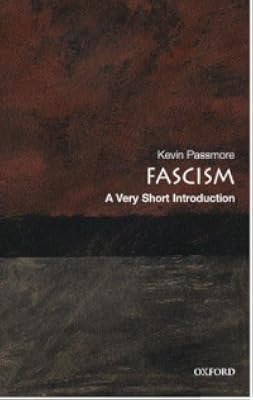
Fascism: A Very Short Introduction
by Kevin Passmore
On This Page
Description
What is fascism? Is it revolutionary? Or is it reactionary? Can it be both? Fascism is notoriously hard to define. How do we make sense of an ideology that appeals to streetfighters and intellectuals alike? That is overtly macho in style, yet attracts many women? That calls for a return to tradition while maintaining a fascination with technology? And that preaches violence in the name of an ordered society? In the new edition of this Very Short Introduction, Kevin Passmore brilliantly show more unravels the paradoxes of one of the most important phenomena in the modern world-tracing its origins in the intellectual, political, and social crises of the late nineteenth century, the rise of fascism following World War I, including fascist regimes in Italy and Germany, and the fortunes of "failed" fascist movements in Eastern Europe, Spain, and the Americas. He also considers fascism in culture, the new interest in transnational research, and the progress of the far right since 2002. show lessTags
Recommendations

















Member Reviews
Very good introduction/refresher that tackles the problem of trying to define fascism head on, not falling for the popular gloss-overs, or the academically popular totalitarian analysis. You get most of the spectrum represented here, not just the main course of italian fascism and german nazism, but smaller countries and movements.
This is clearly a book aimed particularly at students, and seems to achieve its brevity by compressing its contents rather than thinning them out, so it wasn't the easiest thing to listen to as an audiobook whilst busy with other activities. But it overlaps quite heavily with other things I've been reading over the last couple of months, so I think I was able to grasp the essentials...
Passmore spends quite a while dealing with the problem of definitions. The two clear historical examples, Italian Fascism and German Nazism, differed in important ways from each other, and both also changed considerably over the course of time. Other right-wing movements in Europe and elsewhere in the inter-war period often borrowed language, labels and show more ideas from the successful Italian and German movements, but differed considerably on things like the way they came to power (if they did), the extent to which they worked together with church, army, monarchy and mainstream conservatives, and even on whether or not their ultranationalism was based on racism (and if so, against which groups). Since World War II, the label "fascist" has been so tainted that no serious political movement (except the Italian Neo-fascists) has used it to define itself, whilst the rest of us have been happy to attach it to just about any political movement we didn't like. (Since the book was written in 2002 and only partly updated in 2014, it doesn't have much to say in detail about the current crop of far-right parties.)
Academic political scientists also use the term in conflicting and confusing ways. Passmore urges us to separate this essentially historical problem of definitions from the more important question of what we find morally repugnant in the programmes of far-right/nationalist/populist parties, which seems a helpful way of looking at things.
The other interesting point I took from the book is his identification of the common element between the ways Mussolini and Hitler came to power. In both cases a relatively modest electoral success was backed up by the (perceived) threat of large-scale civil disorder from the party's paramilitary organisations, which was enough to intimidate established parties into putting the extremists in power, and once in power the existing mobilisation of activists allowed the party to eliminate effective opposition very rapidly. None of the other movements of the 20s and 30s achieved this combination, and — so far — most of the modern far-right parties have shown no sign of trying to lock up their opponents and impose a single-party state. As Passmore says, this doesn't make their xenophobic rhetoric any less offensive, but it does mean that it probably isn't helpful to use their perceived similarity to Hitler and Mussolini as the core of our strategy for opposing them.
Probably a good book to read if you want to get the historical background clear in your mind, but rather superficial in its treatment of 21st century movements. show less
Passmore spends quite a while dealing with the problem of definitions. The two clear historical examples, Italian Fascism and German Nazism, differed in important ways from each other, and both also changed considerably over the course of time. Other right-wing movements in Europe and elsewhere in the inter-war period often borrowed language, labels and show more ideas from the successful Italian and German movements, but differed considerably on things like the way they came to power (if they did), the extent to which they worked together with church, army, monarchy and mainstream conservatives, and even on whether or not their ultranationalism was based on racism (and if so, against which groups). Since World War II, the label "fascist" has been so tainted that no serious political movement (except the Italian Neo-fascists) has used it to define itself, whilst the rest of us have been happy to attach it to just about any political movement we didn't like. (Since the book was written in 2002 and only partly updated in 2014, it doesn't have much to say in detail about the current crop of far-right parties.)
Academic political scientists also use the term in conflicting and confusing ways. Passmore urges us to separate this essentially historical problem of definitions from the more important question of what we find morally repugnant in the programmes of far-right/nationalist/populist parties, which seems a helpful way of looking at things.
The other interesting point I took from the book is his identification of the common element between the ways Mussolini and Hitler came to power. In both cases a relatively modest electoral success was backed up by the (perceived) threat of large-scale civil disorder from the party's paramilitary organisations, which was enough to intimidate established parties into putting the extremists in power, and once in power the existing mobilisation of activists allowed the party to eliminate effective opposition very rapidly. None of the other movements of the 20s and 30s achieved this combination, and — so far — most of the modern far-right parties have shown no sign of trying to lock up their opponents and impose a single-party state. As Passmore says, this doesn't make their xenophobic rhetoric any less offensive, but it does mean that it probably isn't helpful to use their perceived similarity to Hitler and Mussolini as the core of our strategy for opposing them.
Probably a good book to read if you want to get the historical background clear in your mind, but rather superficial in its treatment of 21st century movements. show less
Almost gave this two stars. Useful historical discussion of the varieties of fascism. But Passmore is so hyper-attuned to postmodernist fears of erecting totalizing definitional absolutes that he won't venture even the mildest moral pronouncements about the connections between historical fascism and the modern right. And his justifications for his own academic restraint are unconvincing, particularly in an era that has leaned ever more rightward in the years since this book's publication. Yes: arriving at a single, unified definition of fascism that fits all historical cases is ultimately impossible. Nevertheless, this book is so paralyzed by that impossibility that it offers, essentially, not even a provisional definition of the common show more threads that run through most varieties of fascism and that are alive and well in today's politics. show less
In his noted 1944 essay, George Orwell argued that the term "fascism" lacked precise usage, and mainly was used as a term of abuse. Over 60 years later, "fascist" has become an epithet that is applied across the political spectrum, to Islamic theocrats, fundamentalist Christians, and the GW Bush presidency, not to mention Nazis, Marxists, and denizens of the KKK.
In this short but weighty contribution, historian Kevin Passmore explores the concept of fascism from the standpoints of history and political philosophy. He proposes an elaborate definition that distinguishes fascism from features of which it is often composed, including ultra-nationalism, anti-democratic populism, and authoritarian conservativism. Passmore then traces show more manifestations of fascism historically, in book chapters on Mussolini’s Italy, Hitler’s Germany, Franco's Spain, and Eastern Europe. He stops short of applying the term to contemporary right wing movements, for which he prefers the term “national populism.” Subsequent chapters focus on the relationship of fascism to race, gender, and social class, and finally, to the current political scene.
Although carefully defined, Passmore’s criteria for recognizing fascism seem unduly restrictive. Even historically “fascist” Italy, Spain, and Eastern Europe do not quite meet his criteria. Likewise, his book does not consider extreme rightwing movements in Italy, France, the US, and Russia as fascist, on the grounds that they accept free market economy, and seek to exploit democracy for ethnic and ultra-nationalistic agendas rather than to overthrow it. Thus, a “national populist” movement would not be “fascist” until it succeeds at taking power, eliminating other political parties. However, radical rightwing movements that have not gained the power to impose their will on the public at large are hardly going to announce their anti-democratic objectives. After all, even the National Socialists in Germany used democratic election to gain power.
Passmore’s book essentially restricts “fascism” to established states with state-run economies, ultra-nationalist agendas, and one-party rule. Yet in reality, a radical statist movement that has taken control of a government benefits from retaining the trappings of democracy, as a way to mollify its citizenry, if not the international community. Existence of more than one political party does not imply either a sharing of power, or a diversity of views and goals. (As an example, consider the many authoritarian states with opposition parties that are tolerated because they have no actual power). Likewise, no need exists for "paramilitary violence" (another of Passmore's criteria) when the government itself has assumed power to suspend habeas corpus, spy on its own citizenry without warrant, imprison them without trial, and have them tortured and executed. Nor is there any need for such a government to take control over a capitalist economy, when that economy serves a powerful military-industrial complex that lies under direct control of the state.
Finally, Passmore’s restricted focus on nation states seems anachronistic, given that transnational movements and multinational institutions now pose some of the greatest threats to democratic values and governments. If the concept “fascism” is to have continued utility, surely it must be flexible enough to recognize changing times. Otherwise, we simply coin new terms like “neo-fascism” and “national populism” in a pedantic attempt at linguistic purity.
Clearly, Kevin Passmore’s “Fascism” is thought-provoking, and offers much material for consideration. As a scholarly work, it takes a conservative approach to its subject, and succeeds more at explaining patterns of the past than at mapping concepts to serve our dangerous present and unpredictable future.
This book is fairly accessible to the general reader; as one of the “Very Short Introduction” series, it is meant for the lay public. It includes 12 gray-scale illustrations, and two useful maps. show less
In this short but weighty contribution, historian Kevin Passmore explores the concept of fascism from the standpoints of history and political philosophy. He proposes an elaborate definition that distinguishes fascism from features of which it is often composed, including ultra-nationalism, anti-democratic populism, and authoritarian conservativism. Passmore then traces show more manifestations of fascism historically, in book chapters on Mussolini’s Italy, Hitler’s Germany, Franco's Spain, and Eastern Europe. He stops short of applying the term to contemporary right wing movements, for which he prefers the term “national populism.” Subsequent chapters focus on the relationship of fascism to race, gender, and social class, and finally, to the current political scene.
Although carefully defined, Passmore’s criteria for recognizing fascism seem unduly restrictive. Even historically “fascist” Italy, Spain, and Eastern Europe do not quite meet his criteria. Likewise, his book does not consider extreme rightwing movements in Italy, France, the US, and Russia as fascist, on the grounds that they accept free market economy, and seek to exploit democracy for ethnic and ultra-nationalistic agendas rather than to overthrow it. Thus, a “national populist” movement would not be “fascist” until it succeeds at taking power, eliminating other political parties. However, radical rightwing movements that have not gained the power to impose their will on the public at large are hardly going to announce their anti-democratic objectives. After all, even the National Socialists in Germany used democratic election to gain power.
Passmore’s book essentially restricts “fascism” to established states with state-run economies, ultra-nationalist agendas, and one-party rule. Yet in reality, a radical statist movement that has taken control of a government benefits from retaining the trappings of democracy, as a way to mollify its citizenry, if not the international community. Existence of more than one political party does not imply either a sharing of power, or a diversity of views and goals. (As an example, consider the many authoritarian states with opposition parties that are tolerated because they have no actual power). Likewise, no need exists for "paramilitary violence" (another of Passmore's criteria) when the government itself has assumed power to suspend habeas corpus, spy on its own citizenry without warrant, imprison them without trial, and have them tortured and executed. Nor is there any need for such a government to take control over a capitalist economy, when that economy serves a powerful military-industrial complex that lies under direct control of the state.
Finally, Passmore’s restricted focus on nation states seems anachronistic, given that transnational movements and multinational institutions now pose some of the greatest threats to democratic values and governments. If the concept “fascism” is to have continued utility, surely it must be flexible enough to recognize changing times. Otherwise, we simply coin new terms like “neo-fascism” and “national populism” in a pedantic attempt at linguistic purity.
Clearly, Kevin Passmore’s “Fascism” is thought-provoking, and offers much material for consideration. As a scholarly work, it takes a conservative approach to its subject, and succeeds more at explaining patterns of the past than at mapping concepts to serve our dangerous present and unpredictable future.
This book is fairly accessible to the general reader; as one of the “Very Short Introduction” series, it is meant for the lay public. It includes 12 gray-scale illustrations, and two useful maps. show less
While at times I felt like I needed an introduction to this introduction, I still managed to glean a handful of the most important details about Fascism from Passmore's short little book. While the beginnings of the movement took place among French saltworks laborers fighting against Italian immigrants, Mussolini's rise to power in Italy between WWI and WWII marks the beginning of the movement on a grand scale. Even from that grassroots development to its advent on the world stage, Fascists, like all -isms, covered an array of beliefs and topics, but a profound and sometimes violent ultranationalism always unified the factions. Fascists desire nations with as little diversity as possible, firmly rejecting people with different show more ethnicities and races and religions. Some of Passmore's finer details on economics and political science were sadly lost on me, written perhaps more for students or those with backgrounds in politics that aren't Fascism. show less
The author admits in the first chapter that fascism is difficult to define and that different characteristics will be emphasised depending on what definition one chooses. The characteristics he chooses to highlight have some uncomfortable resonances this year (2025) considering this book dates from 2014.
He then looks at what might be considered proto-fascist movements before WW1 before moving on to the classic Italian fascism of the interwar years and its similarities and differences with Nazism and authoritarian movements in other parts of Europe. Lastly he considers whether right wing movements after WW2 and into the 21st century really count as fascist and whether it is a meaningful pejorative.
He then looks at what might be considered proto-fascist movements before WW1 before moving on to the classic Italian fascism of the interwar years and its similarities and differences with Nazism and authoritarian movements in other parts of Europe. Lastly he considers whether right wing movements after WW2 and into the 21st century really count as fascist and whether it is a meaningful pejorative.
Top notch stuff if you want some basic political thought about one of the scariest political ideologies out there. This book cleared up a lot of misinfo I had about fascism.
Members
- Recently Added By
Author Information
7+ Works 478 Members
Series
Belongs to Publisher Series
Work Relationships
Is contained in
Common Knowledge
- Canonical title
- Fascism: A Very Short Introduction
- First words
- In the late 19th century, the saltworks of Mediterranean France were largely unmechanized, and the task of lifting salt was an exceptionally exhausting form of labour.
- Last words
- (Click to show. Warning: May contain spoilers.)It is equally possible that a cycle of violence and counter-violence might be unleashed, and that authoritarianism, and even full-blown fascism, might emerge.
Classifications
- Genres
- Nonfiction, History, General Nonfiction, Philosophy, Politics and Government
- DDC/MDS
- 335.6 — Society, government, & culture Economics Socialism and related systems Fascism
- LCC
- JC481 .P372 — Political Science Political theory Political theory. The state. Theories of the state Forms of the state
- BISAC
Statistics
- Members
- 419
- Popularity
- 74,159
- Reviews
- 14
- Rating
- (3.58)
- Languages
- English, Swedish
- Media
- Paper, Audiobook, Ebook
- ISBNs
- 13
- ASINs
- 4