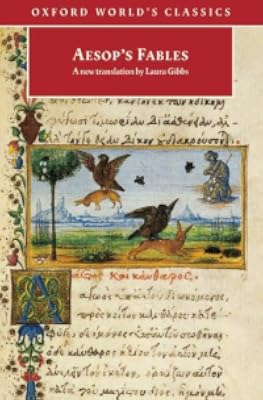
Fables of Aesop
by Aesop
On This Page
Description
Aesop was an Ancient Greek story-teller and slave, famed and cherished for his short fables that often involve personified animals. In the renowned collection of works that is Aesop's Fables, he weaves moral education and entertainment together into tales that have been enjoyed by many, many generations. A lot of the stories in Aesop's Fables, such as The Fox and the Grapes (giving us the term "sour grapes"), The Tortoise and the Hare, The North Wind and the Sun and The Boy Who Cried Wolf, show more are well-known across the world. The 1st century philosopher Apollonius of Tyana said of Aesop that "like those who dine well off the plainest dishes, he made use of humble incidents to teach great truths.". show less
Tags
Recommendations













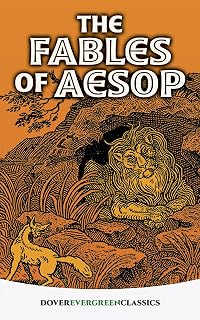



Member Recommendations

TineOliver Any selection (or the complete set) of the tales from the Arabian Nights would be a good complement to Aesop's fables. Although the tales from the nights are much longer and more detailed, they also contain moralistic stories, however these are based on Arabic traditions.
70


BeeQuiet Though unsuitable for youngsters due to its basis in letter form as opposed to short fables, this is good for people wanting a different outlook on life. It can encourage tolerance to your own misfortune and an appreciation of other's.
21

Member Reviews
These short stories of talking animals, plants, and men, attributed to a Grecian slave some 500-600 years before Christ, are a truly mixed bag of the conventional “street smarts” of the day. Some of stories strike a deep chord of wisdom, while others state fairly obvious truths. Still others offer sarcastic objections to life as it is. And, of course, many of the fables betray the skewed worldview of the ancient Grecian who saw the world as being ordered (or disordered, as the case may be) by a company of gods of questionable morals. There are a couple of things worthy of note, one being that Aesop sees nature as being immutable, although he also allows that it is often broader than what we might see at first glance. The foxes are show more always foxy, the sheep always sheepish, the snakes always snaky. Everything is what it is, and it cannot change beyond the bounds of its nature. However, it may be that the reader can expand his understanding of what a fox’s nature is, or a lion’s, etc. Aesop wants us to deal with life as it is with no misconceptions that it might change, but he wants us to know that life is much broader than we may think. Also of note is Aesop’s interaction with the Judeo-Christian faith, as both worldviews developed their concepts of wisdom in the same neighborhood, so to speak. In some cases, it is obvious that the Bible picks up lines or concepts from Aesop, such as “Physician, heal thyself,” or “If a man isn’t willing to work, let him not eat.” In other cases, it is obvious that Aesop picks up lines or concepts from the Bible, such as “Pride comes before a fall,” or the lion who would attack one bull alone but not three banded together. It is interesting to remember that our biblical writers were aware of the schools of thought of their neighbors, just as their neighbors were aware of them. And, on the topic of moral one-liners, it is also interesting to note just how many of Aesop’s lines are still in use today. “Honesty is the best policy,” “Necessity is the mother of invention,” “Don’t count your chickens before they hatch,” “Look before you leap,” “Slow and steady wins the race,” “Two wrongs don’t make a right,” “Revenge is a double-edged sword,” and “One good turn deserves another” are just a few. Of course, the reader might recognize some of Aesop’s ill-advised morals as well, such as, “Heaven helps those who help themselves,” “Might makes right,” or “Every man for himself.” Again, the wisdom of Aesop is not absolutely to be trusted, but he does make a valuable and interesting contribution to the study of wisdom. show less
This collection is about as close to the "original" Aesop as we'll ever get. Some of these fables may be genuine Aesops - assuming Aesop actually existed, while others may be stories later attributed to him, or imports from Egypt and even as far as India.
Like a lot of older works, the trick lies in understanding the context. These aren't supposed to be morality tales - that angle was added by the Victorians. Instead they are rhetorical devices, witty little tales to be used during debates to illustrate a point or to embarrass an opponent.
This little part of the introduction, explaining the "brutality" of many of the tales, didn't sit well with me:
I'm not sure we can extend the fact that the characters of the fables act in amoral ways, that the ancient Greeks condoned that sort of behaviour. As the editors themselves explained, many of these stories are supposed to be funny, and what's more funny than people acting in ridiculous ways?
Take the more modern humourous show, the Simpsons, in which the humour of Homer strangling Bart doesn't stem from a social acceptance of extreme child abuse - it's because the action is so absurd and out of place in the context of a "loving family". In fact, I'd argue the decreasing acceptance of this as humourous since it was first aired is due to our greater recognition of child abuse as a problem in our society - meaning is gag is now "too real" to be funny.
There's also some fables in here that don't make the cut for modern anthologies. There's one rather racist fable about Arabs being dishonest, about which the editors remark in a footnote "Arabs will find this fable offensive, and should avert their eyes". It's clearly not a serious content warning, since it comes after the fable and at the very end of the note, so I have to wonder if this was supposed to be funny, or if the editors just thought they had to acknowledge the obvious racism somehow. They remain silent on the homophobic fable a few pages later, so I don't know.
You're probably getting the idea that I don't like the editors much. It's true. I found them rather snarky, and self-important. My four stars is for the fables themselves, which are fun, and not the editorial content. I suppose I do appreciate the clarifications of which animals are meant by the original stories, giving us a window into the world where before house cats were common, we had house ferrets.
Now that I've read these, I'd love to compare to other historic fable collections, but Sophocles is calling me next, and my Greek journey continues. show less
Like a lot of older works, the trick lies in understanding the context. These aren't supposed to be morality tales - that angle was added by the Victorians. Instead they are rhetorical devices, witty little tales to be used during debates to illustrate a point or to embarrass an opponent.
This little part of the introduction, explaining the "brutality" of many of the tales, didn't sit well with me:
...we probably tend to underestimate the ethical transformation of Western culture whichshow more
came about as a result of Christianity. In the West today there is also much brutality, violence and corruption, but among all of that there is also a widespread public consensus that it is a good thing to be kind to children, to care about the unfortunate, to help one's neighbour, to assist the elderly across busy streets and to come to the assistance of someone in distress who may be drowning or being murdered in the street. But these attitudes seem to have been absent in ancient Greece except in the case of occasional individuals. The underlying ethos of the world of Aesop is 'You're on your own, and if you meet people who are unfortunate, kick them when they are down'.
I'm not sure we can extend the fact that the characters of the fables act in amoral ways, that the ancient Greeks condoned that sort of behaviour. As the editors themselves explained, many of these stories are supposed to be funny, and what's more funny than people acting in ridiculous ways?
Take the more modern humourous show, the Simpsons, in which the humour of Homer strangling Bart doesn't stem from a social acceptance of extreme child abuse - it's because the action is so absurd and out of place in the context of a "loving family". In fact, I'd argue the decreasing acceptance of this as humourous since it was first aired is due to our greater recognition of child abuse as a problem in our society - meaning is gag is now "too real" to be funny.
There's also some fables in here that don't make the cut for modern anthologies. There's one rather racist fable about Arabs being dishonest, about which the editors remark in a footnote "Arabs will find this fable offensive, and should avert their eyes". It's clearly not a serious content warning, since it comes after the fable and at the very end of the note, so I have to wonder if this was supposed to be funny, or if the editors just thought they had to acknowledge the obvious racism somehow. They remain silent on the homophobic fable a few pages later, so I don't know.
You're probably getting the idea that I don't like the editors much. It's true. I found them rather snarky, and self-important. My four stars is for the fables themselves, which are fun, and not the editorial content. I suppose I do appreciate the clarifications of which animals are meant by the original stories, giving us a window into the world where before house cats were common, we had house ferrets.
Now that I've read these, I'd love to compare to other historic fable collections, but Sophocles is calling me next, and my Greek journey continues. show less
Brilliant stuff, but some of the morals seem to contradict others. For example, The Ant And The Grasshopper teaches one to always prepare for the future, whereas The Frogs Desiring A King has the moral "Let well enough alone!" I think most adults can see the nuances differentiating those two stories, but a child might not be able to. And while some stories speak of the importance of teamwork, some exalt individual toughness and refusal to play along with others. So why do I still give this 4 stars? Because of life's pesky gray areas, of course.
Everyone knows Aesop's most famous fables: the fox and the sour grapes, the hen that laid golden eggs, the dog who saw his reflection in the water, the race between the tortoise and the hare, the boy who cried wolf, etc. What becomes quickly evident reading this text -- a translation of all 358 extant works collected under the Aesop 'brand' -- is that our cultural relationship with Aesop is fairly selective.
Taken as a whole, at face value, Aesop's fables are much more about how to avoid being eaten in a vicious, dog-eat-dog world, than they are about teaching quaint moral lessons. It becomes quickly apparent that our understanding of Aesop has been very westernized, Victorianized, and sanitized. Aesop's stories -- the ones we do not show more illustrate for children's books -- are rather violent, morbid, and feature moment-of-death punchlines as a favourite literary device.
For us, Aesop's fables are not simply storied thought experiments, but they provide a glimpse into a broader worldview and add another hue to our understanding of ancient Greek culture. Reading Aesop alongside the remnants of other texts from the 6th and 5th century BCE yields many rich insights, and provides an important interpretive lens for thinking about the fables in their original context -- not ours. show less
Taken as a whole, at face value, Aesop's fables are much more about how to avoid being eaten in a vicious, dog-eat-dog world, than they are about teaching quaint moral lessons. It becomes quickly apparent that our understanding of Aesop has been very westernized, Victorianized, and sanitized. Aesop's stories -- the ones we do not show more illustrate for children's books -- are rather violent, morbid, and feature moment-of-death punchlines as a favourite literary device.
For us, Aesop's fables are not simply storied thought experiments, but they provide a glimpse into a broader worldview and add another hue to our understanding of ancient Greek culture. Reading Aesop alongside the remnants of other texts from the 6th and 5th century BCE yields many rich insights, and provides an important interpretive lens for thinking about the fables in their original context -- not ours. show less
There are some books I’ve been aware of since childhood; this is one of them. Recently, I asked myself if I could recall ever having read it from start to finish. So I gave it a try. These are charming tales, some of which suffer from overexposure. I was interested to see the fox featured in many of them, the relatively powerless creature who has to live by his wits. An appropriate stand-in for the fabulist and his listeners.
There are also many tales warning against the danger of trying to pass yourself off as something you’re not. I guess the big bluff is not only a modern plague.
The translation offered here is agreeably colloquial and appropriate for passing on these common-sense bits of folk wisdom.
There are also many tales warning against the danger of trying to pass yourself off as something you’re not. I guess the big bluff is not only a modern plague.
The translation offered here is agreeably colloquial and appropriate for passing on these common-sense bits of folk wisdom.
It’s quite something when you reflect on the longevity of these stories, and the fact that some are recited by children born hundreds of years after they are written. Some carry messages still pertinent to modern times, and probably ever after.
This seems to be a pretty comprehensive collection of fables. They come from many collections, some directly attributable to Aesop (who seems to have bee a fairly erudite slave) .....some seem to originate in the bible (or maybe even predate the bible). And some seem to have been invented for added by various european writers. After a while, there gets to be a certain sameness about the babies though they all seem to have their own wrinkles. One impression that I've been left with is that there is not a lot of fun out there. They have cruel outcomes with the moral being "Don't be too trustful' or "that's what you get for hanging around in bad company" , etc. Even where there is a nice message as with the lion and the mouse (where the show more mouse is allowed to escape by the lion but later repays him)......it seems that there will be five other similar stories where the lion pounces on the mouse. Yes, found it quite fascinating ..though a little boring after a while. Sometimes, the message or moral of the story is clearly spelled out. At other times, the moral might be pretty hard to discern...or just be absent. Maybe, the real target audience is scholars who are studying fables as a communication tool etc.
Here are a few extracts that caught my attention and some samples of the fables:
Introduction
What might be called the endomythium, the moral inside the story (Greek endo-mythos, ‘inside-story’), was sometimes omitted entirely, as can already be seen in the first extant collection of fables, the poems of the Roman freedman Phaedrus.
The animal characters of Aesop’s fables bear a sometimes uncanny resemblance to those in the ancient folktales of India collected both in the Hindu storybook called the Panchatantra
and also in the tales of the Buddha’s former births, called jatakas.
It is only in medieval Europe that a more elaborate narrative form begins to emerge with the medieval ‘beast epic’ stories of Reynard the fox, inveterate rival of Ysengrimus, the wolf.
It is but a slight jump from this tradition to the horse named Boxer in Orwell’s Animal Farm,
the famous pigs named Wilbur or Babe or Porky, not to mention Bugs Bunny, Mickey Mouse, and innumerable other cartoon animals,
It is generally agreed that the first collection was the work of Demetrius of Phalerum (d. 280 BCE), There are approximately 120 verse fables of Phaedrus that have survived...One of the most curious features of Phaedrus’ fables is his attempt to supply fables about exploitation and injustice with a more pious conclusion
We know even less about Babrius.....Babrius wrote his fables in an unusual style of Greek verse (choliambics) and there are slightly more than 140 fables extant,
Aphthonius was a scholar and teacher of the fourth century CE.....The fables of Aphthonius are forty in number.......As a rule, his fables are quite brief and, with few exceptions, he includes both a promythium and an epimythium for every fable. Given this abundance of editorial moralizing, it is not surprising that in the majority of Aphthonius’ fables there is no endomythium, those witty last words spoken by one of the characters inside the fable itself.
There are just over forty fables ascribed to Avianus in the early fifth century CE.....Accounts of Aesopic fables can be found in the historical writings of the Greek historians Herodotus, Diodorus Siculus, and Plutarch and also in the Roman historian Livy. These historians recount specific fables that were reportedly used in speeches by historical figures, but it was in the Latin West that the fables truly thrived, thanks largely to the prose paraphrases of the Roman poet Phaedrus.
Ademar of Chabannes was a monk and scholar.....he also produced a collection of sixty-seven Aesopic fables,
There are several modern editions of Aesopic fables.....Most important is the monumental work published by Ben Perry in 1952, which is entitled Aesopica.....The French scholar Émile Chambry, who first published his results in a two-volume edition for the Belles Lettres series in 1925–6........Chambry lists ninety-four manuscripts held in public libraries.
Note on the Text and Translation
I have followed the lead of Odo of Cheriton and grouped the fables according to their contents, making it possible to follow the patterns of theme and variation that characterize the Aesopic tradition.
Every Greek and Latin noun, including the names of animals, has a fixed linguistic gender which is either masculine or feminine. The Greek raven, korax, is always masculine, as is the Latin corvus, while the Greek weasel, gale, is always feminine.
Aesop, the Popular Favourite
Having told this much of the story, Demosthenes then turned his back on the audience and began to walk away. The Athenians shouted at him to stop and begged him to finish the story. ‘Indeed!’ said Demosthenes. ‘You want to hear all about the donkey’s shadow, but you refuse to pay attention when someone talks to you about serious matters!’
I. The Fables
Greed and Jealousy......Thus, he voluntarily requested that a punishment be inflicted on his body: by asking to be blinded in one eye, he thus condemned the other man to a life of total darkness, with two blind eyes.
Sun: The Sun and the North Wind were quarrelling with each other as to which of the two of them would be able to make a man disrobe. The North Wind went first, blowing fiercely against the man. Yet as the man grew colder and colder, he only wrapped himself up more snugly in his cloak, clutching at it tightly so as to keep a firm grip no matter how hard the wind might be blowing. Thus the North Wind did the man no harm at all and failed to make him strip off his clothes. Next, the Sun began to shine upon the man so brightly that the very air of the day grew hotter and hotter. The man immediately took off his cloak and bundled it up on his shoulders. The fable shows that to take a humble approach is always more effective and practical than making empty boasts. NOTE: This fable is also found in Plutarch, Advice on Marriage 12.
Fable 193 (Babrius 65 = Perry 294) The Crane and the Peacock The peacock kept waving his golden feathers back and forth while he argued with the grey-winged crane. The crane finally exclaimed, ‘You may make fun of the colour of my wings, but I can rise on them up to the stars and high into the sky. You, on the other hand, can only flap those gilded feathers of yours down there on the ground, just like a rooster. You are never seen soaring up high in the sky!’ I would prefer to be admired while dressed in my well-worn clothes than to live without honour, no matter how fine my clothes might be.
Fable 200 (Babrius 64 = Perry 304) The Fir Tree and the Bramble Bush The fir tree and the bramble bush were quarrelling with one another. The fir tree sang her own praises at length. ‘I am beautiful and attractively tall. I grow straight up, a neighbour to the clouds. I supply the hall’s roof and the ship’s keel. How can you compare yourself, you mere thorn, to such a tree as myself?’ The bramble bush then said to the tree, ‘Just remember the axes which are always chopping away at you! Then even you can understand that it is better to be a bramble bush.’ A famous man has more glory than lesser people, but he is also exposed to greater dangers.
Fable 202 (Aphthonius 36 = Perry 70) The Oak Tree and the Reed A story about a reed and an oak, urging us not to rely on strength. A reed got into an argument with an oak tree. The oak tree marvelled at her own strength, boasting that she could stand her own in a battle against the winds. Meanwhile, she condemned the reed for being weak, since he was naturally inclined to yield to every breeze. The wind then began to blow very fiercely. The oak tree was torn up by her roots and toppled over, while the reed was left bent but unharmed. Those who adapt to the times will emerge unscathed.
Fable 240 (Babrius 4 = Perry 282) The Fisherman and the Fish A fisherman was pulling in the net which he had just cast and, as luck would have it, the net was filled with all kinds of sea creatures. The little fish escaped to the bottom of the net and slipped out through its many holes, but the big fish was caught and lay stretched out flat aboard the boat. To be small is a way to stay safe and avoid problems, whereas you rarely see a man with a big reputation who is able to keep out of danger.
The fable warns us that weak and poor people should not try to rebel against the high and mighty......The same is true of people. Often we are in awe of someone whom we have never even seen, but when we get to know him, we realize that he is really not important at all.
The Lion, the Hare, and the Deer........This is how some people behave: not satisfied with their moderate profits, they instead chase after the chance of something better and as a result they unwittingly lose what they previously had in their possession.
The Man and the New Donkey.....The story shows that a person is considered similar to the people whose companionship he enjoys.
II. Aetiologies, Paradoxes, Insults, and Jokes
Hermes and the Arabs:...... Hermes filled a cart with lies and dishonesty and all sorts of wicked tricks, and he journeyed in this cart throughout the land,The Arabs seized the contents of the cart as if it were a merchant’s valuable cargo.......As a result, Arabs are liars and charlatans, as I myself have learned from experience. There is not a word of truth that springs from their lips.
Truth in the Wilderness: A man was journeying in the wilderness and he found Truth standing there all alone.
An epimythium added to the fable reads: ‘If you want to hear my opinion: the way people live these days is scandalous!
Overall, I liked the book...though it became a bit tedious and somewhat repetitious with , more or less, the same formula for the fables. Probably best taken in short pithy doses as they were always designed to be. Five stars from me. show less
Here are a few extracts that caught my attention and some samples of the fables:
Introduction
What might be called the endomythium, the moral inside the story (Greek endo-mythos, ‘inside-story’), was sometimes omitted entirely, as can already be seen in the first extant collection of fables, the poems of the Roman freedman Phaedrus.
The animal characters of Aesop’s fables bear a sometimes uncanny resemblance to those in the ancient folktales of India collected both in the Hindu storybook called the Panchatantra
and also in the tales of the Buddha’s former births, called jatakas.
It is only in medieval Europe that a more elaborate narrative form begins to emerge with the medieval ‘beast epic’ stories of Reynard the fox, inveterate rival of Ysengrimus, the wolf.
It is but a slight jump from this tradition to the horse named Boxer in Orwell’s Animal Farm,
the famous pigs named Wilbur or Babe or Porky, not to mention Bugs Bunny, Mickey Mouse, and innumerable other cartoon animals,
It is generally agreed that the first collection was the work of Demetrius of Phalerum (d. 280 BCE), There are approximately 120 verse fables of Phaedrus that have survived...One of the most curious features of Phaedrus’ fables is his attempt to supply fables about exploitation and injustice with a more pious conclusion
We know even less about Babrius.....Babrius wrote his fables in an unusual style of Greek verse (choliambics) and there are slightly more than 140 fables extant,
Aphthonius was a scholar and teacher of the fourth century CE.....The fables of Aphthonius are forty in number.......As a rule, his fables are quite brief and, with few exceptions, he includes both a promythium and an epimythium for every fable. Given this abundance of editorial moralizing, it is not surprising that in the majority of Aphthonius’ fables there is no endomythium, those witty last words spoken by one of the characters inside the fable itself.
There are just over forty fables ascribed to Avianus in the early fifth century CE.....Accounts of Aesopic fables can be found in the historical writings of the Greek historians Herodotus, Diodorus Siculus, and Plutarch and also in the Roman historian Livy. These historians recount specific fables that were reportedly used in speeches by historical figures, but it was in the Latin West that the fables truly thrived, thanks largely to the prose paraphrases of the Roman poet Phaedrus.
Ademar of Chabannes was a monk and scholar.....he also produced a collection of sixty-seven Aesopic fables,
There are several modern editions of Aesopic fables.....Most important is the monumental work published by Ben Perry in 1952, which is entitled Aesopica.....The French scholar Émile Chambry, who first published his results in a two-volume edition for the Belles Lettres series in 1925–6........Chambry lists ninety-four manuscripts held in public libraries.
Note on the Text and Translation
I have followed the lead of Odo of Cheriton and grouped the fables according to their contents, making it possible to follow the patterns of theme and variation that characterize the Aesopic tradition.
Every Greek and Latin noun, including the names of animals, has a fixed linguistic gender which is either masculine or feminine. The Greek raven, korax, is always masculine, as is the Latin corvus, while the Greek weasel, gale, is always feminine.
Aesop, the Popular Favourite
Having told this much of the story, Demosthenes then turned his back on the audience and began to walk away. The Athenians shouted at him to stop and begged him to finish the story. ‘Indeed!’ said Demosthenes. ‘You want to hear all about the donkey’s shadow, but you refuse to pay attention when someone talks to you about serious matters!’
I. The Fables
Greed and Jealousy......Thus, he voluntarily requested that a punishment be inflicted on his body: by asking to be blinded in one eye, he thus condemned the other man to a life of total darkness, with two blind eyes.
Sun: The Sun and the North Wind were quarrelling with each other as to which of the two of them would be able to make a man disrobe. The North Wind went first, blowing fiercely against the man. Yet as the man grew colder and colder, he only wrapped himself up more snugly in his cloak, clutching at it tightly so as to keep a firm grip no matter how hard the wind might be blowing. Thus the North Wind did the man no harm at all and failed to make him strip off his clothes. Next, the Sun began to shine upon the man so brightly that the very air of the day grew hotter and hotter. The man immediately took off his cloak and bundled it up on his shoulders. The fable shows that to take a humble approach is always more effective and practical than making empty boasts. NOTE: This fable is also found in Plutarch, Advice on Marriage 12.
Fable 193 (Babrius 65 = Perry 294) The Crane and the Peacock The peacock kept waving his golden feathers back and forth while he argued with the grey-winged crane. The crane finally exclaimed, ‘You may make fun of the colour of my wings, but I can rise on them up to the stars and high into the sky. You, on the other hand, can only flap those gilded feathers of yours down there on the ground, just like a rooster. You are never seen soaring up high in the sky!’ I would prefer to be admired while dressed in my well-worn clothes than to live without honour, no matter how fine my clothes might be.
Fable 200 (Babrius 64 = Perry 304) The Fir Tree and the Bramble Bush The fir tree and the bramble bush were quarrelling with one another. The fir tree sang her own praises at length. ‘I am beautiful and attractively tall. I grow straight up, a neighbour to the clouds. I supply the hall’s roof and the ship’s keel. How can you compare yourself, you mere thorn, to such a tree as myself?’ The bramble bush then said to the tree, ‘Just remember the axes which are always chopping away at you! Then even you can understand that it is better to be a bramble bush.’ A famous man has more glory than lesser people, but he is also exposed to greater dangers.
Fable 202 (Aphthonius 36 = Perry 70) The Oak Tree and the Reed A story about a reed and an oak, urging us not to rely on strength. A reed got into an argument with an oak tree. The oak tree marvelled at her own strength, boasting that she could stand her own in a battle against the winds. Meanwhile, she condemned the reed for being weak, since he was naturally inclined to yield to every breeze. The wind then began to blow very fiercely. The oak tree was torn up by her roots and toppled over, while the reed was left bent but unharmed. Those who adapt to the times will emerge unscathed.
Fable 240 (Babrius 4 = Perry 282) The Fisherman and the Fish A fisherman was pulling in the net which he had just cast and, as luck would have it, the net was filled with all kinds of sea creatures. The little fish escaped to the bottom of the net and slipped out through its many holes, but the big fish was caught and lay stretched out flat aboard the boat. To be small is a way to stay safe and avoid problems, whereas you rarely see a man with a big reputation who is able to keep out of danger.
The fable warns us that weak and poor people should not try to rebel against the high and mighty......The same is true of people. Often we are in awe of someone whom we have never even seen, but when we get to know him, we realize that he is really not important at all.
The Lion, the Hare, and the Deer........This is how some people behave: not satisfied with their moderate profits, they instead chase after the chance of something better and as a result they unwittingly lose what they previously had in their possession.
The Man and the New Donkey.....The story shows that a person is considered similar to the people whose companionship he enjoys.
II. Aetiologies, Paradoxes, Insults, and Jokes
Hermes and the Arabs:...... Hermes filled a cart with lies and dishonesty and all sorts of wicked tricks, and he journeyed in this cart throughout the land,The Arabs seized the contents of the cart as if it were a merchant’s valuable cargo.......As a result, Arabs are liars and charlatans, as I myself have learned from experience. There is not a word of truth that springs from their lips.
Truth in the Wilderness: A man was journeying in the wilderness and he found Truth standing there all alone.
An epimythium added to the fable reads: ‘If you want to hear my opinion: the way people live these days is scandalous!
Overall, I liked the book...though it became a bit tedious and somewhat repetitious with , more or less, the same formula for the fables. Probably best taken in short pithy doses as they were always designed to be. Five stars from me. show less
Members
- Recently Added By
Lists

1001 Books You Must Read Before You Die
1,448 works; 1,137 members

Favorite Childhood Books
1,651 works; 515 members
1001 Children's Books You Must Read Before You Grow Up
774 works; 101 members

Favorite Animal Fiction
359 works; 156 members

Childhood Favorites
427 works; 24 members

The Top Ten: Writers Pick Their Favorite Books
240 works; 33 members

Best Books About Animals
143 works; 48 members

Children's Classics Worth Reading
68 works; 9 members

Folio Society
831 works; 49 members

Harold Bloom - The Western Canon: A. The Theocratic Age
97 works; 13 members
Ambleside Books
459 works; 18 members

Best Young Adult
413 works; 102 members
Favourite Books
1,820 works; 308 members

Greatest Books, allegedly
484 works; 9 members

Western Canon
206 works; 2 members

Western Canon
24 works; 1 member

A Reading List
100 works; 3 members

Short Story Collections and Anthologies
261 works; 42 members

100 Books to Read in a Lifetime (That Are Older Than 200 Years)
415 works; 176 members

Books on my Kindle
162 works; 3 members

Art of Reading
188 works; 5 members

Western World's Greatest Books - Project Gutenberg
295 works; 15 members

Unread books
1,063 works; 87 members

Stories Featuring Reptiles
22 works; 5 members

Best of World Literature
437 works; 52 members

Literature Before the 17th Century
20 works; 5 members

Book Titles Mentioned In Newberry Medal And Honor Books
884 works; 3 members
Author Information

Though many modern scholars dispute his existence, Aesop's life was chronicled by first century Greek historians who wrote that Aesop, or Aethiop, was born into Greek slavery in 620 B.C. Freed because of his wit and wisdom, Aesop supposedly traveled throughout Greece and was employed at various times by the governments of Athens and Corinth. Some show more of Aesop's most recognized fables are The Tortoise and the Hare, The Fox and the Grapes, and The Ant and the Grasshopper. His simple but effective morals are widely used and illustrated for children. (Bowker Author Biography) show less
Some Editions
Awards and Honors
Awards
Distinctions
Notable Lists
Series
Belongs to Publisher Series
BUR: L [Rizzoli] (69)
Clube de Literatura Clássica (CLC) (48 [April 2024])
Incline Press (2018)
Penguin Classics (L043)
Work Relationships
Is contained in
Contains
Is retold in
Is abridged in
Common Knowledge
- Canonical title
- Fables of Aesop
- Original title
- Μῦθοι Αἰσώπειοι
- Alternate titles
- Aesop's Fables; The Complete Fables
- Original publication date
- ca. 600 BC
- People/Characters
- Aesop; The Tortoise and the Hare; The Boy Who Cried Wolf; The Goose that Laid the Golden Eggs; Jupiter (god); Mercury (god) (show all 9); Hercules (god); Zeus (god); Hermes (god)
- Important places
- Ancient Greece; Greece
- Important events
- Classical Antiquity
- Epigraph
- So the tales were told age before Aesop; and asses under lions' manes roared in Hebrew; and sly foes flattered in Etruscan; and wolves in sheep's clothing gnashed their teeth in Sanskrit, no doubt. - Thackeray, Th... (show all)e Newcomes
- First words
- A half-starved fox, who saw in the hollow of an oak-tree some bread and meat left there by shepherds, crept in and ate it.
--Handford translation (1964)
Wolf, meeting with a Lamb astray from the fold, resolved not to lay violent hands on him, but to find some plea to justify to the Lamb the Wolf's right to eat him.
A WOLF, meeting with a Lamb astray from the fold, resolved not to lay violent hands on him, but to find some plea to justify to the Lamb the Wolf's right to eat him.
A cock was once strutting up and down the farmyard among the hens when suddenly he espied something shining amid the straw. - 1966 Schocken edition.
A hungry fox saw some fine bunches of grapes hanging from a vine that was trained along a high trellis and did his best to reach them by jumping as high as he could into the air.
Popular stories of one sort and another have existed in every place and age; and since primitive man has usually lived in close contact with wild and domestic animals, it was natural for him to invent stories describing imag... (show all)inary adventures of animals and to make them act and speak with motives and emotions proper to human beings.
--Handford translation (1964)
[Preface] We have had the History of AEsiop so many times over and over, and dress'd up to many several Ways, that it would be but labour lost to multiple unprofitable Conjectures upon a Tradition of so great Uncer... (show all)tainty.
[THE LIFE OF AESOP] AESOP (according to Planudes, Camerarius and others) was by Birth, of Ammorius, a Town in the greater Phrygia; (though some will have him to be a Thracian, others a S... (show all)amian) of mean Condition, and his Person deformed, to the highest degree: Flat-nos'd, hunch-back'd, blobber-lipp'd; a long mishapen Head; his Body crooked all over, big-belly'd, badger-legg'd, and his Complexion so swarthy, that he took his very Name from't; for AEsop is with AEthiop. - Quotations
- Destroy the seed of evil, or it will grow up to your ruin.
Necessity is the mother of invention. - Last words
- (Click to show. Warning: May contain spoilers.)In the same way there are some would-be orators who in the schools pass for men of ability but are a complete failure when they enter public life.
(Click to show. Warning: May contain spoilers.)The Kite replied, "That I might attain your royal hand, there is nothing that I would not have promised, however much I knew that I must fail in the performance."
(Click to show. Warning: May contain spoilers.)And this is the end fo Aesop's Fables. Hurrah! - 1966 Schocken edition
(Click to show. Warning: May contain spoilers.)"Had you fallen into the well, the blame would have been thrown not on your own folly but on me, Fortune."
(Click to show. Warning: May contain spoilers.)[Preface] So that in these Papers, I have done my best to obviate a common Inconvenience, or, to speak plainly, the mortal Error of pretending to erect a Building upon a false Foundation: Leaving the whold World to take the same Freedom with me, that I have done with others: Provided that they do not impute the Faults, and the Mispointings of the Press to the Author.
(Click to show. Warning: May contain spoilers.)[THE LIFE OF AESOP] In the Conscience of their Barbarity, they erected a Pyramid to his Honour, and it is upon Tradition, that a great many of the most eminent Men and the Greeks of that Season, went afterwards to Delphos upon the News of the tragical End of AEsop, to learn the Truth of the History; and found upon Enquiry, that the principal of the Conspirators had laid violent hands upon themselves. - Original language
- Greek
- Disambiguation notice
- Please note that this entry should be reserved for complete and unabridged collections of Aesop's fables only. (Please see Book Description for details!). Don't combine with retellings or volumes containing selected fables on... (show all)ly!
Classifications
- Genres
- Fiction and Literature, Children's Books
- DDC/MDS
- 398.2452 — Society, government, & culture Customs, etiquette & folklore Folklore & Folktales Folk literature Fables, Magical Creatures Animals Real animals
- LCC
- PA3855 .E5 .G54 — Language and Literature Greek language and literature. Latin language and literature Greek literature Individual authors Aesop
- BISAC
Statistics
- Members
- 4,323
- Popularity
- 3,505
- Reviews
- 59
- Rating
- (3.86)
- Languages
- 21 — Amharic, Catalan, Chinese, Danish, Dutch, English, Estonian, French, German, Greek (Ancient), Greek, Italian, Japanese, Korean, Norwegian (Bokmål), Portuguese, Russian, Spanish, Swedish, Thai, Welsh
- Media
- Paper, Audiobook, Ebook
- ISBNs
- 431
- ASINs
- 74