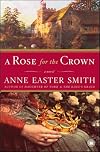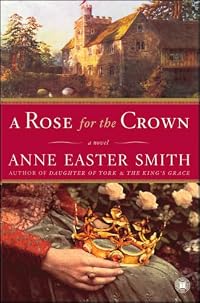
A Rose for the Crown
by Anne Easter Smith
On This Page
Description
Follows the rise of Kate Haute from English peasant to beloved mistress of the future King Richard III, with whom she bears three children, endures a dangerous political war, and struggles against personal accusations of murder.Tags
Recommendations






Member Reviews
This is the sixth novel I have read from Anne Easter Smith - she is one of my favorite historical fiction writers. Her books focus on some of the more interesting historical figures involved in England's "Wars of the Roses" saga. (Richard III, Cecily Neville, Margaret of Burgundy, etc.)
This time she tackles Katherine Haute, believed by some to be the mistress of King Richard III and mother to at least one of his illegitimate children. Historically, Richard is known to have either two or three illegitimate children. And Katherine is one women who received a regular payment from Richard. But beyond that -- the author was free to make up a quite believable narrative where Katherine is not only the mother of Richard's three bastards, but show more also the great romantic love of his life.
In keeping with my own preferences for historical fiction, this book is not filled with endless details of battle scenes. Instead the Wars of the Roses remain the backdrop -- with historical events referenced in conversation, rather than unfolding in real time. Instead, at the novel's center is Katherine's life -- her humble origins, the lucky breaks that lead to social advancement, her first encounter with a teenage Richard, and generally, life as a women living in the 1400s. Smith explores the limitations in power women suffered at this time, the ways in which they were bartered to seal alliances and expand holdings, and the sometimes difficult decisions they were forced to make because they had so little autonomy.
Still, these women are capable of fierce passion and deep friendship. They love and lose children. And help heal and care for each other and the men around them. In short, their relationships feel both true to their era AND to our own. In fact, that may be my favorite part of this novel -- putting the lives of women, from all social strata, front and center while men, their politics, and war are secondary.
This is Smith's earliest novel. And there were a few moments when I felt it drifted into cheap romance novel territory. As one example -- consider Katherine's first sexual encounter with Richard. He's a 15-year-old virgin, she's an inexperienced 18-year-old. But, surprise surprise -- they both experience complete satisfaction. Hardly likely the first time with a teenage boy, wouldn't you say?
Nevertheless, it was an engaging read that left me feeling more knowledgeable about the lives of medieval women and admiring a lovable central character who showed about as much spunk as was possible for the times.
One more winning aspect worth mentioning. Despite the stories of William Shakespeare, Smith also believes Richard III was a good guy who did NOT kill the Princes in the Tower. And since that is my own position, seeing Richard as a hero made the book that much more enjoyable. show less
This time she tackles Katherine Haute, believed by some to be the mistress of King Richard III and mother to at least one of his illegitimate children. Historically, Richard is known to have either two or three illegitimate children. And Katherine is one women who received a regular payment from Richard. But beyond that -- the author was free to make up a quite believable narrative where Katherine is not only the mother of Richard's three bastards, but show more also the great romantic love of his life.
In keeping with my own preferences for historical fiction, this book is not filled with endless details of battle scenes. Instead the Wars of the Roses remain the backdrop -- with historical events referenced in conversation, rather than unfolding in real time. Instead, at the novel's center is Katherine's life -- her humble origins, the lucky breaks that lead to social advancement, her first encounter with a teenage Richard, and generally, life as a women living in the 1400s. Smith explores the limitations in power women suffered at this time, the ways in which they were bartered to seal alliances and expand holdings, and the sometimes difficult decisions they were forced to make because they had so little autonomy.
Still, these women are capable of fierce passion and deep friendship. They love and lose children. And help heal and care for each other and the men around them. In short, their relationships feel both true to their era AND to our own. In fact, that may be my favorite part of this novel -- putting the lives of women, from all social strata, front and center while men, their politics, and war are secondary.
This is Smith's earliest novel. And there were a few moments when I felt it drifted into cheap romance novel territory. As one example -- consider Katherine's first sexual encounter with Richard. He's a 15-year-old virgin, she's an inexperienced 18-year-old. But, surprise surprise -- they both experience complete satisfaction. Hardly likely the first time with a teenage boy, wouldn't you say?
Nevertheless, it was an engaging read that left me feeling more knowledgeable about the lives of medieval women and admiring a lovable central character who showed about as much spunk as was possible for the times.
One more winning aspect worth mentioning. Despite the stories of William Shakespeare, Smith also believes Richard III was a good guy who did NOT kill the Princes in the Tower. And since that is my own position, seeing Richard as a hero made the book that much more enjoyable. show less
This is the sixth novel I have read from Anne Easter Smith - she is one of my favorite historical fiction writers. Her books focus on some of the more interesting historical figures involved in England's "Wars of the Roses" saga. (Richard III, Cecily Neville, Margaret of Burgundy, etc.)
This time she tackles Katherine Haute, believed by some to be the mistress of King Richard III and mother to at least one of his illegitimate children. Historically, Richard is known to have either two or three illegitimate children. And Katherine is one women who received a regular payment from Richard. But beyond that -- the author was free to make up a quite believable narrative where Katherine is not only the mother of Richard's three bastards, but show more also the great romantic love of his life.
In keeping with my own preferences for historical fiction, this book is not filled with endless details of battle scenes. Instead the Wars of the Roses remain the backdrop -- with historical events referenced in conversation, rather than unfolding in real time. Instead, at the novel's center is Katherine's life -- her humble origins, the lucky breaks that lead to social advancement, her first encounter with a teenage Richard, and generally, life as a women living in the 1400s. Smith explores the limitations in power women suffered at this time, the ways in which they were bartered to seal alliances and expand holdings, and the sometimes difficult decisions they were forced to make because they had so little autonomy.
Still, these women are capable of fierce passion and deep friendship. They love and lose children. And help heal and care for each other and the men around them. In short, their relationships feel both true to their era AND to our own. In fact, that may be my favorite part of this novel -- putting the lives of women, from all social strata, front and center while men, their politics, and war are secondary.
This is Smith's earliest novel. And there were a few moments when I felt it drifted into cheap romance novel territory. As one example -- consider Katherine's first sexual encounter with Richard. He's a 15-year-old virgin, she's an inexperienced 18-year-old. But, surprise surprise -- they both experience complete satisfaction. Hardly likely the first time with a teenage boy, wouldn't you say?
Nevertheless, it was an engaging read that left me feeling more knowledgeable about the lives of medieval women and admiring a lovable central character who showed about as much spunk as was possible for the times.
One more winning aspect worth mentioning. Despite the stories of William Shakespeare, Smith also believes Richard III was a good guy who did NOT kill the Princes in the Tower. And since that is my own position, seeing Richard as a hero made the book that much more enjoyable. show less
This time she tackles Katherine Haute, believed by some to be the mistress of King Richard III and mother to at least one of his illegitimate children. Historically, Richard is known to have either two or three illegitimate children. And Katherine is one women who received a regular payment from Richard. But beyond that -- the author was free to make up a quite believable narrative where Katherine is not only the mother of Richard's three bastards, but show more also the great romantic love of his life.
In keeping with my own preferences for historical fiction, this book is not filled with endless details of battle scenes. Instead the Wars of the Roses remain the backdrop -- with historical events referenced in conversation, rather than unfolding in real time. Instead, at the novel's center is Katherine's life -- her humble origins, the lucky breaks that lead to social advancement, her first encounter with a teenage Richard, and generally, life as a women living in the 1400s. Smith explores the limitations in power women suffered at this time, the ways in which they were bartered to seal alliances and expand holdings, and the sometimes difficult decisions they were forced to make because they had so little autonomy.
Still, these women are capable of fierce passion and deep friendship. They love and lose children. And help heal and care for each other and the men around them. In short, their relationships feel both true to their era AND to our own. In fact, that may be my favorite part of this novel -- putting the lives of women, from all social strata, front and center while men, their politics, and war are secondary.
This is Smith's earliest novel. And there were a few moments when I felt it drifted into cheap romance novel territory. As one example -- consider Katherine's first sexual encounter with Richard. He's a 15-year-old virgin, she's an inexperienced 18-year-old. But, surprise surprise -- they both experience complete satisfaction. Hardly likely the first time with a teenage boy, wouldn't you say?
Nevertheless, it was an engaging read that left me feeling more knowledgeable about the lives of medieval women and admiring a lovable central character who showed about as much spunk as was possible for the times.
One more winning aspect worth mentioning. Despite the stories of William Shakespeare, Smith also believes Richard III was a good guy who did NOT kill the Princes in the Tower. And since that is my own position, seeing Richard as a hero made the book that much more enjoyable. show less
DNF = got almost halfway through, too many offensive stereotypes and cliches. It's a shame, too, because this period in British history is interesting and it's cool to see what Katherine Swynford's descendents are up to but between the amateurish writing and the stereotypes the history couldn't shine.
Basically the life story of Richard III in novel form. I knew little of the Plantagenet's before I read this book which has inspired me to do a little historical research. I find this book to be competent in most of its historical assumptions; perhaps a little less so on the intertwining of Richard and his mistress, Katherine Haute; but it makes for a great story! I will definitely read more of this author.
A Rose For The Crown is a big improvement over this author’s other works I’ve read. The storytelling is more fluid without a ton of awkward descriptive side paragraphs or too perfect characters (though at times Kate had that stink about her). Phrasing sometimes read as awkward, but I could see the author’s reasons for those exchanges. Overall, I enjoyed this historical exploration more than previous attempts by Smith.
I think the ambiguity of my Kate Haute and Richard III knowledge helped spice this story for me. All I really knew about Richard was the propaganda that history has spewed about him and the fairly recent discovery of his bones under a parking lot. To see him from the eyes of one who loved him for himself rather than show more his position was an eye-opener. Kate’s simple faith and love made him more human to me, giving him more complex motivations rather than a lust for power and evil murdering personality.
Kate was a blank slate for me; I’d only read her name in passing. I enjoyed seeing her fleshed out into a woman with a personality all her own: loyal, sometimes blind to reality, loving, and sweet. The author didn’t have much in the historical record to go off of; according to her author’s note, there’s even some doubt that Kate was Richard III’s mother of his illegitimate children at all. Yet, she was a great foil with which to see the times and Richard’s place in them.
The author pleases again in the history department. Her setting skills are handled with aplomb, as per usual. The reader sees, hears, and smells each scene. I’ve come to expect this from Smith. The one area where this book falters a bit falls in this area, though. There are locations in the narrative where the speech can get very stilted and awkward, dragged down with exact phrasing from the era. I can appreciate that the author was striving for historical accuracy; so I can understand the reasoning. Yet, at times these exchanges made reading enjoyment hard to reach.
A great window into a little known woman who saw much change in her life, this work was a pleasant diversion. Historical figures got new life and perspective, Kate giving us a new window into their soul. She, herself, shone as a loving, if flawed, personality. Some stilted conversational exchanges don’t condemn this book. When taken as a whole, the book is a great historical fictional work, and I highly recommend it. show less
I think the ambiguity of my Kate Haute and Richard III knowledge helped spice this story for me. All I really knew about Richard was the propaganda that history has spewed about him and the fairly recent discovery of his bones under a parking lot. To see him from the eyes of one who loved him for himself rather than show more his position was an eye-opener. Kate’s simple faith and love made him more human to me, giving him more complex motivations rather than a lust for power and evil murdering personality.
Kate was a blank slate for me; I’d only read her name in passing. I enjoyed seeing her fleshed out into a woman with a personality all her own: loyal, sometimes blind to reality, loving, and sweet. The author didn’t have much in the historical record to go off of; according to her author’s note, there’s even some doubt that Kate was Richard III’s mother of his illegitimate children at all. Yet, she was a great foil with which to see the times and Richard’s place in them.
The author pleases again in the history department. Her setting skills are handled with aplomb, as per usual. The reader sees, hears, and smells each scene. I’ve come to expect this from Smith. The one area where this book falters a bit falls in this area, though. There are locations in the narrative where the speech can get very stilted and awkward, dragged down with exact phrasing from the era. I can appreciate that the author was striving for historical accuracy; so I can understand the reasoning. Yet, at times these exchanges made reading enjoyment hard to reach.
A great window into a little known woman who saw much change in her life, this work was a pleasant diversion. Historical figures got new life and perspective, Kate giving us a new window into their soul. She, herself, shone as a loving, if flawed, personality. Some stilted conversational exchanges don’t condemn this book. When taken as a whole, the book is a great historical fictional work, and I highly recommend it. show less
I loved this book and am so happy I picked it up. Richard III is written as a serious yet caring young man and it is easy to see how he has been turned into a villain when it probably wasn't any of his fault. I really grew to care for the characters, especially Kate, and felt their pain at their losses. I also loved the specific details of medieval life, thrown in at random, proving that Smith did her research. This is also lighter on the history than, for example, Penman's work, which isn't my personal preference, but served the story well.
I was very eager to read A Rose for the Crown as I have long been curious of Richard III. Of course I know the history and how many regard him as a villain. Some call him a Wife poisoner and others of course accuse him of being a usurper and a killer of his nephews. Historically none of that can be proven of course and you always have to take some things with a grain of salt (Anne Boleyn being a witch anyone?), still I wanted to see what Anne Easter Smiths take on Richard III would be. I would not be disappointed.
Kate Bywood is a fiery young lady who by all accounts is a nobody to the royal houses of England. However thanks to some turns in life that put her in favorable places she as a young girl and throughout her younger days meets show more Richard Plantagenet. The more the young pair meet one another the more they are attracted on many levels to each other. You can not help but be drawn into their love story as it unfolds. A love that while is passionate and all consuming both know can never be more than what it is. Richard could have as a royal Duke kept Kate in the kind of comfort that many royal Mistresses throughout time (and at that time) were kept in, especially after she bore him both a Daughter and a Son. However Kate valued the privacy more and her values as to not be known publicly as a Mistress. Something in the end that Richard deeply admires.
The story is heart warming and heart breaking all in the same as we follow the couple through life. In the end we all know what happens historically, Richard III was slain and Henry Tudor took the crown. The bastard Son John of Gloucester would also later be killed as a traitor. The book does not end on a bad note however with a new start being laid out for you the reader to go away with some good feelings. Overall this was another beautifully written book and while of course fiction, I dare anyone not to look upon Richard III with a kinder eye once they have read it. show less
Kate Bywood is a fiery young lady who by all accounts is a nobody to the royal houses of England. However thanks to some turns in life that put her in favorable places she as a young girl and throughout her younger days meets show more Richard Plantagenet. The more the young pair meet one another the more they are attracted on many levels to each other. You can not help but be drawn into their love story as it unfolds. A love that while is passionate and all consuming both know can never be more than what it is. Richard could have as a royal Duke kept Kate in the kind of comfort that many royal Mistresses throughout time (and at that time) were kept in, especially after she bore him both a Daughter and a Son. However Kate valued the privacy more and her values as to not be known publicly as a Mistress. Something in the end that Richard deeply admires.
The story is heart warming and heart breaking all in the same as we follow the couple through life. In the end we all know what happens historically, Richard III was slain and Henry Tudor took the crown. The bastard Son John of Gloucester would also later be killed as a traitor. The book does not end on a bad note however with a new start being laid out for you the reader to go away with some good feelings. Overall this was another beautifully written book and while of course fiction, I dare anyone not to look upon Richard III with a kinder eye once they have read it. show less
Members
- Recently Added By
Lists

Historical Fiction
889 works; 91 members
Author Information

7 Works 1,962 Members
Some Editions
Awards and Honors
Distinctions
Common Knowledge
- Canonical title
- A Rose for the Crown
- Original publication date
- 2006
- People/Characters
- Richard III, King of England; Anne Neville, Queen Consort of England; Kate
- Important places
- England, UK
- Important events
- Wars of the Roses (1455 | 1485)
- Original language
- English
Classifications
Statistics
- Members
- 657
- Popularity
- 43,720
- Reviews
- 24
- Rating
- (3.89)
- Languages
- English, German
- Media
- Paper, Audiobook, Ebook
- ISBNs
- 8
- ASINs
- 4