On This Page
Description
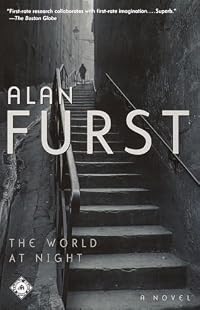
Paris, 1940. The civilized, upper-class life of film producer Jean Casson is derailed by the German occupation of Paris, but Casson learns that with enough money, compromise, and connections, one need not deny oneself the pleasures of Parisian life. Somewhere inside Casson, though, is a stubborn romantic streak. When he's offered the chance to take part in an operation of the British secret service, this idealism gives him the courage to say yes. A simple mission, but it goes wrong, and show more Casson realizes he must gamble everything-his career, the woman he loves, life itself. Here is a brilliant re-creation of France-its spirit in the moment of defeat, its valor in the moment of rebirth. show lessTags
Recommendations







Member Reviews
We begin The World at Night on the 10th of May in 1940 before dawn. Jean-Claude Casson, film producer of forty-two years of age, is in bed with his assistant, Gabriella Vico. The phone rings...it's Casson's wife. Marie-Claire wants to talk about the dinner party she and Jean-Claude are throwing that night. Does this not sound like the start to a torrid romance novel? Far from it (although there is passion within the pages)! By the end of the first chapter Casson has received a telegram recalling him back to active duty. The Germans are on the move and will occupy France shortly. Without warning Corporal Casson is pulled into a completely different life and, after three months when he returns home to Paris, the old life he left behind show more has completely vanished. As a movie producer he needs a way to stay useful in the eyes of the enemy. What can he do to earn a living during the German occupation? Somehow, in some way, this line of work makes him the perfect recruit for espionage. The only convincing he would need would be political. Which side are you on, boy? This question becomes pertinent when a simple lie traps Jean-Claude. He realizes no one is one hundred percent evil or one hundred percent good which makes the danger all that more a stark reality. You don't know of whom you should stay clear or who you can trust.
If you are looking for a spy thriller with lots of violence, The World at Night is not for you. The dangers are subtle and barely suggested. Instead, Furst is a master of detail. From fashion and the automobiles to the food and drink and music, the culture of Paris lives and breathes alongside its society. Furst's imagery is perfection: what do you picture when he describes a young woman as having "hen-strangler hands"? Furst takes you into 1940s Paris with love. A commentary on authenticity. I believe authenticity comes from the ability to faithfully mimic primary sources; the ability to take first-hand accounts and recreate them exactly. Once you see faithful details repeated you assume a truthful interpretation. Such is The World at Night.
Speaking of characters and love, I could not help but fall in love with Jean-Claude Casson. His mature passion for beautiful women and the way he makes each one feel as though she were the only one in his life...sigh. When he finally settles on one particular woman you root for them to be together. show less
If you are looking for a spy thriller with lots of violence, The World at Night is not for you. The dangers are subtle and barely suggested. Instead, Furst is a master of detail. From fashion and the automobiles to the food and drink and music, the culture of Paris lives and breathes alongside its society. Furst's imagery is perfection: what do you picture when he describes a young woman as having "hen-strangler hands"? Furst takes you into 1940s Paris with love. A commentary on authenticity. I believe authenticity comes from the ability to faithfully mimic primary sources; the ability to take first-hand accounts and recreate them exactly. Once you see faithful details repeated you assume a truthful interpretation. Such is The World at Night.
Speaking of characters and love, I could not help but fall in love with Jean-Claude Casson. His mature passion for beautiful women and the way he makes each one feel as though she were the only one in his life...sigh. When he finally settles on one particular woman you root for them to be together. show less
Jean Casson, a Parisian movie producer with a string of moderately successful dramas / thrillers under his belt, is caught up in daily survival after the Nazis storm Belgium and France in May 1940 and soon occupy Paris. We follow Casson as he adapts his social routines and business to the Occupation, increasingly forced to examine what's important to him, and precisely what he's prepared to sacrifice.
A sub-plot involves Casson's efforts to make a movie during the Occupation, working with UFA and wondering how much must change now that the Nazis are involved, what constitutes collaboration and what is, simply, making a movie in strange times. The whole effort serves as a commentary, both on Casson as a character, and intentionally or show more not, also on the reader of genre fiction such as the spy novel. Good stuff.
Much is made of Furst's atmospherics, often with a whiff of disdain. Were there nothing else to the novel, I could agree with the criticism. For me, though, The World At Night is a little tale, told with panache and a very comfortable sense of time & place, and much of this is deliberate. But knotted at the heart of this story is a sober glimpse of the moral (and sometimes, ethical) weight pulling at a life in conflict. Like Hitchcock, I think, the point is not to be melodramatic or focus on the events of History. Rather, it is to examine the tensions and dilemmas of an ordinary person caught up in extraordinary circumstances, and from it glean something worth taking to heart. The agent / counter-agent business, Casson's collaboration with saboteurs, are very much a MacGuffin.
The ending was unexpected, as other reviews have mentioned, but I do not make too much of it. The turnabout came quickly, was handled in a few paragraphs, and the story was done. Primarily it was the speed of it that shocked. But it did not change the central problems facing Casson throughout the novel, and for that reason, I think, it is quite fitting.
More intriguing is Furst's reference to Rene Guillot, a French author but in the final words of the novel, named as the director of Casson's movie project. Why him and not a fictional director? Why not a director working in France at the time? Why not the director of a film adaptation (Fort de la Solitude) of one of Guillot's novels? Why indeed.
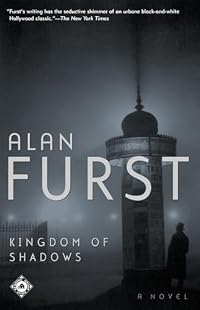
NOTE: Furst mentioned in his Aug 09 Author Chat that this book marks his first use of what he termed the "existential novel", culminating in Kingdom Of Shadows. He implied the first three books took a different form, and that those following Kingdom Of Shadows similarly adopted a different overall literary approach. So while his novels are often mentioned as an informal series, Furst suggests there may be mini-serials within the set. show less
A sub-plot involves Casson's efforts to make a movie during the Occupation, working with UFA and wondering how much must change now that the Nazis are involved, what constitutes collaboration and what is, simply, making a movie in strange times. The whole effort serves as a commentary, both on Casson as a character, and intentionally or show more not, also on the reader of genre fiction such as the spy novel. Good stuff.
Much is made of Furst's atmospherics, often with a whiff of disdain. Were there nothing else to the novel, I could agree with the criticism. For me, though, The World At Night is a little tale, told with panache and a very comfortable sense of time & place, and much of this is deliberate. But knotted at the heart of this story is a sober glimpse of the moral (and sometimes, ethical) weight pulling at a life in conflict. Like Hitchcock, I think, the point is not to be melodramatic or focus on the events of History. Rather, it is to examine the tensions and dilemmas of an ordinary person caught up in extraordinary circumstances, and from it glean something worth taking to heart. The agent / counter-agent business, Casson's collaboration with saboteurs, are very much a MacGuffin.
The ending was unexpected, as other reviews have mentioned, but I do not make too much of it. The turnabout came quickly, was handled in a few paragraphs, and the story was done. Primarily it was the speed of it that shocked. But it did not change the central problems facing Casson throughout the novel, and for that reason, I think, it is quite fitting.
More intriguing is Furst's reference to Rene Guillot, a French author but in the final words of the novel, named as the director of Casson's movie project. Why him and not a fictional director? Why not a director working in France at the time? Why not the director of a film adaptation (Fort de la Solitude) of one of Guillot's novels? Why indeed.
NOTE: Furst mentioned in his Aug 09 Author Chat that this book marks his first use of what he termed the "existential novel", culminating in Kingdom Of Shadows. He implied the first three books took a different form, and that those following Kingdom Of Shadows similarly adopted a different overall literary approach. So while his novels are often mentioned as an informal series, Furst suggests there may be mini-serials within the set. show less
I've read many books by Alan Furst -- and plan to read them all -- and have become addicted to the details he puts into his World War II-era novels set in Europe. Many of them, as does this one, is set in France, and this one focuses on Parisian Jean Claude Casson, a film producer who gets caught up in the affairs of war, resistance, and spycraft despite his best efforts to be left alone to work and love in the manner he did both before the Germans came.
This is the first of Furst's books to feature Casson; unfortunately, not realizing it at the time, I'd read the second one (Red Gold) years ago, and now, finally, have read this one. Despite knowing how it ends, this was an exciting read. First, recalled to active duty to fight the show more invading Germans, Casson spends a few harrowing weeks with a unit filming the war for newsreel footage. The French are overwhelmed, German occupation begins, and back in Paris, Casson is approached by contacts from the film industry, one who wants him to continue making movies and another who asks him to participate in a scheme against the Germans. Reluctantly, Casson agrees to both; the former reunites him with the actress he loves and the latter puts them both in danger.
The beauty of Furst's books is his ability to realistically recreate time and place, putting the reader into the story. I hope there's a third book featuring Casson because I really want to know what happens to him. show less
This is the first of Furst's books to feature Casson; unfortunately, not realizing it at the time, I'd read the second one (Red Gold) years ago, and now, finally, have read this one. Despite knowing how it ends, this was an exciting read. First, recalled to active duty to fight the show more invading Germans, Casson spends a few harrowing weeks with a unit filming the war for newsreel footage. The French are overwhelmed, German occupation begins, and back in Paris, Casson is approached by contacts from the film industry, one who wants him to continue making movies and another who asks him to participate in a scheme against the Germans. Reluctantly, Casson agrees to both; the former reunites him with the actress he loves and the latter puts them both in danger.
The beauty of Furst's books is his ability to realistically recreate time and place, putting the reader into the story. I hope there's a third book featuring Casson because I really want to know what happens to him. show less
Another solid Furst outing that had me thinking that I was right there in Paris in 1940. This time around, the story centers around a Paris film producer who shows that he's more noble than he probably gives himself credit for being. First he is called in to the war effort as a documentary filmmaker so that he can (in retrospect, of course) document France's near-instant defeat (this is France we're talking about, after all), and then he slowly gets pulled into the spy game as he finds himself unable to pretend to be blind to things happening around him. The characters here are once again terrific, and Furst continues to be so unbelievably good at making it possible for me to almost transport myself into every scene.
Alan Furst is simply the best writer of thrillers around today. His heroes are are mature, world weary men about town who have no ambitions to be heroes, but have a sense of honor that nonetheless propels them onto the heroic path.
In this volume, Jean Claude Casson, a Parisian film producer struggles to come to terms with life under the German occupation during World War II. He sees people all around him collaborating, but just cannot make himself cozy up to the Nazis. He tries a little espionage on behalf of the English, but finds that that doesn't suit him either.
But it's hard to stay neutral in occupied Paris. The Germans hear about his flirtation with espionage and then start pressuring him to play the game by their rules, and Jean show more Claude must make a desperate run towards Unoccupied France and then to Spain. This one kept me madly turning the pages until the last page. show less
In this volume, Jean Claude Casson, a Parisian film producer struggles to come to terms with life under the German occupation during World War II. He sees people all around him collaborating, but just cannot make himself cozy up to the Nazis. He tries a little espionage on behalf of the English, but finds that that doesn't suit him either.
But it's hard to stay neutral in occupied Paris. The Germans hear about his flirtation with espionage and then start pressuring him to play the game by their rules, and Jean show more Claude must make a desperate run towards Unoccupied France and then to Spain. This one kept me madly turning the pages until the last page. show less
This could almost be titled, almost anyone can do it, or anyone can be drawn into this game, even at the double agent level. I knew this premise even before I read the book. Yet I came to it skeptical. Could anyone become a double agent? Doesn't that take more planning, motivation, training, chutzpah?
But Furst draws us in. For the first hundred pages of this short book (257pp) there's not even a whiff of spies or espionage. Instead we learn about a somewhat successful film producer who enjoys living the good life in Paris before the world goes into its second crazy war. But it starts and even though he briefly gets mobilized with his old unit from the first war France is quickly defeated by the hated Bosch. Even though they take his and show more everyone else's car he can still find ways to make a film. He's briefly contacted by British intelligence to do something small. They explain they sought him out because his profession allowed him to travel widely without much question. So he takes on a small request and he quickly learns it may be simple but it's still dangerous so he decides basically enough of that, I can just ride out this war by keeping out of it. But not so fast. The Germans know he was contacted by a woman they know is working for the British. He's able to convince them he was asked but didn't accept. But the Germans say we want you to accept, just tell us what they want you do. Now he's in a bind. Does he want to work with the Germans who have conquered his country? Thus the everyman becomes a double agent. He didn't ask for it, they found him.
Now we know anybody could be caught in this web. No special talents needed. In addition to watching our hero get drawn in there's lots of graphic romantic interludes to keep the story going. There's even a love story buried here to keep us wondering, do they finally get together? Read it to find out how it turns out. show less
But Furst draws us in. For the first hundred pages of this short book (257pp) there's not even a whiff of spies or espionage. Instead we learn about a somewhat successful film producer who enjoys living the good life in Paris before the world goes into its second crazy war. But it starts and even though he briefly gets mobilized with his old unit from the first war France is quickly defeated by the hated Bosch. Even though they take his and show more everyone else's car he can still find ways to make a film. He's briefly contacted by British intelligence to do something small. They explain they sought him out because his profession allowed him to travel widely without much question. So he takes on a small request and he quickly learns it may be simple but it's still dangerous so he decides basically enough of that, I can just ride out this war by keeping out of it. But not so fast. The Germans know he was contacted by a woman they know is working for the British. He's able to convince them he was asked but didn't accept. But the Germans say we want you to accept, just tell us what they want you do. Now he's in a bind. Does he want to work with the Germans who have conquered his country? Thus the everyman becomes a double agent. He didn't ask for it, they found him.
Now we know anybody could be caught in this web. No special talents needed. In addition to watching our hero get drawn in there's lots of graphic romantic interludes to keep the story going. There's even a love story buried here to keep us wondering, do they finally get together? Read it to find out how it turns out. show less
Rene Casson is a famous French film producer caught in Paris as the Germans take the city in 1940. He continues to think he can just avoid the ugliness of war by ignoring it. He only wants to continue to make his films and enjoy evenings with his close friends, many of whom share his sentiments about ignoring the war. When an acquaintance tries to recruit him into the Resistance, he refuses, but eventually becomes involved.
I expected to like this book much better than I did. I think I just had too high an expectation. I enjoyed the story, but Casson's reluctance to become involved and air of futility began to annoy me. I felt like he lived in his own little world, but I admit it was an interesting one, filled with fascinating French show more characters. His obsession with a former lover, Citrine, provided a lot a flashbacks to happier times. I like most of Furst's books but this wasn't my favorite. If you have never read a book by Alan Furst, I recommend Night Soldiers, The Polish Officer or The Spies of Warsaw. show less
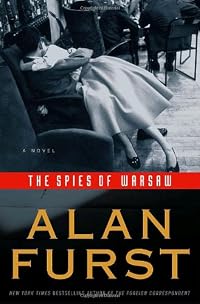
I expected to like this book much better than I did. I think I just had too high an expectation. I enjoyed the story, but Casson's reluctance to become involved and air of futility began to annoy me. I felt like he lived in his own little world, but I admit it was an interesting one, filled with fascinating French show more characters. His obsession with a former lover, Citrine, provided a lot a flashbacks to happier times. I like most of Furst's books but this wasn't my favorite. If you have never read a book by Alan Furst, I recommend Night Soldiers, The Polish Officer or The Spies of Warsaw. show less
Members
- Recently Added By
Lists

Books Read in 2023
5,547 works; 145 members
Author Information

26+ Works 16,472 Members
Furst received a B.A. from Oberlin College in 1962 and an M.A. from Penn State in 1967. Before becoming a full-time novelist, Furst worked in advertising and wrote magazine articles, most notably for Esquire, and as a columnist for the International Herald Tribune His early novels (1976-1983) achieved limited success. However, the 1988 publication show more of Night Soldiers inspired by a 1984 trip to Eastern Europe on assignment for Esquire revitalized his career. It was the first of his highly original novels about espionage in Europe before and during the Second World War. Born in New York on February 20, 1941, he lived for long periods in France, especially Paris where he was awarded a Fulbright teaching fellowship. In 2011, the Tulsa Library Trust in Tulsa, Oklahoma selected Furst to receive its Helmerich Award, a literary prize given annually to honor a distinguished author's body of work He also made The New York Times Best Seller List in 2012 with his title The Mission to Paris and Midnight in Europe in 2014. Furst again made the New York Times Bestseller in 2016 with his novel a Hero of France. (Publisher Provided) Alan Furst is an American author of spy novels. He was born in New York City on February 20, 1941, and was raised on the Upper West Side of Manhattan. Furst received a B.A. from Oberlin College in 1962 and an M.A. from Penn State in 1967. His novels are set just prior to and during the Second World War. Titles include: Night Soldiers, Kingdom of Shadows (which won the 2001 Hammett Prize), Blood of Victory, Spies of the Balkans and Mission to Paris. In 2011, the Tulsa Library Trust in Tulsa, Oklahoma, selected Furst to receive its Helmerich Award, a literary prize given annually to honor a distinguished author's body of work. Furst made The New York Times Best Seller List in 2012 with his title The Mission to Paris and Midnight in Europe in 2014. Furst again made the New York Times Bestseller in 2016 with his novel A Hero of France. (Bowker Author Biography) show less

Alan Furst is a LibraryThing Author, an author who lists their personal library on LibraryThing.
Some Editions
Awards and Honors
Notable Lists
Series


Work Relationships
Common Knowledge
- Canonical title
- The World at Night
- Original title
- The World at Night
- Original publication date
- 1996
- People/Characters
- Jean Casson; Citrine; Hugo Altmann; Bernard Langlade; Louis Fischfang; Franz Millau
- Important places
- 16th arrondissement, Paris, France; Brasserie Heininger, Paris, France
- Important events
- World War II (1939 | 1945); World War II, German Occupation of France (1940 | 1944)
- Epigraph
- The boat left the Quai de la Joliette in Marseilles harbour about midnight. It was new moon and the stars were bright and their light hard. The coast with its long garlands of gas lamps faded slowly away. The lighthouses e... (show all)merging from the black water, with their green and red eyes, were the last outposts of France, sleeping under the stars in her enormous, dishonored nakedness, humiliated, wretched and beloved.
-- Arthur Koestler, 1940 - Dedication
- Avec remerciements a Ann Godoff, pour son support et ses encouragements
- First words
- Long before dawn, Wehrmacht commando units came out of the forest on the Belgian border, overran the frontier posts, and killed the customs officers.
- Quotations
- On the radio, the BBC. A quintet, swing guitar, violin -- maybe Stephane Grapelli -- a female vocalist, voice rough with static. The volume had to be very low: radios were supposed to be turned over to the Germans, and Casson... (show all) was afraid of Madame Fitou -- but he loved the thing, couldn't bear to part with it. It glowed in the dark and played music -- he sometimes thought of it as the last small engine of civilization, a magic device, and he was its keeper, the hermit who hid the sacred ring. [pp 102-103]
"I'm a Hungarian, Casson. Not exactly by birth, you understand, but by nationality at birth. Still, Mitteleuropa, central Europe, is the world I understand, just like Adolf -- so I see clearly certain things. Some people say ... (show all)that Adolf is a devil, but he's not, he's the head of a central European political party, no more, no less. And what he means to do in France is to destroy you, to ruin your soul, to make you despise yourselves, that's the plan. He wants you to collaborate, he makes it easy for you. He wants you to denounce each other, he makes it easy for you. He wants you to feel that there's no nation, just you, and everybody has to look out for themselves. You think I'm wrong? Look at the Poles. He kills them, because they come from the same part of the world that he does, and they see through his tricks. You understand?" [Simic, p 97]
The preparation of an escape, he thought, whatever else it did, showed you your life from an angle of profound reality. Where to go. How to get there. Friends and money must be counted up, but then, ~which~ friends -- who wil... (show all)l really help? How much money? And, if you can't get that, how much? And then, most of all, when? Because ~these~ doors, once you went through them, closed behind you. [p 203]
Yet, a mystery. [The screenplay for] ~Hotel Dorado~ was luminous. Not in the plot -- somewhere in deepest Fischfang-land there was no real belief in plots. Life wasn't this, and therefore that, and so, of course, the other. I... (show all)t didn't work that way. Life was this, and then something, and something else, and then a kick in the ass from nowhere. In ~Hotel Dorado~ anyhow, the theory worked. A miracle. How on earth had Fischfang thought it up? The characters floated about, puzzled ghosts in the corridors of a dream hotel, a little good, a little bad, the usual tenants of life. They shared, all of them, a certain gentle despair. Even the teenager, Helene, had seen the world for what it was -- and love might help, might not. There were six tables in the dining room, the old waiter moved among them, you could hear the hum of conversation, the bump of the door to the kitchen, the clatter of pots and pans as the proprietor cooked dinner. Thank heaven it wasn't Cocteau! The Game of Life as a provincial hotel -- Madame Avarice, Baron Glutton, and Death as the old porter. Fischfang's little hotel was a little hotel, life was a weekend. [p 148] - Last words
- (Click to show. Warning: May contain spoilers.)HOTEL DU MER (1944) Brilliantly written and directed by Rene Guillot, the last weekend of a small seaside hotel in the south of France. Danielle Aubin (Citrine) is ravishing as a mysterious stranger.
Classifications
- Genres
- Fiction and Literature, General Fiction, Historical Fiction, Mystery
- DDC/MDS
- 813.54 — Literature & rhetoric American literature in English American fiction in English 1900-1999 1945-1999
- LCC
- PS3556 .U76 .W67 — Language and Literature American literature American literature Individual authors 1961-
- BISAC
Statistics
- Members
- 1,002
- Popularity
- 25,925
- Reviews
- 25
- Rating
- (3.86)
- Languages
- English, Portuguese
- Media
- Paper, Audiobook, Ebook
- ISBNs
- 23
- ASINs
- 7