On This Page
Description
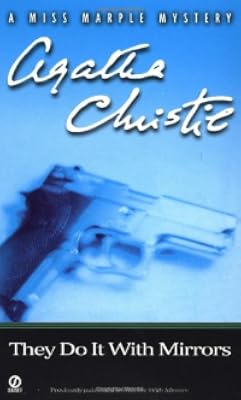
Miss Marple senses danger when she visits a friend living in Stoneygates, a rehabilitation center for delinquents. Her fears are confirmed when someone shoots at the administrator. Although he is not injured, a mysterious visitor is less fortunate-shot dead simultaneously in another part of the building. Pure coincidence? Miss Marple thinks not, and must use all her cunning to solve the riddle of the stranger's visit . . . and his murder. This title was previously published as Murder with show more Mirrors. show lessTags
Recommendations




















Member Reviews
I enjoyed 'They Do It With Mirrors' more for its tone and its characters than for the mystery, although the mystery is a pretty good one.
I was inclined to like this book because it's a Miss Marple mystery. I find them much easier to slip into than the Poirot mysteries. Jane Marple feels more like a real person to me than Hercule Poirot. Where Poirot is driven by a mixture of ego, curiosity and his sometimes fickle notions of justice, Marple simply sees the worst in people and does what she can either to prevent the bad acts or hold those who commit them accountable. Poirot solves puzzles. Marple sees people. Poirot grandstands. Marple stands in the shadows and watches.
I liked the character of Carrie Louise, a woman who everyone claimed show more to hold in high affection but who very few people really saw. I loved that the plot hinged on Carrie Louise being regarded as woman too fragile to be confronted with unpleasantness and as so otherworldly that she didn't understand reality, when the truth is that she sees people as clearly as Jane Marple does but she approaches the world with a little more hope. Still, hope is probably easier to sustain when you are wealthy and your social position is unassailable.
Jane and Carrie Louise are old friends, although old friends who have not met for many years. I liked the way they related to one another. I particularly liked that Jane Marple's relationship with Carrie Louise led her to understand that sometimes its necessary not only to listen to other people but to imagine that they might be right.
I was intrigued by the glimpses and hints at who Jane Marple was when she was young. She and Carrie Louise and Ruth were all at school together, which, given how wealthy the other two were, was surprising. The three also seem to have been firm friends. Ruth still actively seeks Jane out. All of which made me wonder what happened to Jane Marple in between being a vibrant young girl and becoming a white-haired spinster lady with a talent for making herself invisible? Whatever it was, Jane never speaks of it nor does she seem to mourns it, at least not in the books that I've read so far.
It was nice to see Agatha Christie allowing the police in this book to be competent. They didn't need to be rescued by The Great Detective. They acknowledged that Miss Marple wasn't the innocent old lady she is often assumed to be and engaged with her in a way that didn't undermine their authority and which allowed her to work unnoticed.
The mystery was fun, mostly because Agatha Christies was playing games with her readers. She told me very early on, that this book was explicitly about misdirection and yet she still managed successfully to misdirect me several times starting by playfully setting me up to expect a locked-room murder and then delivering something quite different.
I recommend the Emilia Fox audiobook version of 'They Do It With Mirrors'. Emilia Fox does a great job. The sample I heard of the Joan Hickson narration sounded flat by comparison. show less
I was inclined to like this book because it's a Miss Marple mystery. I find them much easier to slip into than the Poirot mysteries. Jane Marple feels more like a real person to me than Hercule Poirot. Where Poirot is driven by a mixture of ego, curiosity and his sometimes fickle notions of justice, Marple simply sees the worst in people and does what she can either to prevent the bad acts or hold those who commit them accountable. Poirot solves puzzles. Marple sees people. Poirot grandstands. Marple stands in the shadows and watches.
I liked the character of Carrie Louise, a woman who everyone claimed show more to hold in high affection but who very few people really saw. I loved that the plot hinged on Carrie Louise being regarded as woman too fragile to be confronted with unpleasantness and as so otherworldly that she didn't understand reality, when the truth is that she sees people as clearly as Jane Marple does but she approaches the world with a little more hope. Still, hope is probably easier to sustain when you are wealthy and your social position is unassailable.
Jane and Carrie Louise are old friends, although old friends who have not met for many years. I liked the way they related to one another. I particularly liked that Jane Marple's relationship with Carrie Louise led her to understand that sometimes its necessary not only to listen to other people but to imagine that they might be right.
I was intrigued by the glimpses and hints at who Jane Marple was when she was young. She and Carrie Louise and Ruth were all at school together, which, given how wealthy the other two were, was surprising. The three also seem to have been firm friends. Ruth still actively seeks Jane out. All of which made me wonder what happened to Jane Marple in between being a vibrant young girl and becoming a white-haired spinster lady with a talent for making herself invisible? Whatever it was, Jane never speaks of it nor does she seem to mourns it, at least not in the books that I've read so far.
It was nice to see Agatha Christie allowing the police in this book to be competent. They didn't need to be rescued by The Great Detective. They acknowledged that Miss Marple wasn't the innocent old lady she is often assumed to be and engaged with her in a way that didn't undermine their authority and which allowed her to work unnoticed.
The mystery was fun, mostly because Agatha Christies was playing games with her readers. She told me very early on, that this book was explicitly about misdirection and yet she still managed successfully to misdirect me several times starting by playfully setting me up to expect a locked-room murder and then delivering something quite different.
I recommend the Emilia Fox audiobook version of 'They Do It With Mirrors'. Emilia Fox does a great job. The sample I heard of the Joan Hickson narration sounded flat by comparison. show less
The book that confirmed for me, way back when I first read it, that Christie was a writer of unsentimental steel, a bit like Miss Marple, doddery and genteel on the surface, mind like a steel trap underneath. Ruthlessness in the murderers is expected, of course, but somehow it's the writers' ruthlessness that really chills, takes the cozy out of this mystery, if anyone dared call it that.
Miss Marple is actually actively present for this whole novel!
Seeing that it's set in a philanthropic reform school for JD boys,the novel shows off Christie's classism hangups, but I see this in every one of her books I've read. Putting that aside, I thought this was a fascinatingly peculiar piece of fiction to be a work of popular entertainment. A truly odd story. I could care less about figuring out who dunnit; these things are all contrived, so just about all mystery fiction fails as "puzzle" entertainment to me. But the interviews of the characters with the investigating detective, in which they are all blase with someone shooting a loaded gun at someone they know, and the investigator's growing frustration and confusion at their show more dismissive reaction in this regard, got to be very amusing.
Fun, weird characters. In a way, many of these Christie novels feel grotesquely Goth tinged ; sometimes reading one can feel like watching the Adams family. or an Italian Giallo horror movie, without the gore and luridness. show less
Seeing that it's set in a philanthropic reform school for JD boys,the novel shows off Christie's classism hangups, but I see this in every one of her books I've read. Putting that aside, I thought this was a fascinatingly peculiar piece of fiction to be a work of popular entertainment. A truly odd story. I could care less about figuring out who dunnit; these things are all contrived, so just about all mystery fiction fails as "puzzle" entertainment to me. But the interviews of the characters with the investigating detective, in which they are all blase with someone shooting a loaded gun at someone they know, and the investigator's growing frustration and confusion at their show more dismissive reaction in this regard, got to be very amusing.
Fun, weird characters. In a way, many of these Christie novels feel grotesquely Goth tinged ; sometimes reading one can feel like watching the Adams family. or an Italian Giallo horror movie, without the gore and luridness. show less
Working my way through all of Christie’s Miss Marple books, I hit two fantastic installments in a row, including this. In Murder with Mirrors (or, They Do It With Mirrors) Miss Marple appears before anyone has actually died!
Jane’s friend Ruth asks her to go and visit Ruth’s sister Carrie Louise because she feels sure there is something wrong in her household. Miss Marple takes her intuition seriously and heads to Stonygates, Carrie Louise’s home, where they have set up a foundation to help juvenile offenders escape a life of crime. Jane also meets Carrie Louise’s family: friend and companion Jolly, husband Lewis, daughter Mildred, step sons Alex and Steven and granddaughter Gina with her husband Walter. It isn’t long after show more arriving that Carrie’s other stepson Christian, on the board for the foundation, arrives unexpectedly – and is promptly murdered. Was he there on foundation business? Was it something to do with Carrie Louise’s health?
There were couple things about this mystery that I really loved. First, Miss Marple is actually part of the story and is involved from beginning to end. In previous books, I felt like she showed up toward the end just to “solve” the mystery. Here, she is seeing everything unfold so her deductions gave the reader more. Also, this is something of a locked door mystery, which I’m a fan of. Just about everyone has motive, but at the time of the murder they were all listening outside a door as Lewis had a violent confrontation with Edgar Lawson, one of the offenders. It’s possible one or more suspects could have slipped out, but how and why is where the fun begins. I thought the ultimate conclusion was excellent. The culprit made perfect sense – if you were paying attention! show less
Jane’s friend Ruth asks her to go and visit Ruth’s sister Carrie Louise because she feels sure there is something wrong in her household. Miss Marple takes her intuition seriously and heads to Stonygates, Carrie Louise’s home, where they have set up a foundation to help juvenile offenders escape a life of crime. Jane also meets Carrie Louise’s family: friend and companion Jolly, husband Lewis, daughter Mildred, step sons Alex and Steven and granddaughter Gina with her husband Walter. It isn’t long after show more arriving that Carrie’s other stepson Christian, on the board for the foundation, arrives unexpectedly – and is promptly murdered. Was he there on foundation business? Was it something to do with Carrie Louise’s health?
There were couple things about this mystery that I really loved. First, Miss Marple is actually part of the story and is involved from beginning to end. In previous books, I felt like she showed up toward the end just to “solve” the mystery. Here, she is seeing everything unfold so her deductions gave the reader more. Also, this is something of a locked door mystery, which I’m a fan of. Just about everyone has motive, but at the time of the murder they were all listening outside a door as Lewis had a violent confrontation with Edgar Lawson, one of the offenders. It’s possible one or more suspects could have slipped out, but how and why is where the fun begins. I thought the ultimate conclusion was excellent. The culprit made perfect sense – if you were paying attention! show less
Es tan rico leer a Agatha Christie, son de esas lecturas salvavidas, de esas que caen super bien cuando no tienes nada que leer o cuando quieres descansar entre lecturas o simplemente cuando quieres leer algo muy bueno, con Agatha no hay pierde.
Sin duda encontrarme con la genialidad de la mente de Poirot siempre es una delicia, algo que siempre disfruto, no solo es la personalidad tan peculiar de este hombre, si no su manera de resolver sus casos.
Agatha tiene su muy particular estilo ya muy conocido y también copiado por muchos de plantear estas historias policiacas, aunque me gusta mucho Mrs. Marple, sin duda Poirot es mi concentido.
En esta historia, como siempre me pasa con Agatha me ha sorprendido, nunca logro atinar al asesino y en show more este caso, además nos ha regalado un pequeño giro de historia que me ha encantado, además adoro esas escenas finales cuando Poirot junta a todo el mundo para explicar como sucedieron las cosas y desvelar al asesino.
No importa cuando fue escrito o publicado un libro, Agatha Christie es atemporal y siempre vigente, siempre es un placer leerla. show less
Sin duda encontrarme con la genialidad de la mente de Poirot siempre es una delicia, algo que siempre disfruto, no solo es la personalidad tan peculiar de este hombre, si no su manera de resolver sus casos.
Agatha tiene su muy particular estilo ya muy conocido y también copiado por muchos de plantear estas historias policiacas, aunque me gusta mucho Mrs. Marple, sin duda Poirot es mi concentido.
En esta historia, como siempre me pasa con Agatha me ha sorprendido, nunca logro atinar al asesino y en show more este caso, además nos ha regalado un pequeño giro de historia que me ha encantado, además adoro esas escenas finales cuando Poirot junta a todo el mundo para explicar como sucedieron las cosas y desvelar al asesino.
No importa cuando fue escrito o publicado un libro, Agatha Christie es atemporal y siempre vigente, siempre es un placer leerla. show less
Sure, they do it with mirrors. Apparently in 1952, they could even do it by telephone. By which I refer to phoning it in, because this isn’t Christie at her best. It isn’t even Marple at her best. Still, They Do It with Mirrors is a diverting read, a quick Christie satisfier.
We begin with Miss Marple enjoying a few moments with a dear friend from boarding school days. Ruth now lives in America, but her sister lives in England, and after visiting her, Ruth has a suspicion something isn’t right–something besides the 200 criminals living on the property. Ruth’s sister Carrie Louise and her current husband are running a school for juvenile delinquents, hoping to reform the youth through applied psychology. Also in residence are show more Carrie Louise’s attendant, her two step-sons, her grand-daughter and her American husband, and Carrie’s widowed daughter. Ruth can’t tell Jane any concrete reason why she feels anxious about her sister, but would like Miss Marple to put her gentle investigatory skills to work.
I love the few moments we have Miss Marple’s backstory as she shares reminiscences with Ruth and Carrie Louise. Despite her fondness for the universals of human nature, Miss Marple so rarely draws stories from herself–she finds most parallels in neighbors and acquaintances. Now that I think about it, I suspect that is one of the reasons I was always so fond of Miss Marple: she’s the antithesis of the attention-seeking narcissist, an all-too-familiar figure (ahem, Poirot). Moreover, Miss Marple is self-aware and is at peace with it: “Everyone’s life has a tempo. Ruth’s was presto whereas Miss Marple’s was content to be adagio.”
The setting is a country estate in shabby condition, and revolves more around gossiping conversation than fact-finding. I didn’t note Miss Marple displaying her usual acumen, and thought she appeared to be led astray rather easily. Christie seemed to be telegraphing as well, but that is a tricky call for me–I’ve read most of her works decades ago so I can never tell what I’m remembering from reading, and what I might be deciphering.
Interestingly, I don’t remember noticing Christie’s subtle humor when I was younger, but I’m enjoying her sly asides now. Here it generally plays out in discussions with the police:
“‘I shouldn’t think anybody else,’ said Miss Marple…’I just happened to be looking out of my window–at some birds.’
‘Birds?’
‘Birds.’ Miss Marple added after a moment or two: ‘I thought, perhaps, they might be siskins.’
Inspector Curry was uninterested in siskins.”
Characterization was largely straightforward, following general character stereotypes with one or two developed above the rest. Again, the police provide some amusement. Watch Dame Christie get a jab or two in:
“She looked, Inspector Curry reflected, exactly as the relict of a Canon of the Established Church should look–which was almost odd, because so few people ever did look like what they really were.
Even the tight line of her lips had an ascetic Ecclesiatical flavour. She expressed Christian Endurance, and possibly Christian Fortitude. But not, Curry thought, Christian Charity.”
The rather slow build of the beginning has a nicely murderous payoff, then followed by even more disaster. The culmination, however, seemed hasty and morally simplified and borrowed (or heralded?) another Christie ending. Overall, it was fun, if not particularly suspenseful or logical. Entertaining and quick, perfect for a break between projects. show less
We begin with Miss Marple enjoying a few moments with a dear friend from boarding school days. Ruth now lives in America, but her sister lives in England, and after visiting her, Ruth has a suspicion something isn’t right–something besides the 200 criminals living on the property. Ruth’s sister Carrie Louise and her current husband are running a school for juvenile delinquents, hoping to reform the youth through applied psychology. Also in residence are show more Carrie Louise’s attendant, her two step-sons, her grand-daughter and her American husband, and Carrie’s widowed daughter. Ruth can’t tell Jane any concrete reason why she feels anxious about her sister, but would like Miss Marple to put her gentle investigatory skills to work.
I love the few moments we have Miss Marple’s backstory as she shares reminiscences with Ruth and Carrie Louise. Despite her fondness for the universals of human nature, Miss Marple so rarely draws stories from herself–she finds most parallels in neighbors and acquaintances. Now that I think about it, I suspect that is one of the reasons I was always so fond of Miss Marple: she’s the antithesis of the attention-seeking narcissist, an all-too-familiar figure (ahem, Poirot). Moreover, Miss Marple is self-aware and is at peace with it: “Everyone’s life has a tempo. Ruth’s was presto whereas Miss Marple’s was content to be adagio.”
The setting is a country estate in shabby condition, and revolves more around gossiping conversation than fact-finding. I didn’t note Miss Marple displaying her usual acumen, and thought she appeared to be led astray rather easily. Christie seemed to be telegraphing as well, but that is a tricky call for me–I’ve read most of her works decades ago so I can never tell what I’m remembering from reading, and what I might be deciphering.
Interestingly, I don’t remember noticing Christie’s subtle humor when I was younger, but I’m enjoying her sly asides now. Here it generally plays out in discussions with the police:
“‘I shouldn’t think anybody else,’ said Miss Marple…’I just happened to be looking out of my window–at some birds.’
‘Birds?’
‘Birds.’ Miss Marple added after a moment or two: ‘I thought, perhaps, they might be siskins.’
Inspector Curry was uninterested in siskins.”
Characterization was largely straightforward, following general character stereotypes with one or two developed above the rest. Again, the police provide some amusement. Watch Dame Christie get a jab or two in:
“She looked, Inspector Curry reflected, exactly as the relict of a Canon of the Established Church should look–which was almost odd, because so few people ever did look like what they really were.
Even the tight line of her lips had an ascetic Ecclesiatical flavour. She expressed Christian Endurance, and possibly Christian Fortitude. But not, Curry thought, Christian Charity.”
The rather slow build of the beginning has a nicely murderous payoff, then followed by even more disaster. The culmination, however, seemed hasty and morally simplified and borrowed (or heralded?) another Christie ending. Overall, it was fun, if not particularly suspenseful or logical. Entertaining and quick, perfect for a break between projects. show less
Jane Marple reconnects with an old childhood friend who lives with her husband, daughter, granddaughter, stepsons and a school full of supposedly reformed juvenile delinquents. When a murder happens, the question becomes who is guilty?
Finally a book that starts and ends with Miss Marple. I loved that this opened with her agreeing to have a nosy around for her friend. Honestly I agreed with Wally - they're all nuts. I get wanting to help people but funding a private operation to rehabilitate criminal offenders is pretty nuts.
In regards to the actual plot - I enjoyed the twists and turns and the way the investigation unfolded. I love the blend of amateur sleuth and police detective that Christie does so well in her Marple books. It's show more nice that they both respect one another - rather than just writing the police off as inept or Miss Marple as a crackpot.
As far as the resolution, I was completely caught off guard by the guilty party. Although that's pretty standard. I was also totally wrong on the other thing. I really thought she was being poisoned but no - red herring. I was shattered I got that one wrong - I'd written a note for myself and everything saying I called it - I apparently did not. Very disappointing.
Overall the mystery was intriguing and the characters fascinating. A well written and well plotted mystery with interesting characters and a neat solution. 4 stars. show less
Finally a book that starts and ends with Miss Marple. I loved that this opened with her agreeing to have a nosy around for her friend. Honestly I agreed with Wally - they're all nuts. I get wanting to help people but funding a private operation to rehabilitate criminal offenders is pretty nuts.
In regards to the actual plot - I enjoyed the twists and turns and the way the investigation unfolded. I love the blend of amateur sleuth and police detective that Christie does so well in her Marple books. It's show more nice that they both respect one another - rather than just writing the police off as inept or Miss Marple as a crackpot.
As far as the resolution, I was completely caught off guard by the guilty party. Although that's pretty standard. I was also totally wrong on the other thing.
Overall the mystery was intriguing and the characters fascinating. A well written and well plotted mystery with interesting characters and a neat solution. 4 stars. show less
Members
- Recently Added By
Lists

Read the book and saw the movie
1,170 works; 193 members

Crime and Mysteries to Read
746 works; 31 members

British Mystery
469 works; 14 members

Agatha Christie Miss Marple
12 works; 1 member

Books About Murder
313 works; 7 members

Detective Stories
343 works; 5 members

Books With Complete Sentence Titles
502 works; 17 members

Books Read in 2010
631 works; 11 members
Nifty Fifties
129 works; 14 members

Books Read in 2023
5,638 works; 147 members

Agatha Christie Chronology
93 works; 1 member
Author Information

2,164+ Works 441,382 Members
One of the most successful and beloved writer of mystery stories, Agatha Mary Clarissa Christie was born in 1890 in Torquay, County Devon, England. She wrote her first novel, The Mysterious Affair at Styles, in 1920, launching a literary career that spanned decades. In her lifetime, she authored 79 crime novels and a short story collection, 19 show more plays, and six novels written under the name of Mary Westmacott. Her books have sold over a billion copies in the English language with another billion in 44 foreign languages. Some of her most famous titles include Murder on the Orient Express, Mystery of the Blue Train, And Then There Were None, 13 at Dinner and The Sittaford Mystery. Noted for clever and surprising twists of plot, many of Christie's mysteries feature two unconventional fictional detectives named Hercule Poirot and Miss Jane Marple. Poirot, in particular, plays the hero of many of her works, including the classic, The Murder of Roger Ackroyd (1926), and Curtain (1975), one of her last works in which the famed detective dies. Over the years, her travels took her to the Middle East where she met noted English archaeologist Sir Max Mallowan. They married in 1930. Christie accompanied Mallowan on annual expeditions to Iraq and Syria, which served as material for Murder in Mesopotamia (1930), Death on the Nile (1937), and Appointment with Death (1938). Christie's credits also include the plays, The Mousetrap and Witness for the Prosecution (1953; film 1957). Christie received the New York Drama Critics' Circle Award for 1954-1955 for Witness. She was also named Dame Commander of the Order of the British Empire in 1971. Christie died in 1976. (Bowker Author Biography) show less
Some Editions
Series

Belongs to Publisher Series
Work Relationships
Is contained in
Starring Miss Marple = The Invincible Miss Marple: A Murder is Announced, The Body in the Library, Murder with Mirrors by Agatha Christie
Agatha Christie Crime Collection: The Murder of Roger Ackroyd / They Do It With Mirrors / Mrs. McGinty's Dead by Agatha Christie
Agatha Christie Collection: They Do it with Mirrors, a Pocket Full of Rye, Murder on the Orient Express, Evil Under the Sun, Death on the Nile by Agatha Christie
The Blue Geranium / The Mirror Crack'd From Side to Side / The Herb of Death / They Do It With Mirrors / The Affair at the Bungalow by Agatha Christie
The Best of Miss Marple Boxed Set (The Body in the Library/Nemesis/Murder with Mirrors/The Mirror Crack'd) by Agatha Christie
Common Knowledge
- Canonical title
- They Do It With Mirrors
- Original title
- They Do It with Mirrors
- Alternate titles
- Murder with Mirrors
- Original publication date
- 1952-11-17
- People/Characters
- Jane Marple; Carrie Louise Serrocold; Lewis Serrocold; Ruth Van Rydock; Gina Hudd; Wally Hudd (show all 19); Christian Gulbrandsen; Edgar Lawson; Juliet Bellever; Inspector Curry; Mildred Strete; Stephen Restarick; Dr Maverick; Ernie Gregg; Alex Restarick; Dr Baumgarten; Arthur Jenkins; Sergeant Lake; Constable Dodgett
- Important places
- Stonygates, Market Kimble, England, UK
- Related movies
- Murder with Mirrors (aka They Do It with Mirrors | 1985 | IMDb); They Do It with Mirrors (1991 | IMDb); They Do It with Mirrors (2009 | IMDb)
- Epigraph
- [None]
- Dedication
- To Matthew Prichard
- First words
- Mrs Van Rydock moved a little back from the mirror and sighed.
- Quotations
- In spite of all my aches and pains, and I've got plenty. Inside I go on feeling just a chit like Gina. Perhaps everyone does. The glass shows them how old they are and they just don't believe it. It seems only a few months ag... (show all)o that we were at Florence. Do you remember Fräulein Schweich and her boots?”
The two elderly women laughed together at events that had happened nearly half a century ago. - Last words
- (Click to show. Warning: May contain spoilers.)It was all a long time ago ...
- Original language
- English UK
- Canonical DDC/MDS
- 823.914
Classifications
Statistics
- Members
- 3,952
- Popularity
- 3,974
- Reviews
- 80
- Rating
- (3.60)
- Languages
- 24 — Catalan, Czech, Danish, Dutch, English, Estonian, Finnish, French, German, Greek, Hungarian, Indonesian, Italian, Japanese, Norwegian (Bokmål), Norwegian, Polish, Croatian, Slovak, Spanish, Swedish, Thai, Turkish, Portuguese (Portugal)
- Media
- Paper, Audiobook, Ebook
- ISBNs
- 169
- UPCs
- 3
- ASINs
- 95