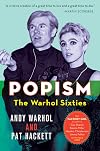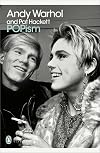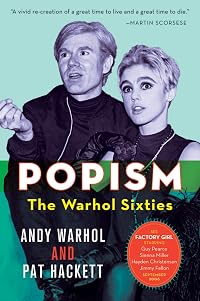
POPism: The Warhol Sixties
by Andy Warhol  , Pat Hackett
On This Page
Description
Anecdotal, funny, frank, POPism is Warhol's personal view of the Pop phenomenon in New York in the 1960s and a look back at the relationships that made up the scene at the Factory, including his rela??tionship with Edie Sedgewick, focus of the film Factory Girl. In the detached, back-fence gossip style he was famous for, Warhol tells all--the ultimate inside story of a decade of cultural revolution.Tags
Recommendations


















Member Reviews
POPism is a surprisingly slow, though still very enjoyable, read. Why does it drag so? Isn't pop, by its very nature, supposed to be easily consumed and digested? After all, we're talking about a style that isn't supposed to take itself seriously, present nothing meaningful beyond surface appearances (and those superficial appearances aren't supposed to be meaningful either, are they?), find the easiest route along the flashiest path, coalesce and decay quickly, look modish and hip, never sleep (with the help of copious amphetamines), talk brilliantly if nonsensically, be entirely accessible and "real," and embrace the spirit of everything goes *and* everything is good.
Is "everything goes," good?
My suspicion is that this account of the show more 60s, which in tone sounds more like Hackett to me even if the content is Warhol, betrays the bleak possibility that pop fun is merely the glossy front for parasitic and self-destructive a-heads, vapid (though sometimes attractive) style over non-existent substance, tedious self-involvement, rank consumerism, and the dread nihilism of Nietzschean transvaluation of values. Not for nothing did critics accuse Warhol of base exploitation and amorality. Warhol writes about Tiger Morse in a way that others could have written about him:
Oh. Not sure if that is supposed to explain or excuse or both. Either way, I can admit to a persistent desire at this point and throughout the entire book: tell me more.
Warhol notes that what started as a chaotic open house atmosphere at The Factory in the early and mid 60s ended with a sense of doom and downright violence. MLK, Jr. and RFK were both assassinated, and even Warhol himself took a bullet from which he never psychologically recovered. Was it inevitable that Warhol would be shot by Valerie Solanas? Perhaps it was.
Throughout this book, which is a worthy read, I heard Allan Bloom shouting over the din created by the Velvet Underground and the "happenings" of the Exploding Plastic Inevitable. In The Closing of the American Mind, Bloom writes,
A lament from Allan Bloom; a victory for Andy Warhol. Truly, what a fascinating time to read about and POPism a wonderful book from which to dive in. show less
Is "everything goes," good?
My suspicion is that this account of the show more 60s, which in tone sounds more like Hackett to me even if the content is Warhol, betrays the bleak possibility that pop fun is merely the glossy front for parasitic and self-destructive a-heads, vapid (though sometimes attractive) style over non-existent substance, tedious self-involvement, rank consumerism, and the dread nihilism of Nietzschean transvaluation of values. Not for nothing did critics accuse Warhol of base exploitation and amorality. Warhol writes about Tiger Morse in a way that others could have written about him:
I've heard people say, "Tiger Morse was a fraud." Well, of course she was, but she was a real fraud.
Oh. Not sure if that is supposed to explain or excuse or both. Either way, I can admit to a persistent desire at this point and throughout the entire book: tell me more.
Warhol notes that what started as a chaotic open house atmosphere at The Factory in the early and mid 60s ended with a sense of doom and downright violence. MLK, Jr. and RFK were both assassinated, and even Warhol himself took a bullet from which he never psychologically recovered. Was it inevitable that Warhol would be shot by Valerie Solanas? Perhaps it was.
Throughout this book, which is a worthy read, I heard Allan Bloom shouting over the din created by the Velvet Underground and the "happenings" of the Exploding Plastic Inevitable. In The Closing of the American Mind, Bloom writes,
Around the campus disruptions and the student movement there has grown up a mythology...that the fifties were a period of intellectual conformism and superficiality, whereas there was real excitement and questioning in the sixties. McCarthyism--invoked when Stalinism is mentioned in order to even the balance of injustice between the two superpowers--symbolizes those gray, grim years, while the blazing sixties were the days of "the movement" and, to hear its survivors tell it, their single-handed liberation of the blacks, the women and the South Vietnamese. Without entering into the strictly political issues, the intellectual picture projected is precisely the opposite of the truth. The sixties were the period of dogmatic answers and trivial tracts. Not a single book of lasting importance was produced in or around the movement. It was all Norman O. Brown and Charles Reich. This was when conformism hit the universities, when opinions about everything from God to the movies became absolutely predictable. The evidence brought from pop culture to bolster the case for the sixties--that in the fifties Lana Turner played torchy, insincere adulteresses while in the sixties we got Jane Fonda as an authentic whore; that before the sixties we had Paul Anka and after we had the Rolling Stones--is of no importance. Even if this characterization were true, it would only go to prove that there is no relation between popular culture and high culture, and that the former is all that is now influential on the scene.
A lament from Allan Bloom; a victory for Andy Warhol. Truly, what a fascinating time to read about and POPism a wonderful book from which to dive in. show less
Well, it's Andy Warhol, so it's pretty much what you'd expect. Generally speaking, his secretary Pat Hackett did a fine job of turning Warhol's recollections into a readable book, but she made him sound nicer than he was. Even in the sympathetic biographies (like Victor Bockris's), Warhol doesn't come off as the harmless, almost goody-two-shoes voyeur he tries to be in POPism, so take this portrayal with a grain of salt.
It's never directly stated, of course, but this book isn't about the 1960s: that's just the incidental garnish. It's actually about an ambitious eccentric who, via his art and considerable luck, made contact with stratospherically rich people who collected paintings and enabled him to become a celebrity (and to indulge show more his crueler instincts). Did some part of Warhol--who came from a desperately poor background--hate these people? Probably. But another part of him yearned to join their ranks, and he made it. By the end, he had nothing like a human personality ("I don't think that there is any person there," William S. Burroughs once remarked to David Bowie)...but that, too, aligned with Warhol's desires. Or so he said. Certainly, he was famous for being a nonpersonality--a real-life cartoon character--rather than for his art. (If you've ever wondered what Pop looked like when painted by people with actual artistic talent, check out the work of Tom Wesselmann or Alex Katz.)
POPism underscores the fact that what went on at the Factory was far more interesting than Warhol's artistic output. (Does anyone really care about 100 Brillo Boxes or 40 Gold Marilyns at this stage of the game?) He and the wealthy, manipulative art crowd survived, but many of the people who gave this narrative its drama--Fred Herko, Danny Williams, Andrea Feldman, Eric Emerson--did not. The story about a drunken Judy Garland singing "Over the Rainbow" with a mouthful of spaghetti is funny, sort of, but it's also mean-spirited. Much of the book is just spiteful without being even slightly funny, and the smarmily casual tone fails to disguise the intent. show less
It's never directly stated, of course, but this book isn't about the 1960s: that's just the incidental garnish. It's actually about an ambitious eccentric who, via his art and considerable luck, made contact with stratospherically rich people who collected paintings and enabled him to become a celebrity (and to indulge show more his crueler instincts). Did some part of Warhol--who came from a desperately poor background--hate these people? Probably. But another part of him yearned to join their ranks, and he made it. By the end, he had nothing like a human personality ("I don't think that there is any person there," William S. Burroughs once remarked to David Bowie)...but that, too, aligned with Warhol's desires. Or so he said. Certainly, he was famous for being a nonpersonality--a real-life cartoon character--rather than for his art. (If you've ever wondered what Pop looked like when painted by people with actual artistic talent, check out the work of Tom Wesselmann or Alex Katz.)
POPism underscores the fact that what went on at the Factory was far more interesting than Warhol's artistic output. (Does anyone really care about 100 Brillo Boxes or 40 Gold Marilyns at this stage of the game?) He and the wealthy, manipulative art crowd survived, but many of the people who gave this narrative its drama--Fred Herko, Danny Williams, Andrea Feldman, Eric Emerson--did not. The story about a drunken Judy Garland singing "Over the Rainbow" with a mouthful of spaghetti is funny, sort of, but it's also mean-spirited. Much of the book is just spiteful without being even slightly funny, and the smarmily casual tone fails to disguise the intent. show less
Pretty straightforward memoir of Andy's early Factory days, an era I find fascinating. The way he tells it, things just happened - people got ideas, did paintings, put on happenings, went to parties. So much going on. By the end, after he gets shot by Valerie Solano, he's gotten more businesslike in his work and realizing that though the crazy people are fun, some of them are actually dangerous. I’ve read his diary and other memoir and just like his cut and dried style. I miss him.
Pat Hackett was Andy Warhol's secretary throughout the 1970s and 80s, but her role encompassed more than that label suggests. For instance, in the case of the Diaries, she wrote the manuscript based on her memory of conversations with Warhol and edited the manuscript into publishable form. Hackett is also listed as coauthor on POPism. The Warhol Sixties.
Unlike the Diaries, POPism. The Warhol Sixties is a very readable book. The Diaries cover the period 1977 - 1987, which was artistically a less interesting period in Warhol's life. On the other hand, POPism. The Warhol Sixties covers the 1960s, the decade which saw Andy Warhol rise from an unknown to a world-renowned artist.
POPism. The Warhol Sixties is written in a very lively, show more enervating style. Regardless of whether you are specifically interested in Andy Warhol, the book is recommended to any reader who is interested to experience the very positive atmosphere of the 1960s. The landmark achievements in Warhol's artistic career are mentioned, but the book is devoid of technical details of art production. Neither does Warhol talk about money, although between the lines one can read that his fame was established very fast, and he must have made or been closely associated with a lot of it. At the beginning of the book, there is talk of walking on old shoes, while towards the end of it Warhol is described only as getting into and alighting from limousines, and the casual mention of buying "a pound of caviar".
POPism. The Warhol Sixties is essentially a book of people, and the only thing that can be said against the book is that it comes very close to name-dropping. However, the overall style of the book is so positive and powerful that the book does not notably suffer.
Read the book to relive that period, and if you are interested in Andy Warhol, then POPism. The Warhol Sixties is a very good place to start. show less
Unlike the Diaries, POPism. The Warhol Sixties is a very readable book. The Diaries cover the period 1977 - 1987, which was artistically a less interesting period in Warhol's life. On the other hand, POPism. The Warhol Sixties covers the 1960s, the decade which saw Andy Warhol rise from an unknown to a world-renowned artist.
POPism. The Warhol Sixties is written in a very lively, show more enervating style. Regardless of whether you are specifically interested in Andy Warhol, the book is recommended to any reader who is interested to experience the very positive atmosphere of the 1960s. The landmark achievements in Warhol's artistic career are mentioned, but the book is devoid of technical details of art production. Neither does Warhol talk about money, although between the lines one can read that his fame was established very fast, and he must have made or been closely associated with a lot of it. At the beginning of the book, there is talk of walking on old shoes, while towards the end of it Warhol is described only as getting into and alighting from limousines, and the casual mention of buying "a pound of caviar".
POPism. The Warhol Sixties is essentially a book of people, and the only thing that can be said against the book is that it comes very close to name-dropping. However, the overall style of the book is so positive and powerful that the book does not notably suffer.
Read the book to relive that period, and if you are interested in Andy Warhol, then POPism. The Warhol Sixties is a very good place to start. show less
Anecdotal, funny, frank, POPism is where Warhol, in the detached, back-fence gossip style he was famous for, tells it all-the ultimate inside story of a decade of cultural revolution. Foreword by Andy Warhol; Index; photographs.
Very entertaining. If you don't like Warhol, you won't like this, though--his voice very much comes through.
The turbulence of the sixties is reflected in a revealing memoir that documents Warhol's success as a commerical and pop artist and filmmaker and the sudden dramas of his life
Members
- Recently Added By
Talk Discussions
Past Discussions
Recent viewings in Experimental Film and Video (April 2013)
Author Information

369+ Works 5,436 Members
Born near Pittsburgh, Pennsylvania, of immigrant Czech parents, American artist Andy Warhol studied art at the Carnegie Institute in Pittsburgh. He then worked as a commercial artist in New York City. In the early 1960s, Warhol became the most famous pioneer of "pop art," which used comic books, advertisements, and consumer goods as subject show more matter. Warhol's colorful paintings of Campbell's soup can labels, boxes of Brillo pads, and celebrity icons such as Marilyn Monroe, became among the most recognizable examples of pop art. Warhol was also a filmmaker as well as a painter and graphic artist; his more memorable films include Trash (1969) and Frankenstein (1973). His studio, called "The Factory," became infamous as a locale for eccentrics and eccentric behavior, much of it associated with the New York drug scene. It was Warhol who predicted that, "in the future, everyone will be famous for 15 minutes." (Bowker Author Biography) show less
Andy Warhol has a Legacy Library. Legacy libraries are the personal libraries of famous readers, entered by LibraryThing members from the Legacy Libraries group.
4 Works 1,488 Members
Series
Belongs to Publisher Series
Common Knowledge
- People/Characters
- Andy Warhol
Classifications
Statistics
- Members
- 474
- Popularity
- 64,105
- Reviews
- 7
- Rating
- (3.99)
- Languages
- 7 — Chinese, English, Finnish, French, German, Portuguese, Spanish
- Media
- Paper, Ebook
- ISBNs
- 17
- UPCs
- 1
- ASINs
- 8