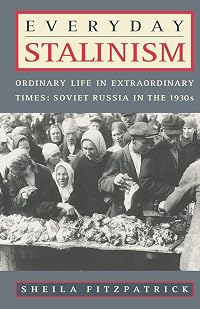
Everyday Stalinism: Ordinary Life in Extraordinary Times: Soviet Russia in the 1930s
by Sheila Fitzpatrick
On This Page
Description
Here is a pioneering account of everyday life under Stalin, written by one of our foremost authorities on modern Russian history. Focusing on urban areas in the 1930s, Sheila Fitzpatrick shows that with the adoption of collectivization and the first Five-Year Plan, everyday life was utterly transformed. With the abolition of the market, shortages of food, clothing, and all kinds of consumer goods became endemic. It was a world of privation, overcrowding, endless queues, and broken families, show more in which the regime's promises of future socialist abundance rang hollow. We read of a government bureaucracy that often turned everyday life into a nightmare, and of the ways that ordinary citizens tried to circumvent it, primarily by patronage and the ubiquitous system of personal connections known as blat. And we read of the police surveillance that was ubiquitous to this society, and the waves of terror, like the Great Purges of 1937, that periodically cast this world into turmoil. Fitzpatrick illuminates the ways that Soviet city-dwellers coped with this world, examining such diverse activities as shopping, traveling, telling jokes, finding an apartment, getting an education, landing a job, cultivating patrons and connections, marrying and raising a family, writing complaints and denunciations, voting, and trying to steer clear of the secret police. show lessTags
Recommendations












Member Recommendations

Member Reviews
Aproape că i-am scăzut o stea pentru că este incoerent (dez)organizată (nu are o structură clară ci funcționează prin alunecare - vorbește de divorț deci trece la femei deci apoi la copii de la care la infractori juvenili de la care la justiție apoi la bărbați și de la ei înapoi la copii prin pensia alimentară șamd), dar rămâne de 5 pentru că este cea mai comprehensivă descriere a tuturor aspectelor vieții de zi cu zi a sovieticilor anilor 30. Un mare plus este faptul că este vorba de cetățenii banali, nu de lideri, în fond o mare nedreptate a istoriografiei în general (după ce că liderii le-au furat tot, le fură în continuare și posteritatea, cărțile fiind tot despre tirani, nu victime).
Spre marea mea show more scârbă, 90% din ce am citit acolo (minus Gulagul) am recunoscut perfect în România anilor 80 prin care am trăit (adică noi am reușit să fim cu 50 de ani întârziați față de cei mai dobitoci primitivi nemernici ai Europei și să le păstrăm toate relele, în ciuda experienței negative).
O carte echilibrată (deloc pătimașă, ba în opinia mea cam blândă cu sovieticii și Stalin) pe care o recomand drept medicament amar tuturor nostalgicilor de vârsta a 3a sau 1 (că din fericire nostalgici de vârsta a 2a nu am cunoscut). show less
Spre marea mea show more scârbă, 90% din ce am citit acolo (minus Gulagul) am recunoscut perfect în România anilor 80 prin care am trăit (adică noi am reușit să fim cu 50 de ani întârziați față de cei mai dobitoci primitivi nemernici ai Europei și să le păstrăm toate relele, în ciuda experienței negative).
O carte echilibrată (deloc pătimașă, ba în opinia mea cam blândă cu sovieticii și Stalin) pe care o recomand drept medicament amar tuturor nostalgicilor de vârsta a 3a sau 1 (că din fericire nostalgici de vârsta a 2a nu am cunoscut). show less
Sheila Fitzpatrick, specialist in the Stalin period of the USSR, has written a counterpart to her history of peasants and their lives in this era (Stalin's Peasants: Resistance and Survival in the Russian Village after Collectivization). Here, in "Everyday Stalinism", she chronicles the urban experience of life under Stalin during the 1930s, with all its paranoia, hardship and oddities.
The book is focused in particular on the relationship of daily life and the state, with relatively little attention for cultural history. However, making much use of the Harvard Project interviews with Soviet citizens from this period, she offers a compelling and fascinating view into the attitude of Soviet citizens towards the state, towards Stalin, and show more towards each other. Much more than just a tale of survival under threat of secret police, Fitzpatrick shows how people got by in terms of getting consumer goods, getting ahead, and getting even. Of course the Great Purges are given due attention, but what is particularly interesting is that in this book we see those events, as well as the earlier show trials, from the bottom up: not the political history of Stalin eliminating his enemies, but a struggle for power between the Party elites (largely received with disinterest by the general populace), and subsequently a series of rapid repressive maneouvres that descend onto the unsuspecting middle level.
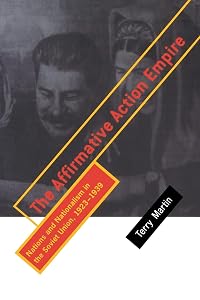
Fitzpatrick pays excellent attention also to social policy and what effect this had on women, social and ethnic minorities, and so on. The USSR as an "affirmative action empire" has been well chronicled (The Affirmative Action Empire: Nations and Nationalism in the Soviet Union, 1923-1939 (Wilder House Series in Politics, History, and Culture)). Nevertheless, Fitzpatrick's overview is clear and cogent, and we get also get a good idea of the immense advances in literacy, cultural knowledge and general outlook that were made in roughly the period 1927-1937. Whereas in 1926 only 57% of those aged between 9 and 49 were literate, in 1939 81% of the whole population was literate. Similarly, the entire mass of the population learned basic culture such as appreciating poetry, washing regularly, using soap and towels, not leaving cigarette butts everywhere and not spitting on the floor, etc.
Striking is the amount of critical letters and appeals that people kept sending to Party and Politburo leaders in the (often, but not always vain) hope of redress of grievances or changes in policy. This was already a set tradition dating back to Czarist times, but was maintained during the Revolution and post-Revolutionary period in the form of public debate in leftist papers and letters to Lenin (see Voices of Revolution, 1917). This gives us a good indication however of the public opinion in the Stalinist days, to which Fitzpatrick usefully adds the NKVD reports of overheard conversations and the like. This surprisingly indicates that skepticism towards Stalin himself as well as the general system was reasonably widespread, despite the "cult of the personality".
Overall, this is a well written and interesting history of urban life in the Soviet Union during the 1930s. It must be emphasized though (as this is not directly apparent from the book description) that it only deals with urban life, and only the 1930s. Neither WWII nor the post-War Stalinist period is discussed. show less
The book is focused in particular on the relationship of daily life and the state, with relatively little attention for cultural history. However, making much use of the Harvard Project interviews with Soviet citizens from this period, she offers a compelling and fascinating view into the attitude of Soviet citizens towards the state, towards Stalin, and show more towards each other. Much more than just a tale of survival under threat of secret police, Fitzpatrick shows how people got by in terms of getting consumer goods, getting ahead, and getting even. Of course the Great Purges are given due attention, but what is particularly interesting is that in this book we see those events, as well as the earlier show trials, from the bottom up: not the political history of Stalin eliminating his enemies, but a struggle for power between the Party elites (largely received with disinterest by the general populace), and subsequently a series of rapid repressive maneouvres that descend onto the unsuspecting middle level.
Fitzpatrick pays excellent attention also to social policy and what effect this had on women, social and ethnic minorities, and so on. The USSR as an "affirmative action empire" has been well chronicled (The Affirmative Action Empire: Nations and Nationalism in the Soviet Union, 1923-1939 (Wilder House Series in Politics, History, and Culture)). Nevertheless, Fitzpatrick's overview is clear and cogent, and we get also get a good idea of the immense advances in literacy, cultural knowledge and general outlook that were made in roughly the period 1927-1937. Whereas in 1926 only 57% of those aged between 9 and 49 were literate, in 1939 81% of the whole population was literate. Similarly, the entire mass of the population learned basic culture such as appreciating poetry, washing regularly, using soap and towels, not leaving cigarette butts everywhere and not spitting on the floor, etc.
Striking is the amount of critical letters and appeals that people kept sending to Party and Politburo leaders in the (often, but not always vain) hope of redress of grievances or changes in policy. This was already a set tradition dating back to Czarist times, but was maintained during the Revolution and post-Revolutionary period in the form of public debate in leftist papers and letters to Lenin (see Voices of Revolution, 1917). This gives us a good indication however of the public opinion in the Stalinist days, to which Fitzpatrick usefully adds the NKVD reports of overheard conversations and the like. This surprisingly indicates that skepticism towards Stalin himself as well as the general system was reasonably widespread, despite the "cult of the personality".
Overall, this is a well written and interesting history of urban life in the Soviet Union during the 1930s. It must be emphasized though (as this is not directly apparent from the book description) that it only deals with urban life, and only the 1930s. Neither WWII nor the post-War Stalinist period is discussed. show less
This book looks at the experience of the extremely turbulent and traumatic decade of the 1930s in the Soviet Union, the era of collectivisation, industrialisation and mass terror, from the point of view of ordinary Soviet people: workers; peasants; students; the intelligentsia; Party and non-Party people; Russians and other nationalities. To the extent that the notion of "public opinion" can be held to exist meaningfully in the context of a totalitarian society without press freedom or freedom of assembly, there is a large body of evidence from: individuals' letters and petitions expressing grievances to local, regional or national authorities; discussions at near compulsory workplace and public meetings on the new Stalin constitution show more of 1936 and on restrictions to the abortion laws; and from conversations reported by third parties such as informers and the secret police. This all gives a wealth of information about people's views, and on the dire economic conditions many faced, with a lot of fascinating, bizarre and sometimes horrific individual stories. It's an interesting complement to more straightforward political narratives of the period, which are numerous. The author is an academic, and her research is thorough, but her writing style almost always accessible to anyone already knowing the basic flow of events. A good read. show less
Dr. Fitzpatrick is a very fine writer on Stalinist Russia, and I recommend all her other work on this topic (see my catalogue). The style is more clinical than outraged, and perhaps all the more illuminating because of it. She cites numerous letters, memoirs and documents, and presents a very intimate picture of what it was like to live in that time and place.
Soviet history, USSR
„Stalinismul de fiecare zi” de Sheila Fitzpatrick este o lucrare care examinează viața cotidiană în Uniunea Sovietică sub regimul lui Stalin, evidențiind cum politica totalitară și represiunea au modelat experiențele oamenilor obișnuiți.
📖 Despre autor
a) Sheila Fitzpatrick este istoric australian-american, specialist în istoria Uniunii Sovietice și a regimurilor comuniste.
b) Este cunoscută pentru cercetarea vieții sociale și culturale în perioada sovietică, combinată cu analiza istorică riguroasă.
c) A publicat numeroase lucrări despre viața cotidiană, represiunea și propaganda din URSS.
📚 Despre volum
a) Cartea analizează impactul politicii staliniste asupra muncitorilor, colectivelor agricole și show more cetățenilor urbani.
b) Explorează frica, conformismul, propagandă și mecanismele de supraveghere socială.
c) Include exemple și relatări despre modul în care oamenii au navigat între reguli și supraviețuire.
🔎 Teme principale
a) Viața cotidiană sub regimul stalinist.
b) Mecanismele de represiune și control social.
c) Propaganda, educația și conformismul.
d) Experiența oamenilor obișnuiți în fața fricii și autorității.
e) Transformările sociale, economice și culturale în URSS.
⚖️ Semnificație
a) Cartea oferă o perspectivă aprofundată asupra realității regimurilor totalitare.
b) Relevanța sa constă în înțelegerea impactului politicii autoritare asupra vieții cotidiene și a societății.
c) Este utilă pentru studiul istoriei URSS, politologiei, sociologiei și istoriei sociale. show less
📖 Despre autor
a) Sheila Fitzpatrick este istoric australian-american, specialist în istoria Uniunii Sovietice și a regimurilor comuniste.
b) Este cunoscută pentru cercetarea vieții sociale și culturale în perioada sovietică, combinată cu analiza istorică riguroasă.
c) A publicat numeroase lucrări despre viața cotidiană, represiunea și propaganda din URSS.
📚 Despre volum
a) Cartea analizează impactul politicii staliniste asupra muncitorilor, colectivelor agricole și show more cetățenilor urbani.
b) Explorează frica, conformismul, propagandă și mecanismele de supraveghere socială.
c) Include exemple și relatări despre modul în care oamenii au navigat între reguli și supraviețuire.
🔎 Teme principale
a) Viața cotidiană sub regimul stalinist.
b) Mecanismele de represiune și control social.
c) Propaganda, educația și conformismul.
d) Experiența oamenilor obișnuiți în fața fricii și autorității.
e) Transformările sociale, economice și culturale în URSS.
⚖️ Semnificație
a) Cartea oferă o perspectivă aprofundată asupra realității regimurilor totalitare.
b) Relevanța sa constă în înțelegerea impactului politicii autoritare asupra vieții cotidiene și a societății.
c) Este utilă pentru studiul istoriei URSS, politologiei, sociologiei și istoriei sociale. show less
Sep 24, 2025Romanian
Ratings
Members
- Recently Added By
Author Information

Sheila Fitzpatrick is an Australian historian, born in 1941 in Melbourne Australia. She earned her BA from the University of Melbourne and received her PhD from St Antony's College, Oxford University. She is the a Professor in the Department of History at the University of Sydney, and Emerita Distinguished Service Professor at the University of show more Chicago. She is the author of numerous books, articles, and book reviews. Her first book was The Commissariat of Enlightenment: Soviet organization of education and the arts under Lunacharsky, 1917-1921 (1970). Her recent work includes My Father's Daughter (2010), A Spy in the Archives (2013), and On Stalin's Team: The Years of Living Dangerously in Soviet Politics. Princeton University Press (2015) for which she was a joint winner of the Prime Minister's Literary Awards 2016, Nonfiction. (Bowker Author Biography) show less
Some Editions
Awards and Honors
Notable Lists
Common Knowledge
- Canonical title*
- Le stalinisme au quotidien. La Russie soviétique dans les années 30
- Original title
- Everyday Stalinism: Ordinary Life in Extraordinary Times: Soviet Russia in the 1930s
- Original publication date
- 2000
- Important places
- USSR; Russia; Soviet Union
- Original language*
- Anglais (Etats-Unis) (Etats-Unis)
*Some information comes from Common Knowledge in other languages. Click "Edit" for more information.
Classifications
- Genres
- History, Nonfiction, General Nonfiction, Politics and Government
- DDC/MDS
- 306.0947 — Society, government, & culture Social sciences, sociology & anthropology Social Behavior - Dating, Marriage, Divorce Social history Europe Eastern Europe And Russia
- LCC
- HN523 .F57 — Social sciences Social history and conditions. Social problems. Social reform Social history and conditions. Social problems. By region or country
- BISAC
Statistics
- Members
- 470
- Popularity
- 64,716
- Reviews
- 5
- Rating
- (3.97)
- Languages
- English, French, Russian, Spanish
- Media
- Paper, Ebook
- ISBNs
- 13
- ASINs
- 6