On This Page
Description
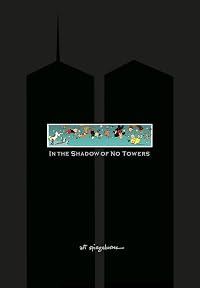
For Art Spiegelman, the Pulitzer Prize-winning author of Maus, the terrorist attacks of September 11, 2001 were both highly personal and intensely political. In the Shadow of No Towers, his first new book of comics since the groundbreaking Maus, is a masterful and moving account of the events and aftermath of that tragic day. Spiegelman and his family bore witness to the attacks in their lower Manhattan neighborhood: his teenage daughter had started school directly below the towers days show more earlier, and they had lived in the area for years. But the horrors they survived that morning were only the beginning for Spiegelman, as his anguish was quickly displaced by fury at the U.S. government, which shamelessly co-opted the events for its own preconceived agenda. He responded in the way he knows best. In an oversized, two-page-spread format that echoes the scale of the earliest newspaper comics (which Spiegelman says brought him solace after the attacks), he relates his experience of the national tragedy in drawings and text that convey--with his singular artistry and his characteristic provocation, outrage, and wit--the unfathomable enormity of the event itself, the obvious and insidious effects it had on his life, and the extraordinary, often hidden changes that have been enacted in the name of post-9/11 national security and that have begun to undermine the very foundation of American democracy. show lessTags
Recommendations









Member Recommendations
LitPeejster Grusin establishes his media theory of premediation in part through a "close reading" of this collection of comic panels Spiegelman created in the first few years after 9/11.

Member Reviews
This highly underrated work, by the acclaimed author of Maus, can easily be written off as a shallow account of september 11th donning an strange end-cap on comics history. To conceive it as such ignores many of the formal and structural elements Spiegelman employs to add density to what is otherwise a relatively short text.
The size and weight (literal) of this book were no accident. Reading it on my pillow I felt engulfed by it and my arms quickly tired under its mass. Beyond this obvious structural metaphor the book itself is divided into two parts each prefaced by a substantial text introduction.
The first part is a frenetic comic manifestation of the September 11th events as well as the emotional bedlam with which they endued the show more author. **Spoiler** These pages are peppered with what appear to be non-sequitir shifts in imagery that only become meaningful when one reads the second half of the book **Spoiler Over**
The second half of the book, upon an uncritical reading, seems to be nothing more than a tangentially relevant history of the comic medium. In fact every obscure comic that Spiegelman digs up is apposite not just to the events themselves and his experience of them, **Spoiler** but the imagery resonates directly with the the non-sequitirs from the first half of the book. I find it interesting to that in order to read the second half of the book you must turn it on its side (as if the book itself has fallen over). show less
The size and weight (literal) of this book were no accident. Reading it on my pillow I felt engulfed by it and my arms quickly tired under its mass. Beyond this obvious structural metaphor the book itself is divided into two parts each prefaced by a substantial text introduction.
The first part is a frenetic comic manifestation of the September 11th events as well as the emotional bedlam with which they endued the show more author. **Spoiler** These pages are peppered with what appear to be non-sequitir shifts in imagery that only become meaningful when one reads the second half of the book **Spoiler Over**
The second half of the book, upon an uncritical reading, seems to be nothing more than a tangentially relevant history of the comic medium. In fact every obscure comic that Spiegelman digs up is apposite not just to the events themselves and his experience of them, **Spoiler** but the imagery resonates directly with the the non-sequitirs from the first half of the book. I find it interesting to that in order to read the second half of the book you must turn it on its side (as if the book itself has fallen over). show less
So supremely my kind of book. In The Shadow of No Towers is one of the best explorations of Post-9/11 America I've ever seen, partially because it communicates via pop culture, something I love.
Clearly, after his home city was attacked, Art Spiegelman (the master artist behind Maus) buried himself in familiar media. As a result, this graphic novel is coated in references to comics, including his own, and popular cultural symbols in general.
The biggest downside is that I found the constant art style changes to be a bit exhausting after 20 or so pages. The style is incredibly unpredictable, by choice, and not all of the choices felt as intentional as the others.
It's aged fairly well, with a lot of the concerns raised being even more show more relevant today. However, it also makes the book seem a bit less clever than it probably was at the time. I doubt railing against George W Bush was as commonplace back then, especially in mainstream literature.
Nowhere near the level of importance as Maus, but the mastery is still there. It's a gigantic book and so expensive, so try and rent or just take a peek at it. It's really worth it. show less
Clearly, after his home city was attacked, Art Spiegelman (the master artist behind Maus) buried himself in familiar media. As a result, this graphic novel is coated in references to comics, including his own, and popular cultural symbols in general.
The biggest downside is that I found the constant art style changes to be a bit exhausting after 20 or so pages. The style is incredibly unpredictable, by choice, and not all of the choices felt as intentional as the others.
It's aged fairly well, with a lot of the concerns raised being even more show more relevant today. However, it also makes the book seem a bit less clever than it probably was at the time. I doubt railing against George W Bush was as commonplace back then, especially in mainstream literature.
Nowhere near the level of importance as Maus, but the mastery is still there. It's a gigantic book and so expensive, so try and rent or just take a peek at it. It's really worth it. show less
In 2004, graphic artist Art Spiegelman (Pulitzer winner for Maus), a New Yorker, released this oversized hardback compilation of a series of ten full-page graphical remembrances of the events of September 11, 2001 and their political and social aftermath. With a tone ranging from the terror of not knowing the fate of his daughter (whose school was at the foot of the Towers), to inchoate outrage at the Bush administration's political and goverrnmental handling of the "terrorist" issues, Spiegelman has created a 9/11 work of startling clarity and emotion. Spiegelman's artistic style ranges from highly realistic, to extremely cartoony, and he frequently ends up using the "mice" visual persona that he used so effectively to portray himself, show more his family and the Jewish people in Maus. People with a strong right-leaning political stance may not necessary appreciate this work, but it is a significant contribution to post-9/11 literature. An extra feature in this compilation is several pages of older newspaper comics from the late 1800s through the 1930s, by a variety of other artists. These include entries such as the Kin-der-Kids and Little Nemo, among others. Since Spiegelman's own works in this volume were full-page newspaper strips, seeing these historical examples from other eras places Spiegelman in an interesting historical context. I found this entire book to be a fascinating read.
Originally reviewed for my local library's website: http://www.lincolnlibraries.org/depts/bookguide/srec/staffrec09-09.htm show less
Originally reviewed for my local library's website: http://www.lincolnlibraries.org/depts/bookguide/srec/staffrec09-09.htm show less
Very surprising, innovative graphic narration of September 11th by eyewitness Spiegelman, author of award-winning MAUS. The book is enormous, literally and figuratively, and I found the author's obsession with one particular image of the towers--his rendering of it appears on almost every page--haunting. Unlike MAUS, SHADOW is full color, with a frantic and scattered pacing. The book is printed on World Trade Center-sized, thick posterboard paper (as if Spiegelman needed his story to last, since the towers didn't). SHADOW also includes a discussion of the history of comics, circa late 1800s, and how they influenced/recorded politics and societal mores. Appended are several plates that illustrate Spiegelman's comics essay.
Highly show more recommended for lovers of graphic novels, historians, and democrats--or anyone disheartened by America's sharp ethical decline since the Bush administration took office. show less
Highly show more recommended for lovers of graphic novels, historians, and democrats--or anyone disheartened by America's sharp ethical decline since the Bush administration took office. show less
As author of Maus, I had very high expectations for this graphic novel that focuses on September 11th. I was not disappointed. Once again, Spiegelman has created a graphic novel that is heartbreaking and poignant while still having aspects of humor. I would not say that his style is humorous but there are elements of dark humor that make the reader chuckle at his irony.
It is in an oversize format in which the book opens vertically like a newspaper. This adds to Spiegelman's design of having each page look like the front page of a newspaper. Half of the graphic novel is formatted in this way while the other half consists of plates from 1903-1921. Though the main story is only told in about twenty pages, it is filled with such passion show more and insight that it could easily fill an entire 400 page novel.
There is no true "plot" in this graphic novel but instead centers around Spiegelman's own experience on 9/11 and his reflections on the event years later. Clearly, Spiegelman suffers from post-traumatic stress due to the event and the extremely emotional situations that his family was put through. Though the content is heavy, he pokes fun at the government and the onslaught of patriotism that the event caused.
Written between 2002 and 2004, this graphic novel is a reflection on that day and the horrific days that followed. At times, In the Shadow of No Towers feels like Spiegelman’s personal project that he created in order to help with his own neurosis and come to terms with his own experiences. Yet this is not detrimental to the story and at no time does the reader feel as if Spiegelman pities himself. In fact, many of his observations about himself are pretty universal to anyone who lived through that day and the emotional/political whiplash that followed.
Before reading this book, I had not read a single book (fiction or non) that even remotely touched upon 9/11. I felt that it still hangs over us and that it was too soon for any movie or book to be written. It took me a couple of weeks before I was even willing to pick up this book but I really respected Spiegelman's treatment of the Holocaust in Maus and therefore thought that I would give it a try. I am so glad that I did because his perspective and opinions matched my own. I do not know if this book is for everyone because Spiegelman certainly is outspoken about his views. For those who are willing to give it a shot, it has the potential to be extremely therapeutic.
www.iamliteraryaddicted.blogspot.com show less
It is in an oversize format in which the book opens vertically like a newspaper. This adds to Spiegelman's design of having each page look like the front page of a newspaper. Half of the graphic novel is formatted in this way while the other half consists of plates from 1903-1921. Though the main story is only told in about twenty pages, it is filled with such passion show more and insight that it could easily fill an entire 400 page novel.
There is no true "plot" in this graphic novel but instead centers around Spiegelman's own experience on 9/11 and his reflections on the event years later. Clearly, Spiegelman suffers from post-traumatic stress due to the event and the extremely emotional situations that his family was put through. Though the content is heavy, he pokes fun at the government and the onslaught of patriotism that the event caused.
Written between 2002 and 2004, this graphic novel is a reflection on that day and the horrific days that followed. At times, In the Shadow of No Towers feels like Spiegelman’s personal project that he created in order to help with his own neurosis and come to terms with his own experiences. Yet this is not detrimental to the story and at no time does the reader feel as if Spiegelman pities himself. In fact, many of his observations about himself are pretty universal to anyone who lived through that day and the emotional/political whiplash that followed.
Before reading this book, I had not read a single book (fiction or non) that even remotely touched upon 9/11. I felt that it still hangs over us and that it was too soon for any movie or book to be written. It took me a couple of weeks before I was even willing to pick up this book but I really respected Spiegelman's treatment of the Holocaust in Maus and therefore thought that I would give it a try. I am so glad that I did because his perspective and opinions matched my own. I do not know if this book is for everyone because Spiegelman certainly is outspoken about his views. For those who are willing to give it a shot, it has the potential to be extremely therapeutic.
www.iamliteraryaddicted.blogspot.com show less
http://nhw.livejournal.com/200405.html
This is ever so slightly different from the 9/11 Report. The Commission Report is hundreds of pages of dense research, whereas this is ten huge pages of graphics explaining the reaction of one resident of Lower Manhattan.
Spiegelman and his wife rushed to their daughter's school beside the World Trade Center as soon as they realised what was happening; while they were inside looking for her the first tower collapsed; on their way out, the second tower fell too.
We turn to see the bones of the tower glow and shimmy in the sky. Ever-so-slowly it cascades into itself.
The image of the glowing tower, about to fall, illuminates the entire work. But he also expresses a deep hostility to the entire American show more political system, President Bush in particular, for (as he sees it) using the excuse of the attacks to pursue business as usual.
Our hero is trapped reliving the traumas of Sept 11, 2001...
Unbeknownst to him, brigands suffering from war fever have since hijacked those tragic events...
Yet at the same time he maintains a certain ability to question his own reactions (which will be familiar to anyone else who's read his Maus) and even pokes fun at his own propensity to read up on conspiracy theories. He doesn't come to a firm conclusion, but that goes for most of us.
The 9-11 material is followed by an interesting if not especially related brief history of comics in New York, with a few classic scenes from the likes of Little Nemo In Slumberland which Spiegelman links into the overall theme. The inside front and back cover carry the September 11 1901 headlines from the New York World, also a time of (generally forgotten) national trauma, as President William McKinley, shot a few days before in upstate New York, was gradually deteriorating to his death on September 14. But almost the best bit is Spiegelman's two-page introduction to the book as a whole, which says much more than I can here about why he did it, and why he did it the way he did. show less
This is ever so slightly different from the 9/11 Report. The Commission Report is hundreds of pages of dense research, whereas this is ten huge pages of graphics explaining the reaction of one resident of Lower Manhattan.
Spiegelman and his wife rushed to their daughter's school beside the World Trade Center as soon as they realised what was happening; while they were inside looking for her the first tower collapsed; on their way out, the second tower fell too.
We turn to see the bones of the tower glow and shimmy in the sky. Ever-so-slowly it cascades into itself.
The image of the glowing tower, about to fall, illuminates the entire work. But he also expresses a deep hostility to the entire American show more political system, President Bush in particular, for (as he sees it) using the excuse of the attacks to pursue business as usual.
Our hero is trapped reliving the traumas of Sept 11, 2001...
Unbeknownst to him, brigands suffering from war fever have since hijacked those tragic events...
Yet at the same time he maintains a certain ability to question his own reactions (which will be familiar to anyone else who's read his Maus) and even pokes fun at his own propensity to read up on conspiracy theories. He doesn't come to a firm conclusion, but that goes for most of us.
The 9-11 material is followed by an interesting if not especially related brief history of comics in New York, with a few classic scenes from the likes of Little Nemo In Slumberland which Spiegelman links into the overall theme. The inside front and back cover carry the September 11 1901 headlines from the New York World, also a time of (generally forgotten) national trauma, as President William McKinley, shot a few days before in upstate New York, was gradually deteriorating to his death on September 14. But almost the best bit is Spiegelman's two-page introduction to the book as a whole, which says much more than I can here about why he did it, and why he did it the way he did. show less
Spiegelman and his family live close to ground zero and so he had a more first hand experience with 9/11 than most of us. Taking early newspaper comics as his inspiration and means of telling his recollections he examines his reaction to the towers collapse. The result is both harrowing and beautiful. It is a deeply personal look at the event that will still resonate with our own experiences.
Members
- Recently Added By
Author Information

63+ Works 36,222 Members
Art Spiegelman was born in Stockholm, Sweden on February 15, 1948. He is the son of Polish Jews who survived imprisonment in Auschwitz. His family immigrated to the United States. He became a professional cartoonist at the age of 16. He studied art and philosophy at Harpur College. He became a creative consultant, designer, and writer for Topps show more Chewing Gum, Inc., where he created Wacky Packages, Garbage Pail Kids and other novelty items. The Complete Mr. Infinity was published in 1970 and won the Joel M. Cavior Award for Jewish Writing. In 1980, Spiegelman and his wife, Françoise Mouly founded the avant-garde comics magazine RAW. His best known work Maus: A Survivor's Tale, was published in 1986 and won the Pulitzer Prize in 1992. His other works include Maus: A Survivor's Tale II, In the Shadow of No Towers, Breakdowns, Jack and the Box, Be a Nose, and The Ghosts of Ellis Island. MetaMaus won the 2011 National Jewish Book Award in the Biography, Autobiography, and Memoir category. (Bowker Author Biography) show less
Some Editions
Awards and Honors
Series

Belongs to Publisher Series
Common Knowledge
- Canonical title
- In the Shadow of No Towers
- Original title
- In the Shadow of No Towers
- Original publication date
- 2004
- Important places
- Manhattan, New York, New York, USA; New York, USA; New York, New York, USA; World Trade Center, New York, New York, USA
- Important events
- September 11 Attacks (2001-09-11)
- Dedication
- For F, N & D, As Always
- First words
- I tend to be easily unhinged.
- Quotations
- Doomed! Doomed to drag this damned albatross around my neck, and compulsively retell the calamities of September 11th to anyone who'll still listen!
They passed some guy on Canal Street painting the towers. Glancing south, they could only see the billowing toxic smoke . . . the damned model had moved. - Last words
- (Click to show. Warning: May contain spoilers.)Ah!
Classifications
- Genre
- Graphic Novels & Comics
- DDC/MDS
- 741.5973 — Arts & recreation Drawing & decorative arts Drawing Comic books, graphic novels, fotonovelas, cartoons, caricatures, comic strips History, geographic treatment, biography North American United States (General)
- LCC
- PN6727 .S6 .I5 — Language and Literature Literature (General) Literature (General) Collections of general literature Comic books, strips, etc.
- BISAC
Statistics
- Members
- 1,305
- Popularity
- 18,634
- Reviews
- 25
- Rating
- (3.60)
- Languages
- 7 — Dutch, English, French, German, Italian, Spanish, Portuguese (Brazil)
- Media
- Paper
- ISBNs
- 13
- ASINs
- 3