
The Sheltering Sky
by Paul Bowles
On This Page
Description
A beautiful 65th anniversary paperback edition of the landmark literary work by acclaimed author Paul Bowles.In this classic work of psychological terror, Paul Bowles examines the ways in which Americans apprehend an alien culture--and the ways in which their incomprehension destroys them. The story of three American travelers adrift in the cities and deserts of North Africa after World War II, The Sheltering Sky is at once merciless and heartbreaking in its compassion. It etches the limits show more of human reason and intelligence--perhaps even the limits of human life--when they touch the unfathomable emptiness and impassive cruelty of the desert. show lessTags
Recommendations
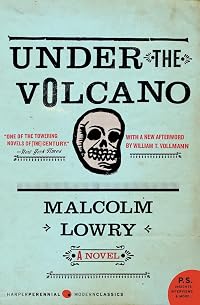
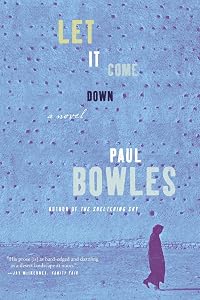

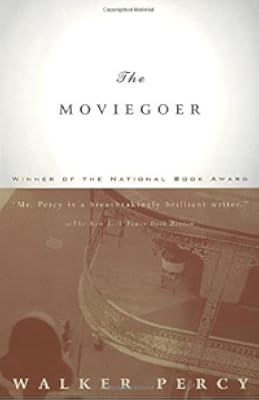

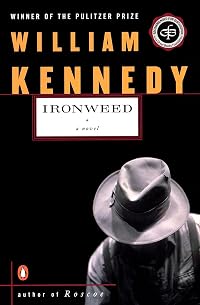
























Member Recommendations




Member Reviews
"...he had only to see a map to begin studying it passionately, and then, often as not, he would begin to plan some new, impossible trip which sometimes eventually became a reality. He did not think of himself as a tourist; he was a traveler. The difference is partly one of time, he would explain. Whereas the tourist generally hurries back home at the end of a few weeks or months, the traveler, belonging no more to one place than to the next, moves slowly, over periods of years, from one part of the earth to another. Indeed, he would have found it difficult to tell, among the many places he had lived, precisely where it was he had felt most at home. ...another important difference between tourist and traveler is that the former accepts show more his own civilization without question; not so the traveler, who compares it with the others, and rejects those elements he finds not to his liking." ~Paul Bowles (page 6)
My interest in the convergence of cultures and the crossing of lines are generally two-fold. (1) How is identity threatened and reconstructed? (2) How and why are cultural/societal/belief lines so rigidly enforced? and how can they be circumvented without paying "the cost of life?"
Paul Bowles opens with his definition of a tourist versus a traveler. Having set the stage with this distinction, the book delves into the disintegration of self which is the risk of the cultural/ideological traveler. Excellent and thought-provoking.
From my perspective, being a tourist is not a negative thing. It is much better than those who never leave home. The tourist brings back some perspective of another way, but has no reason to adjust their own since of self.
The traveler, on the other hand, becomes more psychologically flexible...finding self in identifications that are individual and impermanent....individual in the sense that they are not a part of a Whole which a community has agreed upon...but are self-constructed from many communities. The traveler always runs the risk of fragmentation and disintegration. I don't think a traveler is capable of being just a tourist. show less
My interest in the convergence of cultures and the crossing of lines are generally two-fold. (1) How is identity threatened and reconstructed? (2) How and why are cultural/societal/belief lines so rigidly enforced? and how can they be circumvented without paying "the cost of life?"
Paul Bowles opens with his definition of a tourist versus a traveler. Having set the stage with this distinction, the book delves into the disintegration of self which is the risk of the cultural/ideological traveler. Excellent and thought-provoking.
From my perspective, being a tourist is not a negative thing. It is much better than those who never leave home. The tourist brings back some perspective of another way, but has no reason to adjust their own since of self.
The traveler, on the other hand, becomes more psychologically flexible...finding self in identifications that are individual and impermanent....individual in the sense that they are not a part of a Whole which a community has agreed upon...but are self-constructed from many communities. The traveler always runs the risk of fragmentation and disintegration. I don't think a traveler is capable of being just a tourist. show less
Port Moresby and his wife Kit leave New York with their friend Tunner, planning to travel in the North African desert and hopefully resolve some unspecified marital difficulties. It quickly becomes apparent that none of them have the slightest idea how to navigate a very different culture in an extreme climate. Set in 1949, the locations they visit are remote and not designed for tourism. The hotels provide nothing more than a cot in a dirty room, and the food leaves a lot to be desired. But the trio appear unflappable, so accustomed to their white privilege that they fail to anticipate ways they could be taken advantage of or take even the most basic safety precautions.
It’s no surprise that things quickly go terribly wrong, and show more worsen as the travelers make snap judgements that only serve to complicate their situation. Paul Bowles steadily builds dramatic tension through a combination of the bleak environment, extreme heat, and character flaws. This drumbeat of oppression and despair never lets up, and yet I was fully engaged in this novel, always hoping the trio’s fortunes would improve. The conclusion is disorienting, but fitting. The Sheltering Sky was a compelling, if not enjoyable, novel. show less
It’s no surprise that things quickly go terribly wrong, and show more worsen as the travelers make snap judgements that only serve to complicate their situation. Paul Bowles steadily builds dramatic tension through a combination of the bleak environment, extreme heat, and character flaws. This drumbeat of oppression and despair never lets up, and yet I was fully engaged in this novel, always hoping the trio’s fortunes would improve. The conclusion is disorienting, but fitting. The Sheltering Sky was a compelling, if not enjoyable, novel. show less
Strangely enough, this novel reminded me strongly of another lesser known classic novel I read last year, Black Sun by Edward Abbey. Both novels were considered minor classics by authors I had heard of and wanted to read. I bought both books because they came in beautifully designed reissued trade paperbacks. Both Abbey and Bowles know the places they write about intimately--the Arizona desert in Abbey's case and the Sahara in Bowles's--and are particularly well gifted in capturing that strong sense of place on the page. And both books degenerate into an unexpectedly offensive male fantasy. (Read my review of Black Sun for more details on that one.)
In The Sheltering Sky, a well-off married couple and their friend go to North Africa--not show more as tourists, but as travelers--to escape their ennui and find some meaning in their lives. (These people are idle rich; where do they get their money? Bowles never says.) All are poorly equipped for the journey and make extremely bad decisions. It is immediately apparent that the husband, Port, is a selfish prick and we feel no sympathy for him when he becomes ill with typhoid. (He didn't even bother getting immunized before going abroad.) The traveling companion, Tunner, is also completely self-absorbed and rather adolescent in his behavior. The wife, Kit, is a woman completely without agency, who lets things happen to her and then decides afterward how she feels about them. But even with such a character, and even though we know the desert is slowly driving her insane, it is still almost impossible to accept her actions during the final third of the book, and even more impossible to accept that her feelings about what happens to her as depicted are what an actual woman would feel. She seems to exist solely to depend on men and to feel grateful to them for their existence and willing to let them do whatever and to like it.
Here is where the male fantasy comes in. Both Abbey and Bowles have created women who think and behave as they would like to imagine women would behave, not as women actually do. The net result for this female reader is a growing sense of disgust with the writer. This attitude toward women seems much more common in older novels that have been labeled as "classic" than in contemporary novels by male writers, perhaps because men now realize that women are in fact people and should behave as such, or because those male writers who still depict women this way are no longer lauded by critics. Nevertheless, this novel has pretty much turned me off completely on reading classic books written by men, and I guess my education of the white male psyche as depicted in literature is pretty much complete anyway. I did major in English.
By contrast, my discoveries of classic books written by women have been, for the most part, a sheer delight, an unearthing of really good writing that I wasn't before exposed to, or exposed to only in limited qualities. At this point in my reading life, it seems a much more sensible use of my time to continue finding and reading the women writers that my education neglected. In the meantime, this novel sits side by side on the shelf next to the Abbey, waiting to be donated--they seem to deserve each other. show less
In The Sheltering Sky, a well-off married couple and their friend go to North Africa--not show more as tourists, but as travelers--to escape their ennui and find some meaning in their lives. (These people are idle rich; where do they get their money? Bowles never says.) All are poorly equipped for the journey and make extremely bad decisions. It is immediately apparent that the husband, Port, is a selfish prick and we feel no sympathy for him when he becomes ill with typhoid. (He didn't even bother getting immunized before going abroad.) The traveling companion, Tunner, is also completely self-absorbed and rather adolescent in his behavior. The wife, Kit, is a woman completely without agency, who lets things happen to her and then decides afterward how she feels about them. But even with such a character, and even though we know the desert is slowly driving her insane, it is still almost impossible to accept her actions during the final third of the book, and even more impossible to accept that her feelings about what happens to her as depicted are what an actual woman would feel. She seems to exist solely to depend on men and to feel grateful to them for their existence and willing to let them do whatever and to like it.
Here is where the male fantasy comes in. Both Abbey and Bowles have created women who think and behave as they would like to imagine women would behave, not as women actually do. The net result for this female reader is a growing sense of disgust with the writer. This attitude toward women seems much more common in older novels that have been labeled as "classic" than in contemporary novels by male writers, perhaps because men now realize that women are in fact people and should behave as such, or because those male writers who still depict women this way are no longer lauded by critics. Nevertheless, this novel has pretty much turned me off completely on reading classic books written by men, and I guess my education of the white male psyche as depicted in literature is pretty much complete anyway. I did major in English.
By contrast, my discoveries of classic books written by women have been, for the most part, a sheer delight, an unearthing of really good writing that I wasn't before exposed to, or exposed to only in limited qualities. At this point in my reading life, it seems a much more sensible use of my time to continue finding and reading the women writers that my education neglected. In the meantime, this novel sits side by side on the shelf next to the Abbey, waiting to be donated--they seem to deserve each other. show less
The narrative tracks affluent Americans Port and Kit Moresby and their companion Tunner as they travel across the North African desert following World War II. They are "travelers" as opposed to "tourists," looking to escape the monotony of their lives and fully immerse themselves in a new culture. However, the harsh realities of the desert, their own internal conflicts, and their encounters with the unfamiliar quickly undo their attempts to rediscover themselves and rekindle their strained marriage. The story devolves into an unsettling examination of human frailty in the face of the Sahara's immense, merciless emptiness.
The inherent meaninglessness of life and the struggle of the individual to find meaning in a world devoid of show more intrinsic values are major themes. This existential emptiness is powerfully metaphorically represented by the vast, uncaring desert. While Kit attempts to avoid meaninglessness in a number of ways, characters such as Port struggle with the "infinite sadness" at the center of consciousness.
The conflict between Western sensibilities and the strange North African culture is portrayed by Bowles in a striking manner. Despite their desire to be "travelers," the Americans eventually fall short of truly understanding or connecting with the locals and their customs. Tragic outcomes from their ignorance underscore the perils of cultural conceit and unsophisticated exploration.
A common theme is the contrast between "tourists" who are looking for familiarity and comfort and "travelers" who welcome the unknown. Although Port considers himself a true traveler, the book challenges ideas of identity and purpose by implying that true self-discovery frequently comes at a terrifying cost. The characters feel incredibly alone, even in their own relationships. Distance and a lack of genuine intimacy plague Port and Kit's marriage. They become even more estranged from one another as well as from any feeling of home or belonging as a result of their journey.
Bowles contrasts the untamed, unadulterated forces of nature and human impulse in the desert with the ostensible order and reason of Western civilization. "The Sheltering Sky" is a difficult but unquestionably influential piece of writing. Although it's not an easy read, its examination of important existential issues and its realistic, frequently disturbing portrayal of human nature under pressure make an impression. This book compels readers to face difficult realities about who they are and the state of humanity. show less
The inherent meaninglessness of life and the struggle of the individual to find meaning in a world devoid of show more intrinsic values are major themes. This existential emptiness is powerfully metaphorically represented by the vast, uncaring desert. While Kit attempts to avoid meaninglessness in a number of ways, characters such as Port struggle with the "infinite sadness" at the center of consciousness.
The conflict between Western sensibilities and the strange North African culture is portrayed by Bowles in a striking manner. Despite their desire to be "travelers," the Americans eventually fall short of truly understanding or connecting with the locals and their customs. Tragic outcomes from their ignorance underscore the perils of cultural conceit and unsophisticated exploration.
A common theme is the contrast between "tourists" who are looking for familiarity and comfort and "travelers" who welcome the unknown. Although Port considers himself a true traveler, the book challenges ideas of identity and purpose by implying that true self-discovery frequently comes at a terrifying cost. The characters feel incredibly alone, even in their own relationships. Distance and a lack of genuine intimacy plague Port and Kit's marriage. They become even more estranged from one another as well as from any feeling of home or belonging as a result of their journey.
Bowles contrasts the untamed, unadulterated forces of nature and human impulse in the desert with the ostensible order and reason of Western civilization. "The Sheltering Sky" is a difficult but unquestionably influential piece of writing. Although it's not an easy read, its examination of important existential issues and its realistic, frequently disturbing portrayal of human nature under pressure make an impression. This book compels readers to face difficult realities about who they are and the state of humanity. show less
American expatriate Paul Bowles' [The Sheltering Sky] skewers American culture and character in this tale of three "travelers" in North Africa after WWII. Porter Moresby, known as Port, and his wife Kit are accompanied by a bachelor friend named George Tunner. Burdened by ennui and purposelessness, they want to experience different cultures, see different lands. North Africa is their destination, for the simple reason that it is the only place they could get passage to. Upon arrival, Port dislikes the place, but he chose it; they'll experience North Africa with its Arabs, blacks, and other denizens, as well as the French authorities.
The trio remind each other that they are travelers, not tourists.
Their travels are aimless, with the next destination being wherever the next bus is going. "'When are you pulling out of this hellhole?'" Port is asked by a fellow wanderer he's just met.
The Moresbys are no longer intimate and engage separate rooms in whatever hotel they stay in. Tunner dreams of an opportunity to get intimate with Kit (the last thing on Kit's wishlist). Both Moresbys regret having invited Tunner along; he's annoying. Several times they cross paths with a shady mother-son duo driving from place to place in a large, old Mercedes. If this sounds pretty bad, be assured it is bad. It gets worse.
And yet. Yet. I found their journey curiously seductive; certainly, it is strange. Will there be redemption for them across the Sahara? Will they emerge from the desert freshed, inspired, renewed. Don't count on it.
In sum, it's a strange yet alluring story. It was selected by both Modern Library and Time magazine for their Top 100 Novels lists. Time's reviewer: "The last of this book’s three sections, when Kit is given over to her fate in the desert, is one of the damnedest things you will ever read." True. I'm glad I read it. show less
The trio remind each other that they are travelers, not tourists.
show more
He [Port] did not think of himself as
a tourist; he was a traveler. The difference is partly one of time, he would explain .Whereas the tourist generally hurries back home at the end of a few weeks or months, the traveler, belonging no more to one place than to the next, moves slowly, over periods of years, from one part of the earth to another.
Their travels are aimless, with the next destination being wherever the next bus is going. "'When are you pulling out of this hellhole?'" Port is asked by a fellow wanderer he's just met.
"Oh, we've been planning to get the train tomorrow for Boussif, but we're not in any hurry. So we may wait until Thursday. The only way to travel, at least for us, is to go when you feel like going and stay where you feel like staying"
"I quite agree. But surely you don't feel like staying here?"
"Oh God, no!" laughed Port. "We hate it. But there are three of us, and we haven't all managed to get up the necessary energy at one time."
The Moresbys are no longer intimate and engage separate rooms in whatever hotel they stay in. Tunner dreams of an opportunity to get intimate with Kit (the last thing on Kit's wishlist). Both Moresbys regret having invited Tunner along; he's annoying. Several times they cross paths with a shady mother-son duo driving from place to place in a large, old Mercedes. If this sounds pretty bad, be assured it is bad. It gets worse.
And yet. Yet. I found their journey curiously seductive; certainly, it is strange. Will there be redemption for them across the Sahara? Will they emerge from the desert freshed, inspired, renewed. Don't count on it.
In sum, it's a strange yet alluring story. It was selected by both Modern Library and Time magazine for their Top 100 Novels lists. Time's reviewer: "The last of this book’s three sections, when Kit is given over to her fate in the desert, is one of the damnedest things you will ever read." True. I'm glad I read it. show less
This is a book I've put off reading for a very long time. I've read other Bowles novels and knew this one was going to be hard. The characters are odious. The setting dirty desert. The plot, purely inhuman in its scope and dark alleys as they caress the mind with emotional devastation.
And yet, it is an amazing work. This is one of those stories that will stay with you, mostly unbidden, sometimes unwanted, and remind you that if you, like me, crave humanistic reflection and justice, will rise like sour bile, to remind you of what's important in this life.
And yet, it is an amazing work. This is one of those stories that will stay with you, mostly unbidden, sometimes unwanted, and remind you that if you, like me, crave humanistic reflection and justice, will rise like sour bile, to remind you of what's important in this life.
Port and Kit are married Americans looking for meaningful experiences immediately after World War II. Joined by their friend, Tunner, they head for French Algeria, the first place they are allowed to visit. As they travel farther and farther into the desert, it becomes clear they are not prepared for the lack of accustomed food, fine accommodations, and for the heat, the flies and the uncaring desert and its people. In addition, Port and Kit are alienated from each other and are having serious communication issues.
Port is obviously unsatisfied with materialism and is searching for the meaning of life. He has the temperament of a poet, but can't express what he experiences. Kit lives in constant dread of something bad happening and show more relies upon Port completely. When the sheltering sky of western civilization falls away, and Kit and Port must face the utter indifference of the desert world, they are left completely vulnerable. Everything just keeps getting worse.
This isn't a pleasant book and the main characters aren't easy to like, but it is a good one. Bowles offers fantastic descriptions of the landscape and people, and strikes straight at colonial attitudes.
If one goes looking to live on the edge, one better have extremely good balance. show less
Port is obviously unsatisfied with materialism and is searching for the meaning of life. He has the temperament of a poet, but can't express what he experiences. Kit lives in constant dread of something bad happening and show more relies upon Port completely. When the sheltering sky of western civilization falls away, and Kit and Port must face the utter indifference of the desert world, they are left completely vulnerable. Everything just keeps getting worse.
This isn't a pleasant book and the main characters aren't easy to like, but it is a good one. Bowles offers fantastic descriptions of the landscape and people, and strikes straight at colonial attitudes.
If one goes looking to live on the edge, one better have extremely good balance. show less
Members
- Recently Added By
Published Reviews
ThingScore 100
There is a curiously double level to this novel. The surface is enthralling as narrative. It is impressive as writing. But above that surface is the aura that I spoke of, intangible and powerful, bringing to mind one of those clouds that you have seen in summer, close to the horizon and dark in color and now and then silently pulsing with interior flashes of fire. And that is the surface of show more the novel that has filled me with such excitement. show less
added by stephmo
Lists

The Guardian's 1000 Novels Everyone Must Read
1,005 works; 547 members
20th Century Literature
1,161 works; 54 members

Larry McCaffery's 20th Century Greatest Hits: 100 English-Language Books
103 works; 12 members
1940s
221 works; 25 members

The Top Ten: Writers Pick Their Favorite Books
240 works; 31 members

Time Magazine's "All-Time 100"
113 works; 15 members

Boarding House and Hotel Fiction
73 works; 25 members

Sense of place
156 works; 13 members
Time's All-Time 100 Novels
100 works; 27 members
Harold Bloom - The Western Canon: D. The Chaotic Age
833 works; 24 members

A Novel Cure
742 works; 23 members

Africa
109 works; 8 members
The Modern Library's 100 Best Novels: The Board's List
85 works; 6 members
My list of 100 books to read next
100 works; 4 members

Books Read in 2017
4,249 works; 130 members

Literature which inspired Pop songs
85 works; 9 members
First Novels
373 works; 17 members

Mustich's 1000 Books to Read Before You Die: A Life Changing List
1,001 works; 19 members

Global Reads: Books Set in Africa
19 works; 3 members
Stephen King's 'On Writing' reading list
95 works; 4 members

Canon de la narrativa universal del s. XX (cicutadry)
499 works; 3 members

My Favourite Books
86 works; 5 members
Modern Library's 100 Best Novels
100 works; 2 members

Canon de la narrativa universal del siglo XX
254 works; 6 members
Author Information

127+ Works 10,843 Members
Some Editions
Awards and Honors
Distinctions
Notable Lists
Series
Belongs to Publisher Series
Work Relationships
Common Knowledge
- Canonical title
- The Sheltering Sky
- Original title
- The Sheltering Sky
- Alternate titles*
- Под покровом небес
- Original publication date
- 1949
- People/Characters
- Port Moresby; Kit Moresby; Tunner; Eric Lyle; Mrs. Lyle; Belqassim (show all 7); Captain Broussard
- Important places
- Oran, Algeria; Algeria; Morocco; Sahara
- Related movies
- The Sheltering Sky (1990 | IMDb)
- Epigraph
- [Book One]
"Each man's destiny is personal only insofar as it may happen to resemble what is already in his memory."
--Eduardo Mallea
[Book Two]
"'Good-bye,' says the dying man to the mirror they hold in front of him. 'We won't be seeing each other any more.'"
--Valery
[Book Three]
"From a certain point onward there is no longer any turning back. That is the point that must be reached."
--Kafka - Dedication
- To Jane
- First words
- He awoke, opened his eyes.
Si svegliò, aprì gli occhi. La stanza gli diceva poco o niente, profondamente immerso com'era nel non-essere da cui era appena affiorato. Se l'energia di accertare la propria collocazione nel tempo e nello spazio gli mancav... (show all)a, gliene mancava anche il desiderio. Sapeva soltanto di esistere, d'avere attraversato vaste regioni per ritornare dal nulla; c'era, al centro della sua coscienza, la certezza di una tristezza infinita e al tempo stesso rassicurante, perché era la sola ad essergli familiare. - Last words
- (Click to show. Warning: May contain spoilers.)At the edge of the Arab quarter the car, still loaded with people, made a wide U-turn and stopped; it was the end of the line.
(Click to show. Warning: May contain spoilers.)In quel momento stava passando un tram affollato, gremito in gran parte di scaricatori del porto indigeni, in tuta blu. Nell'interno le luci fioche vacillavano, la gente in piedi ondeggiava. Aggirato l'angolo, sempre scampanellando, si avviò su per la salita oltre il Café d'Eckmühl-Noiseux, dove i tendoni sbattevano nella brezza della sera, oltre il Bar Métropol la cui radio era assordante, oltre il Café de France, luccicante di ottoni e specchi. Si spingeva avanti rumorosamente, aprendosi un varco tra la folla che riempiva la strada, poi sferragliò attorno a un altro angolo e infine cominciò la lenta ascesa dell'Avenue Galliéni. In basso, apparvero le luci del porto, distorte dal movimento dell'acqua. Poi, edifici più squallidi si profilarono nel buio, le strade divennero più oscure. Al margine del quartiere arabo il tram, ancora carico di gente, descrisse un'ampia svolta a U e si fermò; era arrivato al capolinea. - Blurbers
- Wolff, Tobias; Muir, Edwin; Vidal, Gore
- Original language*
- Amerikanisch
*Some information comes from Common Knowledge in other languages. Click "Edit" for more information.
Classifications
Statistics
- Members
- 4,765
- Popularity
- 2,993
- Reviews
- 89
- Rating
- (3.85)
- Languages
- 22 — Catalan, Chinese, Danish, Dutch, English, Finnish, French, German, Greek, Hungarian, Italian, Japanese, Norwegian (Bokmål), Norwegian, Polish, Portuguese, Romanian, Russian, Serbian, Croatian, Spanish, Swedish
- Media
- Paper, Audiobook, Ebook
- ISBNs
- 84
- UPCs
- 1
- ASINs
- 46