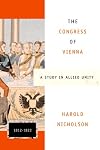
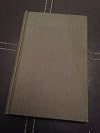
The Congress of Vienna: A Study in Allied Unity: 1812-1822
by Harold Nicolson
On This Page
Description
In 1812, at the end of the Napoleonic Wars, a congress convened in Vienna in which the fate of Europe was to be determined for the next hundred years. Attending were the great statesmen of the time -- the wily French foreign minister, Talleyrand; his brave but misguided British counterpart, Lord Castlereagh; the conservative Austrian chancellor, Prince Metternich; and the idealistic but unstable tsar Alexander. Beginning with Napoleon's harrowing retreat from Moscow, the pace of the show more narrative holds throughout the negotiations in the Austrian capital, where the power struggle to both restore a lost world and ensure a stable future took place. Harold Nicolson's classic is narrative history at its best. "With swift pace, clear focus and a series of brilliant character sketches, this is narrative history at its best." -- The New York Times show lessTags
Recommendations


















Member Reviews
Published in 1946 that is, at a time when Europe were just waking up from the military ambtions of dictators that had thrown her into total war, drawing parallels with the last days of the napoleonic saga would have been easy and very tempting. Well, hat off to the author because he doesn't! On the contrary, he insists history is a matter of circumstances and, as circumstances differ with various generations it doesn't repeat itself.
Such a view (again, remarkable considering the context) makes of this book more than an account of a diplomatic conference in european history. It's a window open on the circumstances that affected its decisions, from the personalities involved to the events (tragic or downright ridiculous) that changed its show more agendas more than once.
Being himself a diplomat, the portraits Harold Nicolson offers of Talleyrand, Lord Castlereagh, the Tsar Alexander Ist or, between the lines, Napoleon and Louis XVIII are a gem. Replacing it all in the context of a tumultuous period he, in the end, doesn't hide his admiration for such an endeavour. Indeed, it's easy to criticise the shortfalls and failures of such a conference (e.g. the rise of nationalisms, People's Springs...) but, let's not forget we'll have to wait 1914 for Europe to be plunged again into the chaos of a total war. Having laid the foundations for a century of peace is not that bad, is it?
A nice read. show less
Such a view (again, remarkable considering the context) makes of this book more than an account of a diplomatic conference in european history. It's a window open on the circumstances that affected its decisions, from the personalities involved to the events (tragic or downright ridiculous) that changed its show more agendas more than once.
Being himself a diplomat, the portraits Harold Nicolson offers of Talleyrand, Lord Castlereagh, the Tsar Alexander Ist or, between the lines, Napoleon and Louis XVIII are a gem. Replacing it all in the context of a tumultuous period he, in the end, doesn't hide his admiration for such an endeavour. Indeed, it's easy to criticise the shortfalls and failures of such a conference (e.g. the rise of nationalisms, People's Springs...) but, let's not forget we'll have to wait 1914 for Europe to be plunged again into the chaos of a total war. Having laid the foundations for a century of peace is not that bad, is it?
A nice read. show less
The Congress of Vienna, written in 1945, is still by far the best book on this subject. It also gives a good insight in the workings of diplomacy and is very direct and open about the characters of the main players. On top of this it is very well written.
This book is NOT a gripping read; however, if you want to know about the establishment of modern Europe, and particularly, the British involvement therein, then this is a must read.
Nicolson must have researched extensively for this authoritative and informative book. It is well served by a plethora of notes which would make it ideal for the serious student but, leaving the in depth stuff alone, it acts as an ideal book for the interested amateur too.
Although, I have nothing with which to compare this work, to confirm its veracity, I am convinced by its representation of a group of diplomats all fighting in part for their country but equally, for their personal kudos. I was long intrigued by the contempt of Shelly and Byron for Lord show more Castlereagh: I can see, from this description, why he would not be the sort of man to appeal to their avant-garde outlook on life. show less
Nicolson must have researched extensively for this authoritative and informative book. It is well served by a plethora of notes which would make it ideal for the serious student but, leaving the in depth stuff alone, it acts as an ideal book for the interested amateur too.
Although, I have nothing with which to compare this work, to confirm its veracity, I am convinced by its representation of a group of diplomats all fighting in part for their country but equally, for their personal kudos. I was long intrigued by the contempt of Shelly and Byron for Lord show more Castlereagh: I can see, from this description, why he would not be the sort of man to appeal to their avant-garde outlook on life. show less
2273 The Congress of Vienna A study in Allied Unity:1812-1822, by Harold Nicolson (read 4 Mar 1990) This book was published in 1946, when I first heard of it, though not till now have I read it. It is a masterful work, just detailed and perspicacious enough to make it superlative reading. It covers the period from 1812 through the Congress of Vienna and to 1822. It tends to concentrate on Castlereigh, who was Britain's representative at the Congress till Feb 1815 and was Foreign Minister till his suicide on Aug 12, 1822, when he cut his throat from ear to ear with a small penknife. There is nothing unfavorable to say about this perfect book, which illuminates the period and makes it seem supremely interesting. I really enjoyed this show more book--I should read anything else Nicolson has written. I read two other books by him before I read this one, but this was by far the best of the three. Just very well-done! show less
Interesante ensayo sobre el sistema naval español durante el siglo XVI. España, una de las tres potencias globales que han sido en la historia de la humanidad, fue la primera a la que se le planteo el problema de armar un sistema de flotas que asegurara su hegemonía y protegiera su comercio a lo ancho de los vastos océanos recién descubiertos. A diferencia de las posteriores potencias globales (Reino Unido y EE.UU.) el primer sistema de armadas español no fue permanente ni estuvo sufragado enteramente por el estado, se trato de un sistema intermitente, según necesidad, que era sufragado por la corona y por los particulares con intereses en el comercio de la Carrera de Indias.
Un buen libro que despertará el interés de aquellos show more aficionados a los temas navales o al funcionamiento de la corona española en sus años de hegemonía. show less
Un buen libro que despertará el interés de aquellos show more aficionados a los temas navales o al funcionamiento de la corona española en sus años de hegemonía. show less
ESSENCE OF HISTORY!! FANTASTIC!! SUPER. Keep this with 'The Great Duke' by A. Bryant. They go together. SEL
Members
- Recently Added By
Lists

In Our Time books
4,934 works; 2 members
Author Information

63+ Works 2,480 Members
Common Knowledge
- Canonical title
- The Congress of Vienna: A Study in Allied Unity: 1812-1822
- Original publication date
- 1946-05
- People/Characters
- Robert Stewart, 2nd Marquess of Londonderry (Lord Castlereagh); Talleyrand-Périgord, Prince Charles Maurice de; Alexander I, Emperor of Russia; Metternich, Prince Clement Wenceslaus Lothaire von; Gentz, Friedrich von; Napoleon Bonaparte (show all 8); Frederick William III, King of Prussia; Wellington, Field Marshal Duke Arthur Wellesley
- Important places
- Vienna, Austria
- Important events
- Congress of Vienna
- Epigraph
- 'Nothing appears of shape to indicate
That cognisance has marshalled things terrene.
Or will (such is my thinking) in my span.
Rather they show that, like a knitter droused
Whose lingers play in skilled unmindfuln... (show all)ess,
The Will has woven with an absent heed
Since life first was; and ever will so weave.'
THOMAS HARDY, The Dynasts
'Historic sense forbids us to judge results by
motive, or real consequences by the ideals and
intentions of the actor who produced them.'
VISCOUNT MORLEY - First words
- Introduction This study of the grouping and regrouping of the United Nations between 1812 and 1822 makes no claim to original research.
Chapter 1 The 29th Bulletin was issued from Molodetchno ... (show all)on December 3, 1812. - Last words
- (Click to show. Warning: May contain spoilers.)He was spared the news of Solferino.
- Original language
- English UK
- Disambiguation notice*
- The correct title of this book is: The congress of Vienna : a study in allied unity: 1812-1822
*Some information comes from Common Knowledge in other languages. Click "Edit" for more information.
Classifications
- Genres
- History, Nonfiction, General Nonfiction, Politics and Government
- DDC/MDS
- 940.27 — History & geography History of Europe History of Europe Europe: Renaissance, Reformation, Enlightenment, Napolean Napoleonic period 1789-1815
- LCC
- DC249 .N5 — History of Europe, Asia, Africa and Oceania France – Andorra – Monaco History of France Modern, 1515- Revolutionary and Napoleonic period, 1789-1815
- BISAC
Statistics
- Members
- 317
- Popularity
- 100,857
- Reviews
- 9
- Rating
- (3.87)
- Languages
- 5 — Dutch, English, German, Italian, Spanish
- Media
- Paper, Ebook
- ISBNs
- 11
- ASINs
- 26