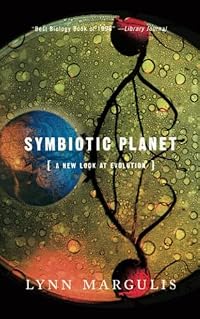
Symbiotic Planet: A New Look at Evolution
by Lynn Margulis
On This Page
Description
"Although Charles Darwin's theory of evolution laid the foundations of modern biology, it did not tell the whole story. Most remarkably, The Origin of Species said very little about, of all things, the origins of species. Darwin and his modern successors have shown very convincingly how inherited variations are naturally selected, but they leave unanswered how variant organisms come to be in the first place." "In Symbiotic Planet, renowned scientist Lynn Margulis shows that symbiosis, which show more simply means members of different species living in physical contact with each other, is crucial to the origins of evolutionary novelty. Ranging from bacteria, the smallest kinds of life, to the largest - the living Earth itself - Margulis explains the symbiotic origins of many of evolution's most important innovations." "Along the way, Margulis describes her initiation into the world of science and the early steps in the present revolution in evolutionary biology; the importance of species classification for how we think about the living world; and the way "academic apartheid" can block scientific advancement."-- show lessTags
Recommendations






Member Reviews
I'm a sucker for popular science books. As a minor member of one of C P Snow's Two Cultures, I am respectful of but in no way conversant with the scientific mind (and even less so of technology), so popular science writings are my way of consuming regurgitated scientific principles without too much indigestion.
Lynn Margulis is a celebrated microbiologist who has, by all accounts, done sterling work on the relationships between bacteria, fungi, plants and animals. Her main contribution to science is her endosymbiotic theory, which postulates that over millions of years organisms have often absorbed or been absorbed by others, developing and evolving into new organisms (I think I have that right). For example, human cells have long been show more known to include bacterial relics such as mitochondria, which among other attributes process oxygen and provide the energy that keeps us going, and without which we would certainly not have evolved to be here.
The Symbiotic Planet goes further than that, however, and suggests links with James Lovelock's Gaia hypothesis. Gaia, so beloved by some mystics, feminists and romantics, is actually the name currently given to the processes that help to regulate the planetary eco-systems that sustain life in its myriad forms, not some anthropomorphised goddess that needs worshipping (as would have happened in the classical period).
There are lots of exciting ideas here, the distillation of many years of work, collaboration and stamina, and I certainly am in no position to criticise the science behind them. Her writing at times exhibits passion and poetry, and you can see that this is a real powerhouse of a woman who converses and argues with other scientists (inter alia, she was married to Carl Sagan for nearly a decade) to expand horizons and perpectives.
What I am less happy about in this book, though, is its poor editing and occasional lack of clarity and direction. Many of her other books are co-authored (often with one of her sons) and I feel that this publication could have done with more imput from other minds. We have a whole chapter on her early career which, while interesting, diverts from the main thrust of her arguments. There are fine diagrams, but they are often placed arbitrarily amongst the pages and labelled inconsistently when compared one with another. There is an index, but we non-scientists, at whom the book must largely be aimed, would have welcomed a glossary when new terms are introduced (though to be fair these are sometimes partly explained a few pages on, but sometimes not at all). And there are occasional misspellings (an obvious one is 'archaebacteria', appearing twice on one page as 'archeabacteria', which raises concerns about those I must have missed).
Most of these faults must be laid at the door of an editor (was there one?), because there is no doubting the enthusiasm, expertise and creativity of the author, still evident many years on from the book's original publication date. In fact, one of the plus-points of this book for me, as a non-scientist, was the analogy I can see with the creative arts (not to mention technology). I've often suspected that it's hard to create new art-forms de novo, and that most artistic innovation is the symbiosis of two or more distinctly different genres; The Symbiotic Planet's arguments provide the perfect parallel when discussing the evolution of life-forms.
http://calmgrove.wordpress.com/2012/07/08/symbiosis/ show less
Lynn Margulis is a celebrated microbiologist who has, by all accounts, done sterling work on the relationships between bacteria, fungi, plants and animals. Her main contribution to science is her endosymbiotic theory, which postulates that over millions of years organisms have often absorbed or been absorbed by others, developing and evolving into new organisms (I think I have that right). For example, human cells have long been show more known to include bacterial relics such as mitochondria, which among other attributes process oxygen and provide the energy that keeps us going, and without which we would certainly not have evolved to be here.
The Symbiotic Planet goes further than that, however, and suggests links with James Lovelock's Gaia hypothesis. Gaia, so beloved by some mystics, feminists and romantics, is actually the name currently given to the processes that help to regulate the planetary eco-systems that sustain life in its myriad forms, not some anthropomorphised goddess that needs worshipping (as would have happened in the classical period).
There are lots of exciting ideas here, the distillation of many years of work, collaboration and stamina, and I certainly am in no position to criticise the science behind them. Her writing at times exhibits passion and poetry, and you can see that this is a real powerhouse of a woman who converses and argues with other scientists (inter alia, she was married to Carl Sagan for nearly a decade) to expand horizons and perpectives.
What I am less happy about in this book, though, is its poor editing and occasional lack of clarity and direction. Many of her other books are co-authored (often with one of her sons) and I feel that this publication could have done with more imput from other minds. We have a whole chapter on her early career which, while interesting, diverts from the main thrust of her arguments. There are fine diagrams, but they are often placed arbitrarily amongst the pages and labelled inconsistently when compared one with another. There is an index, but we non-scientists, at whom the book must largely be aimed, would have welcomed a glossary when new terms are introduced (though to be fair these are sometimes partly explained a few pages on, but sometimes not at all). And there are occasional misspellings (an obvious one is 'archaebacteria', appearing twice on one page as 'archeabacteria', which raises concerns about those I must have missed).
Most of these faults must be laid at the door of an editor (was there one?), because there is no doubting the enthusiasm, expertise and creativity of the author, still evident many years on from the book's original publication date. In fact, one of the plus-points of this book for me, as a non-scientist, was the analogy I can see with the creative arts (not to mention technology). I've often suspected that it's hard to create new art-forms de novo, and that most artistic innovation is the symbiosis of two or more distinctly different genres; The Symbiotic Planet's arguments provide the perfect parallel when discussing the evolution of life-forms.
http://calmgrove.wordpress.com/2012/07/08/symbiosis/ show less
Margulis strives in this short book to connect the idea of Gaia with her symbiotic theory of evolution and does so quite convincingly to my mind. I appreciate her scientific explication of the Gaia Hypothesis, as opposed to the widespread, pop-spirituality one of a personified uber-organism. In Margulis's words, "Gaia itself is not an organism directly selected among many. It is an emergent property of interaction among organisms, the spherical planet on which they reside, and an energy source, the sun."
Two short passages from Symbiotic Planet:
*
Life is a planetary level phenomenon and the Earth has been alive for at least 3000 million years. To me the human move to take responsibility for the living Earth is laughable - the rhetoric of the powerless. The planet takes care of us, not we of it. Our self inflated moral imperative to guide a wayward Earth or heal a sick planet is evidence of our immense capacity for self-delusion. Rather, we need to protect us from ourselves.
*
So far the only way in which we humans prove our dominance is by expansion. We remain brazen, crass, and recent, even as we become more numerous. Our toughness is a delusion. Have we the intelligence and discipline to resist our tendency to grow without limit?
*
Life is a planetary level phenomenon and the Earth has been alive for at least 3000 million years. To me the human move to take responsibility for the living Earth is laughable - the rhetoric of the powerless. The planet takes care of us, not we of it. Our self inflated moral imperative to guide a wayward Earth or heal a sick planet is evidence of our immense capacity for self-delusion. Rather, we need to protect us from ourselves.
*
So far the only way in which we humans prove our dominance is by expansion. We remain brazen, crass, and recent, even as we become more numerous. Our toughness is a delusion. Have we the intelligence and discipline to resist our tendency to grow without limit?
(posted on my blog: davenichols.net)
Microbiologist Lynn Margulis presents an argument on behalf of symbiogenesis and Gaia Hypothesis in her book Symbiotic Planet. I had high expectations given Margulis's role in the establishment of the origins of mitochondria in cells. I was profoundly disappointed by the muddled, moody, and downright terrible treatment of her field of work found here.
Margulis starts the book with discussion of the nature of symbiosis and her own personal involvement in microbiological research. A few chapters in, it is difficult to determine if Margulis was trying to present a popular science book or an opinionated memoir. Neither was successfully presented.
Throughout the book, the author makes assertions about the show more nature of biology and symbiosis which are often described with 'my view' or 'in my opinion'. I'm not asking her to claim such hypothesis are indeed proven fact (although, at times, she does make such assertions), but the presentation, which only rarely includes descriptions of how such theories were validated through research, left me questioning whether Margulis had enough coffee on the morning she wrote the passage. Sometimes she just seems to lose interest in her current subject and changes course in mid-paragraph.
One telling moment in the book is when she is discussing Mendel's work. One sentence sums up the lack of professional presentation and effort that seems to have ruled her production of this book:
Seriously?!? Margulis is a widely-respected professional biologist who has contributed enormously to cutting-edge science, and she's quoting an unnamed amateur unpublished source to support her point? This appeared on page 20, at which point I was already questioning Margulis' ability to argue and present evidence. The rest of the book was not much better.
Highly disappointing treatment of a highly interesting subject by a well-respected key participant in 20th Century biology. I am really very suprised that this book was this bad. Maybe I just caught this read on a bad day (not likely), but I cannot recommend this book to anyone except the rare reader who has a personal interest in Margulis's theories and mindset. Two very generous stars. show less
Microbiologist Lynn Margulis presents an argument on behalf of symbiogenesis and Gaia Hypothesis in her book Symbiotic Planet. I had high expectations given Margulis's role in the establishment of the origins of mitochondria in cells. I was profoundly disappointed by the muddled, moody, and downright terrible treatment of her field of work found here.
Margulis starts the book with discussion of the nature of symbiosis and her own personal involvement in microbiological research. A few chapters in, it is difficult to determine if Margulis was trying to present a popular science book or an opinionated memoir. Neither was successfully presented.
Throughout the book, the author makes assertions about the show more nature of biology and symbiosis which are often described with 'my view' or 'in my opinion'. I'm not asking her to claim such hypothesis are indeed proven fact (although, at times, she does make such assertions), but the presentation, which only rarely includes descriptions of how such theories were validated through research, left me questioning whether Margulis had enough coffee on the morning she wrote the passage. Sometimes she just seems to lose interest in her current subject and changes course in mid-paragraph.
One telling moment in the book is when she is discussing Mendel's work. One sentence sums up the lack of professional presentation and effort that seems to have ruled her production of this book:
According to a brilliant unpublished manuscript by an amateur historian of science whose name I can't remember from Nassau Island in the Bahamas, Mendel saw no evidence at all that species change and evolve (20).
Seriously?!? Margulis is a widely-respected professional biologist who has contributed enormously to cutting-edge science, and she's quoting an unnamed amateur unpublished source to support her point? This appeared on page 20, at which point I was already questioning Margulis' ability to argue and present evidence. The rest of the book was not much better.
Highly disappointing treatment of a highly interesting subject by a well-respected key participant in 20th Century biology. I am really very suprised that this book was this bad. Maybe I just caught this read on a bad day (not likely), but I cannot recommend this book to anyone except the rare reader who has a personal interest in Margulis's theories and mindset. Two very generous stars. show less
Short book. Not much on symbiosis or planetary symbiosis and Gaia. Could have more info and detail on symbiogenesis. Will try other books from the author.
Lynn Margulis onderzoekt al jaren het principe van 'endosymbiose', het onderlinge fysieke contact tussen soorten. Haar conclusie is dat alle leven op onze planeet diepgaand met elkaar verbonden is, en dat daarin het antwoord ligt op een van de belangrijkste vragen die Darwin in zijn evolutieleer had opengelaten: hoe soorten kunnen ontstaan. Zij geeft hiermee een wetenschappelijke basis voor de Gaia-hypothese, de theorie dat de aarde één groot ecosysteem vormt. De Gaia-theorie is door milieuactivisten altijd omarmd, maar het wetenschappelijke establishment heeft er lange tijd aan getwijfeld. Margulis' werk heeft die twijfel inmiddels weggenomen, en daarmee heeft zij het denken over het milieu belangrijke vooruitgang teweeggebracht. In show more "De symbiotische planeet" legt Lynn Margulis uit wat endosymbiose inhoudt en vertelt zij over de moeite die het heeft gekost voordat de wetenschappelijke wereld haar visie aanvaardde.
Recensie(s)
Lynn Margulis is beroemd als biologe vanwege haar theorie over het ontstaan van organellen die in cellen van plant en dier voorkomen. Deze organellen zijn essentieel, omdat ze zorgen voor de energiehuishouding. Het is nu algemeen aanvaard dat dit bacteriën waren, die eerst vrij leefden en nu als symbionten in onze cellen. Margulis is bescheiden genoeg om te benadrukken dat zij niet de eerste was die dit idee had, maar ze is toch zeker degene geweest die het idee gepromoot heeft en voor de bewijzen zorgde. Ze heeft een serie andere populaire boeken op haar naam staan, allemaal over grote thema's als 'wat is leven'. Hoewel ze schrijft over grote, bijna filosofische onderwerpen, is het iemand die zich bij de feiten houdt en er niet al te veel op los speculeert. In dit boek over symbiose probeert ze uit te leggen hoeveel invloed symbioses telkens weer gespeeld hebben in de evolutie van soorten. Ook probeert ze aan te geven wat het verschil is tussen haar theorieën en de Gaia-theorie. Haar schrijfstijl is erg persoonlijk van aard. Haar relaas is doorspekt met de invloed die haar persoonlijke contacten op haar denken hebben gehad. show less
Recensie(s)
Lynn Margulis is beroemd als biologe vanwege haar theorie over het ontstaan van organellen die in cellen van plant en dier voorkomen. Deze organellen zijn essentieel, omdat ze zorgen voor de energiehuishouding. Het is nu algemeen aanvaard dat dit bacteriën waren, die eerst vrij leefden en nu als symbionten in onze cellen. Margulis is bescheiden genoeg om te benadrukken dat zij niet de eerste was die dit idee had, maar ze is toch zeker degene geweest die het idee gepromoot heeft en voor de bewijzen zorgde. Ze heeft een serie andere populaire boeken op haar naam staan, allemaal over grote thema's als 'wat is leven'. Hoewel ze schrijft over grote, bijna filosofische onderwerpen, is het iemand die zich bij de feiten houdt en er niet al te veel op los speculeert. In dit boek over symbiose probeert ze uit te leggen hoeveel invloed symbioses telkens weer gespeeld hebben in de evolutie van soorten. Ook probeert ze aan te geven wat het verschil is tussen haar theorieën en de Gaia-theorie. Haar schrijfstijl is erg persoonlijk van aard. Haar relaas is doorspekt met de invloed die haar persoonlijke contacten op haar denken hebben gehad. show less
Dec 10, 2015Dutch
Wer sich für Wissenschaftsgeschichte interessiert, kann hier auf seine Kosten kommen. Lynn Margulis, Ex-Frau von Carl Sagan und Mutter von Dorion Sagan, außerdem - und wichtiger - die "Mutter" der Endosymbiontentheorie, plaudert nämlich hier auch ein bißchen aus der Schule, sprich: aus ihrem Leben. Obwohl das Buch primär eine historische Übersicht der Entwicklung der Endosymbiontentheorie bietet, enthält es auch einiges Privates, so über jugendliche Eskapaden.
"In secret exercise of my perceived rights as a person of free will I snuck out of the University of Chicago eight-grade laboratory school, with its vastly inferior pool of potential boyfriends, and returned to the huge public high school where I had decided I belonged. I show more refused to stay another day in that lab school, where everything was so familiar and algebra was so hard. I was living in my parents' lovely South Shore Drive apartment and decided that running away was the only solution. Of course, I had no money, nowhere to go, and a rigid schedule of classes and duties."
Es kam wie es kommen mußte.
"Fury hit the fan when the high school administrators realized that my parents had no idea that I was not in the lab school; when I had told them that I was leaving I hadn't admitted that my parents didn't know. Of course my parents had not noticed the missing tuition bill. - Many teary sessions followed in and out of school."
Man bekommt aber einen Endruck, warum sich der charismatische Carl Sagan von dieser dickköpfigen jungen Dame angezogen gefühlt haben mag.
"At age fourteen I was lucky indeed to be accepted into the University of Chicago's special early entry program. Although three and a half years later I graduated with many acquisitions, including a liberal arts degree and a husband [Sagan], by far the most lasting was a thoroughgoing, finely nurtured critical scepticism. I cherish my University of Chicago education for its central teaching: one must always strive to distinguish bullshit from authenticity."
Obwohl das Buch nun schon ein paar Jahre alt ist (1998) bietet es einen immer noch aktuellen, allgemeinverständlichen, aber knapp gehaltenen (146 S.) Überblick sowohl über die Endosymbiontentheorie als auch über die Gaia-Hypothese. Ein klein wenig Grundwissen über beide Themen sollte man allerdings mitbringen. Der einzige Wermutstropfen ist die spärliche Ausstattung mit nur wenigen und durchgehend schwarzweißen Abbildungen. Beide, die serielle Endosymbiontentheorie (SET à la Margulis) und die Gaia-Hypothese, werden im Kontext ihrer historischen Entwicklung dargestellt. Insofern ist dies nicht nur ein Lehrbuch, sondern vielmehr ein Geschichtsbuch aus individueller Sicht – aber wie gesagt: man sollte sich wirklich für Biologiegeschichte interessieren.
Margulis ist von Grund auf Optimistin. Sie meint, die Erde wird auch mit so schädlichen Organismen wie Homo sapiens fertigwerden: "Gaia, a tough bitch, is not at all threatened by humans".
8 von 10 Endosymbionten. show less
"In secret exercise of my perceived rights as a person of free will I snuck out of the University of Chicago eight-grade laboratory school, with its vastly inferior pool of potential boyfriends, and returned to the huge public high school where I had decided I belonged. I show more refused to stay another day in that lab school, where everything was so familiar and algebra was so hard. I was living in my parents' lovely South Shore Drive apartment and decided that running away was the only solution. Of course, I had no money, nowhere to go, and a rigid schedule of classes and duties."
Es kam wie es kommen mußte.
"Fury hit the fan when the high school administrators realized that my parents had no idea that I was not in the lab school; when I had told them that I was leaving I hadn't admitted that my parents didn't know. Of course my parents had not noticed the missing tuition bill. - Many teary sessions followed in and out of school."
Man bekommt aber einen Endruck, warum sich der charismatische Carl Sagan von dieser dickköpfigen jungen Dame angezogen gefühlt haben mag.
"At age fourteen I was lucky indeed to be accepted into the University of Chicago's special early entry program. Although three and a half years later I graduated with many acquisitions, including a liberal arts degree and a husband [Sagan], by far the most lasting was a thoroughgoing, finely nurtured critical scepticism. I cherish my University of Chicago education for its central teaching: one must always strive to distinguish bullshit from authenticity."
Obwohl das Buch nun schon ein paar Jahre alt ist (1998) bietet es einen immer noch aktuellen, allgemeinverständlichen, aber knapp gehaltenen (146 S.) Überblick sowohl über die Endosymbiontentheorie als auch über die Gaia-Hypothese. Ein klein wenig Grundwissen über beide Themen sollte man allerdings mitbringen. Der einzige Wermutstropfen ist die spärliche Ausstattung mit nur wenigen und durchgehend schwarzweißen Abbildungen. Beide, die serielle Endosymbiontentheorie (SET à la Margulis) und die Gaia-Hypothese, werden im Kontext ihrer historischen Entwicklung dargestellt. Insofern ist dies nicht nur ein Lehrbuch, sondern vielmehr ein Geschichtsbuch aus individueller Sicht – aber wie gesagt: man sollte sich wirklich für Biologiegeschichte interessieren.
Margulis ist von Grund auf Optimistin. Sie meint, die Erde wird auch mit so schädlichen Organismen wie Homo sapiens fertigwerden: "Gaia, a tough bitch, is not at all threatened by humans".
8 von 10 Endosymbionten. show less
Mar 6, 2009German
2
Members
- Recently Added By
Author Information

38+ Works 2,096 Members
Lynn Margulis was born in Chicago, Illinois on March 5, 1938. She graduated from the University of Chicago at the age of 18. She received a master's degree in genetics and zoology from the University of Wisconsin and a Ph.D. in genetics from the University of California, Berkeley. She taught for 22 years at Boston University before joining the show more faculty at the University of Massachusetts, Amherst in 1988. She was best known for her theory of species evolution by symbiogensis. The manuscript in which she first presented her findings was published in 1967 by the Journal of Theoretical Biology. An expanded version, with additional evidence to support the theory, became her first book entitled Origin of Eukaryotic Cells. Her other works include Symbiosis in Cell Evolution, Luminous Fish: Tales of Science and Love, Dazzle Gradually: Reflections on the Nature of Nature, and Mind, Life, and Universe: Conversations with Great Scientists of Our Time. She died five days after suffering a hemorrhagic stroke on November 22, 2011 at the age of 73. (Bowker Author Biography) show less
Series
Belongs to Publisher Series
Common Knowledge
- Canonical title
- Symbiotic Planet: A New Look at Evolution
- Original title
- Symbiotic Planet: A New Look at Evolution; Symbiotic Planet
- Original publication date
- 1998
- People/Characters*
- Sagan, C.; Cleveland, L.R.; Lovelock, J.E.; Morowitz, H.; Protoctisten
- First words*
- "Mama, was hat das Gaia-Konzept mit deiner Symbiontentheorie zu tun ?" fragte mein 17-jähriger Sohn Zach eines Tages nach der Arbeit.
- Quotations*
- Überflüssig wird die Sonne - Ist Vortrefflichkeit erst tot
- Original language*
- Englisch
*Some information comes from Common Knowledge in other languages. Click "Edit" for more information.
Classifications
Statistics
- Members
- 377
- Popularity
- 82,293
- Reviews
- 7
- Rating
- (3.60)
- Languages
- 8 — Chinese, Czech, Dutch, English, German, Korean, Spanish, Turkish
- Media
- Paper, Ebook
- ISBNs
- 16
- ASINs
- 2