On This Page
Description
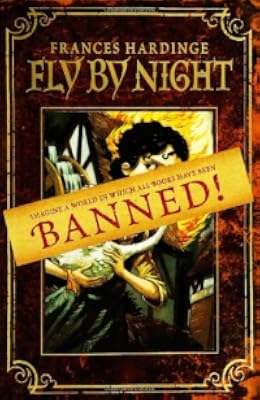
Mosca Mye and her homicidal goose, Saracen, travel to the city of Mandelion on the heels of smooth-talking con-man, Eponymous Clent.Tags
Recommendations
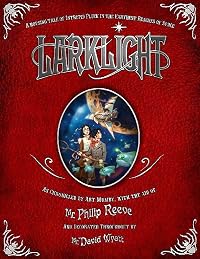
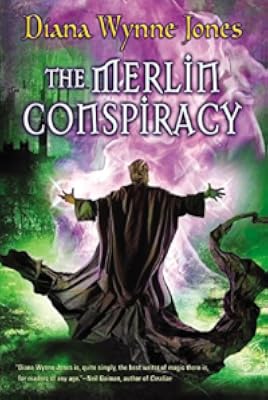
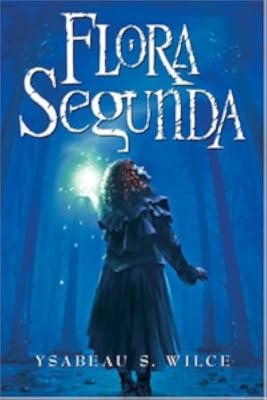
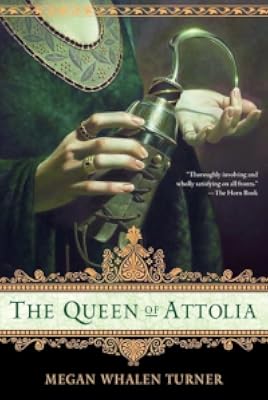




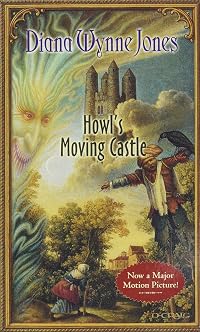
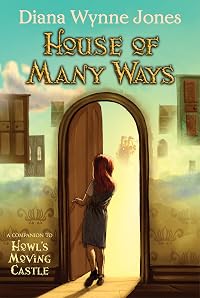
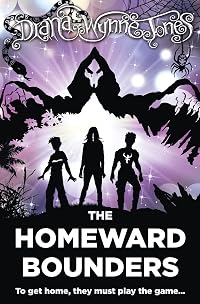
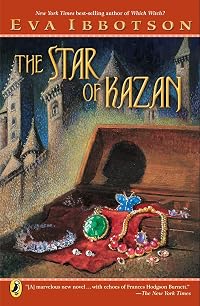
Member Recommendations
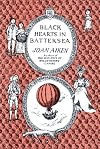
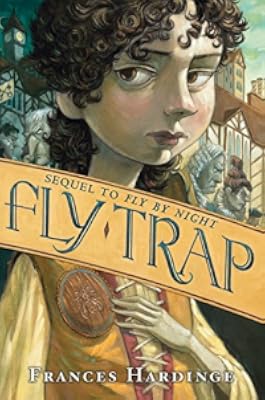
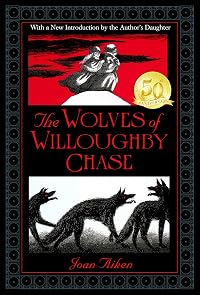
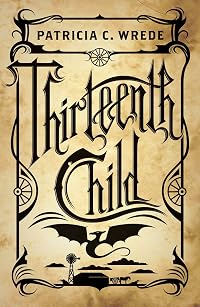
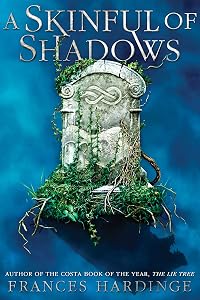
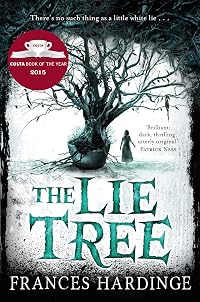
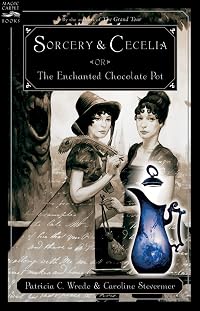
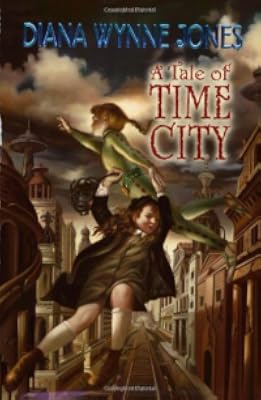
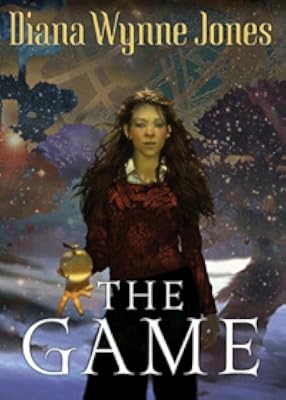
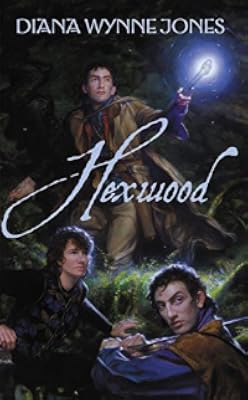
Sakerfalcon Similar period settings and society, with intelligent, unscrupulous heroines. Both books are exciting, subversive and extremely well-written.
20
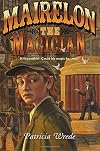
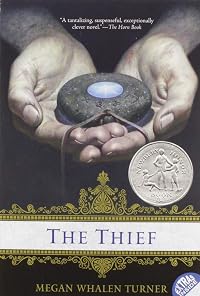
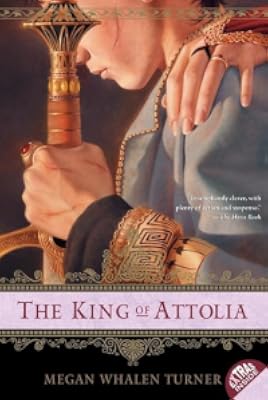
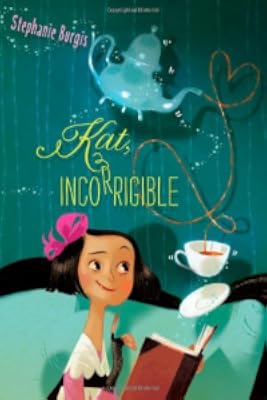
MyriadBooks For heroines who are nobody's fool and who want more than the norm from their life.
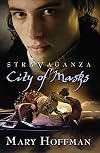
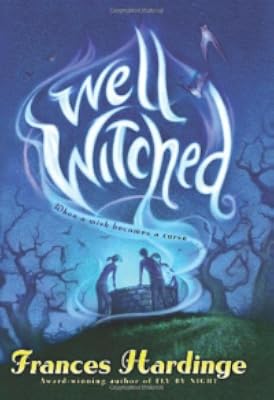
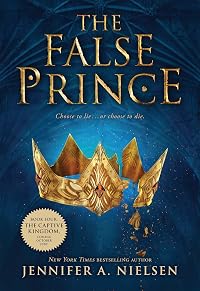
HatsForMice Alternate Universes! Plot! Intrigue! Rebellion! Boats!

Member Reviews
Mosca Mye grows up far from anywhere with her father, a bookish but emotionally remote man. After his death it falls up to her aunt and uncle to look after her, but Mosca runs away one night and frees an incarcerated con man with a way with words on the way. Thrown together by circumstance, they decide to travel together, accompanied by Mosca's companion, the fierce goose Saracen. But as it usually goes in these kinds of stories, that's not at all how events unfold, and Mosca becomes a central figure in a story of mayhem and murder, intrigue and conflict.
Frances Hardinge's debut novel is wildly imaginative with surprisingly mature themes at its heart, if a little ambitious for the supposed target readership (age 9+). Frances Hardinge's show more love of words shines from the page, obvious in her fizzing prose and sparkling plot. Her characters are drawn with affection and she even makes the villains relatable. The wryly humorous narration masks a darker heart at the centre of the novel, one that is just as relevant today as it was more than ten years ago when this book was written. You could do a lot worse than giving this book to your child, which may just inspire a lifelong love of reading, and chances are you will enjoy it too. I certainly want to find out how Mosca's adventures with her goose continue, in the sequel Twilight Robbery. show less
Frances Hardinge's debut novel is wildly imaginative with surprisingly mature themes at its heart, if a little ambitious for the supposed target readership (age 9+). Frances Hardinge's show more love of words shines from the page, obvious in her fizzing prose and sparkling plot. Her characters are drawn with affection and she even makes the villains relatable. The wryly humorous narration masks a darker heart at the centre of the novel, one that is just as relevant today as it was more than ten years ago when this book was written. You could do a lot worse than giving this book to your child, which may just inspire a lifelong love of reading, and chances are you will enjoy it too. I certainly want to find out how Mosca's adventures with her goose continue, in the sequel Twilight Robbery. show less
I was taken by this book, from the very first scene, in which our heroine is introduced as a small baby, tightly swaddled and hung from a hook in the study where her father is writing a great work of history. The setting is an ingenious fractured reflection of England in about 1700, with the memory of civil war and religious persecution still raw and troublesome; but the scenery is also strongly reminiscent of Pratchett's Ankh-Morpork, with lots of mud, shady inns, disreputable footpads, and scheming patricians and guildmasters. This book is not for the reluctant reader: it is for the reader who likes long words, even if they don't quite know what they mean. The vocabulary is riotously rich, the descriptions vivid and baroque, the plot show more entertainingly serpentine. MB 30-ix-2020 show less
This is why I keep on reading; for all the sludge you find yourself wading through, every so often you turn up a genuine diamond. 'Fly By Night' is set in a world something like 18th century England, dominated by myriad household gods but still haunted by a religious reformation that’s been overturned but whose influence still casts a shadow. Our heroine is Mosca Mye, a plucky young orphan who escapes from her evil uncle by the simple expedient of setting fire to his barn, picks up an itinerant wordsmith by way of adult guidance and, with no other companion than her evil-tempered gander Saracen, sets out to find her way in the world, cheerfully creating havoc wherever she goes and ending up embroiled in a revolution that involves, show more amongst other things, a ragged school, an illegal printing press, warring trade guilds, a mad Duke and his sinister sister, floating coffee houses, and a highwayman who finds his destiny changed by the power of the printed word. Exciting, engaging, literate, and wholly wonderful. show less
Very enjoyable and rather rollicking adventure, about a young orphan who flees a literal backwater village with a rescued and untrustworthy con-man and heads for the nearest city, only to become embroiled in a tangled net of intrigue between religious zealots and oppressive controlling guilds and dangerous radicals and loony rulers. Heroine Mosca an Aikenesque figure, reminiscent of Dido Twite in her manners, though she is well able to read, and, though good-hearted, capable of making a few selfish choices that get her into hot water. The intriguing world, a sturdy fantasy version of eighteenth century England with a fractured realm and floating coffee houses, makes for a fun setting for the escapades of Mosca and friends.
Fly By Night is an awesome book, with fanciful writing and interesting characters. It showcases a twelve-year-old misfit girl--she can read--who learns how words can lead one astray, but also into strange and wonderful experiences. She also learns what happens when one guild attempts to control all the printed words when an unknown agitator begins using an unauthorized printing press.
No parallels to Goodreads, Amazon and on-topic, uncensored reviews here.
Fly By Night is a playful, sophisticated story, as suited to the older reader as the young adult. The story of a twelve-year-old misfit girl–she can read–weaves an antagonistic buddy-trip, a spy caper, guild wars, city revolutions, freedom of the press and a journey of show more self-discovery into a satisfying book that I wholeheartedly recommend.
I knew I was going to be in for something fun when I read on page one:
“Celery had every reason to feel strongly on the subject of names. Her eyes were pale, soft and moist, like skinned grapes, but at the moment they were stubborn, resolute grapes.”
Clearly, this is an author that enjoys playing with words. I understand the simile doesn’t work–grapes can’t be resolute–but that’s exactly why I find it amusing. But Hardringe doesn’t just love playing with words; she’s written a book where themes of reading, words and books have been woven into the core of her story. Just how much does her heroine love words?
Since the burning of her father’s books, Mosca had been starved of words. She had subsisted on workaday terms, snub and flavorless as potatoes. Clent had brought phrases as vivid and strange as spices, and he smiled as he spoke, as if tasting them… Mendacity, thought Mosca. Mellifluous. She did not know what they meant, but the words had shapes in her mind. She memorized them, and stroked them in her thoughts like the curved backs of cats. Words, words, wonderful words. But lies too.
Surely readers can relate.
A barely-spoilery summary: Mosca’s father died, trapping her in a dreary existence in the book-fearing, water-logged village of Clough. A traveler indirectly enchants her with his wily, silver-coated tongue–not because of his lies, but because of his words–inspiring her to disobedience. Escaping Clough, they head to a nearby village, securing access on Captain Partridge’s suspiciously weighted barge. Forced off, they catch a ride on a peddler’s cart until encountering a wealthy woman’s damaged coach and a highwayman with a flair for the dramatic. Landing in the village of Mandelion, they take rooms in a ‘marriage house’ and then the real confusion starts.
Since that’s just the first 94 pages, it’s clear that this is a fast paced story. Layers upon layers are added, paralleling Mosca’s intellectual and emotional growth as she experiences the world beyond her village. I found myself challenged, and admit that I was surprised by a number of twists (all probable!) the plot took.
Characterization is fascinating. I’m not a fan of the current trend of anti-heroes, so I appreciate that these characters have the flavor of real people, with obsessions, grudges, hopes and misconceptions. Starry-eyed idealism doesn’t play nearly the role in their decisions that perseverance and determination do. Still, the characters aren’t unconditionally likeable; they have flaws. Mosca is irascible and Eponymous Clent is a con artist with a strategy for every situation. Our first glimpse of him is more telling for the adult readers than the younger:
“The mouth was moving, spilling out long, languorous sentences in a way which suggested that, despite his predicament, the speaker rather enjoyed the sound of his own voice.”
Yet what I loved most was Hardinge’s prose. It will surely having me buying and gifting this book. Instead of telling us how Mosca and Clent traveled the forest, we get the perspective of the path:
“The path was a troublesome, fretful thing. It worried that it was missing a view of the opposite hills and insisted on climbing for a better look. Then it found the breeze uncommonly chill and ducked back among the trees. It suddenly thought it had forgotten something and doubled back, then realized that it hadn’t and turned about again. At last it struggled free of the pines, plumped itself down by the riverside, complained of its aching stones and refused to go any farther. A sensible, well-trodden track took over.”
I don’t know that I would call this fantasy, although the top Goodreads shelf is ‘fantasy.’ But truly, there aren’t really any fantastical elements, only extreme, storybook ones. Even the goose, swaggering and ill-tempered, is goose-like. In fact, in the afterward, Hardinge states her land is “based roughly on England at the start of the eighteenth century.” If so, it’s a history lesson in heavy disguise, the Robin Hood version.
Whimsical, clever, empowering and satisfying, I may just bump this up to five stars. After I buy and re-read.
This re-read had me noting the most evocative and beautiful description of seagulls ever:
Above, the gulls spun and floated like tea leaves in a stirred cup. They followed each boat along the river, tearing off narrow strips of sound with their sharp beaks. show less
No parallels to Goodreads, Amazon and on-topic, uncensored reviews here.
Fly By Night is a playful, sophisticated story, as suited to the older reader as the young adult. The story of a twelve-year-old misfit girl–she can read–weaves an antagonistic buddy-trip, a spy caper, guild wars, city revolutions, freedom of the press and a journey of show more self-discovery into a satisfying book that I wholeheartedly recommend.
I knew I was going to be in for something fun when I read on page one:
“Celery had every reason to feel strongly on the subject of names. Her eyes were pale, soft and moist, like skinned grapes, but at the moment they were stubborn, resolute grapes.”
Clearly, this is an author that enjoys playing with words. I understand the simile doesn’t work–grapes can’t be resolute–but that’s exactly why I find it amusing. But Hardringe doesn’t just love playing with words; she’s written a book where themes of reading, words and books have been woven into the core of her story. Just how much does her heroine love words?
Since the burning of her father’s books, Mosca had been starved of words. She had subsisted on workaday terms, snub and flavorless as potatoes. Clent had brought phrases as vivid and strange as spices, and he smiled as he spoke, as if tasting them… Mendacity, thought Mosca. Mellifluous. She did not know what they meant, but the words had shapes in her mind. She memorized them, and stroked them in her thoughts like the curved backs of cats. Words, words, wonderful words. But lies too.
Surely readers can relate.
A barely-spoilery summary: Mosca’s father died, trapping her in a dreary existence in the book-fearing, water-logged village of Clough. A traveler indirectly enchants her with his wily, silver-coated tongue–not because of his lies, but because of his words–inspiring her to disobedience. Escaping Clough, they head to a nearby village, securing access on Captain Partridge’s suspiciously weighted barge. Forced off, they catch a ride on a peddler’s cart until encountering a wealthy woman’s damaged coach and a highwayman with a flair for the dramatic. Landing in the village of Mandelion, they take rooms in a ‘marriage house’ and then the real confusion starts.
Since that’s just the first 94 pages, it’s clear that this is a fast paced story. Layers upon layers are added, paralleling Mosca’s intellectual and emotional growth as she experiences the world beyond her village. I found myself challenged, and admit that I was surprised by a number of twists (all probable!) the plot took.
Characterization is fascinating. I’m not a fan of the current trend of anti-heroes, so I appreciate that these characters have the flavor of real people, with obsessions, grudges, hopes and misconceptions. Starry-eyed idealism doesn’t play nearly the role in their decisions that perseverance and determination do. Still, the characters aren’t unconditionally likeable; they have flaws. Mosca is irascible and Eponymous Clent is a con artist with a strategy for every situation. Our first glimpse of him is more telling for the adult readers than the younger:
“The mouth was moving, spilling out long, languorous sentences in a way which suggested that, despite his predicament, the speaker rather enjoyed the sound of his own voice.”
Yet what I loved most was Hardinge’s prose. It will surely having me buying and gifting this book. Instead of telling us how Mosca and Clent traveled the forest, we get the perspective of the path:
“The path was a troublesome, fretful thing. It worried that it was missing a view of the opposite hills and insisted on climbing for a better look. Then it found the breeze uncommonly chill and ducked back among the trees. It suddenly thought it had forgotten something and doubled back, then realized that it hadn’t and turned about again. At last it struggled free of the pines, plumped itself down by the riverside, complained of its aching stones and refused to go any farther. A sensible, well-trodden track took over.”
I don’t know that I would call this fantasy, although the top Goodreads shelf is ‘fantasy.’ But truly, there aren’t really any fantastical elements, only extreme, storybook ones. Even the goose, swaggering and ill-tempered, is goose-like. In fact, in the afterward, Hardinge states her land is “based roughly on England at the start of the eighteenth century.” If so, it’s a history lesson in heavy disguise, the Robin Hood version.
Whimsical, clever, empowering and satisfying, I may just bump this up to five stars. After I buy and re-read.
This re-read had me noting the most evocative and beautiful description of seagulls ever:
Above, the gulls spun and floated like tea leaves in a stirred cup. They followed each boat along the river, tearing off narrow strips of sound with their sharp beaks. show less
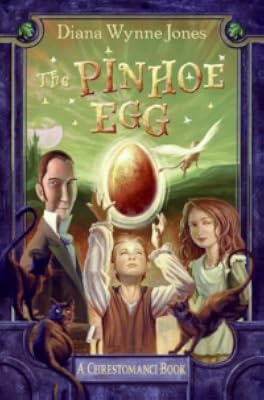
From what I can tell, Frances Hardinge appears to be the spiritual successor of Diana Wynne Jones. Not that their books were even faintly alike in themselves, but their works are children’s books that are not only widely read but also almost universally – and enthusiastically – loved by adults. I’m not a great reader of children’s books (or even so-called Young Adult) myself, but once in a blue moon I do come across a writer whose charm I find irresistible. Apart from Wynne Jones, that has basically been Patricia Wrede (whose Enchanted Forest series I really should finish some day), and now I can add a third name to that list, namely Frances Hardinge.
Fly By Night is, as far as I can tell, her first novel, and that does show on show more occasion: the plot is somewhat too all over the place, the points of view could have been controlled more tightly and time and again it is maybe a bit too much in love with its own verbal cleverness. But those are not even minor niggles, those are things most readers will not even notice as they are being swept along by the adventures of the girl Mosca in a world somewhat reminiscent of a post-Revolution France transplanted to early Industrialization England.
The first thing to notice about Fly By Night is the sheer inventiveness of its author; she keeps throwing off brilliant ideas left and right like she had an endless supply of them (and I won’t exclude that she has); there is such an exuberant imagination at work here, with such deep and joyful delight in the pleasures of an exuberant, prolific fantasy that restlessly jumps from one spot to the next, barely staying long enough in one place to create yet another wonderful, magically scintillating marvel before moving on. The reader, unless their imagination is as hyperactive as Frances Hardinge’s, will occasionally have problems keeping up, and will eventually become short of breath as they stumble after her – but in all likelihood they won’t care because of all the strange and wonderful delights they will encounter along the way. This starts right at the prologue where our freshly-born heroine is named Mosca because she was born on the name day of Goodman Palpitattle, “He Who Keeps Flies out of Jams and Butter Churns” – the novel pretty much had from that moment on, and didn’t let me go – exhausted and panting, but smiling a broad, happy smile – until the end.
The plot zips along at a similar speed – from the moment she and her goose friend Saracen escape the drab and dreary (not to mention very, very damp) village where she was born by freeing the charismatic scoundrel Eponymous Clent and flee towards the big city, there is high tension and exciting adventures, and once they arrive in Mandelion thing really get underway. The term “rollicking” seems to have been invented specifically for Fly by Night, for nothing really else quite describes the kind of edge-of-your-seat-breathlessly-turning-the-pages-wide-eyed-wonder one experiences in reading it. As you might have glanced from this, I liked the novel rather a lot. And the author it reminded me most of was actually not a children's author at all, but German Romantic writer E.T.A. Hoffmann, in so far as reading Fly by Night put me into a state of euphoric dizziness that felt very similar to what I get when reading books like Prinzessin Brambilla or Meister Floh. Needless to say, this is very unlikely to have been the last book of Frances Hardinge that I have read, in fact I am very keen to find out what her other books are like. show less
Fly By Night is, as far as I can tell, her first novel, and that does show on show more occasion: the plot is somewhat too all over the place, the points of view could have been controlled more tightly and time and again it is maybe a bit too much in love with its own verbal cleverness. But those are not even minor niggles, those are things most readers will not even notice as they are being swept along by the adventures of the girl Mosca in a world somewhat reminiscent of a post-Revolution France transplanted to early Industrialization England.
The first thing to notice about Fly By Night is the sheer inventiveness of its author; she keeps throwing off brilliant ideas left and right like she had an endless supply of them (and I won’t exclude that she has); there is such an exuberant imagination at work here, with such deep and joyful delight in the pleasures of an exuberant, prolific fantasy that restlessly jumps from one spot to the next, barely staying long enough in one place to create yet another wonderful, magically scintillating marvel before moving on. The reader, unless their imagination is as hyperactive as Frances Hardinge’s, will occasionally have problems keeping up, and will eventually become short of breath as they stumble after her – but in all likelihood they won’t care because of all the strange and wonderful delights they will encounter along the way. This starts right at the prologue where our freshly-born heroine is named Mosca because she was born on the name day of Goodman Palpitattle, “He Who Keeps Flies out of Jams and Butter Churns” – the novel pretty much had from that moment on, and didn’t let me go – exhausted and panting, but smiling a broad, happy smile – until the end.
The plot zips along at a similar speed – from the moment she and her goose friend Saracen escape the drab and dreary (not to mention very, very damp) village where she was born by freeing the charismatic scoundrel Eponymous Clent and flee towards the big city, there is high tension and exciting adventures, and once they arrive in Mandelion thing really get underway. The term “rollicking” seems to have been invented specifically for Fly by Night, for nothing really else quite describes the kind of edge-of-your-seat-breathlessly-turning-the-pages-wide-eyed-wonder one experiences in reading it. As you might have glanced from this, I liked the novel rather a lot. And the author it reminded me most of was actually not a children's author at all, but German Romantic writer E.T.A. Hoffmann, in so far as reading Fly by Night put me into a state of euphoric dizziness that felt very similar to what I get when reading books like Prinzessin Brambilla or Meister Floh. Needless to say, this is very unlikely to have been the last book of Frances Hardinge that I have read, in fact I am very keen to find out what her other books are like. show less
It took me weeks to read the first third of Fly By Night. It’s a clever, sharply written fantasy novel about Mosca, a 12 year old orphan who burns down her uncle's mill, abducts a goose and frees a “poetic practitioner” from the stocks in exchange for a job as his secretary. I liked Mosca, approved of Saracen the goose, but I did not care for anyone else. I appreciated the prose and thought the alternate-historical-England worldbuilding of reminiscent of Joan Aiken’s books, but I was not emotionally invested. I kept putting the book down and reading other things.
However, I persevered, and ended up reading the last two-thirds in the space of an afternoon. In the city of Mandelion, Mosca becomes caught up in a world of political show more instability, illegal printing presses, murder and spies. The story twists in unexpected ways, and manages to pull all the narrative threads together beautifully.
“I am content to be hated, and bloody, and outnumbered. For in this sickened world, it is better to believe in something too fiercely than to believe in nothing.”
Words, words, wonderful words. But lies too.
“No, it isn’t!” shouted Mosca the Housefly, Quillam Mye’s daughter. “Not if what you’re believin’ isn’t blinkin’ well True! You shouldn’t just go believin’ things for no reason, pertickly if you got a sword in your hand! [...]” show less
However, I persevered, and ended up reading the last two-thirds in the space of an afternoon. In the city of Mandelion, Mosca becomes caught up in a world of political show more instability, illegal printing presses, murder and spies. The story twists in unexpected ways, and manages to pull all the narrative threads together beautifully.
“I am content to be hated, and bloody, and outnumbered. For in this sickened world, it is better to believe in something too fiercely than to believe in nothing.”
Words, words, wonderful words. But lies too.
“No, it isn’t!” shouted Mosca the Housefly, Quillam Mye’s daughter. “Not if what you’re believin’ isn’t blinkin’ well True! You shouldn’t just go believin’ things for no reason, pertickly if you got a sword in your hand! [...]” show less
Members
- Recently Added By
Lists

Recommend the 20 best books you've read in the last five years
2,168 works; 606 members

Books discovered on LibraryThing
256 works; 36 members

infjsarah's wishlist
408 works; 2 members

al.vick-series
381 works; 2 members

Books Read in 2020
4,379 works; 124 members

Books Read in 2018
4,360 works; 110 members
Author Information

24+ Works 8,445 Members
Frances Hardinge was born in 1973 in the United Kingdom. Her first novel, Fly By Night, won the Bradford Boase Award in 2006. Her other books include Verdigris Deep / Well Witched, Twilight Robbery, and A Face Like Glass. Cuckoo Song won the Robert Holdstock Award for Best Novel at the British Fantasy Awards in 2015 and The Lie Tree won the 2015 show more Costa Book of the Year award. (Bowker Author Biography) show less
Some Editions
Awards and Honors
Awards
Distinctions
Series

Common Knowledge
- Canonical title
- Fly by Night
- Original publication date
- 2005-10-07
- People/Characters
- Mosca Mye; Eponymous Clent; Saracen (goose); Quillam Mye; Celery Dunnock; Jennifer Bessel (show all 27); Farthingale; Halk Partridge; Dotheril; Clam Blythe; Lady Tamarind; Mr Bockerby; Mabwick Toke; Caveat; Hopewood Pertellis; Mr Copperback; Miss Kitely; Linden Kohlrabi; The Cakes (Dormalise Bockerby); Carmine; Vocado Avourlace, Duke of Mandelion; Sorrel; Tare; Aramai Goshawk; Dulcet; Mr Stallwrath; Mr Hind
- Important places
- Chough; Kempe Teetering; Mandelion
- Dedication
- To my inspirational grandfather, the author H. Mills West, and to Rhiannon, Mosca's godmother
- First words
- "But names are important!" the nursemaid protested.
- Quotations
- Everybody knew that books were dangerous. Read the wrong book, it was said, and the words crawled around your brain on black legs and drove you made, wicked mad. (p. 12)
Words were dangerous when loosed. They were more powerful than cannon and more unpredictable than storms. They could turn men's heads inside out and warp their destinies. They could pick up kingdoms and shake them until they ... (show all)rattled. And this was a good thing, a wonderful thing ... (p. 433)
Clent simply swept such memories away, with the impatience of someone shoving crockery aside so that he can spread a treasure map across a table. The facts fell to the floor with a fractured tinkle and were forgotten.
To Mosca's mind, Clent did not look as if he had haunted anything but a pantry, but she managed not to say so.
With a sense of infinite luxury, Mosca gazed down at the step to watch pewter being polished by someone other than herself.
He had a pleasant, pink, rounded face, and the smile of someone who would always find something flattering to say about ugly women's hats. (p. 136)
I don't want a happy ending, I want more story. (p. 435) - Last words
- (Click to show. Warning: May contain spoilers.)Mosca held out her hand for Saracen's leash, and after a moment's hesitation Clent gave it back to her, with a small but ceremonious bow.
- Blurbers
- Rosoff, Meg; Nix, Garth
- Original language
- English UK
Classifications
Statistics
- Members
- 1,619
- Popularity
- 13,968
- Reviews
- 55
- Rating
- (3.87)
- Languages
- 8 — English, Finnish, French, German, Italian, Norwegian (Bokmål), Portuguese, Swedish
- Media
- Paper, Audiobook, Ebook
- ISBNs
- 32
- ASINs
- 4