On This Page
Description
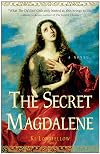
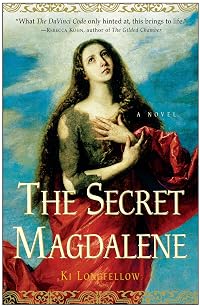
Raised like sisters, Mariamne and Salome are indulged with riches, position, and learning-a rare thing for females in Jerusalem. But Mariamne has a further gift: an illness has left her with visions; she has the power of prophecy. It is her prophesying that drives the two girls to flee to Egypt, where they study philosophy, mathematics, and astronomy in the Great Library of Alexandria. After seven years they return to a Judaea where many now believe John the Baptizer is the messiah. Salome show more too begins to believe, but Mariamne, now called Magdalene, is drawn to his cousin, Yeshu'a, a man touched by the divine in the same way she was during her days of illness. Together they speak of sharing their direct experience of God; but Yeshu'a unexpectedly gains a reputation as a healer, and as the ill and the troubled flock to him, he and Magdalene are forced to make a terrible decision. This radical retelling of the greatest story ever told brings Mary Magdalene to life-not as a prostitute or demon-possessed-but as an educated woman who was truly the "apostle to the apostles." show lessTags
Recommendations


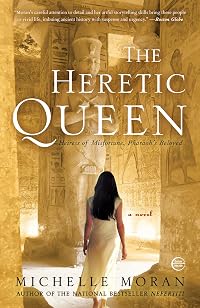
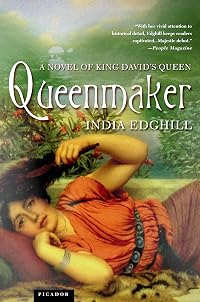

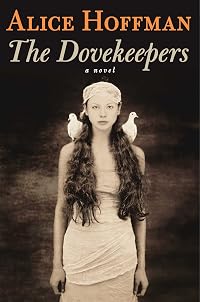
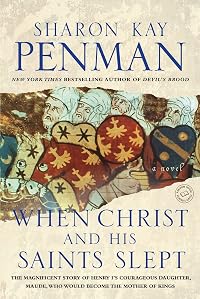
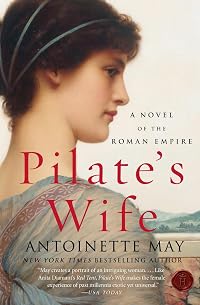
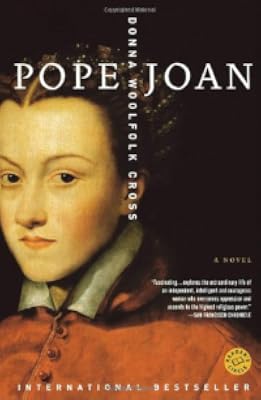
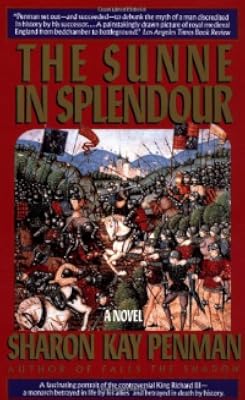
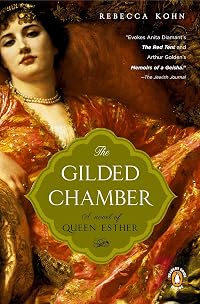







Member Recommendations
saltypepper An accessible, NOT DRY, non-fiction work that deals with a lot of what Longfellow talks about here.
30
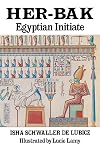
elenchus Her-Bak and Secret Magdalene each guides the reader through rite and theology by following an initiate from youth through adulthood. Longfellow feels more confessional in the manner of a contemporary novel, despite some archaic stylings in dialogue and narration. Schwaller de Lubicz's prose is reminiscent of a late 19c. novel. Both motivate me to seek out source documents hinted at in plot and setting.
Member Reviews
Let me make one thing clear - I did not give this book a lower rating because I am a Christian who is offended by this author's portrayal of Biblical figures. In fact I'm not even a Christian at all.
I did like the history of the characters and their changes from Bible canon. What the author did for Mary's story did not bother me the least, and it did intrigue me, as well as what was done for Mariamne and 'Simon'.
What bothered me was the writing. In some parts the writing was awkward and repetitive. I remember one thing that grated me, it was like, 'a table of some sort with a machine of some sort' and that really bothered me, and there is also repetition in some sentences that was really unneccessary. If the writing would have been more show more polished and some of the kinks taken out, the story would have flowed along better. show less
I did like the history of the characters and their changes from Bible canon. What the author did for Mary's story did not bother me the least, and it did intrigue me, as well as what was done for Mariamne and 'Simon'.
What bothered me was the writing. In some parts the writing was awkward and repetitive. I remember one thing that grated me, it was like, 'a table of some sort with a machine of some sort' and that really bothered me, and there is also repetition in some sentences that was really unneccessary. If the writing would have been more show more polished and some of the kinks taken out, the story would have flowed along better. show less
The Secret Magdalene gathers elements in the Christ myth as conceived in the Gnostic tradition, and unifies them through the character of Mariamne / Mary Magdal-Eder / Mary Magdalene. Longfellow imagines the actions of Jesus / Jehoshua as a deliberate effort to craft a Jewish godman myth, after the myth of Osiris. The book itself reinforces the idea the Bible usefully can be read this way: in effect a constellation of important themes and positions, arranged as a story; and not as divine revelation as advocated by the Roman Catholic Church.
Brings home the End Times atmosphere prevalent among many during the life of Jesus, the competing doctrines and sects such as the Essenes, the Sicarii, the sense of urgency driving their members.
Nice show more evocation of landscape and geography.
Intriguing portrayal of the family of Jesus and his cousin John of the River / John the Baptiser: presumably not all were so related within the Bible as edited by Deuteronomists? I'm not sufficiently familiar with the Bible narratives to identify when & how Longfellow changed or invented relations, or to assess how plausible these relations are. Similarly, unclear how closely the Biblical stories such as the Woman at the Well were followed in this story.
Hieratic to the extent Longfellow first references explicitly the doctrine of constructing a godman myth as a medicinal lie, then proceeds to relate her story (which, in fact, follows that narrative). Suggests Longfellow's story is itself a Socratic teaching.
Also raises the possibility the tale is constructed as a variant of the Memory Palace, predicated on the structural elements of narrative rather than architecture. This possibility in turn suggests that Longfellow's story would be useful primarily as a mnemonic, that is: to recall facts and concepts, and prompt reflection thereupon, and not as the initial presentation of the argument or concepts. Yet for all but an extremely small minority of readers, the story will be just that, the first encounter of the argument, not an engaged recollection of it. Of course the author would anticipate that situation: does she play with that duality, with a separate intent for each audience? Use it pragmatically as a means for propagating the meme (an established hieratic practice)? show less
Brings home the End Times atmosphere prevalent among many during the life of Jesus, the competing doctrines and sects such as the Essenes, the Sicarii, the sense of urgency driving their members.
Nice show more evocation of landscape and geography.
Intriguing portrayal of the family of Jesus and his cousin John of the River / John the Baptiser: presumably not all were so related within the Bible as edited by Deuteronomists? I'm not sufficiently familiar with the Bible narratives to identify when & how Longfellow changed or invented relations, or to assess how plausible these relations are. Similarly, unclear how closely the Biblical stories such as the Woman at the Well were followed in this story.
Hieratic to the extent Longfellow first references explicitly the doctrine of constructing a godman myth as a medicinal lie, then proceeds to relate her story (which, in fact, follows that narrative). Suggests Longfellow's story is itself a Socratic teaching.
Also raises the possibility the tale is constructed as a variant of the Memory Palace, predicated on the structural elements of narrative rather than architecture. This possibility in turn suggests that Longfellow's story would be useful primarily as a mnemonic, that is: to recall facts and concepts, and prompt reflection thereupon, and not as the initial presentation of the argument or concepts. Yet for all but an extremely small minority of readers, the story will be just that, the first encounter of the argument, not an engaged recollection of it. Of course the author would anticipate that situation: does she play with that duality, with a separate intent for each audience? Use it pragmatically as a means for propagating the meme (an established hieratic practice)? show less
This book was painful. I can't admit to reading the whole thing, page by painful page, word by wearisome word, because it just didn't grip me. There is a lot of heavy-handed philosophizing that could have been so much more palatable, and interesting if the prose hadn't been so tortuous. These are simple concepts to grasp and appreciate -- but not if you're chasing the dog all over the farm, as it were. Point A -- which should lead directly to Point B, C and D are robed in such convoluted verbiage that I had trouble remembering who the hell Mary Magdalene was and why she was even there!
It is a simple story that I would have enjoyed immensely, but this writing style needs a serious make-over!
Two stars because the story is a good one; two show more stars, because the prose failed the story. show less
It is a simple story that I would have enjoyed immensely, but this writing style needs a serious make-over!
Two stars because the story is a good one; two show more stars, because the prose failed the story. show less
I'd just read Gilbert's "Eat, Pray, Love" and found it both intriguing as well as annoying. I don't have the lovely freedom to just take off around the world. I don't know many who do. But I realize that has nothing to do with Gilbert's journey, that's just me being whiny. So when I picked up The Secret Magdalene I expected to feel a bit of the same. Wrong. The writer of this book knows what Gilbert was seeking already, how I couldn't say, but she's talking about it through the story we all know and some of us believe is the absolute truth---the Christ story. I got more out of this book than from years of sitting in an ashram or on a pew. I found myself at times almost weeping with discovery. The only reason I kept back a half star is show more because nothing is perfect and I would offend the book by calling it perfect. It's small imperfections make it even more moving. show less
No point in detailing the plot. Every point in speaking of the effect this book had on me. Things that confused me, seem cleared up. The path I've been seeking seems straight before me. And a bonus, this book is beautifully written, amazingly imagined, and speaks from a mystics understand. I was, and am, in love with it. More, please more, from this author.
Just finished this book. Can't get it out of mind. I love books or I wouldn't be here, and those I love linger. This one will not only linger, it seems to have changed me in some fundamental way. It's a novel and so has all one can ask of a novel: lovely writing that suits its subject, a need to turn a page, a falling in love with the characters as you live with them. But it's also a sort of Gospel. It's a teaching, a finding, a revelation. I honestly predict this one is going to become a classic. If it doesn't stay in print for years and years, then my tastebuds fail me. And they haven't done so yet. (Annabelle C.)
I love love love this book. The only way the writer could have written it is for her to KNOW. And while I do not KNOW, I have a much better understanding of what mystics are getting at. To take the much malinged Mary Magdalene and make her into a person so interesting and so real is truly a challenge. To do the same for Yeshu/Jesus and every other name you associate with this story is even more than a challenge for Jesus has been diefied. Here he is a man, a real man, as she is a real woman, and all the more holy for it. I hope this book gets bought or checked out or borrowed and is read and read and read. Never mind those it offends with their "by the book" heads in the sands faith. They are lost. For those who would be found, here is show more the book. show less
Members
- Recently Added By
Lists

Best historical fiction set in the ancient world
126 works; 40 members

Top-Rated Books on LibraryThing
272 works; 117 members
Author Information

12 Works 1,208 Members
Series

Common Knowledge
- Canonical title
- The Secret Magdalene
- Original publication date
- 2005
- People/Characters
- Mary Magdalene
- Quotations
- "This Issa," she [Salome] says, "I would hear of him."
Seth answers her, "I will tell you what is said of Issa, to show what men make of a man who confounds them. There are those who claim Issa was born of a virgin called ... (show all)Mari, that he was not human but divine, that he performed miracles and raised the dead, that he was crucified, taken up into heaven, and that he will come again as the Messiah." [48]
Osiris, born of God and a mortal virgin, is led before us in triumph seated on a donkey. But is then abused and is scorned and caused to dire horribly, hung bleeding on a crooked tree. Just before I think I too would die from... (show all) grief, he is taken down and placed in a tomb where three women attend his body. But oh! He rises on the third day! And how I weep as he ascends to heaven accompanied by such music as is made by the transported, and in the blaze of glorious celestial lights. [Mariamne at Osiris rite: 98]
"Best of all," continues Seth, "is that we argue with God. If one can argue with a god, surely this means that one's own thoughts count, however humble the source. In the Jew, humanity is elevated, for while other gods and go... (show all)ddesses bestow gifts on their people, the god of the Jews requires us to gift ourselves." Seth touches my hand. "Was Moses not a Jew? Is Hillel not a Jew? Is John of the River not a Jew or, in any case, a Nazorean? Are you not a Jew and the Magdal-eder? Are these not great things?" [88]
As I listen [to Philo Judaeus reading from the Book of the Dead], I wonder, could not the visible world be God speaking to itself? I run with this thought to Seth, as a child runs to its mother with something it has made. [94... (show all)-95]
Classifications
Statistics
- Members
- 588
- Popularity
- 49,860
- Reviews
- 56
- Rating
- (4.58)
- Languages
- Czech, English, Spanish
- Media
- Paper, Audiobook, Ebook
- ISBNs
- 9
- ASINs
- 1