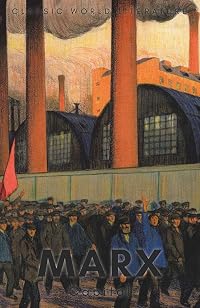
Das Kapital
by Karl Marx
On This Page
Description
This audiobook narrated by Simon Vance presents a major new translation of the explosive book that transformed our world Karl Marx (1818-1883) was living in exile in England when he embarked on an ambitious, multivolume critique of the capitalist system of production. Though only the first volume saw publication in Marx's lifetime, it would become one of the most consequential books in history. This magnificent new edition of Capital is a translation of Marx for the twenty-first century. It show more is the first translation into English to be based on the last German edition revised by Marx himself, the only version that can be called authoritative, and it features extensive commentary and annotations by Paul North and Paul Reitter that draw on the latest scholarship and provide invaluable perspective on the book and its complicated legacy. At once precise and boldly readable, this translation captures the momentous scale and sweep of Marx's thought while recovering the elegance and humor of the original source. For Marx, our global economic system is relentlessly driven by "value"-to produce it, capture it, trade it, and most of all, to increase it. Lifespans are shortened under the demand for ever-greater value. Days are lengthened, work is intensified, and the division of labor deepens until it leaves two classes, owners and workers, in constant struggle for life and livelihood. In Capital, Marx reveals how value came to tyrannize our world, and how the history of capital is a chronicle of bloodshed, colonization, and enslavement. With a foreword by Wendy Brown and an afterword by William Clare Roberts, this is a critical edition of Capital for our time, one that faithfully preserves the vitality and directness of Marx's German prose and renders his ideas newly relevant to modern readers. show lessTags
Recommendations












Member Recommendations

chwiggy Marx for Beginners is a quick and easy way to get the gist of Marx' theories.
Member Reviews
I decided to read Capital for two reasons. The first was my reading this spring of To The Finland Station, a passionate, idiosyncratic book about passionate, idiosyncratic people, especially Marx. I wanted to see the result of his long, proud, penurious London years and his bookwormery in the British Museum reading room; I wanted to see how the unquenchable fury and bottomless well of bitterness portrayed by Edmund Wilson could possibly find expression in a "critique of political economy". The second reason was a drunken argument I had with the CFO of my company not long after. I can't remember how it started, I think I was saying that the best cities had room for people of all socioeconomic classes and he was saying fuck that, show more Singapore is the best city because they flog vagrants there, but before I knew it he was reaching for the enduring pejorative epithet recently given new vigour by the ascendant crypto-fascists of our times (that's crypto as in Bitcoin — there's nothing crypto about their fascism): "Marxist." Don't be ridiculous, I said, of course I'm not a Marxist, and anyway, have you even read Das Kapital? And as I slurred that out loud, I was slurring to myself, I really must read Das Kapital. And then I read something about a new translation and duly coughed up sixty bucks to the capitalist exploiters doing business as Princeton University Press.
Many things surprised me about Capital, but one that didn't was the ham-handedness of Marx's try at economic theory. His insistence on the "use-value" of a thing correlating with the amount of human labour that's gone into it — his "labour theory of value" — is just head-spinningly wrong-seeming from the outset, and you get the sense that he's secretly a bit embarrassed about it himself, from the way he takes every opportunity to dress it up in kindergarten algebra and restate it backwards, inside-out and upside-down. But there's something exhilarating about this. We sense from the get-go that we're in for a weird time here, and that all this strange preamble about congealed labour and the nature of the commodity is a kind of dialectical borborygmus, presaging a crisis we want to be in the room for when it erupts. The backward, inside-out and upside-downness of Marx's economics is also illustrative of his literary technique, I guess influenced by the rhetorical fluidity of his beloved Greeks. Marx can't take anything, or state anything, at face-value — he has the permanently aggrieved mindset of the constitutionally paranoid — and so all his axioms and formulations end up flipped, doubled, reversed, paired off in a grotesque Doctor Moreau-style freakshow. Everything in Marx has a "double nature"; he's an inveterate turner-over of stones, and it's both horrid and compelling to watch. It can result in absurd sentences like this:
Obviously.
But what's especially good about Marx's mad theoretical contortions is that his subject — that monolith, its name derived from "head" — is equally double-natured, equally slippery, equally paranoid. Marx portrays capital as an elemental entity, as relentless as a force of nature but feral and cunning and insatiable, alien to and ungovernable by humanity. He calls it, in a triumph for Paul Reiter's translation, a "sensuous supersensuous thing." He's too successful at this (his vampire metaphor is pre-Stoker), and his success undermines his assertions later on that other economic paradigms are no less inevitable. Marx believes in progress — another weakness he shares with his arch-enemies — so he thinks that Capitalism is perforce a passing phase. He sees it as a hideous growth that will be its own undoing and be superseded by, or give birth to, fairer things; whereas to us the capitalist end-state looks more like mere depletion, a blob of corium beneath a blown reactor core. Marx's optimism is both understandable, given his relative proximity to the birth of Capitalism, and necessary to power the polemical side of this book, which is what really makes it worth reading. Because for everything Marx gets wrong about economics, for every mutation (e.g. branding and the information economy) of the capitalist hippogriff that he fails to foresee, there is an incontestable analysis of some intrinsic aspect of it still in evidence today: its dependence on an immiserated "surplus labour army", or its instinct for bucking all restraint and proceeding like a dysregulated peristaltic Moloch, gulping down its victims and vomiting their undigested remains back up for reprocessing. The "apologists" in this paragraph for example — about how new technology never really "sets people free" — could just as well be the current apologists for what's laughably called artificial intelligence:
It's this monumental polemic, this unwonky cri de coeur at the crapness of life under Capitalism (specifically his kind of industrial capitalism, but equally applicable to post-industrial societies) that gives Capital its enduring appeal. Marx, son of a lawyer and grandson of a Rabbi, writes sometimes like a priest, more often like a vituperative prophet. He draws on the researches of his friend Engels (the only friend he never succeeded in repelling) into the "condition of the working class in England", as well as reams of official statistics, government inquiries, court transcripts and obscurities dug up from the bowels of the British Museum to assemble an identikit portrait, like the police used to do for suspects, of Capitalism. His style is consciously lawyerly, and his favourite prosecutorial techniques are the thespian-flamboyant — the righteous, Rabbinical denunciation — and the evidential overload, the "my book will be a million words and you can't try to refute it until you've read it all". Like many a literary rhetorician, he indulges his baser urges in the footnotes, peppering them with sarcastic insults, second-edition score-settling, and tangential veerings-off in pursuit of ulterior targets. Capital is like capital: complex, elusive, resisting categorisation, a mess, a self-perpetuating system that conditions its participants to accept it, if not to understand it. Great books train their readers how to read them; Capitalism inures its victims to their own victimhood; Marx's Capital does both of these things. Will I read it again? Under no circumstances. Will I read volumes II and III? Not if I live as long as the Capitalist system itself endures. Did I laugh when Marx described the Ancient Greek Xenophon as having "characteristic bourgeois instincts"? Yes — it's funny because it's true! show less
Many things surprised me about Capital, but one that didn't was the ham-handedness of Marx's try at economic theory. His insistence on the "use-value" of a thing correlating with the amount of human labour that's gone into it — his "labour theory of value" — is just head-spinningly wrong-seeming from the outset, and you get the sense that he's secretly a bit embarrassed about it himself, from the way he takes every opportunity to dress it up in kindergarten algebra and restate it backwards, inside-out and upside-down. But there's something exhilarating about this. We sense from the get-go that we're in for a weird time here, and that all this strange preamble about congealed labour and the nature of the commodity is a kind of dialectical borborygmus, presaging a crisis we want to be in the room for when it erupts. The backward, inside-out and upside-downness of Marx's economics is also illustrative of his literary technique, I guess influenced by the rhetorical fluidity of his beloved Greeks. Marx can't take anything, or state anything, at face-value — he has the permanently aggrieved mindset of the constitutionally paranoid — and so all his axioms and formulations end up flipped, doubled, reversed, paired off in a grotesque Doctor Moreau-style freakshow. Everything in Marx has a "double nature"; he's an inveterate turner-over of stones, and it's both horrid and compelling to watch. It can result in absurd sentences like this:
Insofar as the surplus-value that makes up capital Number 1 arose when labor-power was bought with part of the original capital, a transaction that conformed to the laws of commodity exchange and, legally speaking, presupposed nothing but that on the side of the capital relation, the worker could do what he wanted with his skills, while on the other side, the money or commodity owner could do what he wanted with the value he owned; furthermore, insofar as surplus capital Number 2 is merely the result of surplus capital Number 1 and therefore a consequence of the relation described above; and, finally, insofar as all transactions continue to conform to the laws of commodity exchange, which means the capitalist continues to buy labor-power, and the worker continues to sell it (at its actual value, we will assume), the law of appropriation or private property based on commodity production and circulation is obviously inverted into its direct opposite by its inexorable inner dialectic.
Obviously.
But what's especially good about Marx's mad theoretical contortions is that his subject — that monolith, its name derived from "head" — is equally double-natured, equally slippery, equally paranoid. Marx portrays capital as an elemental entity, as relentless as a force of nature but feral and cunning and insatiable, alien to and ungovernable by humanity. He calls it, in a triumph for Paul Reiter's translation, a "sensuous supersensuous thing." He's too successful at this (his vampire metaphor is pre-Stoker), and his success undermines his assertions later on that other economic paradigms are no less inevitable. Marx believes in progress — another weakness he shares with his arch-enemies — so he thinks that Capitalism is perforce a passing phase. He sees it as a hideous growth that will be its own undoing and be superseded by, or give birth to, fairer things; whereas to us the capitalist end-state looks more like mere depletion, a blob of corium beneath a blown reactor core. Marx's optimism is both understandable, given his relative proximity to the birth of Capitalism, and necessary to power the polemical side of this book, which is what really makes it worth reading. Because for everything Marx gets wrong about economics, for every mutation (e.g. branding and the information economy) of the capitalist hippogriff that he fails to foresee, there is an incontestable analysis of some intrinsic aspect of it still in evidence today: its dependence on an immiserated "surplus labour army", or its instinct for bucking all restraint and proceeding like a dysregulated peristaltic Moloch, gulping down its victims and vomiting their undigested remains back up for reprocessing. The "apologists" in this paragraph for example — about how new technology never really "sets people free" — could just as well be the current apologists for what's laughably called artificial intelligence:
We will recall that when new machines are introduced or old machines are enlarged, part of the variable capital is transformed into constant capital. The apologists take this operation, which "fixes" capital, thereby setting workers "free," and turn it around. According to them, it sets capital free for the workers. Only now are we in a position to fully appreciate the apologists' shamelessness. For the workers directly cast aside by machines aren't the only ones set free: so are their future replacements and also the additional contingent regularly absorbed when, supported by its old foundation, industry expanded as usual. Old capital isn't set free for workers, but workers are set free for "additional" capital.
It's this monumental polemic, this unwonky cri de coeur at the crapness of life under Capitalism (specifically his kind of industrial capitalism, but equally applicable to post-industrial societies) that gives Capital its enduring appeal. Marx, son of a lawyer and grandson of a Rabbi, writes sometimes like a priest, more often like a vituperative prophet. He draws on the researches of his friend Engels (the only friend he never succeeded in repelling) into the "condition of the working class in England", as well as reams of official statistics, government inquiries, court transcripts and obscurities dug up from the bowels of the British Museum to assemble an identikit portrait, like the police used to do for suspects, of Capitalism. His style is consciously lawyerly, and his favourite prosecutorial techniques are the thespian-flamboyant — the righteous, Rabbinical denunciation — and the evidential overload, the "my book will be a million words and you can't try to refute it until you've read it all". Like many a literary rhetorician, he indulges his baser urges in the footnotes, peppering them with sarcastic insults, second-edition score-settling, and tangential veerings-off in pursuit of ulterior targets. Capital is like capital: complex, elusive, resisting categorisation, a mess, a self-perpetuating system that conditions its participants to accept it, if not to understand it. Great books train their readers how to read them; Capitalism inures its victims to their own victimhood; Marx's Capital does both of these things. Will I read it again? Under no circumstances. Will I read volumes II and III? Not if I live as long as the Capitalist system itself endures. Did I laugh when Marx described the Ancient Greek Xenophon as having "characteristic bourgeois instincts"? Yes — it's funny because it's true! show less
Marx was right. The first reason I say this is simple: because like a good carnival barker, I want to get your attention. Karl Marx is one of those guys who evokes strong emotions, so invoking his name with approval makes you wonder what’s going on in my circus. If you’ve ever harbored suspicions about my political doctrines, maybe this is where my mask comes off. Only one way to find out!
The second reason I say that Marx was right is that he was, but the trick is figuring out what he was right about. For one thing, he died before he could finish arranging his thoughts. As editor and translator Paul Reitter writes in his brilliant foreword, Marx’s “rangy project” of slaying the capitalist hydra was “always on the way to show more formulation…Marx reimagined the project several times…there is no single finished version of the whole…On the one hand, it is incomplete because it is unfinished; on the other hand, it is incomplete because the project is essentially incomplete.”
For another thing, Marx’s project is so vast that I’m not confident in my own ability to critique the critique. He read widely and thought deeply, mining mountains of economic history for the raw materials to build his siege engine. I’ve not read or thought half as much as he did; and since, as a classic wage slave, I lack the time to devote myself full-time to economic theory, I can only react to Marx as the person I am today. In short, despite my bone-deep wariness of Marxism as a whole, when I think Marx is right from a given angle, all I can do is say he’s right.
Immediately, though, I run into questions about his Labor Theory of Value (LTV). For Marx, the exchange value of a commodity is determined by how much socially necessary labor goes into its production. In other words, the true value of a thing is pinned to the average amount of time and effort that goes into it, not to what an employer or purchaser is willing to pay. Your brain and muscle is what’s valuable, not someone else’s self-serving fictions. The capitalist exploits the space between what your time is worth and what someone else says your time is worth. By purchasing X amount of your time in advance through wage contracts, he buys X amount of value and then works you so long or so hard that he gets values Y and Z as well: “This is what the secret of capital’s self-valorization comes down to: capital has at its disposal a certain amount of other people’s unpaid labor.”
If Marx is wrong about this, then his theory collapses. (Wikipedia says some revisionist Marxists have abandoned the LTV, but I haven’t read them and don’t know what to tell you.) For my money, the real driver of commodity value is human desire. If it’s 1997 and I want to pay $500 for a Beanie Baby, then the Beanie Baby is worth $500. My desire determines its value, not the amount of socially necessary labor it takes to stuff and sew. I don’t think Marx accounts well for the variable of squishy human wants in calculating commodity value, relying instead on compounding numerical costs in the form of machinery, warehouses, and labor time. In a sense, he’s forced to do this to make his theory work. A capitalist who exploits math to steal your unpaid labor is a bad man, but a capitalist who bets correctly on public hunger for the product of your labor is just a good gambler. Whence then Marxism?
Even if Marx is wrong about that, he isn’t wrong about everything. I said earlier that I can only react to him as the person I am. Part of my identity is Christian, and that part of me aligns in a surprising way with his observations on the inequities of wealth and power. Of course, he himself would have nothing but biting words for my religion. I enjoyed his snide aside that in “the realm of religion, people are ruled by a product of their own heads, and it is just so in capitalist production, except that here people are ruled by the products of their own hands.” He finds it laughable that English Christians support a system that debauches young girls by working them through the night in the company of older men: “Fittingly, then, these workers bind many bibles and edifying works, among other books.” He reproduces sarcastic inquiries by the press into how “people who send out missions to the antipodes expressly ‘for the improvement of the morals of South Sea Islanders,’ could look on as such a system [of dispossession and abuse of rural freeholders] took shape on their estates.”
Marx has a point, and it’s one that still discomforts. He observes that capitalism has no natural limit: “The drive to amass money is by nature boundless…driving the person who amasses money back to the Sisyphean task of accumulation. His fate is the same as that of the world conqueror, whose every new conquest of land ends at a new border.” Marx here reflects the truth of Ecclesiastes 5:10: “He who loves money will not be satisfied with money, nor he who loves wealth with his income; this also is vanity.” The idea that the debtor is slave to the lender parallels Marx’s observation that debt was the pathway to slavery as far back as Roman times. His survey of England’s enclosure movement (i.e., the creation of great estates by means of land expropriation, thus creating a rootless surplus population whose labor could be exploited) reminds me of Isaiah 5:8: “Woe to those who join house to house, who add field to field, until there is no more room, and you are made to dwell alone in the midst of the land.” Indeed, Marx in toto could be read as a secular translation of James 2:6: “But you have dishonored the poor man. Are not the rich the ones who oppress you?”
The mind-blowing abuses of England’s Industrial Revolution, which Marx documents with official government reports, illustrate this cognitive dissonance. “Europe’s model Christian country” celebrated its rising wealth and status and turned a blind eye to the broken bodies, diseased morality, truncated lives, and shattered families that fueled the ascent of the British Empire. This should create unease in the Christian conscience even today. I think of the immigrant question in the United States. Here we have a rootless, surplus population trapped for years or decades in a Byzantine system that, perhaps, no one actually wants to solve because it provides a pool of cheap, unprotected labor that contributes to the public coffer without drawing benefits out of it. Is this a Marxist analysis? Maybe. But could it also be a Christian analysis? Again, maybe.
Where Marx is wrong is in the way he conflates elitist abuse with an economic system. Marx thought that power was in the wrong hands, but the real problem is that power is in hands. We are a violent species, and we do violence with the tools we find at hand; and so Communism wound up rivaling Capitalism in every theater of exploitation. We can debate whether this or that economic structure is more or less likely to catalyze abuse, but (contra Marx) none of them can cause it to happen. We can’t wash our sins away by pretending that a different set of sinners at the top would change everything.
Speaking again as the person I am today, this is why I’m still willing to bet on the American experiment despite its grievous failures. Our theory of government doesn’t hand control over to The Right Sort of People, but breaks it into so many little fragments that it’s hard for anyone to scrape them together. This is why I oppose attempts to consolidate control, whether by latter-day Marxists, networked capitalists, or right-wing populists. The Industrial Revolution was a horror show of unchecked capitalism, and Marx was right about that. The 20th Century was a horror show of unchecked Communism, and Marx was wrong about that. Our task is to learn both lessons, to presume that power will always try to exploit the powerless, and to mistrust everyone selling total utopia for the low, low price of total control. show less
The second reason I say that Marx was right is that he was, but the trick is figuring out what he was right about. For one thing, he died before he could finish arranging his thoughts. As editor and translator Paul Reitter writes in his brilliant foreword, Marx’s “rangy project” of slaying the capitalist hydra was “always on the way to show more formulation…Marx reimagined the project several times…there is no single finished version of the whole…On the one hand, it is incomplete because it is unfinished; on the other hand, it is incomplete because the project is essentially incomplete.”
For another thing, Marx’s project is so vast that I’m not confident in my own ability to critique the critique. He read widely and thought deeply, mining mountains of economic history for the raw materials to build his siege engine. I’ve not read or thought half as much as he did; and since, as a classic wage slave, I lack the time to devote myself full-time to economic theory, I can only react to Marx as the person I am today. In short, despite my bone-deep wariness of Marxism as a whole, when I think Marx is right from a given angle, all I can do is say he’s right.
Immediately, though, I run into questions about his Labor Theory of Value (LTV). For Marx, the exchange value of a commodity is determined by how much socially necessary labor goes into its production. In other words, the true value of a thing is pinned to the average amount of time and effort that goes into it, not to what an employer or purchaser is willing to pay. Your brain and muscle is what’s valuable, not someone else’s self-serving fictions. The capitalist exploits the space between what your time is worth and what someone else says your time is worth. By purchasing X amount of your time in advance through wage contracts, he buys X amount of value and then works you so long or so hard that he gets values Y and Z as well: “This is what the secret of capital’s self-valorization comes down to: capital has at its disposal a certain amount of other people’s unpaid labor.”
If Marx is wrong about this, then his theory collapses. (Wikipedia says some revisionist Marxists have abandoned the LTV, but I haven’t read them and don’t know what to tell you.) For my money, the real driver of commodity value is human desire. If it’s 1997 and I want to pay $500 for a Beanie Baby, then the Beanie Baby is worth $500. My desire determines its value, not the amount of socially necessary labor it takes to stuff and sew. I don’t think Marx accounts well for the variable of squishy human wants in calculating commodity value, relying instead on compounding numerical costs in the form of machinery, warehouses, and labor time. In a sense, he’s forced to do this to make his theory work. A capitalist who exploits math to steal your unpaid labor is a bad man, but a capitalist who bets correctly on public hunger for the product of your labor is just a good gambler. Whence then Marxism?
Even if Marx is wrong about that, he isn’t wrong about everything. I said earlier that I can only react to him as the person I am. Part of my identity is Christian, and that part of me aligns in a surprising way with his observations on the inequities of wealth and power. Of course, he himself would have nothing but biting words for my religion. I enjoyed his snide aside that in “the realm of religion, people are ruled by a product of their own heads, and it is just so in capitalist production, except that here people are ruled by the products of their own hands.” He finds it laughable that English Christians support a system that debauches young girls by working them through the night in the company of older men: “Fittingly, then, these workers bind many bibles and edifying works, among other books.” He reproduces sarcastic inquiries by the press into how “people who send out missions to the antipodes expressly ‘for the improvement of the morals of South Sea Islanders,’ could look on as such a system [of dispossession and abuse of rural freeholders] took shape on their estates.”
Marx has a point, and it’s one that still discomforts. He observes that capitalism has no natural limit: “The drive to amass money is by nature boundless…driving the person who amasses money back to the Sisyphean task of accumulation. His fate is the same as that of the world conqueror, whose every new conquest of land ends at a new border.” Marx here reflects the truth of Ecclesiastes 5:10: “He who loves money will not be satisfied with money, nor he who loves wealth with his income; this also is vanity.” The idea that the debtor is slave to the lender parallels Marx’s observation that debt was the pathway to slavery as far back as Roman times. His survey of England’s enclosure movement (i.e., the creation of great estates by means of land expropriation, thus creating a rootless surplus population whose labor could be exploited) reminds me of Isaiah 5:8: “Woe to those who join house to house, who add field to field, until there is no more room, and you are made to dwell alone in the midst of the land.” Indeed, Marx in toto could be read as a secular translation of James 2:6: “But you have dishonored the poor man. Are not the rich the ones who oppress you?”
The mind-blowing abuses of England’s Industrial Revolution, which Marx documents with official government reports, illustrate this cognitive dissonance. “Europe’s model Christian country” celebrated its rising wealth and status and turned a blind eye to the broken bodies, diseased morality, truncated lives, and shattered families that fueled the ascent of the British Empire. This should create unease in the Christian conscience even today. I think of the immigrant question in the United States. Here we have a rootless, surplus population trapped for years or decades in a Byzantine system that, perhaps, no one actually wants to solve because it provides a pool of cheap, unprotected labor that contributes to the public coffer without drawing benefits out of it. Is this a Marxist analysis? Maybe. But could it also be a Christian analysis? Again, maybe.
Where Marx is wrong is in the way he conflates elitist abuse with an economic system. Marx thought that power was in the wrong hands, but the real problem is that power is in hands. We are a violent species, and we do violence with the tools we find at hand; and so Communism wound up rivaling Capitalism in every theater of exploitation. We can debate whether this or that economic structure is more or less likely to catalyze abuse, but (contra Marx) none of them can cause it to happen. We can’t wash our sins away by pretending that a different set of sinners at the top would change everything.
Speaking again as the person I am today, this is why I’m still willing to bet on the American experiment despite its grievous failures. Our theory of government doesn’t hand control over to The Right Sort of People, but breaks it into so many little fragments that it’s hard for anyone to scrape them together. This is why I oppose attempts to consolidate control, whether by latter-day Marxists, networked capitalists, or right-wing populists. The Industrial Revolution was a horror show of unchecked capitalism, and Marx was right about that. The 20th Century was a horror show of unchecked Communism, and Marx was wrong about that. Our task is to learn both lessons, to presume that power will always try to exploit the powerless, and to mistrust everyone selling total utopia for the low, low price of total control. show less
The best review of the second volume of Karl Marx’s “Capital” comes from Goodreads reader Sara Salem, who wrote, “HALLELUJAH! DONE! Now need therapy.” I can’t contradict or top this review, so — much like reading the book — my review will be an exercise in futility.
I’m willing to cut Marx some slack for this volume given that he was dead. The first volume of “Capital” is the only one he saw through to publication, and his friend Friedrich Engels tried mightily to arrange Marx’s notebooks into coherence according to the original plan of publication. The incisive voice of the master rhetorician, so powerful in the first volume, breaks the surface here only as small islands in a turgid ocean of mind-numbing show more fractional calculations so convoluted that Engels wrote in a footnote, “The preparation of this chapter for publication presented no small number of difficulties. Firmly grounded as Marx was in algebra, he did not get the knack of handling figures....and consequently Marx got so tangled up in his computations of turnovers that besides places left uncompleted a number of things were incorrect and contradictory.”
If I squint, I think the goal of this second volume is to prove a concept introduced in the first; namely, that capital always circulates back to its source. A laborer might very well receive a wage paid out of a capitalist’s hoard of money-capital, but that laborer can only afford to spend it on articles of subsistence which have been produced by a second wage slave giving his unpaid labor to a second capitalist. That second capitalist takes this transformed capital (which transits briefly through a laborer’s hands in the form of a wage) and hands it back to the first capitalist by buying the means of production (e.g., worked materials and machinery) that the first laborer produced. ‘Round and ‘round the capital goes, circulating between capitalists and accumulating to ever greater heights as each cycle screws more labor out of the workers than they’re actually paid for: “He sells dearer, not because he sells above the value of his commodity, but because his commodity contains value in excess of that contained in the ingredients of its production.”
I think that’s the gist, although there is more to Volume II than this. Marx lays out his theory of why economic shocks derive from overproduction, and investigates why he thinks Adam Smith’s theory of commodity value is partial and self-contradictory. Marx also drives even further home a concept fundamental to his thought: that we must penetrate capital’s deceptive forms to see things as they really are and to draw the correct economic, and thus the correct moral, conclusions. Labor (the act of using my brain and muscle) and labor-power (the commodity I contract to provide for a given amount of time in exchange for a wage) are two different things. This is what allows the capitalist to pay for a certain amount of labor-power (the commodity) and extract a larger amount of labor (that which adds real value to commodities). The failure to see through this charade catalyzes theft of labor on a civilizational level.
This mode of thought must have started to influence my thinking, because I found myself applying this sort of Marxist critique to Marx himself. He cycles back to his historical arguments in Volume I that the expropriation of common village land is a necessary precursor to capitalism since this is what separates a population from the means of production they need to survive, forcing them into a rootless and landless reserve army of wage laborers: “The reason is that the Russian farm-laborer, owing to the common ownership of land in the village community, has not yet been fully separated from his means of production and hence is not yet a ‘free wage-laborer’ in the full sense of the word.” Only after this consolidation is complete can the reforging and exploitation of a society begin in earnest: “Therefore with it the capitalist character of production is a necessity. Its existence implies the class antagonism between capitalists and wage-labourers. To the extent that it seizes control of social production, the technique and social organisation of the labour-process are revolutionised and with them the economico-historical type of society.”
What occurs to me is that Marx’s vision of a Communist future does not actually solve his historical problem. Take the case of his Russian farm-laborer, as quoted above, who in Marx’s day had not yet been separated from usufruct of common lands. 45 years after Marx’s death, the Stalinist project of collectivized agriculture supposedly seized the means of production (e.g., land and machinery) back from Russian exploiters and put them under collective control of just such Russian farm-laborers. In practice, though, does this not simply change the locus of privatization? Mr. Russian Noble may no longer own the means of production, but a nameless and faceless entity called Mr. The People does. And this being the case, cannot Mr. The People still exploit you, a still-landless and still-rootless farm-laborer, just as ruthlessly as Mr. Russian Noble did? In fact, this is exactly what happened under Stalin’s agricultural project, especially in second-class regions like Ukraine.
Just as capital hides within the forms of money hoards and money wages and raw materials and finished products and bank loans and credit lines, so does inhumane exploitation hide within the forms of all-powerful private owners and all-powerful collective owners alike. My complaint from the first volume remains: Marx fails to grapple with the fact that power itself is the problem. There is no magical person or set of persons who can be trusted with the absolute top-down control a Communist economy must have to prevent it from breaking down into its original capitalist forms. The mode of production does not change the fact that exploiters gonna exploit, whether they work on Wall Street or wear a sickle and hammer. How Marx thought he could solve this is as unclear to me as this book. show less
I’m willing to cut Marx some slack for this volume given that he was dead. The first volume of “Capital” is the only one he saw through to publication, and his friend Friedrich Engels tried mightily to arrange Marx’s notebooks into coherence according to the original plan of publication. The incisive voice of the master rhetorician, so powerful in the first volume, breaks the surface here only as small islands in a turgid ocean of mind-numbing show more fractional calculations so convoluted that Engels wrote in a footnote, “The preparation of this chapter for publication presented no small number of difficulties. Firmly grounded as Marx was in algebra, he did not get the knack of handling figures....and consequently Marx got so tangled up in his computations of turnovers that besides places left uncompleted a number of things were incorrect and contradictory.”
If I squint, I think the goal of this second volume is to prove a concept introduced in the first; namely, that capital always circulates back to its source. A laborer might very well receive a wage paid out of a capitalist’s hoard of money-capital, but that laborer can only afford to spend it on articles of subsistence which have been produced by a second wage slave giving his unpaid labor to a second capitalist. That second capitalist takes this transformed capital (which transits briefly through a laborer’s hands in the form of a wage) and hands it back to the first capitalist by buying the means of production (e.g., worked materials and machinery) that the first laborer produced. ‘Round and ‘round the capital goes, circulating between capitalists and accumulating to ever greater heights as each cycle screws more labor out of the workers than they’re actually paid for: “He sells dearer, not because he sells above the value of his commodity, but because his commodity contains value in excess of that contained in the ingredients of its production.”
I think that’s the gist, although there is more to Volume II than this. Marx lays out his theory of why economic shocks derive from overproduction, and investigates why he thinks Adam Smith’s theory of commodity value is partial and self-contradictory. Marx also drives even further home a concept fundamental to his thought: that we must penetrate capital’s deceptive forms to see things as they really are and to draw the correct economic, and thus the correct moral, conclusions. Labor (the act of using my brain and muscle) and labor-power (the commodity I contract to provide for a given amount of time in exchange for a wage) are two different things. This is what allows the capitalist to pay for a certain amount of labor-power (the commodity) and extract a larger amount of labor (that which adds real value to commodities). The failure to see through this charade catalyzes theft of labor on a civilizational level.
This mode of thought must have started to influence my thinking, because I found myself applying this sort of Marxist critique to Marx himself. He cycles back to his historical arguments in Volume I that the expropriation of common village land is a necessary precursor to capitalism since this is what separates a population from the means of production they need to survive, forcing them into a rootless and landless reserve army of wage laborers: “The reason is that the Russian farm-laborer, owing to the common ownership of land in the village community, has not yet been fully separated from his means of production and hence is not yet a ‘free wage-laborer’ in the full sense of the word.” Only after this consolidation is complete can the reforging and exploitation of a society begin in earnest: “Therefore with it the capitalist character of production is a necessity. Its existence implies the class antagonism between capitalists and wage-labourers. To the extent that it seizes control of social production, the technique and social organisation of the labour-process are revolutionised and with them the economico-historical type of society.”
What occurs to me is that Marx’s vision of a Communist future does not actually solve his historical problem. Take the case of his Russian farm-laborer, as quoted above, who in Marx’s day had not yet been separated from usufruct of common lands. 45 years after Marx’s death, the Stalinist project of collectivized agriculture supposedly seized the means of production (e.g., land and machinery) back from Russian exploiters and put them under collective control of just such Russian farm-laborers. In practice, though, does this not simply change the locus of privatization? Mr. Russian Noble may no longer own the means of production, but a nameless and faceless entity called Mr. The People does. And this being the case, cannot Mr. The People still exploit you, a still-landless and still-rootless farm-laborer, just as ruthlessly as Mr. Russian Noble did? In fact, this is exactly what happened under Stalin’s agricultural project, especially in second-class regions like Ukraine.
Just as capital hides within the forms of money hoards and money wages and raw materials and finished products and bank loans and credit lines, so does inhumane exploitation hide within the forms of all-powerful private owners and all-powerful collective owners alike. My complaint from the first volume remains: Marx fails to grapple with the fact that power itself is the problem. There is no magical person or set of persons who can be trusted with the absolute top-down control a Communist economy must have to prevent it from breaking down into its original capitalist forms. The mode of production does not change the fact that exploiters gonna exploit, whether they work on Wall Street or wear a sickle and hammer. How Marx thought he could solve this is as unclear to me as this book. show less
Note: The first part of this review makes general comments about approaching Capital Volume 1, and second part is about the 2024 Reitter translation, which I highly recommend.
What do you say about Capital? It's Capital. I think Paul North, one of the translators on this edition, put it well when he said: "Capital is still the best can-opener for the sealed container that is the capital system, the best telephoto lens for viewing the market society we live in as if from a distance." It's not an easy read. The early chapters in particular can feel like a slog. But Marx has a voice that kept me awake through the lecture. He's insightful, sarcastic, precise, and vivid in his anger at the suffering he chronicles.
Should you read Capital? I show more think this depends on what you want to learn. If you aren't yet familiar with Marxist thought, you might want to get some modern context first before diving in. Marxism is not just the work of a single person anymore, but an entire political and theoretical tradition spanning more than 150 years of historical upheavals and debate. There are also plenty of authors who can get you started with the basics of Marxist economics if Capital itself seems intimidating-- in the same way that you don't have to directly read Newton or Einstein to learn introductory physics, there is no shame in starting with a good modern primer, or reading them side-by-side. Hadas Thier's book A People's Guide to Capitalism: An Introduction to Marxist Economics is probably what I'd recommend.
But if you are interested in understanding Marxism deeply, you will eventually want to tackle Capital. And when you do, I absolutely recommend reading Reitter & North's translation. It is by far the most readable English-language edition. The translators have taken great care with their vocabulary, selecting terms and grammar structures that are best for actual comprehension. Be aware that this will create a few terminological mismatches with other Marxist writing– but in my opinion, this is almost universally worth it. For example, what Reitter translates as "original accumulation" is called "primitive accumulation" elsewhere. But "original" is just a better choice, and makes the argument much easier to follow.
So read on, comrades, and don't forget that this is a book for action, not just thought. In Marx's own words: "Philosophers have hitherto only interpreted the world in various ways; the point is to change it." show less
What do you say about Capital? It's Capital. I think Paul North, one of the translators on this edition, put it well when he said: "Capital is still the best can-opener for the sealed container that is the capital system, the best telephoto lens for viewing the market society we live in as if from a distance." It's not an easy read. The early chapters in particular can feel like a slog. But Marx has a voice that kept me awake through the lecture. He's insightful, sarcastic, precise, and vivid in his anger at the suffering he chronicles.
Should you read Capital? I show more think this depends on what you want to learn. If you aren't yet familiar with Marxist thought, you might want to get some modern context first before diving in. Marxism is not just the work of a single person anymore, but an entire political and theoretical tradition spanning more than 150 years of historical upheavals and debate. There are also plenty of authors who can get you started with the basics of Marxist economics if Capital itself seems intimidating-- in the same way that you don't have to directly read Newton or Einstein to learn introductory physics, there is no shame in starting with a good modern primer, or reading them side-by-side. Hadas Thier's book A People's Guide to Capitalism: An Introduction to Marxist Economics is probably what I'd recommend.
But if you are interested in understanding Marxism deeply, you will eventually want to tackle Capital. And when you do, I absolutely recommend reading Reitter & North's translation. It is by far the most readable English-language edition. The translators have taken great care with their vocabulary, selecting terms and grammar structures that are best for actual comprehension. Be aware that this will create a few terminological mismatches with other Marxist writing– but in my opinion, this is almost universally worth it. For example, what Reitter translates as "original accumulation" is called "primitive accumulation" elsewhere. But "original" is just a better choice, and makes the argument much easier to follow.
So read on, comrades, and don't forget that this is a book for action, not just thought. In Marx's own words: "Philosophers have hitherto only interpreted the world in various ways; the point is to change it." show less
From my Outsight column published in Jam Rag Vol. IX, No. 1 Jan. 19, 1994
Das KapitaI. Well, I finally read it. Marx’s tome on economic theory that is the basis for communism Karl focused on the burgeoning industries of England at the time of the time of his writing, since he was living there then. Anyone would have felt something was wrong: children labored for over 14 hours, five or six days a week and many women pined away at relentless cottage industries.
The factories were unsafe and exploitative and all was upheld with legislation from Parliament Marx accurately saw European history as a cycle of revolution and oppression culminating the government-sanctioned wage indenture of his day, a pattern that needed to be broken, and by show more radical means if necessary. Marx missed the advent of international unions, paid retirement, health benefits, declining resources, vast service industries, environmental impact and even the creative investment banking that many families have access to.
While I do not intend to say that we live in some sort of Utopia – far from that – but Marx’s philosophies were meant to redress much that is nonexistent today while ignorant of many ills that exist now, and paved a path toward restrictive oligarchies/dictatorships. I do, However, feel we are at some loss for not having Marx alive now to use his brilliant mind to shed some light on our present condition. show less
Das KapitaI. Well, I finally read it. Marx’s tome on economic theory that is the basis for communism Karl focused on the burgeoning industries of England at the time of the time of his writing, since he was living there then. Anyone would have felt something was wrong: children labored for over 14 hours, five or six days a week and many women pined away at relentless cottage industries.
The factories were unsafe and exploitative and all was upheld with legislation from Parliament Marx accurately saw European history as a cycle of revolution and oppression culminating the government-sanctioned wage indenture of his day, a pattern that needed to be broken, and by show more radical means if necessary. Marx missed the advent of international unions, paid retirement, health benefits, declining resources, vast service industries, environmental impact and even the creative investment banking that many families have access to.
While I do not intend to say that we live in some sort of Utopia – far from that – but Marx’s philosophies were meant to redress much that is nonexistent today while ignorant of many ills that exist now, and paved a path toward restrictive oligarchies/dictatorships. I do, However, feel we are at some loss for not having Marx alive now to use his brilliant mind to shed some light on our present condition. show less
Most of this book is dedicated to footnotes. For nearly every point he makes, he studiously supports it with extensive footnotes that almost require footnotes themselves. If you are having difficulty seeing the "logic" of his connections then you are not spending enough time with the footnotes. That is how he reveals his logic. You can disagree with his conclusions, but that's not the same thing as being "illogical". Personally, I think his central thesis is quite logical. Capitalism requires a person to sell his labor for less than the value of the product of his labor, otherwise the capitalistic enterprise cannot make a profit. Then he fills the gaps with his version of class struggle solidifying the inherent unfair relationship show more between employee and employer as the profit motive becomes so paramount. Illogical? No. It's a classic analysis of conflict of interest. Controversial? Of course.
This book is extensive, but it's easier to understand if you think of it as a model of capitalism at his time in history rather than some declaration of eternal truth. Karl Marx himself knew that this book was not capable of seeing the full expanse of capitalism. That's why he intended on writing three more volumes. His best friend and patron, Fredrich Engels had two more published based on Marx's notes and research since he died too early to make the other volumes happen. show less
This book is extensive, but it's easier to understand if you think of it as a model of capitalism at his time in history rather than some declaration of eternal truth. Karl Marx himself knew that this book was not capable of seeing the full expanse of capitalism. That's why he intended on writing three more volumes. His best friend and patron, Fredrich Engels had two more published based on Marx's notes and research since he died too early to make the other volumes happen. show less
As someone who considers myself a Marxist, I’m glad I read it. However, I didn’t enjoy myself. Although 60% of Volume 1 is really interesting core development of the Labor theory of value, Marx’s tendency to speak in circles for pages upon pages, and his mixing of theory with what boils down to data analysis, provided for a dense read that took five months to complete.
Members
- Recently Added By
Lists

Books that changed the world
67 works; 64 members

You Couldn't Pay Me to Read That
25 works; 8 members

Ancap Part 6 - Refutations
17 works; 1 member

Política - Clásicos
164 works; 2 members

Books cited in Progress by Samuel McDonald
160 works; 1 member

Economics
16 works; 1 member

.
396 works; 1 member

2025-2026
8 works; 1 member

My List
302 works; 1 member

Robert B. Downs's Books that Changed the World
16 works; 1 member

Book wishlist
78 works; 1 member

Books Referenced by Izetbegovic's Islam Between East and West
233 works; 2 members

Philosophy, Politics and Economics
61 works; 1 member

Greatest Books, allegedly
484 works; 9 members

How to Read a Book's Recommended Reading List
309 works; 10 members

Shaykh Hamza's Book Recommendations
439 works; 3 members

Blackwell's Five Foot Bookshelf
72 works; 4 members

1964 College Preparatory Reading List
202 works; 8 members

essential pol.phil
17 works; 1 member
Trinity College Booklist (1951): Class Two, Social and Psychological Scienc
60 works; 3 members

Disco Elysium
19 works; 1 member

Philip Ward's Lifetime Reading Plan
592 works; 22 members

Economics
60 works; 5 members
Author Information

1,864+ Works 54,838 Members
Karl Heinrich Marx, one of the fathers of communism, was born on May 5, 1818 in Trier, Germany. He was educated at a variety of German colleges, including the University of Jena. He was an editor of socialist periodicals and a key figure in the Working Man's Association. Marx co-wrote his best-known work, "The Communist Manifesto" (1848), with his show more friend, Friedrich Engels. Marx's most important work, however, may be "Das Kapital" (1867), an analysis of the economics of capitalism. He died on March 14, 1883 in London, England. (Bowker Author Biography) show less
Some Editions
Awards and Honors
Notable Lists
Series
Belongs to Publisher Series
Work Relationships
Is contained in
Is abridged in
Has as a reference guide/companion
Common Knowledge
- Canonical title*
- Il capitale
- Original title
- Das Kapital: Kritik der politischen Ökonomie
- Alternate titles*
- Le Capital. Critique de l'économie politique
- Original publication date
- 1867; 1885; 1894
- First words*
- La ricchezza delle società, nelle quali predomina il modo di produzione capitalistico, appare come una "immensa raccolta di merci" e la singola merce appare come sua forma elementare.
- Last words*
- (Click to show. Warning: May contain spoilers.)Esto significa que el régimen capitalista de producción y acumulación, y por tanto la propiedad privada capitalista, exigen la destrucción de la propiedad privada nacida del propio trabajo, es decir, la expropiación del obrero.
- Original language
- German
- Disambiguation notice
- Please do not combine abridged/condensed editions (ISBN 089526711X - the 'Gateway' edition, and others) with this complete, usually three volume, work.
*Some information comes from Common Knowledge in other languages. Click "Edit" for more information.
Classifications
- Genres
- Economics, Philosophy, Politics and Government, Nonfiction, Sociology, General Nonfiction, History
- DDC/MDS
- 335.4 — Society, government, & culture Economics Socialism and related systems Marxian systems
- LCC
- HB501 .M36 — Social sciences Economic theory. Demography Economic theory. Demography Capital. Capitalism
- BISAC
Statistics
- Members
- 2,375
- Popularity
- 8,293
- Reviews
- 34
- Rating
- (3.73)
- Languages
- 20 — Catalan, Chinese, Czech, Danish, Dutch, English, Finnish, French, German, Greek, Italian, Korean, Lithuanian, Norwegian (Bokmål), Russian, Serbian, Spanish, Swedish, Turkish, Portuguese (Portugal)
- Media
- Paper, Audiobook, Ebook
- ISBNs
- 141
- ASINs
- 90