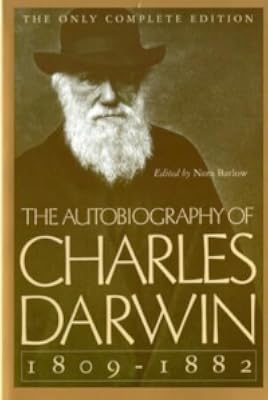
The Autobiography of Charles Darwin: 1809-1882
by Charles Darwin 
On This Page
Description
Charles Darwin is the English naturalist whose work laid the foundation for evolutionary biology and theory. Darwin wrote his autobiography under the title Recollections of the Development of my Mind and Character in 1876. He wrote it for his family, but his son edited and published the autobiography five years after Darwin's death in 1882, removing some of the critical passages about God and Christianity..
Tags
Recommendations

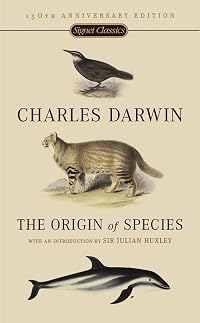
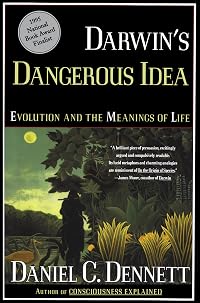
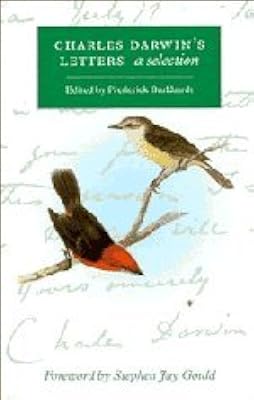
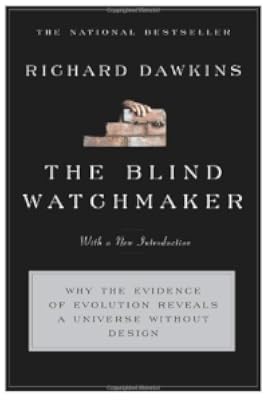
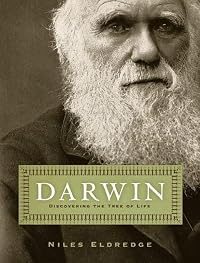

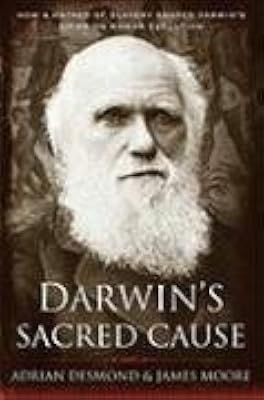


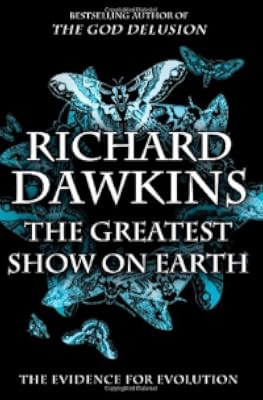









Member Recommendations
Member Reviews
When Darwin sat down to write his autobiography - more for his children's sakes than because he thought anyone outside his immediate family would be interested - he was 67 years old. He had travelled around the world, he had met the elite of 19th century English thinkers, he had published a number of books including at least two which would still be widely read 150 years later, and revolutionised the field of science in general and biology in particular.
After all this, he managed 120 pages of autobiography, almost half of which describes his childhood and teen years.
In other words, Autobiography neither is nor tries to be the ultimate word on the life of Charles Darwin. For most of the book, he simply relates the facts of his life, his show more friends and family and his work, without doing much to try and put it in context, draw conclusions or reveal secrets - or even discern between harmless anecdotes and important events; he spends almost as much on stealing apples as a child as he does on his 5-year trip around the world on the Beagle. (Though to be honest, the latter is because he'd already published an account of that and didn't want to repeat himself.)
Darwin comes across as a genuinely humble guy, who acknowledges that he's done something huge but isn't out to defend his conclusions or parade his knowledge; he's already done that in his other books, and now he just briefly tells us why he came to be interested in biology, how he started questioning prevailing attitudes, and how he drew his conclusions and wrote his books (and he says very little about the 20-year wait before he dared publish Origin of Species). He's as calmly objective about himself as he is about his findings; it's all in a day's work.
Whenever I have found out that I have blundered, or that my work has been imperfect, and when I have been contemptuously criticised, and even when I have been overpraised, so that I have felt mortified, it has been my greatest comfort to say hundreds of times to myself that "I have worked as hard and as well as I could, and no man can do more than this." I remember when in Good Success Bay, in Tierra del Fuego, thinking (and, I believe, that I wrote home to the effect) that I could not employ my life better than in adding a little to Natural Science. This I have done to the best of my abilities, and critics may say what they like, but they cannot destroy this conviction.
The result is a well-written, if not terribly fascinating book; the kind of autobiography that tells you more about its subject by what it leaves out than by what it includes. I'm sure there are better accounts of his life and the importance of his work; hearing ol' Chuck himself tell it, you'd almost think he did no more than invent a better mousetrap. But hey, if you're interested in a look inside the mind of the man who basically came up with the idea that mice could be caught at all, you could do a lot worse. show less
After all this, he managed 120 pages of autobiography, almost half of which describes his childhood and teen years.
In other words, Autobiography neither is nor tries to be the ultimate word on the life of Charles Darwin. For most of the book, he simply relates the facts of his life, his show more friends and family and his work, without doing much to try and put it in context, draw conclusions or reveal secrets - or even discern between harmless anecdotes and important events; he spends almost as much on stealing apples as a child as he does on his 5-year trip around the world on the Beagle. (Though to be honest, the latter is because he'd already published an account of that and didn't want to repeat himself.)
Darwin comes across as a genuinely humble guy, who acknowledges that he's done something huge but isn't out to defend his conclusions or parade his knowledge; he's already done that in his other books, and now he just briefly tells us why he came to be interested in biology, how he started questioning prevailing attitudes, and how he drew his conclusions and wrote his books (and he says very little about the 20-year wait before he dared publish Origin of Species). He's as calmly objective about himself as he is about his findings; it's all in a day's work.
Whenever I have found out that I have blundered, or that my work has been imperfect, and when I have been contemptuously criticised, and even when I have been overpraised, so that I have felt mortified, it has been my greatest comfort to say hundreds of times to myself that "I have worked as hard and as well as I could, and no man can do more than this." I remember when in Good Success Bay, in Tierra del Fuego, thinking (and, I believe, that I wrote home to the effect) that I could not employ my life better than in adding a little to Natural Science. This I have done to the best of my abilities, and critics may say what they like, but they cannot destroy this conviction.
The result is a well-written, if not terribly fascinating book; the kind of autobiography that tells you more about its subject by what it leaves out than by what it includes. I'm sure there are better accounts of his life and the importance of his work; hearing ol' Chuck himself tell it, you'd almost think he did no more than invent a better mousetrap. But hey, if you're interested in a look inside the mind of the man who basically came up with the idea that mice could be caught at all, you could do a lot worse. show less
Essential reading for any fan of Charles Darwin. Interesting - and also amusing in places.
We read that: "The voyage of the Beagle has been by far the most important event in my life..."
That in July 1837: "I opened my first note-book for facts in relation to the Origin of Species, about which I had long reflected, and never ceased working on for the next twenty years."
In October 1838 the penny dropped, and, with the "struggle for existence" and natural selection, "I had at last got a theory by which to work..." (He didn't publish for another twenty years!)
As for religion, he writes that: "...disbelief crept over me at a very slow rate, but was at last complete." And: "I can indeed hardly see how anyone ought to wish Christianity to be show more true; for if so the plain language of the text seems to show that the men who do not believe, and this would include my Father, Brother and almost all of my friends, will be everlastingly punished. And this is a damnable doctrine.” (He says he ended up as an "Agnostic".)
The love and respect Darwin expresses for his wife is touching. He also clearly loved and respected his father, whom he describes as "...the kindest man I ever knew..." So I'd like to know why whoever wrote the blurb on the back of the Penguin Classics edition referred to Darwin's Dad as a "bullying father"!
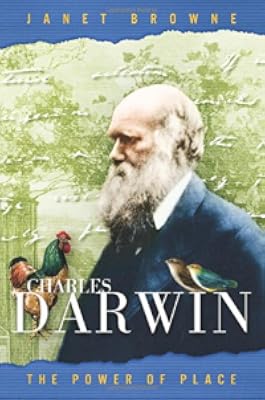
This is a short book. So, if you want more detail on Darwin's life, I recommend Janet Browne's two-volume biography. show less
We read that: "The voyage of the Beagle has been by far the most important event in my life..."
That in July 1837: "I opened my first note-book for facts in relation to the Origin of Species, about which I had long reflected, and never ceased working on for the next twenty years."
In October 1838 the penny dropped, and, with the "struggle for existence" and natural selection, "I had at last got a theory by which to work..." (He didn't publish for another twenty years!)
As for religion, he writes that: "...disbelief crept over me at a very slow rate, but was at last complete." And: "I can indeed hardly see how anyone ought to wish Christianity to be show more true; for if so the plain language of the text seems to show that the men who do not believe, and this would include my Father, Brother and almost all of my friends, will be everlastingly punished. And this is a damnable doctrine.” (He says he ended up as an "Agnostic".)
The love and respect Darwin expresses for his wife is touching. He also clearly loved and respected his father, whom he describes as "...the kindest man I ever knew..." So I'd like to know why whoever wrote the blurb on the back of the Penguin Classics edition referred to Darwin's Dad as a "bullying father"!
This is a short book. So, if you want more detail on Darwin's life, I recommend Janet Browne's two-volume biography. show less
Darwin portrays here himself in a short and humble autobiography, in fact not even intended to be published but, written above all for the sole benefits of his descendants.
We learn about his childhood's interest in (already!) insects, the authoritative figure of his father, and his calling as a clergyman up to the crucial turn in his life: the journey onboard the HMS Beagle. He then moves on to talk about his career and the social prestige he benefited, describing some high intellectual figures of his time. He also, of course, writes about his marriage with Emma -'my greatest benediction'.
Straighforward yet humble, his ample modesty is striking all along. The chapter dealing with his spiritual evolution, from would-be clergyman to, at show more least an agnostic (he here calls christianity an 'abominable doctrine') is for example honest and touching.
So sad it's too short! show less
We learn about his childhood's interest in (already!) insects, the authoritative figure of his father, and his calling as a clergyman up to the crucial turn in his life: the journey onboard the HMS Beagle. He then moves on to talk about his career and the social prestige he benefited, describing some high intellectual figures of his time. He also, of course, writes about his marriage with Emma -'my greatest benediction'.
Straighforward yet humble, his ample modesty is striking all along. The chapter dealing with his spiritual evolution, from would-be clergyman to, at show more least an agnostic (he here calls christianity an 'abominable doctrine') is for example honest and touching.
So sad it's too short! show less
The Man Behind the Controversy: Given the amount of attention placed on Darwin's ideas for the last 150 years, it is an interesting new twist to examine the man himself. The aspects of Darwin's life on which he chooses to focus his self-description are, naturally, very revealing. He portrays himself as methodical and extremely devoted to his various passions, be they hunting, beetle-collecting, or writing. It seems that although Darwin was fairly social in his youth, his health precluded many visitors from calling on him later in life; perhaps this gave him time to complete his many works! This is an engaging and entertaining look at the man behind the books that impacted so much in the world of science.
Reading this feels a bit voyeuristic, in that it was intended as a family document rather than a public one. It's short and not a very good biography; it talks in little detail about Darwin's life or character, whilst rambling about the personalities of various other contemporary scientists, Darwin's religious views and his own books. It's nevertheless of some interest and so short as to hardly allow for getting bogged down. It's nowhere near as fun as The Voyage of the Beagle or as important as On the Origin of Species, however.
It is probably most useful for the section on how developing his theory of evolution eroded his faith in literal interpretation of the Bible and eventually in Christianity altogether.
It is probably most useful for the section on how developing his theory of evolution eroded his faith in literal interpretation of the Bible and eventually in Christianity altogether.
A bit dry, but I still found it interesting as it pertains to his thought processes and reasoning. As a bonus, his down-to-earth and unassuming demeanor was very endearing.
A re-release of Darwin's autobiography 100 years after the release of his most famous book. This release restored a great deal that had been abridged from the original release of his autobiography at the request of his wife, Emma. Darwin's musings on religion are now returned to this work, written for his children. A fine work, elegantly written and easy to read.
Members
- Recently Added By
Lists

Best Autobiographies and Memoirs
370 works; 67 members

BingoDOG - Books About Scientists: Nonfiction
9 works; 4 members

Non-Fiction Worth Reading
1,025 works; 264 members

How to Read a Book's Recommended Reading List
309 works; 10 members
Author Information

348+ Works 32,757 Members
Charles Robert Darwin, born in 1809, was an English naturalist who founded the theory of Darwinism, the belief in evolution as determined by natural selection. Although Darwin studied medicine at Edinburgh University, and then studied at Cambridge University to become a minister, he had been interested in natural history all his life. His show more grandfather, Erasmus Darwin, was a noted English poet, physician, and botanist who was interested in evolutionary development. Darwin's works have had an incalculable effect on all aspects of the modern thought. Darwin's most famous and influential work, On the Origin of Species, provoked immediate controversy. Darwin's other books include Zoology of the Voyage of the Beagle, The Variation of Animals and Plants Under Domestication, The Descent of Man, and Selection in Relation to Sex. Charles Darwin died in 1882. (Bowker Author Biography) show less
Charles Darwin has a Legacy Library. Legacy libraries are the personal libraries of famous readers, entered by LibraryThing members from the Legacy Libraries group.
Some Editions
Series
Belongs to Publisher Series
Work Relationships
Is contained in
The Darwin Compendium: Voyage of the Beagle, The Origin of Species / Descent of Man and Selection in Relation to Sex / Expression of the Emotions in Humans and Animals / Autobiography by Charles Darwin
Common Knowledge
- Canonical title*
- Charles Darwin. Mein Leben 1809-1882
- Original title
- The Autobiography of Charles Darwin
- Original publication date
- 1887 (1e édition originale anglaise dans le titre "The life and letters of Charles Darwin, including an autobiographical chapter", John Murray) (1e édition originale anglaise dans le titre "The life and letters of Charles Darwin, including an autobiographical chapter", John Murray); 1958 (Nouvelle édition restaurée sous le titre "The Autobiography of Charles Darwin 18 09 - 18 82. With the original omissions restored. Edited and with appendix and notes by his grand-daughter Nora Barlow", Collins) (Nouvelle édition restaurée sous le titre "The Autobiography of Charles Darwin 18 09 - 18 82. With the original omissions restored. Edited and with appendix and notes by his grand-daughter Nora Barlow", Collins); 2008-09-04 (1e traduction et édition française, Science ouverte, Seuil) (1e traduction et édition française, Science ouverte, Seuil)
- People/Characters
- Charles Darwin [Charles Robert: 1809-1882]; Erasmus Darwin; Thomas Henry Huxley; Charles Lyell
- Important places
- Shrewsbury, Shropshire, England, UK; University of Cambridge, Cambridge, Cambridgeshire, England, UK; Cambridge, Cambridgeshire, England, UK; HMS Beagle
- Important events
- Voyage of the HMS Beagle (1831 | 1836)
- Epigraph
- "If I lived twenty more years and was able to work, how I should have to modify the 'Origin,' and how much the views on all points will have to be modified! Well it is a beginning, and that is something..." Charles Darwin to... (show all) J.D. Hooker, 1869
- First words
- A German editor having written to me to ask for an account of the development of my mind and character with some sketch of my autobiography, I have thought that the attempt would amuse me, and might possibly interest my child... (show all)ren or their children.
- Quotations
- What a good thing it would be if every scientific man was to die when sixty years old, as afterwards he would be sure to oppose all new doctrines.
- Original language*
- Englisch
*Some information comes from Common Knowledge in other languages. Click "Edit" for more information.
Classifications
Statistics
- Members
- 1,028
- Popularity
- 25,350
- Reviews
- 21
- Rating
- (3.92)
- Languages
- 13 — Catalan, Czech, Dutch, English, Estonian, Finnish, French, German, Italian, Portuguese, Spanish, Swedish, Turkish
- Media
- Paper, Audiobook, Ebook
- ISBNs
- 90
- ASINs
- 25