July, July
by Tim O'Brien
On This Page
Description
A 'perceptive, affectionate, and often very funny' novel about old college friends at a thirty-year reunion, by the author of The Things They Carried (Boston Herald). From a National Book Award winner who's been called 'the best American writer of his generation' (San Francisco Examiner), July, July tells the story of ten old friends who attended Darton Hall College together back in 1969, and now reunite for a summer weekend of dancing, drinking, flirting, reminiscing-and regretting. The show more three decades since graduation have brought marriage and divorce, children and careers, hopes deferred and replaced. This is a witty, heart-rending novel about men and women who came into adulthood at a moment when American ideals and innocence began to fade. show lessTags
Recommendations









Member Reviews
Tim O’Brien’s latest novel, July, July, is a warmed-up plate of leftovers—characters and plots we’ve already tasted in a dozen other books, movies and songs about school reunions. Regret, lost ambition and a sense of “how did we get so fat, wrinkled and boring?�? drift like cigarette smoke over scenes we recognize from Peggy Sue Got Married, Grosse Pointe Blank and any other story where characters walk around carrying drinks, wearing “Hi, My Name Is_______�? nametags, and sporting “I dare you to recognize me�? grins. We’ve been here before—on the page and in real life—and O’Brien doesn’t take us anywhere new.
July, July is banal, banal.
What a pity since O’Brien’s writing often leaps and sparkles—even show more when his characters are wallowing in regret. Take this passage near the end of the novel, for instance:
Billy McMann and Paulette Haslo ordered champagne and lobster salads from room service. They were on the bed, sitting cross-legged, naked and unembarrassed. They had made love twice in the last forty minutes, and now, as they waited for their food, they discussed the issue of turning points. They agreed that a human life mostly erased itself at the instant it was lived. They agreed, too, that out of their own combined time on earth, which amounted to more than a century, only a few hours survived in memory. “It’s what we decide that sticks,�? Paulette said. “When we say yes, when we say no. Those over-the-cliff choices we make. Getting married. Getting unmarried…That’s what makes a life a life, because you lose everything else—peeing, soap operas, scabs, vacations, almost every phone conversation you ever had. Huge chunks of time. Like you never used your own life.�?
But these are well-used lives—used-up lives, to be sure—and the majority of the book is devoted to the Class of Sixty-Nine sitting around moaning about What Went Wrong.
(These characters are so non-committal, they’re even a year late with their reunion, which takes place in the summer of 2000—another of O’Brien’s forced symbols of spiritual renewal, as if a millennial calendar-flip will really make a change in these self-pitied lives.)
July, July offers few solutions or consolations, but is packed to the alcoholic gills with lamentations. As one character laments: “Total shame, isn’t it? The golden generation. Such big dreams—kick ass, never die—but somehow it all went poof.�?
It goes poof right from the first page as a jumble of characters comes flying fast and furious, O’Brien’s pen roving like a camera through the sweaty, anxious crowd gathered “under cardboard stars�? in the Darton Hall College gymnasium. Too fast and too furious, I might add. Faces flick past like a stack of riffled Polaroids and, for the most part, we never really get under the skin of the characters.
With O’Brien’s telegraphed pen strokes, we run through a sweaty-palmed greeting line of types: the drink-swilling divorcees, the class clown who was “ugly as North Dakota,�? the Vietnam draft dodger, the one-legged Vietnam veteran, the breast-cancer survivor, the fat mop-and-broom manufacturer with a bad heart, the adulteress who’d watched her lover (another classmate) drown during a weekend tryst. You’ve met them all before, in one incarnation or another.
The narrative weaves back and forth between 1969 and 2000 and moves from character to character as they discuss “death, marriage, children, divorce, betrayal, loss, grief, disease: these were among the topics that generated a low, liquid hum beneath the surface of the music.�? There are a couple of harrowing passages—we see a murdered woman’s last few minutes of life; a lieutenant drifts in and out of consciousness on a Vietnam battlefield after being shot through both feet (O’Brien, who also wrote Going After Cacciato and The Things They Carried, remains fiction’s best chronicler of the Vietnam War). But aside from those few moments, the novel doesn’t wear its wrinkles and flab well.
Five pages from the end, O’Brien inadvertently captures the reading experience when talking about the reunion: “It had been a stressful two days, at times great fun, at times unbearable, and now a mix of weariness and midlife melancholy had set in.�? show less
July, July is banal, banal.
What a pity since O’Brien’s writing often leaps and sparkles—even show more when his characters are wallowing in regret. Take this passage near the end of the novel, for instance:
Billy McMann and Paulette Haslo ordered champagne and lobster salads from room service. They were on the bed, sitting cross-legged, naked and unembarrassed. They had made love twice in the last forty minutes, and now, as they waited for their food, they discussed the issue of turning points. They agreed that a human life mostly erased itself at the instant it was lived. They agreed, too, that out of their own combined time on earth, which amounted to more than a century, only a few hours survived in memory. “It’s what we decide that sticks,�? Paulette said. “When we say yes, when we say no. Those over-the-cliff choices we make. Getting married. Getting unmarried…That’s what makes a life a life, because you lose everything else—peeing, soap operas, scabs, vacations, almost every phone conversation you ever had. Huge chunks of time. Like you never used your own life.�?
But these are well-used lives—used-up lives, to be sure—and the majority of the book is devoted to the Class of Sixty-Nine sitting around moaning about What Went Wrong.
(These characters are so non-committal, they’re even a year late with their reunion, which takes place in the summer of 2000—another of O’Brien’s forced symbols of spiritual renewal, as if a millennial calendar-flip will really make a change in these self-pitied lives.)
July, July offers few solutions or consolations, but is packed to the alcoholic gills with lamentations. As one character laments: “Total shame, isn’t it? The golden generation. Such big dreams—kick ass, never die—but somehow it all went poof.�?
It goes poof right from the first page as a jumble of characters comes flying fast and furious, O’Brien’s pen roving like a camera through the sweaty, anxious crowd gathered “under cardboard stars�? in the Darton Hall College gymnasium. Too fast and too furious, I might add. Faces flick past like a stack of riffled Polaroids and, for the most part, we never really get under the skin of the characters.
With O’Brien’s telegraphed pen strokes, we run through a sweaty-palmed greeting line of types: the drink-swilling divorcees, the class clown who was “ugly as North Dakota,�? the Vietnam draft dodger, the one-legged Vietnam veteran, the breast-cancer survivor, the fat mop-and-broom manufacturer with a bad heart, the adulteress who’d watched her lover (another classmate) drown during a weekend tryst. You’ve met them all before, in one incarnation or another.
The narrative weaves back and forth between 1969 and 2000 and moves from character to character as they discuss “death, marriage, children, divorce, betrayal, loss, grief, disease: these were among the topics that generated a low, liquid hum beneath the surface of the music.�? There are a couple of harrowing passages—we see a murdered woman’s last few minutes of life; a lieutenant drifts in and out of consciousness on a Vietnam battlefield after being shot through both feet (O’Brien, who also wrote Going After Cacciato and The Things They Carried, remains fiction’s best chronicler of the Vietnam War). But aside from those few moments, the novel doesn’t wear its wrinkles and flab well.
Five pages from the end, O’Brien inadvertently captures the reading experience when talking about the reunion: “It had been a stressful two days, at times great fun, at times unbearable, and now a mix of weariness and midlife melancholy had set in.�? show less
It is July of 2000, and the members of the class of 1969 at Darton Hall College are having their 30-year reunion, one year too late.
In this novel we meet several not-so-gracefully aging flower children, now shopworn and wondering what their lives were really all about. And as the reunion progresses, we journey back into each one’s life, to other Julys in other years, when important choices were made and paths were taken that could not be reversed.
While the story and its characters are a bit confusing at first, jumping from person to person so it’s difficult to keep straight who is who, who loves who, who is married to whom, that is all intentional, and its meaning comes clear as each person’s story unfolds. Because that’s what show more memory is like, not a smoothly unfolding continuum but a jumble of moments, the most important moments making up a patchwork of a life. The book feels uneven from time to time, or rushed, or as if some characters get short shrift while others – particularly David, who represents the Vietnam experience – appear far too frequently, but none of that really matters.
Because these perfectly ordinary people are, in the end, completely compelling, and so are their perfectly ordinary lives. Breast cancer, Vietnam flashbacks, jiltings, divorces, affairs, the stupid mistakes we all make and we all can relate to, are lovingly detailed. And these characters, despite their many, very human faults, are our friends, our spouses, ourselves – and all the more endearing for it. show less
In this novel we meet several not-so-gracefully aging flower children, now shopworn and wondering what their lives were really all about. And as the reunion progresses, we journey back into each one’s life, to other Julys in other years, when important choices were made and paths were taken that could not be reversed.
While the story and its characters are a bit confusing at first, jumping from person to person so it’s difficult to keep straight who is who, who loves who, who is married to whom, that is all intentional, and its meaning comes clear as each person’s story unfolds. Because that’s what show more memory is like, not a smoothly unfolding continuum but a jumble of moments, the most important moments making up a patchwork of a life. The book feels uneven from time to time, or rushed, or as if some characters get short shrift while others – particularly David, who represents the Vietnam experience – appear far too frequently, but none of that really matters.
Because these perfectly ordinary people are, in the end, completely compelling, and so are their perfectly ordinary lives. Breast cancer, Vietnam flashbacks, jiltings, divorces, affairs, the stupid mistakes we all make and we all can relate to, are lovingly detailed. And these characters, despite their many, very human faults, are our friends, our spouses, ourselves – and all the more endearing for it. show less
Tim O'Brien's novel July, July is a subtle and sensitive work of pathos, humor, and humanity. It is the year 2000, and alumni of a 1969 college class have gathered for their 30th reunion -- held a year late due to disorganization of the classmate who scheduled the event. The novel traces their interactions during the long reunion weekend, interspersed with flashbacks to past events that formed each of the characters.
The individual characters are distinct and well drawn, and their histories (as recounted through the flashbacks) range from amusing to quirky to tragic. O'Brien is an excellent writer, and a master of understatement. He can say in a small phrase what might take another writer several pages to overexplain; indeed there are a show more few phrases in the book that haunted me for weeks after finishing it. Likewise, the characters are memorable -- I still smile at recalling some, as if they were personal friends. I recommend this novel highly, and expect that I shall read it again.
I find a few of the LT reviews of this novel inexplicable. Two reviewers blame the book for being like the movie The Big Chill, a film that has virtually nothing in common with this book other than the fact that in each case, old college friends gather years after graduation. Another self- appointed critic offers a puerile rant against "navel-gazing" (sic) "flower children". Perhaps he confused this book with something else he's read, since in July, July there's not a "flower child" in the group (after all, one's a wounded Vietnam War veteran, another an expatriate who moves to Canada, another a dyed-in the wool Republican, another an overweight corporate executive, and so on).
For the mature reader able to take this book on its own terms (and not to bring to it the baggage of petty resentments and false expectations), July, July offers a wonderful reading experience... subtle, understated, sensitive, wistful, and satisfying. I am glad I stumbled on this book, and plan to seek out other novels by this talented author. show less
The individual characters are distinct and well drawn, and their histories (as recounted through the flashbacks) range from amusing to quirky to tragic. O'Brien is an excellent writer, and a master of understatement. He can say in a small phrase what might take another writer several pages to overexplain; indeed there are a show more few phrases in the book that haunted me for weeks after finishing it. Likewise, the characters are memorable -- I still smile at recalling some, as if they were personal friends. I recommend this novel highly, and expect that I shall read it again.
I find a few of the LT reviews of this novel inexplicable. Two reviewers blame the book for being like the movie The Big Chill, a film that has virtually nothing in common with this book other than the fact that in each case, old college friends gather years after graduation. Another self- appointed critic offers a puerile rant against "navel-gazing" (sic) "flower children". Perhaps he confused this book with something else he's read, since in July, July there's not a "flower child" in the group (after all, one's a wounded Vietnam War veteran, another an expatriate who moves to Canada, another a dyed-in the wool Republican, another an overweight corporate executive, and so on).
For the mature reader able to take this book on its own terms (and not to bring to it the baggage of petty resentments and false expectations), July, July offers a wonderful reading experience... subtle, understated, sensitive, wistful, and satisfying. I am glad I stumbled on this book, and plan to seek out other novels by this talented author. show less
I am in my catching up on Tim O'brien phase having just read this book and "The Things They Carried". Can't believe it took me all these years to get around to these 2. Flat out a great writer. This book deals with a year 2000 30 year(really a 31 reunion) from the class of a small college in Minnesota. It focuses on 10-15 characters of the class. O'brien bounces back and forth between significant events in the characters' past and the weekend of the reunion. Great writing and it touches on the past with special emphasis on the Viet Nam war and its' impact on the characters. Just over 300 pages but an easy enjoyable read. It's sad to think that O'brien has not done anything new since the publication of this book in 2002. If you have not show more read him, then do it. He is one of our best!!! show less
So here's the thing: there was this war, and lots of people didn't like it, and they all wore clothes with psychedelic flowers on them and believed in high ideals. And then they got older and, while staring at their navels, noted the absence of said psychedelic flowers, and lamented their lost youth and banjaxed ideals. And they thought this was all tremendously important, because it had something to do with their navels, at which they spent a great deal of time staring, and anything that so many people spend so much time staring at simply has to be important. You can't possibly wear out this particular cliché, even if the navels are getting a little flabby with age.
Except, of course, that you can, and you have.
In July, July, Tim show more O'Brien gives us a collection of short character-driven stories, some successful and others less so, mostly set in the late 60s, and unified (without much success) by the device of their class reunion. The result is a novel that reads like patchwork. O'Brien is a fine writer and his skills are often on display here, but he can't overcome a certain "so what" factor. You're sure you've seen a movie just like this, and that's because you have -- sometime in the late 1980s, no doubt.
The best of O'Brien's writing in this novel simply can't compensate for the feeling that it's a rehash. show less
Except, of course, that you can, and you have.
In July, July, Tim show more O'Brien gives us a collection of short character-driven stories, some successful and others less so, mostly set in the late 60s, and unified (without much success) by the device of their class reunion. The result is a novel that reads like patchwork. O'Brien is a fine writer and his skills are often on display here, but he can't overcome a certain "so what" factor. You're sure you've seen a movie just like this, and that's because you have -- sometime in the late 1980s, no doubt.
The best of O'Brien's writing in this novel simply can't compensate for the feeling that it's a rehash. show less
This is a very difficult book for me to review right after reading it. Many of the issues the characters deal with are so complext there do not seem to be right or wrong answers. However, it was difficult for me to see how easily many characters engaged in relationship affairs that badly hurt others. Most relationships did not have the type of communication that could have helped. Much crdibility had to be suspended as all seemed to remember specific details of events more than 50 years old. It was interesting that substances were such an important part of this work. I wonder what would have been written if more of the characters had been substance free. After finding The Things They Carried by the same author a very important book, show more this one was somewhat of a disapoointment. Most of it took place in Minneapolis in 2000 at the 31st college reunion of a small liberal arts school. show less
Most of my anthologies, and the three textbooks I use for my creative writing class, include the story by Tim O'Brien, “The Things They Carried.” Consequently, I have read that story numerous times. While I admired it, it never rose anywhere near any of my favorite stories. When I heard Tim O'Brien was scheduled to give a talk on “Things,” at Baylor University, I decided to attend and see if I could gain any insights into the story. His topic was the difference between “true” and “truth” in fiction. His talk was enthralling, and I decided to read a later work, his 2002 novel, July, July.
William Timothy “Tim” O’Brien was born in Minnesota in 1946. He teaches at Texas State University at San Marcos. He was drafted show more upon his graduation from college, and served in Viet Nam from 1969-1970. His unit was part of the platoon led by Lt. Calley of the Mi Lai massacre. O’Brien’s unit arrived at Mi Lai a year later, bewildered at the hostility of the people. He did not know about the massacre. “The Things They Carried” explores the boundaries between what was “true” – based on facts, and “truth” – the verisimilitude of events. This has become and important element of his style.
July, July relates the story of about 20 people who gather to celebrate their 31st reunion from college. An odd number, since the gathering was supposed to be the 30th reunion the year before, but the planner had forgotten, and she opted for a 31st celebration.
I was a bit daunted by the large cast of characters, especially since some occasionally went by nicknames, and I did not have enough information on peripheral family members to construct a tree. That were lots of college romances revived, lots of peculiar life styles, for example one woman was married to two men. Both men knew of the other, and accepted the eccentricity of a powerful and independent woman. She alternated weeks at the two houses. She also managed to revive an old crush, which still lingered after three decades. But as the story unfolded, I began to have a feel for the group, almost as if I was attending a reunion of my own. The major characters, I had a firm grasp of their identities and peculiarities. And, as in any reunion, the minor characters had escaped my memory.
Early in the party, O’Brien begins one of a dozen interesting descriptions of the class members. He writes, “David tapped out a cigarette, slipped it between her lips, struck a match, and watched her lean in toward the flame. Lovely woman, he thought. Steel eyes. Silver-blonde hair, cut short. Trim, No hips. No sign of any extra eight pounds. They’d remained friends over the years, sharing lunches, sometimes sharing a bed, and David found it impossible to believe that they would not somehow end up living together and getting old together, and finally occupying the same patch of earth. Anything else seemed mad. Worse than mad. Plain evil” (12).
As a graduate of an all-male high school and college, I never had this reunion experience of catching up with old friends. Mine are scattered to the winds, and only an occasional query on Facebook recalls the old days.
Reading July, July in light of his lecture and my experience with “Things,” I have come to a better understanding of this talented and funny writer. 5 stars.
--Jim, 02/21/16 show less
William Timothy “Tim” O’Brien was born in Minnesota in 1946. He teaches at Texas State University at San Marcos. He was drafted show more upon his graduation from college, and served in Viet Nam from 1969-1970. His unit was part of the platoon led by Lt. Calley of the Mi Lai massacre. O’Brien’s unit arrived at Mi Lai a year later, bewildered at the hostility of the people. He did not know about the massacre. “The Things They Carried” explores the boundaries between what was “true” – based on facts, and “truth” – the verisimilitude of events. This has become and important element of his style.
July, July relates the story of about 20 people who gather to celebrate their 31st reunion from college. An odd number, since the gathering was supposed to be the 30th reunion the year before, but the planner had forgotten, and she opted for a 31st celebration.
I was a bit daunted by the large cast of characters, especially since some occasionally went by nicknames, and I did not have enough information on peripheral family members to construct a tree. That were lots of college romances revived, lots of peculiar life styles, for example one woman was married to two men. Both men knew of the other, and accepted the eccentricity of a powerful and independent woman. She alternated weeks at the two houses. She also managed to revive an old crush, which still lingered after three decades. But as the story unfolded, I began to have a feel for the group, almost as if I was attending a reunion of my own. The major characters, I had a firm grasp of their identities and peculiarities. And, as in any reunion, the minor characters had escaped my memory.
Early in the party, O’Brien begins one of a dozen interesting descriptions of the class members. He writes, “David tapped out a cigarette, slipped it between her lips, struck a match, and watched her lean in toward the flame. Lovely woman, he thought. Steel eyes. Silver-blonde hair, cut short. Trim, No hips. No sign of any extra eight pounds. They’d remained friends over the years, sharing lunches, sometimes sharing a bed, and David found it impossible to believe that they would not somehow end up living together and getting old together, and finally occupying the same patch of earth. Anything else seemed mad. Worse than mad. Plain evil” (12).
As a graduate of an all-male high school and college, I never had this reunion experience of catching up with old friends. Mine are scattered to the winds, and only an occasional query on Facebook recalls the old days.
Reading July, July in light of his lecture and my experience with “Things,” I have come to a better understanding of this talented and funny writer. 5 stars.
--Jim, 02/21/16 show less
Members
- Recently Added By
Lists

Books Set in Minnesota
14 works; 3 members

Books Read in 2002
201 works; 8 members

Books With Time Words in the Title
160 works; 4 members
Author Information

21+ Works 26,173 Members
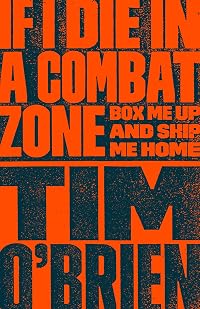
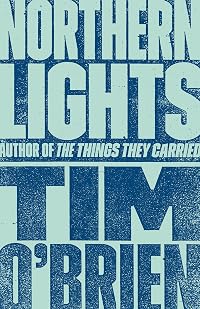
Tim O'Brien was born on October 1, 1946 in Austin, Minnesota. He graduated from Macalester College in 1968 and was immediately drafted into the U. S. Army, serving from 1969 to 1970 and receiving a Purple Heart. Three years later, his memoirs of the Vietnam War were published as If I Die in a Combat Zone, Box Me Up and Ship Me Home. Later works show more include Northern Lights (1975), Going After Cacciato (1978, winner of the National Book Award), and The Things They Carried (1990, winner of the Melcher Book Award and finalist for the Pulitzer Prize and the National Book Critics Circle Award). (Bowker Author Biography) show less
Awards and Honors
Common Knowledge
- Original publication date
- 2002
- Important places
- Minnesota, USA; Darton Hall College (college)
- Dedication
- With thanks to Larry Cooper, Janet Silver, Wendy Strothman, Clay Harper, Meredith O'Brien, Les Ramirez, Nader Darehshori, Adrienne Miller, Bill Buford, Tim Waller, and the Roy F. and Joann Cole Mitte Foundation.
- First words
- The reunion dance had started only an hour ago, but already a good many of the dancers were tipsy, and most others were well along, and now the gossip was flowing and confessions were under way and old flames were being extin... (show all)guished and rekindled under cardboard stars in the Darton Hall College gymnasium.
- Last words
- (Click to show. Warning: May contain spoilers.)It was 3:11 A.M., Sunday morning, July 9, 2000, but over the bleak, flaming grasslands it was July now, July always. "Maybe we _will_ score," said Amy. "Not even maybe," said Jan, and took Amy by the hand. "Follow me, sweetheart. We're golden."
- Blurbers
- Doyle, Roddy
Classifications
Statistics
- Members
- 845
- Popularity
- 32,523
- Reviews
- 17
- Rating
- (3.49)
- Languages
- 6 — Dutch, English, German, Italian, Korean, Portuguese
- Media
- Paper, Audiobook, Ebook
- ISBNs
- 16
- UPCs
- 2
- ASINs
- 5