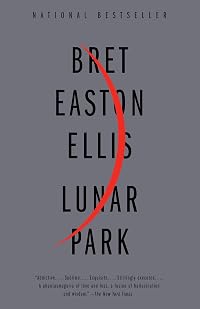
Lunar Park
by Bret Easton Ellis
On This Page
Description
A somewhat autobiographical novel about the life of the author, with some things true, other things exagerrated and other things completely fictitious.Tags
Recommendations
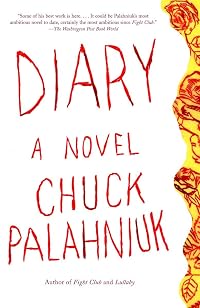
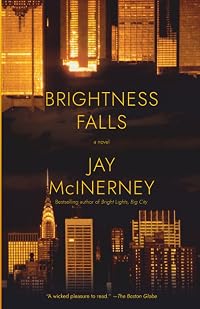
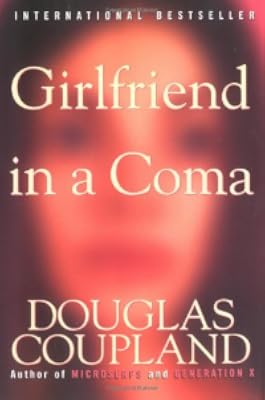
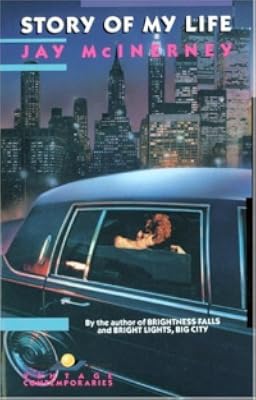

Member Recommendations
Member Reviews
I disagree with Steve Almond's assessment of Lunar Park published in the Boston Globe (Aug. 14, 2005), a novel Almond gleefully labelled as the worst novel he'd ever read. I don't counter Almond's misinformed diatribe by saying Lunar Park is the best novel ever written, though I'd conclude it's a better book than the sole book of Steve Almond's I've read -- My Life in Heavy Metal -- a generally good book of short stories set in the late 1980s when hair metal briefly ruled radio airwaves -- but a book, nevertheless, I did not like as much as I liked Lunar Park. So stick it, Steve.
Lunar Park is, granted, a work of self-indulgent, probably overly self-involved metafiction, but not embarrassing self-aggrandizement as has been purported by show more Almond and his anti-Bret Easton Ellis lit-crit ilk out to tar and feather yet again contemporary literature's Lucifer (every time Ellis publishes a book his devout haters come out of the woodwork like roaches protesting the latest innovation made in Raid), a modern day Marquis de Sade of their own making. As if Ellis could even be remotely confused with de Sade. Now, compared with Jerzy Kosinki? I'd be comfortable with that comparison. Never mind that Marquis de Sade, besides being a superior intellect and talent (sorry, Bret), was an amoralist; while Bret always has been and probably always will be an earnest moralist disguising his moralism behind the depravity and dispassion of his characters and narrators who consistently wear masks of apathy (but Ellis actually cares), and Lunar Park, believe it or not, is as much if not more so a morality tale as his much-maligned anti-heroic classic, American Psycho. So what if Ellis' protagonists are always sadistic, always twisted, always addicted, and certainly always narcissistic and misogynistic, and sometimes serial killers too? We do live in a sick and twisted world don't we, especially here in the States, and Ellis skewers our sordid universe like few writers can, even if it means lambasting himself in the process; or, the confabulated mythology of himself, I should specify, that he and the media have made out of him.
The first thirty-plus pages of Lunar Park are a condensed and self-absorbed history of the roller coaster career of a fictional and yet true life character named Bret Easton Ellis, chronicling his debauched glory days clubbing with the Brat Pack on the Sunset Strip and in Manhattan high rises hot on the heels of his Less Than Zero rocket launch to literary stardom (1985-87); continuing through the infamy of his publisher backing out at the last minute on American Psycho, refusing to publish it, having caved to the pressure from mainly a vocal and politically powerful group of feminists who indicted the book with what amounted to a summary verdict of hate speech (1991); through the even more excessive excess of the Glamorama years (1998-99), when Ellis went a bit bonkers, even by his standards, a la Elvis-circa-1975, and got bloated both personally and professionally to the point of becoming nearly unrecognizable, a caricature of himself, until the safe landing and seeming equanimity he recovered -- finding peace, finally, with his life (declared he was gay) and career -- as exemplified by the uproarious self-deprecation self-contained in the first thirty-plus pages of Lunar Park (2005).
The bleak, nihilistic undercurrents of Ellis' earlier work do not completely dominate Lunar Park, replaced instead with surprising sensitivity, humor, and horror that's more homage to terror masters of the trade than a genuine attempt to write something scary. It's a strange and unexpected, nostalgic mix that includes even a plot -- another novelty for Ellis' novels! -- that relies heavily on the reader's foreknowledge in having already read American Psycho -- but it works, strange, deranged, or not.
In the novel's stirring climax, our protagonist, Bret Easton Ellis, undergoes and begins an emotional rebirth of such breadth and depth we almost forget that, yes indeed, Lunar Park is a novel written by that supposed creepy jerk, Bret Easton Ellis! I was stunned by that powerful and elegantly crafted ending, as Ellis makes an unforgettable deal with the memory of his deceased father, a man who'd all but perhaps justifiably disowned him. The ending's so good it probably outshines the balance of the book, I'll admit, but I'll take it and not complain. For Ellis so invoked such unexpected tenderness in that ending -- going against the grain, against type -- that it touched me to the point of tears. To this day, seven years removed from first reading it, I'm still moved, and more than ready to regale anybody about it -- the book, Lunar Park, unequivocally not the worst novel ever written -- willing to listen. show less
Lunar Park is, granted, a work of self-indulgent, probably overly self-involved metafiction, but not embarrassing self-aggrandizement as has been purported by show more Almond and his anti-Bret Easton Ellis lit-crit ilk out to tar and feather yet again contemporary literature's Lucifer (every time Ellis publishes a book his devout haters come out of the woodwork like roaches protesting the latest innovation made in Raid), a modern day Marquis de Sade of their own making. As if Ellis could even be remotely confused with de Sade. Now, compared with Jerzy Kosinki? I'd be comfortable with that comparison. Never mind that Marquis de Sade, besides being a superior intellect and talent (sorry, Bret), was an amoralist; while Bret always has been and probably always will be an earnest moralist disguising his moralism behind the depravity and dispassion of his characters and narrators who consistently wear masks of apathy (but Ellis actually cares), and Lunar Park, believe it or not, is as much if not more so a morality tale as his much-maligned anti-heroic classic, American Psycho. So what if Ellis' protagonists are always sadistic, always twisted, always addicted, and certainly always narcissistic and misogynistic, and sometimes serial killers too? We do live in a sick and twisted world don't we, especially here in the States, and Ellis skewers our sordid universe like few writers can, even if it means lambasting himself in the process; or, the confabulated mythology of himself, I should specify, that he and the media have made out of him.
The first thirty-plus pages of Lunar Park are a condensed and self-absorbed history of the roller coaster career of a fictional and yet true life character named Bret Easton Ellis, chronicling his debauched glory days clubbing with the Brat Pack on the Sunset Strip and in Manhattan high rises hot on the heels of his Less Than Zero rocket launch to literary stardom (1985-87); continuing through the infamy of his publisher backing out at the last minute on American Psycho, refusing to publish it, having caved to the pressure from mainly a vocal and politically powerful group of feminists who indicted the book with what amounted to a summary verdict of hate speech (1991); through the even more excessive excess of the Glamorama years (1998-99), when Ellis went a bit bonkers, even by his standards, a la Elvis-circa-1975, and got bloated both personally and professionally to the point of becoming nearly unrecognizable, a caricature of himself, until the safe landing and seeming equanimity he recovered -- finding peace, finally, with his life (declared he was gay) and career -- as exemplified by the uproarious self-deprecation self-contained in the first thirty-plus pages of Lunar Park (2005).
The bleak, nihilistic undercurrents of Ellis' earlier work do not completely dominate Lunar Park, replaced instead with surprising sensitivity, humor, and horror that's more homage to terror masters of the trade than a genuine attempt to write something scary. It's a strange and unexpected, nostalgic mix that includes even a plot -- another novelty for Ellis' novels! -- that relies heavily on the reader's foreknowledge in having already read American Psycho -- but it works, strange, deranged, or not.
In the novel's stirring climax, our protagonist, Bret Easton Ellis, undergoes and begins an emotional rebirth of such breadth and depth we almost forget that, yes indeed, Lunar Park is a novel written by that supposed creepy jerk, Bret Easton Ellis! I was stunned by that powerful and elegantly crafted ending, as Ellis makes an unforgettable deal with the memory of his deceased father, a man who'd all but perhaps justifiably disowned him. The ending's so good it probably outshines the balance of the book, I'll admit, but I'll take it and not complain. For Ellis so invoked such unexpected tenderness in that ending -- going against the grain, against type -- that it touched me to the point of tears. To this day, seven years removed from first reading it, I'm still moved, and more than ready to regale anybody about it -- the book, Lunar Park, unequivocally not the worst novel ever written -- willing to listen. show less
If you’re Bret Easton Ellis (most famous for the cult hit American Psycho) and you haven’t written anything for seven years, it’s a bold move to make your comeback novel about a writer called…Bret Easton Ellis. The fictional Bret has major problems: he can’t relate to his slacker son, his step-daughter’s soft toy keeps coming to life and attacking him at every opportunity, and characters from his previous novels seem to be stalking him incessantly. It’s a deft stroke by Ellis to satirize elements from his own life and include his real friends in the narrative, leaving you to wonder what’s real and what’s fake. This clever, witty novel is a great return from one of America’s most interesting writers.
Better than, and different from, what I had expected. "Lunar Park" is a lot of things: a metafictional exercise, an apparently fictitious autobiography, a horror story, a biting social satire. It's also surprisingly readable, and, although it may not be a great novel, and Ellis may not be a great writer, I can't remember reading a novel whose author was as comfortable with his limitations as Ellis is here. A few plot elements seem to be borrowed from classic seventies horror films -- most notably "Poltergeist" -- and, of course, Ellis draws liberally from his earlier books. The book's ending seems to be blatantly ripped off from much, much better writers -- García Marquez and Nabokov, I'm guessing -- and I sort of admire the audacity show more that the author displays in deciding to steal from the very best. The atmosphere of the novel, though, is genuinely creepy and many of the scares sand gore are undeniably effective. At four-hundred pages, the book still feels lean, the plot propelled, appropriately enough, by a secondary narrative voice that Ellis refers to as "the writer." "Lunar Park" is also a fun, filthy read: the author's depictions of his semi-autobiographical character's adventures with drugs, sex, and alcohol are, in a sense, blatantly pornographic and intended to both shock and entertain the reader. Somewhere in here, though, there's a genuine reflection on the persistence of emotional pain and bad memories and the extreme things we're sometimes moved to do to rid ourselves of them. Ellis's anguish often seems genuine, and it makes the novel an occasionally difficult read.
The part that impressed me most about "Lunar Park," though was its depiction of American wealth. While some readers might be annoyed by the author's reliance on brand names, Ellis doesn't seem to have lost his talent for describing the look, feel, and significance of money in modern America. His honesty about the central place that money holds in certain parts of American life is, in itself, sort of refreshing. While many of his wealthy, greedy, neurotic characters are obvious caricatures, watching him skewer them with a sense of humor darker than pine-pitch can be enormously enjoyable. Cool, affected minimalism aside, the guy's got a real talent for the sharp one-liner, or for the telling detail that reveals a character's vulnerability. It's cruelty disguised as honesty, probably, but Ellis seldom hesitates to go for the jugular. I don't know if I'll give Ellis another try, but "Lunar Park" struck me as a book that often succeeds on its own pulpy, reflexive terms. show less
The part that impressed me most about "Lunar Park," though was its depiction of American wealth. While some readers might be annoyed by the author's reliance on brand names, Ellis doesn't seem to have lost his talent for describing the look, feel, and significance of money in modern America. His honesty about the central place that money holds in certain parts of American life is, in itself, sort of refreshing. While many of his wealthy, greedy, neurotic characters are obvious caricatures, watching him skewer them with a sense of humor darker than pine-pitch can be enormously enjoyable. Cool, affected minimalism aside, the guy's got a real talent for the sharp one-liner, or for the telling detail that reveals a character's vulnerability. It's cruelty disguised as honesty, probably, but Ellis seldom hesitates to go for the jugular. I don't know if I'll give Ellis another try, but "Lunar Park" struck me as a book that often succeeds on its own pulpy, reflexive terms. show less
Read for a Studies in Fiction graduate seminar at CU Boulder
Anyone who knows me knows I'm not a fan of horror at all. And this novel was absolutely horrifying. But also so well-written and with so many layers that reading it was an odd pleasure. I have to admire an author who can sink a story beneath so many layers of narrative that the reader has a hard time finding truth OR lies in the pages.
I would definitely recommend this read. If for no other reason than to admire its experimental structure and provocative prose! But be warned - it really is terrifying.
Anyone who knows me knows I'm not a fan of horror at all. And this novel was absolutely horrifying. But also so well-written and with so many layers that reading it was an odd pleasure. I have to admire an author who can sink a story beneath so many layers of narrative that the reader has a hard time finding truth OR lies in the pages.
I would definitely recommend this read. If for no other reason than to admire its experimental structure and provocative prose! But be warned - it really is terrifying.
This book is a brilliant literary criticism of American Psycho and its scholarly responses. It is also, without question, completely bananas. Part fake memoir, part murder mystery, part horror, and part batshit, Bret Easton Ellis brings a literary text merged and blended with many others--truly a postmodern novel. It's interesting, entertaining, and at one point, grotesque beyond compare. I won't get into it, but it involves the dog. My mouth was literally hanging open while I listened on my commute home today.
If I could or if goodreads allowed it, I'd allot this book 3.5 stars. It's not a great book, but it's just as certainly not terrible. There are great ideas and themes at play here, but unfortunately they never cohere together into the chimera masterwork Ellis seemed to be shooting for. Which is a bit of a shame, sure, as the man is a literary talent. But even at half capacity Mr. Ellis has given us a worthy, if only partially realized novel of regret, psychological tension, the supernatural, and aging in the face of familial inevitability or "I am my father's son" with all that that entails.
Backing up a bit, I'd like to point out that Ellis is a personal favorite writer of mine. Less Than Zero was a stellar novel (especially considering show more it was his first work); Rules of Attraction, while good, felt a bit like Ellis was cannibalizing himself and going over some well trod ground (apathetic and spoiled youth, nihilistic drug use, sex over love and the struggle of the latter against the former, etc) but still a decent read; American Psycho was and is, in my humble opinion, his masterwork, a perfect synthesis of the darkest sexual and violent horrors concatenated to some of the funniest dialogue and descriptions outside of Catch-22 and all held together by a pitch perfect satire of the American 1980's; Glamorama was a fantastic follow up though a hair less ambitious and satisfying; and finally, up until this novel, there was the unfortunate Less Than Zero follow up Imperial Bedrooms which is still Ellis's weakest outing as a writer up until the time of this review. And taken all together, Ellis is on a short list of writers I've actually met. It was during the Los Angeles Times Festival of Books held, that year, at UCLA where I not only had my copy of Less Than Zero autographed (which was lost, sadly but not surprisingly) in the ensuing years but where I also told Mr. Ellis that I wanted to be a writer as a well. His response was not what I expected. It was encouragement. And despite his reputation (the drugs, the arrogance, the iconoclasm, the opposition against "Saint" David Foster Wallace) I believed it when he said "Good for you, we could use more writers, really,".
But now on to Lunar Park proper. Like I wrote earlier, it's a good if under cooked novel. There's some of Ellis's singular wit, but it is unfortunately lost in the morass of the mystery Ellis tries to create. Said mystery itself is tied into the structure of the book, Ellis's attempt to yoke together a story of supernatural horror with an exorcising of personal demons and a fictional redemption of a shaky and damaged father-son relationship. Akin to Dostoyevsky's "Crime and Punishment" and that novel's fusing of Christian redemption tale with Greek tragedy, Ellis attempts something big and unorthodox. And even in missing the mark he has created a worthwhile failure of a novel...not at the level of a Kafka but at the level of a great writer exercising ideas in a new way, which is always a wonderful thing to read and even witness.
So, I recommend this book but with the caveat that you don't judge it against the standards of Ellis's superior works (which is hard, I understand, given the biographical content of this story) but as the moving tale of a writer writing himself in a hall of mirrors asking, begging, and finally convincing you to watch him stumbling towards the exit and the light. show less
Backing up a bit, I'd like to point out that Ellis is a personal favorite writer of mine. Less Than Zero was a stellar novel (especially considering show more it was his first work); Rules of Attraction, while good, felt a bit like Ellis was cannibalizing himself and going over some well trod ground (apathetic and spoiled youth, nihilistic drug use, sex over love and the struggle of the latter against the former, etc) but still a decent read; American Psycho was and is, in my humble opinion, his masterwork, a perfect synthesis of the darkest sexual and violent horrors concatenated to some of the funniest dialogue and descriptions outside of Catch-22 and all held together by a pitch perfect satire of the American 1980's; Glamorama was a fantastic follow up though a hair less ambitious and satisfying; and finally, up until this novel, there was the unfortunate Less Than Zero follow up Imperial Bedrooms which is still Ellis's weakest outing as a writer up until the time of this review. And taken all together, Ellis is on a short list of writers I've actually met. It was during the Los Angeles Times Festival of Books held, that year, at UCLA where I not only had my copy of Less Than Zero autographed (which was lost, sadly but not surprisingly) in the ensuing years but where I also told Mr. Ellis that I wanted to be a writer as a well. His response was not what I expected. It was encouragement. And despite his reputation (the drugs, the arrogance, the iconoclasm, the opposition against "Saint" David Foster Wallace) I believed it when he said "Good for you, we could use more writers, really,".
But now on to Lunar Park proper. Like I wrote earlier, it's a good if under cooked novel. There's some of Ellis's singular wit, but it is unfortunately lost in the morass of the mystery Ellis tries to create. Said mystery itself is tied into the structure of the book, Ellis's attempt to yoke together a story of supernatural horror with an exorcising of personal demons and a fictional redemption of a shaky and damaged father-son relationship. Akin to Dostoyevsky's "Crime and Punishment" and that novel's fusing of Christian redemption tale with Greek tragedy, Ellis attempts something big and unorthodox. And even in missing the mark he has created a worthwhile failure of a novel...not at the level of a Kafka but at the level of a great writer exercising ideas in a new way, which is always a wonderful thing to read and even witness.
So, I recommend this book but with the caveat that you don't judge it against the standards of Ellis's superior works (which is hard, I understand, given the biographical content of this story) but as the moving tale of a writer writing himself in a hall of mirrors asking, begging, and finally convincing you to watch him stumbling towards the exit and the light. show less
About halfway through this book, I wondered if someone had tricked me into reading a Stephen King novel. But when I had finished it, I had become a legitimate fan of Bret Easton Ellis. The last couple pages of this book were blurry because I had tears in my eyes. I can't remember an ending to a book being as good as this one. Ellis is a moralist in the best sense of the word. I am sure that I will go back and re-read the last couple pages many times throughout my life. Thanks Bret.
Members
- Recently Added By
Lists

NPR Reader Poll: 100 Best Horror Novels and Stories
100 works; 20 members

2000s (the decade, not the century)
184 works; 9 members

California
4 works; 2 members

Best Horror Mega-List
342 works; 6 members

Stories Inspired by Other Fiction
127 works; 24 members

Books Read in 2009
464 works; 11 members

100 Hemskaste
81 works; 1 member

American Lit for Eng 11 Research Project
368 works; 6 members

Halloween Stories
31 works; 5 members

living room bookshelf
150 works; 1 member
Author Information

26+ Works 38,080 Members
Bret Easton Ellis was born in Los Angeles, California on March 7, 1964. He attended Bennington College. In 1985, at the age of 23, his first novel, Less Than Zero, was published. His other works include The Rules of Attraction (1987), The Informers (1994), Glamorama (1998), Lunar Park (2005), and Imperial Bedrooms (2010). His most controversial show more book was American Psycho, a book for which he received an advance in the amount of $300,000 from Simon and Schuster, who then refused to publish the book while under attack from women's groups in regards to the content of the book. It was later made into a feature film. (Bowker Author Biography) show less
Some Editions
Awards and Honors
Awards
Distinctions
Series
Belongs to Publisher Series
Keltainen kirjasto (369)
Work Relationships
Common Knowledge
- Canonical title*
- Lunar Park
- Original title
- Lunar Park
- Original publication date
- 2005
- People/Characters
- Bret Easton Ellis; Patrick Bateman; Sarah; Robby
- Important places*
- Midland
- Related movies
- Lunar Park (2011 | IMDb)
- Epigraph*
- Le risque du métier en faisant de soi un spectacle qui n'en finit pas, c'est qu'à un moment donné, on achète soi-même un billet.
Thomas McGuane, Panama
Les gens qui se sont fait une idée à propos d'un homme n'aiment pas devoir changer d'opinion, réviser leur jugement en raison d'une preuve nouvelle ou d'arguments nouveaux, et l'homme qui tente de les forcer à changer d'a... (show all)vis est, pour le moins, en train de perdre son temps et peut-être de chercher des ennuis.
John O'Hara
Des tablettes de ma mémoire
J'effacerai tout ce qui y fut inscrit de futile et de tendre
Tout adage livresque, toute forme,
Toute impression passée
Que ma déférente jeunesse y a copiés
Hamlet, I, v,... (show all) 95 - Dedication*
- Pour Robert Martin Ellis 1941-1992 et Michael Wade Kaplan 1974-2004
- First words
- "You do an awfully good impression of yourself."
- Last words
- (Click to show. Warning: May contain spoilers.)So, if you should see my son, tell him I say hello, be good, that I am thinking of him and that I know he's watching over me somewhere, and not to worry: that he can always find me here, whenever he wants, right here, my arms held out and waiting, in the pages, behind the covers, at the end of Lunar Park.
- Blurbers
- King, Stephen
*Some information comes from Common Knowledge in other languages. Click "Edit" for more information.
Classifications
Statistics
- Members
- 3,237
- Popularity
- 5,316
- Reviews
- 56
- Rating
- (3.54)
- Languages
- 15 — Catalan, Danish, Dutch, English, Finnish, French, German, Hungarian, Italian, Norwegian (Bokmål), Norwegian, Polish, Portuguese, Spanish, Swedish
- Media
- Paper, Audiobook, Ebook
- ISBNs
- 67
- ASINs
- 12