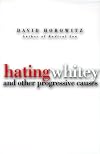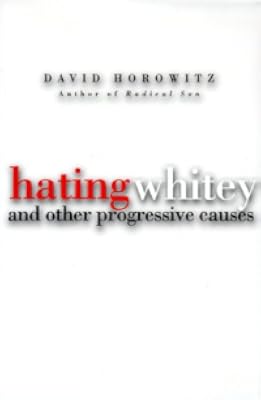
Hating Whitey: And Other Progressive Causes
by David Horowitz
On This Page
Description
The anti-white racism of the political left remains one of the few taboo subjects in America. In this book, David Horowitz, a former confidante of the Black Panthers, lays bare the liberal attack on "whiteness," the latest battle in the war against American democracy. Horowitz acknowledges that America's political culture is the creation of white, European, primarily Christian males. But it is these very men and their heirs that have led the world in abolishing slavery, establishing the show more principles of ethnic and racial inclusion, and creating a society of unparalleled rights and opportunities that people of every race and creed continue to flock to. Horowitz points to the hypocrisy of this and challenges racism in all its forms, especially the hidden ones. show lessTags
Recommendations








Member Reviews
Horowitz offers a remarkable and rare perspective by tracing a journey from Black Panther to conservative commentator. As such from his insider perspective, he has some hair-raising anecdotes from his direct knowledge.
This includes
* Huey Newton sodomizing Bobby Seale as part vengeful punishment in the gang-style organization.
* Maxine Waters actively supporting efforts to free apparent murdered Geronimo Pratt.
* The murder of Betty Van Patter.
Also, Horowitz while looking back a half century derides the subjects of his attack for being backwards looking:
So, what does Horowitz want? He is show more apparently appalled at former radicals invited to give campus lectures. (I guess his former associations don't count, or he deserves a fresh evaluation not given to others.) He is generally abhorred by the apparent lack of conservatives in academia -- Maybe he want some kind of affirmative action in tenure based on political ideology? I am not really clear on it. I support a diversity of opinion, I am just not clear on the remediation suggested here.
For me, Horowitz is on firmer ground for his attacks on Clinton foreign policy and foreign influence. Having recently read Winter Is Coming: Why Vladimir Putin and the Enemies of the Free World Must Be Stopped by Garry Kasparov, I can see a lot of missteps in Bill's decisions in Europe there. Here, Horowitz focuses on Chinese meddling and secrets stealing, including the murky case of Wen Ho Lee and more.
Reflecting on the book, I feel Horowitz is inviting me to consider the worst crimes of extreme leftists and by that judge "Progressives", whoever they are. This feels rather like judging all Conservatives by the actions of the January 6 Insurrectionists.
You can support my reviews with purchases made on Amazon through this link. show less
This includes
* Huey Newton sodomizing Bobby Seale as part vengeful punishment in the gang-style organization.
* Maxine Waters actively supporting efforts to free apparent murdered Geronimo Pratt.
* The murder of Betty Van Patter.
Also, Horowitz while looking back a half century derides the subjects of his attack for being backwards looking:
What has the "civil rights" argument come to, when it cites discriminatory policies of the past to justify discriminatory policies in the present?
So, what does Horowitz want? He is show more apparently appalled at former radicals invited to give campus lectures. (I guess his former associations don't count, or he deserves a fresh evaluation not given to others.) He is generally abhorred by the apparent lack of conservatives in academia -- Maybe he want some kind of affirmative action in tenure based on political ideology? I am not really clear on it. I support a diversity of opinion, I am just not clear on the remediation suggested here.
For me, Horowitz is on firmer ground for his attacks on Clinton foreign policy and foreign influence. Having recently read Winter Is Coming: Why Vladimir Putin and the Enemies of the Free World Must Be Stopped by Garry Kasparov, I can see a lot of missteps in Bill's decisions in Europe there. Here, Horowitz focuses on Chinese meddling and secrets stealing, including the murky case of Wen Ho Lee and more.
Reflecting on the book, I feel Horowitz is inviting me to consider the worst crimes of extreme leftists and by that judge "Progressives", whoever they are. This feels rather like judging all Conservatives by the actions of the January 6 Insurrectionists.
You can support my reviews with purchases made on Amazon through this link. show less
Hating Whitey. And Other Progressive Causes. David Horowitz
For Betty - Oh God, What Have We Done…. June 16, 2000
One brings to a book everything one is and has been through. Let me discuss David Horowitz’s Hating Whitey by seemingly digressing a little on my own experience.
I grew up in the white suburbs of Detroit during the `60s and `70s and have vivid memories of the Detroit riot and my uncle and aunt’s bakery being almost burnt to the ground, while their neighbors and friends were increasingly driven out by violence and the erosion of social order. In the end, they too accepted the inevitability of flight for their lives. More than forty years of programs and promises of “renaissance” have only produced a dysfunctional city show more that often can neither educate its young nor reliably provide the most basic services such as snow removal and, for a couple of days now, electricity.
At the University of Michigan I studied with Robert Hayden, a former Poet Laureate at the Library of Congress, who thought of himself as a human being, first and foremost, though he begrudgingly accepted Afro-American, despite his preference at times for Negro, coming from an older time. The child of an interracial marriage, Hayden loathed the divisiveness of racial politics and lacerated radical blacks on more than one occasion. Ultimately, his vision of human oneness melded with that of Martin Luther King and similar figures, challenging us all to a deeply demanding spiritual ethic, a universal standard holding all accountable, before which all must struggle and strive.
David Horowitz devastatingly chronicles the result of the lack of such a standard on race relations during the last forty years; the result in the university; the result in the media; the result in the legal system; the result in politics; the result in the hearts and minds and souls of our entire nation.
As one who has edited the poems and prose of a human being usually identified as black, I have had the experience several times of being invited for job interviews at colleges only to be met with disbelief and gaping mouths when I, a whitey, walked in through the departmental door. I am one who has lived through almost everything about which Horowitz writes regarding academia, including losing a tenure track job as the result of a relentless and byzantine conspiracy of “colleagues” who wanted a black in the position, one widely perceived by those fit to judge as nowhere near my intellectual equal and who eventually had to be removed from my post for incompetence.
Horowitz’s major shortcoming, typical of the modern secular mind, liberal or conservative, is that his critique, unlike Dostoevsky who understood the nature of modernity, does not go deep enough into the spiritual collapse that underlies the dynamics of race, as they underlay the collapse into communism. This failure is also evident in his Destructive Generation, which is, nevertheless, another of his brave and brilliant books. Perhaps someday Horowitz will plumb further into the depths of radical causes.
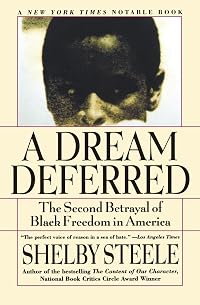
Being a white man and given the politically charged nature of race today, Horowitz demonstrates a rare streak of moral strength and courage by his daring to speak his conscience against black racism and the misguided designs of race elites. Fortunately, he is not alone. Along with Hating Whitey, those truly interested in beginning to understand and confront the race dilemmas of America should also read Ward Connerly’s Creating Equal, Shelby Steele’s A Dream Deferred, and Thomas Sowell’s The Quest for Cosmic Justice, works by exceptional, heroic human beings who have all been slandered as Uncle Toms by more than one race radical.
Frederick Glaysher
http://www.fglaysher.com show less
For Betty - Oh God, What Have We Done…. June 16, 2000
One brings to a book everything one is and has been through. Let me discuss David Horowitz’s Hating Whitey by seemingly digressing a little on my own experience.
I grew up in the white suburbs of Detroit during the `60s and `70s and have vivid memories of the Detroit riot and my uncle and aunt’s bakery being almost burnt to the ground, while their neighbors and friends were increasingly driven out by violence and the erosion of social order. In the end, they too accepted the inevitability of flight for their lives. More than forty years of programs and promises of “renaissance” have only produced a dysfunctional city show more that often can neither educate its young nor reliably provide the most basic services such as snow removal and, for a couple of days now, electricity.
At the University of Michigan I studied with Robert Hayden, a former Poet Laureate at the Library of Congress, who thought of himself as a human being, first and foremost, though he begrudgingly accepted Afro-American, despite his preference at times for Negro, coming from an older time. The child of an interracial marriage, Hayden loathed the divisiveness of racial politics and lacerated radical blacks on more than one occasion. Ultimately, his vision of human oneness melded with that of Martin Luther King and similar figures, challenging us all to a deeply demanding spiritual ethic, a universal standard holding all accountable, before which all must struggle and strive.
David Horowitz devastatingly chronicles the result of the lack of such a standard on race relations during the last forty years; the result in the university; the result in the media; the result in the legal system; the result in politics; the result in the hearts and minds and souls of our entire nation.
As one who has edited the poems and prose of a human being usually identified as black, I have had the experience several times of being invited for job interviews at colleges only to be met with disbelief and gaping mouths when I, a whitey, walked in through the departmental door. I am one who has lived through almost everything about which Horowitz writes regarding academia, including losing a tenure track job as the result of a relentless and byzantine conspiracy of “colleagues” who wanted a black in the position, one widely perceived by those fit to judge as nowhere near my intellectual equal and who eventually had to be removed from my post for incompetence.
Horowitz’s major shortcoming, typical of the modern secular mind, liberal or conservative, is that his critique, unlike Dostoevsky who understood the nature of modernity, does not go deep enough into the spiritual collapse that underlies the dynamics of race, as they underlay the collapse into communism. This failure is also evident in his Destructive Generation, which is, nevertheless, another of his brave and brilliant books. Perhaps someday Horowitz will plumb further into the depths of radical causes.
Being a white man and given the politically charged nature of race today, Horowitz demonstrates a rare streak of moral strength and courage by his daring to speak his conscience against black racism and the misguided designs of race elites. Fortunately, he is not alone. Along with Hating Whitey, those truly interested in beginning to understand and confront the race dilemmas of America should also read Ward Connerly’s Creating Equal, Shelby Steele’s A Dream Deferred, and Thomas Sowell’s The Quest for Cosmic Justice, works by exceptional, heroic human beings who have all been slandered as Uncle Toms by more than one race radical.
Frederick Glaysher
http://www.fglaysher.com show less
David Horowitz's Hating Whitey is not just a book on how politically correct it is to hate white people. It's also about Marxism, liberal activism, and how they both have infiltrated our universities.
In the racial portion, he cites case after case of black on white hate crime and related statistics, and yet all we hear in the media is about Matthew Shephard and James Byrd. Martin Luther King dreamed of a colorless society. Unfortunately, his deciples haven't changed their tune. Racism is still a serious problem to them. Any advances blacks have made is because white racists gave in to avoid a violent revolution. In the end, all whites are still racist. He asks why blacks still support the Democratic party? The Democrats have continually show more patronized blacks and their leaders. Enter Bill Clinton, the first "black" president. Horowitz also shares his history of association with the Black Panthers and being a '60s radical.
Of particular interest is his examination of Camille Cosby's (wife of Bill Cosby's) article for USA Today entitled "America Taught My Son's Killer to Hate Blacks". Forget about a grieving mother venting her anguish, this is an angry anti-white rant written one year after her son's death.
Also interesting is his rememberance of Elaine Brown; who for a time was the leader of the Black Panthers. He details a lot of what went on and what it was that made him flee the Panther party. The Panthers resembled a Mafia family. Extorting store owners for protection. Violence against party members who spoke ill of leaders or were a little too curious about certain activities. Betty Van Patter's death was examined in depth.
Johnnie Cochran defended Geronimo Pratt, a man accused of executing a (white) woman and wounding her husband on a tennis court. In spite of damning testimony, Cochran plays the race card to get this guy acquited. This shouldn't sound like anything new for Cochran, except that this happened in 1968, Pratt was a Black Panther, and the testimony was from his on Panthers who wanted him out of the way.
College campuses around the country denounce conservative speakers as being racist and hateful, while embracing the radical left. Several examples of deans and heads of departments forcing their radical ideologies into the cirriculum and onto unsuspecting college kids. Numerous black activists, writers, and professors speak of uncontrolled rage against white people. This rage is all whitey's fault for inflicting "pain" on blacks for so many years. It's scary to think these people teach and are asked to speak at major universities. Michael Savage applied for a deanship at Berkley. He had sparkling credentials. Except he was a conservative. That didn't set well with the outgoing dean and his colleagues. He was passed over for someone with no experience and modest credentials, but more radicalism.
Horowitz highlights several examples of Maxists that promote Marxism under the guise of fairness and factuality. Colleges used to be thought of as institutions for the pursuit of knowledge. They are now a haven of political correctness and social change.
All in all, this was an eye-opening look at an insider's account of radical life in the '60s. I'd read most of the racial discussion before, but the Black Panther and University writing was fascinating. show less
In the racial portion, he cites case after case of black on white hate crime and related statistics, and yet all we hear in the media is about Matthew Shephard and James Byrd. Martin Luther King dreamed of a colorless society. Unfortunately, his deciples haven't changed their tune. Racism is still a serious problem to them. Any advances blacks have made is because white racists gave in to avoid a violent revolution. In the end, all whites are still racist. He asks why blacks still support the Democratic party? The Democrats have continually show more patronized blacks and their leaders. Enter Bill Clinton, the first "black" president. Horowitz also shares his history of association with the Black Panthers and being a '60s radical.
Of particular interest is his examination of Camille Cosby's (wife of Bill Cosby's) article for USA Today entitled "America Taught My Son's Killer to Hate Blacks". Forget about a grieving mother venting her anguish, this is an angry anti-white rant written one year after her son's death.
Also interesting is his rememberance of Elaine Brown; who for a time was the leader of the Black Panthers. He details a lot of what went on and what it was that made him flee the Panther party. The Panthers resembled a Mafia family. Extorting store owners for protection. Violence against party members who spoke ill of leaders or were a little too curious about certain activities. Betty Van Patter's death was examined in depth.
Johnnie Cochran defended Geronimo Pratt, a man accused of executing a (white) woman and wounding her husband on a tennis court. In spite of damning testimony, Cochran plays the race card to get this guy acquited. This shouldn't sound like anything new for Cochran, except that this happened in 1968, Pratt was a Black Panther, and the testimony was from his on Panthers who wanted him out of the way.
College campuses around the country denounce conservative speakers as being racist and hateful, while embracing the radical left. Several examples of deans and heads of departments forcing their radical ideologies into the cirriculum and onto unsuspecting college kids. Numerous black activists, writers, and professors speak of uncontrolled rage against white people. This rage is all whitey's fault for inflicting "pain" on blacks for so many years. It's scary to think these people teach and are asked to speak at major universities. Michael Savage applied for a deanship at Berkley. He had sparkling credentials. Except he was a conservative. That didn't set well with the outgoing dean and his colleagues. He was passed over for someone with no experience and modest credentials, but more radicalism.
Horowitz highlights several examples of Maxists that promote Marxism under the guise of fairness and factuality. Colleges used to be thought of as institutions for the pursuit of knowledge. They are now a haven of political correctness and social change.
All in all, this was an eye-opening look at an insider's account of radical life in the '60s. I'd read most of the racial discussion before, but the Black Panther and University writing was fascinating. show less
Essays of a reformed liberal. Very good.
Ratings
Members
- Recently Added By
Author Information

85+ Works 4,832 Members
David Horowitz is the author of numerous books, including the New York Times bestseller Unholy Alliance, as well as The Professors, and his celebrated autobiography Radical Son. He is president of the David Horowitz Freedom Center and founder of the online news magazine FrontPageMag.com.
Classifications
- Genres
- Nonfiction, Anthropology, Politics and Government, General Nonfiction, History
- DDC/MDS
- 305.8 — Society, government, & culture Social sciences, sociology & anthropology Social group - Age, Gender, Ethnicity Ethnic and national groups
- LCC
- E839.5 .H67 — History of the United States United States Later twentieth century, 1961-2000 Political history
Statistics
- Members
- 134
- Popularity
- 239,691
- Reviews
- 4
- Rating
- (3.91)
- Languages
- English
- Media
- Paper, Audiobook, Ebook
- ISBNs
- 7
- ASINs
- 2