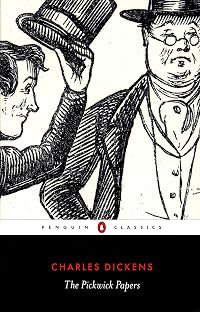
The Pickwick Papers
by Charles Dickens
On This Page
Description
The Pickwick Papers was Dickens' first published novel and the first ever publishing phenomenon with illegal copies, theatrical performances and merchandise. It follows the travels of Mr Pickwick and the Pickwick Club through the English countryside, and is made up of Dickens' usual array of exaggerated, comic characters. The various adventures and encounters are loosely related, suiting the serial format in which the novel was first published..
Tags
Recommendations











Member Recommendations
souloftherose Both books are early Dickens' novels and written in an episodic, picaresque style. Although Nicholas Nickleby is more plot-driven than The Pickwick Papers and contains some darker themes, both works are fundamentally happy Dickens novels and readers who enjoy one would probably enjoy the other.
51
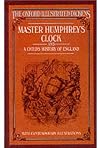
Cecrow Pickwick and the Wellers appear again in this collected serial, in a framing story supporting numerous short works as well as the novels The Old Curiosity Shop and Barnaby Rudge.
30

Porua E.V. Lucas’ London Lavender is the only book I can think of that comes close to the sprawling labyrinth of various narratives and its narrator's humorous but good-natured commentary about it all of Charles Dickens' The Pickwick Papers. I certainly had the same contented feeling after reading London Lavender that I did with The Pickwick Papers.
11

thorold Pop Larkin and Mr Pickwick are both Londoners who find rural idylls in Kent, and both big fans of tomato sauce, but there's also a deeper connection between these two great comic celebrations of the pleasures of lower-middle-class "vulgarity".
02
Member Reviews
Charles Dicken's first novel is taken from the supposed posthumous papers of the Pickwick club after the meeting where the founder member and philanthropist Samuel Pickwick proposes that himself and three other members of the club travel around England to record their experiences. The novel was initially serialised in 19 editions (March !836 - October 1837) and looks back to a period some ten years earlier.
I think it takes some time to tune into the language used and the customs and social milieu of the time; certainly the first chapter which describes a meeting of the PIckwick Club is confusing and the book doesn't really get going until chapter II: The First Day's Journey, then its a question of going along for the ride. Dickens show more introduces his four central characters and the reader realises that the gentlemen are not fully conversant with the world outside of their club and soon find themselves in all sorts of tricky situations and the noble aplomb of Mr Pickwick doesn't always see them through. It is a comical, satirical book that looks at conditions in England in the 1820's encouraging the reader to laugh out loud at the antics of the respectable Pickwickians; Mr Winkle, Mr Snodgrass, and Mr Tupman as they meet other characters: Sam Weller, Tony Weller, Alfred JIngle, Job Trotter and Mr Wardle and his attorney Mr Perker more grounded but perhaps more preposterous than themselves. The female characters are there mainly as foils for the male characters.
I found some of the humour corny and some; particularly the similes used by Sam Weller had lost some of their impact, but there was enough that crossed the time span to make me laugh. What was most fascinating was the descriptions of life in England in the 1820's. Horse drawn carriages were the established form of transport with a car/carriage chase reaching speeds of 15 miles per hour. Servants, drivers and some passengers up on the box seat open to the elements. The changing of horses, the the inns and stables, the turnpikes all giving a vivid impression of another world. The Pickwickians move from one establishment to another, with their yards, common spaces, claustrophobic passages and lively characters. The description of life in the Fleet (a debtors prison in London) and a brief sojourn into early industrialised Birmingham are unforgettable. The society based on masters and servants and those without work at all is well fleshed out, as is the mud and grime that appears to be everywhere.
Cohesion, careful plotting are not features of this first novel, but then again it is a serialised road movie of a book and so these elements are not essential. Dickens wraps it all up tidily in the end, to leave a nice warm glow. 4 stars. show less
I think it takes some time to tune into the language used and the customs and social milieu of the time; certainly the first chapter which describes a meeting of the PIckwick Club is confusing and the book doesn't really get going until chapter II: The First Day's Journey, then its a question of going along for the ride. Dickens show more introduces his four central characters and the reader realises that the gentlemen are not fully conversant with the world outside of their club and soon find themselves in all sorts of tricky situations and the noble aplomb of Mr Pickwick doesn't always see them through. It is a comical, satirical book that looks at conditions in England in the 1820's encouraging the reader to laugh out loud at the antics of the respectable Pickwickians; Mr Winkle, Mr Snodgrass, and Mr Tupman as they meet other characters: Sam Weller, Tony Weller, Alfred JIngle, Job Trotter and Mr Wardle and his attorney Mr Perker more grounded but perhaps more preposterous than themselves. The female characters are there mainly as foils for the male characters.
I found some of the humour corny and some; particularly the similes used by Sam Weller had lost some of their impact, but there was enough that crossed the time span to make me laugh. What was most fascinating was the descriptions of life in England in the 1820's. Horse drawn carriages were the established form of transport with a car/carriage chase reaching speeds of 15 miles per hour. Servants, drivers and some passengers up on the box seat open to the elements. The changing of horses, the the inns and stables, the turnpikes all giving a vivid impression of another world. The Pickwickians move from one establishment to another, with their yards, common spaces, claustrophobic passages and lively characters. The description of life in the Fleet (a debtors prison in London) and a brief sojourn into early industrialised Birmingham are unforgettable. The society based on masters and servants and those without work at all is well fleshed out, as is the mud and grime that appears to be everywhere.
Cohesion, careful plotting are not features of this first novel, but then again it is a serialised road movie of a book and so these elements are not essential. Dickens wraps it all up tidily in the end, to leave a nice warm glow. 4 stars. show less
"There are dark shadows on the earth, but its lights are stronger in the contrast. Some men, like bats or owls, have better eyes for the darkness than for the light. We, who have no such optical powers, are better pleased to take our last parting look at the visionary companions of many solitary hours, when the brief sunshine of the world is blazing full upon them."
I don't like everything by Dickens, and didn't quite believe I would like another work by him as much as A Tale of Two Cities! But this is humor at it's best, with the subtle mockery of socio-economic differences of the classes and the witty characterizations. It's positive and funny, even when portraying the negative. And I think I like Samuel Weller more than Jeeves! :D show more
Come to think of it Dickens wrote Pickwick Papers at the mere age of Twenty-four! Genius! show less
I don't like everything by Dickens, and didn't quite believe I would like another work by him as much as A Tale of Two Cities! But this is humor at it's best, with the subtle mockery of socio-economic differences of the classes and the witty characterizations. It's positive and funny, even when portraying the negative. And I think I like Samuel Weller more than Jeeves! :D show more
Come to think of it Dickens wrote Pickwick Papers at the mere age of Twenty-four! Genius! show less
Not so much a story as a collection of quixotic tales involving the four members of the Pickwick Club, an organization of gentlemen dedicated to experiencing worldly adventures. However, their pursuit of "novel experiences" (appreciating puns is a Dickens prerequisite!) often goes hilariously awry: a picnic that lands them in the middle of two advancing armies at a military re-enactment, various humiliations at the hands of willful horses, romantic rivals, and a jaunty swindler named Mr. Jingle (among other aliases), a wrong turn in a dark hall that places Mr. Pickwick in a most embarrassing situation, a tragically misunderstood conversation that lands Mr. Pickwick in the middle of a breach of promise suit with his housekeeper, Ms. show more Bardell.
Along the way we are introduced to a host of delightful characters: the Pickwickians themselves (Mr. Tupman, the unsuccessful lady's man; Mr. Snodgrass, the tortured poet unbothered by the inconvenience of actually writing poetry; Mr. Winkle, the comically inept sportsman); Sam Weller, the unerringly loyal and practical cockney Jeeves to Mr. Pickwick's Wooster; and a host of supporting characters with names like Serjeant Buzfuz, the Honorable Horatio Fizkin, and Count Smorltork, each of whom Dickens has endowed with joyfully entertaining eccentricities.
The genesis of this work was an assignment Dickens accepted, early in his career, to provide narratives to accompany a set of engravings depicting the misadventures of a group of inept gentlemen-sportsmen. Dickens, however, vastly exceeded his brief, creating a set of stories so compelling that the illustrations ultimately had to be updated to suit his narratives. The Pickwick Papers then became a cultural phenomenon, spawning theatrical performances, knockoffs, and merch, entering the public consciousness in much the same way that his A Christmas Carol did later. If nothing else, Pickwick Papers illustrates that, even at the dawn of his career, Dickens' talent for creating memorable characters and crafting biting social satire was already well-developed. All that's lacking here is the sentimentality that infuses his later works, which isn't necessarily a bad thing: consider this an opportunity to enjoy Dickens at his wittiest, without any distracting waifs or tragic love stories.
Found this to be thoroughly delightful and most definitely destined for the "books I look forward to re-reading" shelf in my library! show less
Along the way we are introduced to a host of delightful characters: the Pickwickians themselves (Mr. Tupman, the unsuccessful lady's man; Mr. Snodgrass, the tortured poet unbothered by the inconvenience of actually writing poetry; Mr. Winkle, the comically inept sportsman); Sam Weller, the unerringly loyal and practical cockney Jeeves to Mr. Pickwick's Wooster; and a host of supporting characters with names like Serjeant Buzfuz, the Honorable Horatio Fizkin, and Count Smorltork, each of whom Dickens has endowed with joyfully entertaining eccentricities.
The genesis of this work was an assignment Dickens accepted, early in his career, to provide narratives to accompany a set of engravings depicting the misadventures of a group of inept gentlemen-sportsmen. Dickens, however, vastly exceeded his brief, creating a set of stories so compelling that the illustrations ultimately had to be updated to suit his narratives. The Pickwick Papers then became a cultural phenomenon, spawning theatrical performances, knockoffs, and merch, entering the public consciousness in much the same way that his A Christmas Carol did later. If nothing else, Pickwick Papers illustrates that, even at the dawn of his career, Dickens' talent for creating memorable characters and crafting biting social satire was already well-developed. All that's lacking here is the sentimentality that infuses his later works, which isn't necessarily a bad thing: consider this an opportunity to enjoy Dickens at his wittiest, without any distracting waifs or tragic love stories.
Found this to be thoroughly delightful and most definitely destined for the "books I look forward to re-reading" shelf in my library! show less
It is remarkable that a two hundred year old book can still amuse. The Pickwick Papers' good humour shines across two centuries. It is readable and humane and it contains all the seeds of the Dickens we know as the Victorian literary giant.
It is, however, scarcely a novel and not Victorian at all. It is a novel made out of a serial and it has the same relationship to a novel as a Netflix Original has to a film made for the cinema which is not a deprecatory remark. There is many a boxed set that is vastly superior to the average art movie.
As to its period, Mr. Pickwick and his curious friends - Tupman, Winkle and Snodgrass - as well as the loyal man-servant Sam Weller (and his father and cronies), the 'villains' Mr. Jingle and the show more tearful Job Trotter and all the rest are Georgian characters.
We write of the seeds of the Victorian Dickens but only as the seeds of Victorian culture also lie in the Georgian. We see 'Bleak House' in the legal shenanigans and 'Christmas Carol' in one of the tales ('the goblin and the sexton') but we also see a society that would be recognisable to Austen.
Or rather we see Jane Austen's world of love, longing, property and propriety through the eyes of a bunch of young males rather than those of a young woman. There is lot of drinking and roistering and, of course, misunderstandings, the basis of much romantic comedy.
Above all, we see Dickens' sentimental personal ideology coming through as the actions rather than just the voice of Mr. Pickwick himself. Pickwick is wealthy and untroubled but he stands on principle (to the point of imprisonment) and is given to Christian charity.
Despite all the harms done, not so much to him as to his good friends, Pickwick not merely forgives Jingle and Trotter but generously helps them on their way to a better life. It is not that he thinks they will necessarily be better but it is more decent to believe that they can improve than not.
One of the enjoyments of the book is the gentle satire of so much in English society but without rancour even when rancour might be justified - rotten borough politics, the inquity of debtors' prisons (a hobby horse of Dickens), antiquarian presumption, predatory lawyers.
Dickens was writing for an audience that wanted good humour and comedy rather than to be nagged about abuses. There is no fundamental critique of society - Dickens was never going to do the job of Karl Marx - but he appeals to English 'fair play', Christian values and justice.
Dickens also satirises with yet more gentleness village life, 'society' at Bath, the working classes, maiden aunts, landladies and medical students (who have barely changed in two centuries). In doing this, he gives us a persuasive vision of what it might have been like to live in the 1820s.
The serials were published and written in 1836/37 but the events happen a decade earlier so we are already looking at world that readers might look on with the beginnings of nostalgia. Much of the story is centred on coaching trips and the railway was just beginning to make its mark a decade on.
The flaw in the book is one arising from serialisation - the intrusion of 'entertaining' tales to amuse readers until they had been hooked sufficiently that the tales were no longer needed. The stories are interesting from a cultural point of view but not always very good.
Yes, after a slow start, Dickens learns his trade quickly and writes as well as we would expect but the stories are just popular in-filling with the ghastly and ghostly or the fantastic that look poor against the material being produced by, say, Poe across the Atlantic and contemporaneously.
But this was an opportunity for Dickens. The success of Pickwick Papers was not going to be assured at the start. A certain nervousness about how to please his audience is forgivable and, in the end, the story hangs together very well with everything tied up neatly if quickly at the end.
We should also mention the excellent illustrations by Seymour, Buss and, above all. Phiz. I could not find my edition on Goodreads so I must note that all the illustrations and an excellent and succinct afterword by Ned Halley were in my Macmillan Collectors Edition (2016).
Above all, if you can put aside the tale interruptions (which die off after a while), I suspect you will grow to love the cast of characters, each with their own mix of virtues and flaws and be rather sorry that, after well over 1,000 pages, Mr. Pickwick decided to retire. show less
It is, however, scarcely a novel and not Victorian at all. It is a novel made out of a serial and it has the same relationship to a novel as a Netflix Original has to a film made for the cinema which is not a deprecatory remark. There is many a boxed set that is vastly superior to the average art movie.
As to its period, Mr. Pickwick and his curious friends - Tupman, Winkle and Snodgrass - as well as the loyal man-servant Sam Weller (and his father and cronies), the 'villains' Mr. Jingle and the show more tearful Job Trotter and all the rest are Georgian characters.
We write of the seeds of the Victorian Dickens but only as the seeds of Victorian culture also lie in the Georgian. We see 'Bleak House' in the legal shenanigans and 'Christmas Carol' in one of the tales ('the goblin and the sexton') but we also see a society that would be recognisable to Austen.
Or rather we see Jane Austen's world of love, longing, property and propriety through the eyes of a bunch of young males rather than those of a young woman. There is lot of drinking and roistering and, of course, misunderstandings, the basis of much romantic comedy.
Above all, we see Dickens' sentimental personal ideology coming through as the actions rather than just the voice of Mr. Pickwick himself. Pickwick is wealthy and untroubled but he stands on principle (to the point of imprisonment) and is given to Christian charity.
Despite all the harms done, not so much to him as to his good friends, Pickwick not merely forgives Jingle and Trotter but generously helps them on their way to a better life. It is not that he thinks they will necessarily be better but it is more decent to believe that they can improve than not.
One of the enjoyments of the book is the gentle satire of so much in English society but without rancour even when rancour might be justified - rotten borough politics, the inquity of debtors' prisons (a hobby horse of Dickens), antiquarian presumption, predatory lawyers.
Dickens was writing for an audience that wanted good humour and comedy rather than to be nagged about abuses. There is no fundamental critique of society - Dickens was never going to do the job of Karl Marx - but he appeals to English 'fair play', Christian values and justice.
Dickens also satirises with yet more gentleness village life, 'society' at Bath, the working classes, maiden aunts, landladies and medical students (who have barely changed in two centuries). In doing this, he gives us a persuasive vision of what it might have been like to live in the 1820s.
The serials were published and written in 1836/37 but the events happen a decade earlier so we are already looking at world that readers might look on with the beginnings of nostalgia. Much of the story is centred on coaching trips and the railway was just beginning to make its mark a decade on.
The flaw in the book is one arising from serialisation - the intrusion of 'entertaining' tales to amuse readers until they had been hooked sufficiently that the tales were no longer needed. The stories are interesting from a cultural point of view but not always very good.
Yes, after a slow start, Dickens learns his trade quickly and writes as well as we would expect but the stories are just popular in-filling with the ghastly and ghostly or the fantastic that look poor against the material being produced by, say, Poe across the Atlantic and contemporaneously.
But this was an opportunity for Dickens. The success of Pickwick Papers was not going to be assured at the start. A certain nervousness about how to please his audience is forgivable and, in the end, the story hangs together very well with everything tied up neatly if quickly at the end.
We should also mention the excellent illustrations by Seymour, Buss and, above all. Phiz. I could not find my edition on Goodreads so I must note that all the illustrations and an excellent and succinct afterword by Ned Halley were in my Macmillan Collectors Edition (2016).
Above all, if you can put aside the tale interruptions (which die off after a while), I suspect you will grow to love the cast of characters, each with their own mix of virtues and flaws and be rather sorry that, after well over 1,000 pages, Mr. Pickwick decided to retire. show less
A delight. This farrago of adventures and characters is surely the best way in to appreciate Dickens’ richness of invention, of description, of comedy and fun. I’d read through it in a rush in my 20s, not really taking in the entertainment; now, as the 2024 General Election prompted me to recall the comical election scene Pickwick encounters at Eatanswill, I read through the book slowly and appreciatively, taking almost a year to get through the many chapters. A slow read if you do it that way, but worth the time and effort. Dickens, in *his* 20s when he wrote this, is coming of age as a writer of power and confidence, and you can still sense him stretching himself and enjoying it. It’s the distant 1830s, before Victorian dynamism show more and railways had blasted though the old ways, and so there’s a good deal of social history in the details of the story. But it’s never an objective account in that everything is refracted through Dickens’ essential positivity, his appreciation of the joys of life, often just small pleasures or comforts: the plentiful drink, the enjoyment of food, the varieties of clothing, decor, transport, etc. Often Dickens drops these interesting details into amusing asides. The “cobbler was a sallow man, all cobblers are“ he tells us. Likewise, “The travellers' room at the White Horse Cellar is of course
uncomfortable; it would be no travellers' room if it were not.” Such casual observations or witticisms are found every few pages, striking or funny even now 2 centuries on. Dickens tosses in skits or silliness to draw the story out, but also to draw out the fun, to indulge himself and his inventiveness. A triumph of jollity. show less
uncomfortable; it would be no travellers' room if it were not.” Such casual observations or witticisms are found every few pages, striking or funny even now 2 centuries on. Dickens tosses in skits or silliness to draw the story out, but also to draw out the fun, to indulge himself and his inventiveness. A triumph of jollity. show less
This felt long, but was very enjoyable. Initially I thought Dickens was going to make Mr Pickwick pompous and dull, but he became more and more admirable and endearing. There is plenty of ridiculousness and characters who are generally humorous (e.g. the Wellers), and I laughed aloud to the scene which leads to Mr Pickwick being sued for breach of promise. The chapters set in Fleet (debtors') prison contained more of Dickens' biting social justice criticism and were very sad.
I found the insertion of stories told by characters (which had nothing to do with anything really) slowed the main narrative down, and I do prefer the more intricately plotted later novels, but I'm glad I read this.
I found the insertion of stories told by characters (which had nothing to do with anything really) slowed the main narrative down, and I do prefer the more intricately plotted later novels, but I'm glad I read this.
Dickens's first published novel (1836-37) and what an absolute comic masterpiece this was and still is. Pickwick and Sam Weller are incredibly memorable creations and one of the best comedy double acts in English literature. There are numerous other memorable characters in this novel which, though slightly rambling, does have a central plot other than Pickwick and his companions' peregrinations across the country, that of the slapstick accusation against him of breach of promise by the widow Mrs Bardell and her unscrupulous lawyers, Dodson and Fogg, for which our hero is tried, found guilty, refuses to pay the fine and is in consequence sent to the Fleet prison. This provides Dickens with the opportunity to expose another evil of his show more time, that of the condition of poor debtors, those unable to pay their way in the prisons of the time, where food and lodging had to paid for by the prisoners, thus meaning that the poor debtors rotted and starved, unless charitable persons outside took pity on them (rich prisoners could afford to pay for luxury and comfort so had a much easier time of it inside). Indeed the whole concept of imprisoning people for debt seems absurd, as they by definition cannot then even try to repay their debts. An absolute gem of a novel that set Dickens on the road to well deserved fame and literary immortality. show less
Members
- Recently Added By
Lists

The Guardian's 1000 Novels Everyone Must Read
1,005 works; 551 members

BBC Big Read
191 works; 46 members

Favourite 19th century fiction
257 works; 60 members

Favorite Dickens novels?
16 works; 27 members
Best of British Literature
226 works; 41 members

Favorite Long Books
330 works; 42 members

Philip Ward's Lifetime Reading Plan
592 works; 22 members

Best high-school English books reread later in life
30 works; 21 members

Best Friendship Stories
205 works; 16 members

Read the book and saw the movie
1,170 works; 195 members

Folio Society
831 works; 50 members

Western World's Greatest Books - Project Gutenberg
295 works; 15 members

Top Five Books of 2014
1,064 works; 398 members
Harold Bloom - The Western Canon: C. The Democratic Age
336 works; 15 members
150 Best Novels Selected by Brander Matthews (1883)
150 works; 7 members
How to Read a Book's Recommended Reading List
309 works; 10 members
Newark Public Library's 1904 List of a Thousand of the Best Novels
98 works; 6 members

cricket in fiction
14 works; 2 members

Books You Read During High School (For School)
301 works; 52 members
Victorian Period
113 works; 10 members
Books mentioned in The Diary of a Provincial Lady
59 works; 4 members

The Road to Freedom (Will Durant's 100 Best Books for an Education)
100 works; 8 members
Good, Smart, Clean Fiction
46 works; 4 members
First Novels
373 works; 17 members
F. B. Perkins' List of 100 Best Fiction
100 works; 5 members
Trinity College Booklist (1951): Class Ten, English Literature
358 works; 5 members

Literary Classics To Read (pre 1900)
19 works; 2 members

Books That Made Us Cry
278 works; 145 members

.
396 works; 1 member

Very Long Novels
15 works; 1 member

.
194 works; 2 members

DigitalDreamDoor top 300
300 works; 4 members

Read
27 works; 1 member

Ambleside Year 8
80 works; 1 member

Books in The Club Dumas
72 works; 1 member

Recommended Reading : 600 Classics Reviewed, Editors of Salem Press, 2015
634 works; 6 members

Book Titles Mentioned In Newberry Medal And Honor Books
884 works; 3 members
Works in the game of Authors
44 works; 2 members
New Lifetime Reading Plan by Fadiman and Major
225 works; 5 members

Books mentioned in Julian Symons’ Bloody Murder
438 works; 6 members

Greatest Books, allegedly
484 works; 9 members

Movies/Shows with Christmas Scenes
161 works; 3 members

Movies/Shows
621 works; 7 members

A Reading List
100 works; 3 members

Comedy of Manners
73 works; 1 member

1964 College Preparatory Reading List
202 works; 8 members
Charles Dickens books
17 works; 1 member

Unread books
1,063 works; 87 members
Author Information

2,578+ Works 313,139 Members
Charles Dickens, perhaps the best British novelist of the Victorian era, was born in Portsmouth, Hampshire, England on February 7, 1812. His happy early childhood was interrupted when his father was sent to debtors' prison, and young Dickens had to go to work in a factory at age twelve. Later, he took jobs as an office boy and journalist before show more publishing essays and stories in the 1830s. His first novel, The Pickwick Papers, made him a famous and popular author at the age of twenty-five. Subsequent works were published serially in periodicals and cemented his reputation as a master of colorful characterization, and as a harsh critic of social evils and corrupt institutions. His many books include Oliver Twist, David Copperfield, Bleak House, Great Expectations, Little Dorrit, A Christmas Carol, and A Tale of Two Cities. Dickens married Catherine Hogarth in 1836, and the couple had nine children before separating in 1858 when he began a long affair with Ellen Ternan, a young actress. Despite the scandal, Dickens remained a public figure, appearing often to read his fiction. He died in 1870, leaving his final novel, The Mystery of Edwin Drood, unfinished. (Bowker Author Biography) show less
Some Editions
Awards and Honors
Notable Lists
BBC's Big Read (106)
Daniel S. Burt's Novel 100 (076 – 76)
Series
Belongs to Publisher Series
Latitud Nord (4)
Mästarna (12)
Winkler Weltliteratur Dünndruckausgabe (Dickens 04)
Collins Classics (38)
Prisma Klassieken (26)
Gli Adelphi [Adelphi] (120)
Penguin English Library, 2012 series (2012-12)
A tot vent (154)
Signet Classics (CQ 200)
Airmont Classics (191)
Modern Library (204)
Everyman's Library (235)
insel taschenbuch (896)
Work Relationships
Is contained in
Contains
Has the adaptation
Is abridged in
Inspired
Has as a commentary on the text
Has as a student's study guide
Common Knowledge
- Canonical title
- The Pickwick Papers
- Original title
- Pickwick Papers
- Alternate titles*
- The Pickwick Papers
- Original publication date
- 1836-1837
- People/Characters
- Samuel Pickwick; Augustus Snodgrass; Tracy Tupman; Nathaniel Winkle; Sam Weller; Tony Weller (show all 16); Alfred Jingle; Job Trotter; Mary; Arabella Allen; Martha Bardell; Mr Perker; Bob Sawyer; Benjamin Allen; Mr Wardle; Emily Wardle
- Important places
- England, UK; Kent, England, UK; Rochester, Kent, England, UK; Dingley Dell
- Related movies
- Mr. Pickwick's Christmas at Wardle's (1901 | IMDb); Mr. Pickwick's Predicament (1912 | IMDb); The Pickwick Papers (1913 | IMDb); The Adventure of the Shooting Party (1913 | IMDb); Mr. Pickwick in a Double Bedded Room (1913 | IMDb); Pickwick Versus Bardell (1913 | IMDb) (show all 16); The Adventures of Mr. Pickwick (1921 | IMDb); Bardell Against Pickwick (1946 | IMDb); The Pickwick Papers (1952 | IMDb); The Pickwick Papers (1952 | IMDb); "Lilli Palmer Theatre" Bardell vs. Pickwick (1955 | IMDb); Les aventures de Monsieur Pickwick (1964 | IMDb); Die Pickwickier (1968 | IMDb); Il circolo Pickwick (1968 | IMDb); The Pickwick Papers (1985 | IMDb); Ghost Stories (1987 | IMDb)
- Dedication
- This
The best edition of my books
is, of right, inscribed to my dear friend
John Forster,
Biographer of Oliver Goldsmith,
in affectionate acknowledgment
of his
counsel, sympathy, and faithful friendship
my whole literary life.
To Mr. Serjeant Talfourd, M.P. etc. etc.
My Dear Sir,
If I had not enjoyed the happiness of your private friendship, I should still have dedicated this work to you, as a slight and most inadequate acknowledgment of ... (show all)the inestimable services you are rendering to the literature of your country, and of the lasting benefits you will confer upon the authors of this and succeeding generations, by securing to them and their descendants a permanent interest in the copyright of their works.
... Accept the dedication of this book, my dear sir, as a mark of my warmest regard and esteem - as a memorial of the most gratifying friendship I have ever contracted, and of some of the pleasantest hours I have ever spent - as a token of my fervent admiration of every fine quality of your head and heart - as an assurance of the truth and sincerity with which I shall ever be,
My dear Sir,
Most faithfully and sincerely yours,
Charles Dickens.
48 Doughty Street,
September 27, 1837. - First words
- The first ray of light which illumines the gloom, and converts into a dazzling brilliancy that obscurity in which the earlier history of the public career of the immortal Pickwick would appear to be involved, is derived from ... (show all)the perusal of the following entry in the Transactions of the Pickwick Club, which the editor of these papers feels the highest pleasure in laying before his readers, as a proof of the careful attention, indefatigable assiduity, and nice discrimination, with which his search among the multifarious documents confided to him has been conducted.
- Quotations
- There are very few moments in a man's existence when he experiences so much ludicrous distress, or meets with so little charitable commiseration, as when he is in pursuit of his own hat.
It is an established axiom that 'every bullet has its billet.' If it apply in an equal degree to shot, those of Mr. Winkle were unfortunate foundlings, deprived of their natural rights, cast loose upon the world, and billeted... (show all) nowhere. - Last words
- (Click to show. Warning: May contain spoilers.)Every year, he repairs to a large family merry-making at Mr. Wardle's; on this, as on all other occasions, he is invariably attended by the faithful Sam, between whom and his master there exists a steady and reciprocal attachment which nothing but death will terminate.
- Original language
- English
- Canonical DDC/MDS
- 823.83
- Disambiguation notice
- This is the main work The Pickwick Papers. Please do NOT combine with part 1 or part 2.
*Some information comes from Common Knowledge in other languages. Click "Edit" for more information.
Classifications
Statistics
- Members
- 10,410
- Popularity
- 935
- Reviews
- 152
- Rating
- (3.88)
- Languages
- 20 — Catalan, Chinese, Czech, Danish, Dutch, English, Esperanto, Finnish, French, German, Italian, Latvian, Lithuanian, Norwegian (Bokmål), Polish, Portuguese, Russian, Spanish, Swedish, Turkish
- Media
- Paper, Audiobook, Ebook
- ISBNs
- 407
- UPCs
- 5
- ASINs
- 420