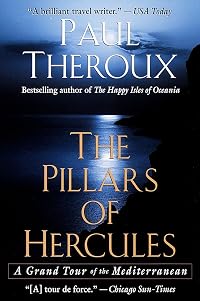
The Pillars of Hercules
by Paul Theroux
On This Page
Description
Travel. Nonfiction. HTML:"DAZZLING."—Time
"[THEROUX'S] WORK IS DISTINGUISHED BY A SPLENDID EYE FOR DETAIL AND THE TELLING GESTURE; a storyteller's sense of pacing and gift for granting closure to the most subtle progression of events; and the graceful use of language. . . . We are delighted, along with Theroux, by the politeness of the Turks, amazed by the mountainous highlands in Syria, touched by the gesture of an Albanian waitress who will not let him pay for his modest meal. . . . The show more Pillars of Hercules [is] engrossing and enlightening from start (a damning account of tourists annoying the apes of Gibraltar) to finish (an utterly captivating visit with Paul Bowles in Tangier, worth the price of the book all by itself)."
—Chicago Tribune
"ENTERTAINING READING . . . WHEN YOU READ THEROUX, YOU'RE TRULY ON A TRIP."
—The Boston Sunday Globe
"HIS PICARESQUE NARRATIVE IS STUDDED WITH SCENES THAT STICK IN THE MIND. He looks at strangers with a novelist's... show less
Tags
Recommendations














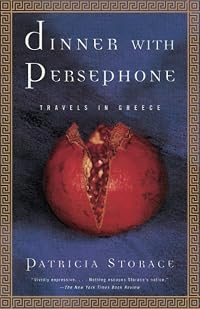

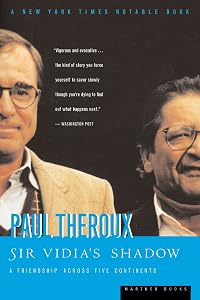
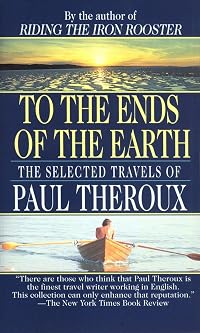
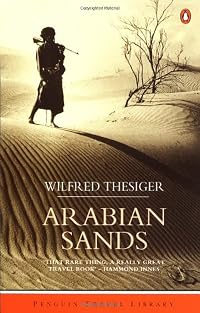



Member Recommendations


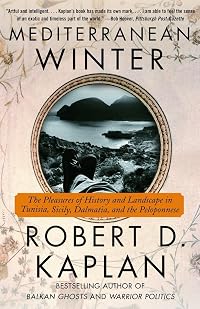
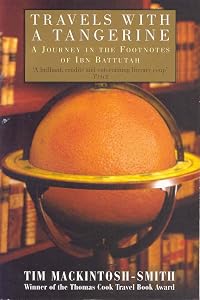
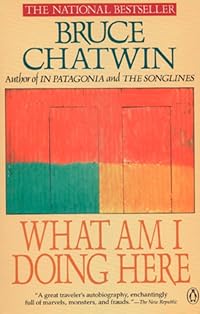
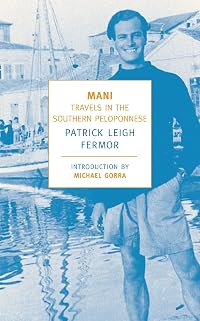
John_Vaughan Similar trips around the 'Med' decades apart - interesting comparisons.
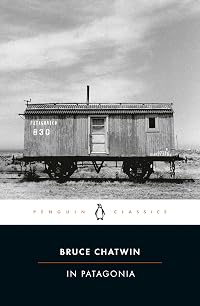
John_Vaughan Lighter but human too.

Member Reviews
Another outstanding book by one of my all time favorite travel writers. Some my call him a grump but what Theroux brings is a critical eye and speaks his mind about what he sees and thinks. This makes for an interesting read especially when he puts himself into challenging situations. You are never bored reading a Theroux book. He is honest and puts himself out there, you learn something about the place but also about the philosophy of travel. He circles the Med clockwise starting at Gibraltar and ending in Morocco and a mystical meeting with the American expat author Paul Bowles. Theroux shows off a bit with a vocabulary--when I find myself reaching for something larger than Webster's Collegiate, more than a few times it gets a little show more thick. Recommend highly. show less
I like Theroux's travel writing because he's more interested in people than in landscapes and monuments. Travel and our experience of the world are mediated through people and their stories, yet so many travel writers seem averse to the kind of real-life chat roulette that can only be had by travelers or barflies. If Theroux is a misanthropist — which I think he is, and usually in an entertaining way — then it's surely a consequence of his having spoken to his fellow man all over the planet and found him, on the whole, a bit of a pain in the ass. This seems to me a defensible attitude, much more so than that of the Baedeker-style traveler (Chatwin for example) who prides himself on an open mind but seldom looks up from his notepad. show more He's a "traveler as an agent of provocation" as he says in his somewhat self-aggrandizing way.
Theroux chose the perfect moment for his lap of the Med. It's 1994, after the Maastricht treaty but before the introduction of the Euro; before smartphones and the Internet made travel easier and solo travel less lonely (and reduced the opportunities to strike up a conversation); the former Yugoslavia is mid-conflagration; Cyprus is still divided; Albania is in the throes of post-Communist anarchy; cheap flights haven't quite supplanted the far more conversation-provoking trains and ferries as the main way for people to get around. More than half the countries he visits are experiencing some form of war, anarchy or dictatorship; Spain and Greece have only relatively recently emerged from the latter state. The more interesting chapters, as you'd expect, are set in these states — Theroux doesn't find much worth saying about the French Riviera. But his writing isn't reliant on chaos or privation, as he demonstrates with an eloquent book-within-the-book, his account of a luxury cruise to Istanbul.
By this point in his career he's well aware of his reputation for egotism and curmudgeonliness, and plays up to it from time to time, like when seeing his books on sale in Barcelona gives the city "an air of sympathy and erudition and [...] made me want to stay a while." But the truth is he's always curious, and whether it's his personal notes on Dalí or his analysis of Spanish pornography or his relish in the demonyms Lesbian, Damascene, Tangerine, he's trying to get at the essence of the people and places he encounters. But it's always the dialogues I look forward to, like the exchange with some young Syrian men in Aleppo (then under the dictatorial rule of Bashar's dad), two of whom tell him they're gay:
Theroux chose the perfect moment for his lap of the Med. It's 1994, after the Maastricht treaty but before the introduction of the Euro; before smartphones and the Internet made travel easier and solo travel less lonely (and reduced the opportunities to strike up a conversation); the former Yugoslavia is mid-conflagration; Cyprus is still divided; Albania is in the throes of post-Communist anarchy; cheap flights haven't quite supplanted the far more conversation-provoking trains and ferries as the main way for people to get around. More than half the countries he visits are experiencing some form of war, anarchy or dictatorship; Spain and Greece have only relatively recently emerged from the latter state. The more interesting chapters, as you'd expect, are set in these states — Theroux doesn't find much worth saying about the French Riviera. But his writing isn't reliant on chaos or privation, as he demonstrates with an eloquent book-within-the-book, his account of a luxury cruise to Istanbul.
By this point in his career he's well aware of his reputation for egotism and curmudgeonliness, and plays up to it from time to time, like when seeing his books on sale in Barcelona gives the city "an air of sympathy and erudition and [...] made me want to stay a while." But the truth is he's always curious, and whether it's his personal notes on Dalí or his analysis of Spanish pornography or his relish in the demonyms Lesbian, Damascene, Tangerine, he's trying to get at the essence of the people and places he encounters. But it's always the dialogues I look forward to, like the exchange with some young Syrian men in Aleppo (then under the dictatorial rule of Bashar's dad), two of whom tell him they're gay:
"But didn't you say you were married?"show less
"Yes. I just found out I am a homosexual one month ago, after five years of married life."
"Isn't that a little inconvenient?" I asked.
"Only for my wife," Akkad said.
I've liked Paul Theroux's travel writing since I was in college, when I read Kingdom by the Sea, his account of traveling around England by foot. I love that he's grumpy, opinionated, straightforward, and difficult. And when he's on, he's really funny. I laughed out loud several times over the course of this book. But damn, it was tough going until he got to the war-torn countries. I'd say the first half of the book, spanning Spain, France, Italy, and the various islands, were some of Theroux's least inspired writing, at least what I've read from him. He seemed dour, the places all began to feel the same, he was forever walking around unremarkable coasts, looking for hotels and dinners. But once he got to Albania, the entire tone show more shifted, and I began to feel Theroux was in his element. When this book was published, the Bosnian conflict was in full swing, so I feel much of his writing here qualifies as war reportage. From there, the work only got stronger. His blunt assessment of Israel was interesting, as were his journeys through Syria, particularly with the hindsight all of us now have of that troubled country. I also got a kick out of his time in North Africa. I think he did, too. He was most alive when he was in these locales. I also liked the sheer weirdness of how Theroux randomly gets on a luxury cruise--which I think he writes about fantastically. He follows this up with two more cruises, only these are far more modest, even weird. I appreciate the unself-conscious nature of much of Theroux's writing here. I just wish he'd cut out half of the countries he visited. It felt as if he were simply going through the motions in order to maintain the idea of the book--or the gimmick, I guess, which was to travel from one Pillar of Hercules to another. show less
I read this after RDK's Adriatic. PT shied away from depth developing history but was still a good read. It started as as Paul's bitchy trip around the Mediterranean. It got interesting once he reached Croatia and the eastern Med. In 1995 the Bosnian War was still on and tourists were new in the former Yugoslavia and Albania and the difficulties brought out the best in PT. His opinions and insights were mostly interesting and his writing not overly florid. He's like an opinionated Pat Conroy.
Travel book is one of my favorite genres but as big as his reputation is, Theroux is not one of my favorite travel writers. In fact, I doubt I will read any more by him. I read his book about Patagonia some years ago and was surprised at how arrogant and negative he was. He didn't like any place he went. How did he get to be such a famous and popular travel writer? This book was no better. Oh, he writes well, but I don't enjoy his arrogance, and what is the point of traveling or reading about someone's travels if the traveler doesn't like any of the places he visits? I think what bothered me the most was his repeated statement that he was not a tourist; he was a traveler. Well, a Mediterranean cruise ship does not a traveler make. It show more makes for a tourist. He rarely stayed in any place for more than a day. That also makes for tourist. He did manage to speak to some interesting people (writers and dignitaries to whom he had some entree) but mostly he talked to taxi drivers. No, I doubt I will be reading any more Theroux. The best parts of the book were the writers and other books he mentioned. I made a note of several of them for future reading. The man may be arrogant and negative, but he is no fool. show less
The Pillars of Hercules is a "Grand Tour of the Mediterranean", an encounter with the most storied sea on the planet. Paul Theroux is well up to the task of bringing a his unique brand of spartan travel to a journey that has been written about since Homer's Odyssey.
Reading the travelogues of Paul Theroux is not just an encounter with exotic geography and customs, it is also an intensely literary experience. Mr. Theroux is a scholar, a linguist and in his uniquely curmodgeonly manner a keen observer of men. He is funny and mindful of his sour temper as he pokes fun at his own style. He makes generalizations as he sneers at the "snap judgments and obnoxious opinions" expressed by Evelyn Waugh in Labels (1930), an account of that writer's show more cruise around the Mediterranean. I found his description of an encounter with another traveler hilarious -
"In life, it is inevitable that you meet someone just like yourself. What a shock that your double is not very nice, and seems selfish and judgmental and frivolous and illogical."
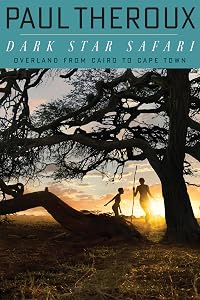
The book begins on a fiesty note - at the Rock of Gibraltar, one of the "Pillars of Hercules" where the author clearly prefers the company of apes to 'tourists'. Tourists he thinks are the worst kinds of humans but he promises early on not to talk about them. Mr. Theroux of course is not a tourist, he is a traveler. The interesting fact is that I agree with his characterization, at least of himself. I found the overall tone less vitriolic than the one employed in Ghost Train to the Eastern Star and Dark Star Safari. There are three cities the author showers considerable praise on - Dubrovnik, Jerusalem and Venice. He is kinder to the Italians but ruthless in his criticism of the Greeks. He relates his frustrating experience with Israel's security and then talks about his meeting with American expat Paul Bowles that borders on the surreal. I've encountered Istanbul twice in Mr. Theroux' works - once in Ghost Train to the Eastern Star and once in Pillars of Hercules - and I can't wait to go visit that grand city. There are encounters with other writers and other, more colorful characters, each contributing to a delightfully readable account.
Mr. Theroux says -
"But then a travel book is a very strange thing, there are few good excuses for writing one--all of them personal..The fairest way of judging travel books is by their truth and their wit"
If he were to judge his work by his own standards, I would say Mr. Theroux would be very proud. Highly recommended. show less
Reading the travelogues of Paul Theroux is not just an encounter with exotic geography and customs, it is also an intensely literary experience. Mr. Theroux is a scholar, a linguist and in his uniquely curmodgeonly manner a keen observer of men. He is funny and mindful of his sour temper as he pokes fun at his own style. He makes generalizations as he sneers at the "snap judgments and obnoxious opinions" expressed by Evelyn Waugh in Labels (1930), an account of that writer's show more cruise around the Mediterranean. I found his description of an encounter with another traveler hilarious -
"In life, it is inevitable that you meet someone just like yourself. What a shock that your double is not very nice, and seems selfish and judgmental and frivolous and illogical."
The book begins on a fiesty note - at the Rock of Gibraltar, one of the "Pillars of Hercules" where the author clearly prefers the company of apes to 'tourists'. Tourists he thinks are the worst kinds of humans but he promises early on not to talk about them. Mr. Theroux of course is not a tourist, he is a traveler. The interesting fact is that I agree with his characterization, at least of himself. I found the overall tone less vitriolic than the one employed in Ghost Train to the Eastern Star and Dark Star Safari. There are three cities the author showers considerable praise on - Dubrovnik, Jerusalem and Venice. He is kinder to the Italians but ruthless in his criticism of the Greeks. He relates his frustrating experience with Israel's security and then talks about his meeting with American expat Paul Bowles that borders on the surreal. I've encountered Istanbul twice in Mr. Theroux' works - once in Ghost Train to the Eastern Star and once in Pillars of Hercules - and I can't wait to go visit that grand city. There are encounters with other writers and other, more colorful characters, each contributing to a delightfully readable account.
Mr. Theroux says -
"But then a travel book is a very strange thing, there are few good excuses for writing one--all of them personal..The fairest way of judging travel books is by their truth and their wit"
If he were to judge his work by his own standards, I would say Mr. Theroux would be very proud. Highly recommended. show less
Oh, to be Paul Theroux - get an idea about where you want to travel and know that a publisher will pay you for whatever you write about your trip. Or something like that. The Pillars of Hercules tells a travel tale about the area on Earth that has probably generated the most travel writing in history - the Mediterranean. That said, Mr. Theroux comes at it from an original angle - the historical monuments and great past of the area that usually dominates writing about the Med, he only mentions in passing. What he is interested in is the people - and not just the famous; he annoys the people around him, asking their opinions about their travels and homes. What results is a fantastic travelogue that encompasses many different travel show more experiences - Theroux goes from a $1,000-a-day cruise (that he didn't pay for) to a cheap (for him) boat load of Turkish holiday goers within a short period of time, and manages to make the Turkish boat sound as interesting as the ritzy cruise ship.
This is not a travel guide. Nor is it an in-depth look at Mediterranean history or culture - there are plenty of other books out there to choose form if that is what you are looking for. In his own words, Theroux describes his travels as: "I had set out to be on the Mediterranean, without a fixed program. I was not writing a book - I was living my life, and had found an agreeable way to do it." I am glad that Theroux decided to share his travels with us, because it makes for an entertaining and interesting read, as well as a view of the area different from most you will find on bookshelves today. show less
This is not a travel guide. Nor is it an in-depth look at Mediterranean history or culture - there are plenty of other books out there to choose form if that is what you are looking for. In his own words, Theroux describes his travels as: "I had set out to be on the Mediterranean, without a fixed program. I was not writing a book - I was living my life, and had found an agreeable way to do it." I am glad that Theroux decided to share his travels with us, because it makes for an entertaining and interesting read, as well as a view of the area different from most you will find on bookshelves today. show less
Members
- Recently Added By
Published Reviews
For along with being an anti-tourist, Mr. Theroux prides himself on being something of the village atheist: religious enthusiasm of any kind fills him with equal-opportunity loathing. And why not? There are enough horrors to be apportioned among the great Mediterranean faiths, and Mr. Theroux, to give him credit, casts a skeptical eye on the murderous accomplishments of the secular powers as well.
added by John_Vaughan
Theroux bestows perhaps his greatest compliment of all to the journey itself: ``I knew I would go back, the way you went back to a museum, to look . . . and think.'' Never has he said that before. As satisfying as a glass of cool wine on a dusty Calabrian afternoon
added by John_Vaughan
Lists

Best of Travel Narratives
142 works; 28 members
Author Information

118+ Works 32,461 Members
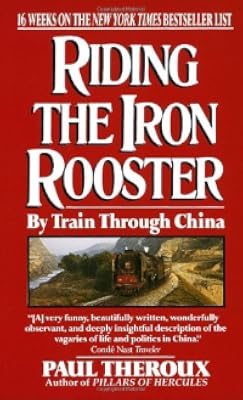
Paul Edward Theroux was born on April 10, 1941 in Medford, Massachusetts and is an acclaimed travel writer. After attending the University of Massachusetts Amherst he joined the Peace Corps and taught in Malawi from 1963 to 1965. He also taught in Uganda at Makerere University and in Singapore at the University of Singapore. Although Theroux has show more also written travel books in general and about various modes of transport, his name is synonymous with the literature of train travel. Theroux's 1975 best-seller, The Great Railway Bazaar, takes the reader through Asia, while his second book about train travel, The Old Patagonian Express (1979), describes his trip from Boston to the tip of South America. His third contribution to the railway travel genre, Riding the Iron Rooster: By Train Through China, won the Thomas Cook Prize for best literary travel book in 1989. His literary output also includes novels, books for children, short stories, articles, and poetry. His novels include Picture Palace (1978), which won the Whitbread Award and The Mosquito Coast (1981), which won the James Tait Black Memorial Prize. Theroux is a fellow of both the British Royal Society of Literature and the Royal Geographic Society. His title Lower River made The New York Times Best Seller List for 2012. Currently his 2015 book, Deep South , is a bestseller. (Bowker Author Biography) Paul Theroux is the distinguished author of numerous award-winning books, including "The Mosquito Coast," "Kowloon Tong," & "Half Moon Street." (Publisher Provided) show less
Some Editions
Series
Belongs to Publisher Series
Common Knowledge
- Canonical title
- The Pillars of Hercules
- Original title
- The Pillars of Hercules: A Grand Tour of the Mediterranean
- Original publication date
- 1995
- Important places
- Albania; Corsica, France; Sicily, Italy; Morocco; Gibraltar; Turkey (show all 7); Montenegro
- First words
- People here in Western civilization say that tourists are no different from apes, but on the Rock of Gibraltar, one of the Pillars of Hercules, I saw both tourists and apes together, and I learned to tell them apart.
- Blurbers*
- Morris, Jan; Raban, Jonathan; Moorhouse, Geoffrey
- Original language*
- English
*Some information comes from Common Knowledge in other languages. Click "Edit" for more information.
Classifications
- Genres
- Travel, Nonfiction, General Nonfiction
- DDC/MDS
- 910.91822 — History & geography Geography & travel modified standard subdivisions of Geography and travel Explorers & Travelers Geography of and travel in areas, regions, places in general Other kinds of terrestrial regions Ocean And Sea Basins Mediterranean region
- LCC
- D973 .T54 — History of Europe, Asia, Africa and Oceania History (General) Europe (General) Description and travel
- BISAC
Statistics
- Members
- 1,455
- Popularity
- 16,206
- Reviews
- 20
- Rating
- (3.79)
- Languages
- 8 — Dutch, English, Finnish, French, German, Greek, Japanese, Spanish
- Media
- Paper, Audiobook, Ebook
- ISBNs
- 24
- ASINs
- 6