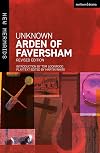
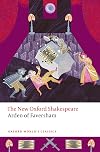
Arden of Faversham
by Anonymous, William Shakespeare (part author)
On This Page
Description
This 'lamentable and true tragedy', as it is announced on its title page, dramatises a domestic murder of the sort that nowadays scandalises and thrills the readers of tabloid newspapers. Although the title advertises 'the great malice and dissimulation of a wicked woman' and her 'unsatiable desire of filthie lust', the unknown playwright with great dramatic skill and psychological insight manages to balance the motivations of all the main characters. Thomas Arden, one of the rapacious show more landlords so reviled in mid-Elizabethan social drama, was murdered at his own house in Faversham, Kent, in 1551. His murderers, it turned out, had been hired by his wife Alice, thrall to Mosby, who hoped to rise socially by marrying a rich widow. As the introduction to this edition shows, sexual and material covetousness is the central theme running through the play, which is commonly rated 'unquestionably the best of all Elizabethan domestic tragedies'. show lessTags
Recommendations

















Member Reviews
An Elizabethan period play that has managed to stay in the repertoire of performed plays right up to recent times, which does not surprise me because of the quality of the writing and the modern feel of the play. It is a play plucked almost in its entirety from Holinshed's chronicles of England Scotland and Ireland published in 1587 which describes in some detail the murder of Arden a gentleman of Faversham by his wife, her lover Mosby and their accomplices. Holinshed apologises for including the event in his history because of it being a private matter or as we might interpret: a domestic affair, but its 'horribleness' and detail would have attracted playwrights as a likely subject for a stage play. The fact that Shakespeare used the show more Chronicles as a source for several of his plays and that he has been linked with Arden of Faversham ever since Edward Jacob's 1770 edition of the play has not hindered its continuing relative popularity.
Assuming it was written for the stage around 1590; although there are no firm dates for it's performance, points to a further development in the history of the theatre; several reasons place it in advance of other plays performed at the time: the absence of any person of heroic qualities, the very few references to classical antiquity, the very close emulation of a reported historical event and the absence, by and large of magical or mystical events. It has the feeling of a modern day crime story. The play does have its problems, much of it stemming from the uneven quality of its writing with the general consensus being that it was one of the many patchwork productions of the time, with various playwrights in collaboration or later adding to the text. This is apparent from the characterisation of Alice Arden who seems to lurch from one moment portraying herself as a faithful wife to the extreme of a murderous women intent on having her lover at any cost. However it cannot be denied there is enough here in the text for a modern actress to make something of this part, although it might have been a stretch for a boy child actor who would have played the part in Elizabethan times. There is also a noticeable unevenness in the seriousness of the portrayal of a tragic affair, for example here is Alice asking the painter (Clarke) if he has prepared a poison to use against her husband Arden and her speech turns into a play on words between life and love:
Alice. Then this, I hope, if all the rest do fail,
Will catch Master Arden,
And make him wise in death that lived a fool.
Why should he thrust his sickle in our corn,
Or what hath he to do with thee, my love,
Or govern me that am to rule myself?
Forsooth, for credit sake, I must leave thee!
Nay, he must leave to live that we may love,
May live, may love; for what is life but love?
And Love shall last as long as life remains,
And life shall end before my love depart.
The history in Holinshed's chronicle tells of how many attempts there were on Ardens life by the cutthroat pair: Black Will and Shakebag and these are all faithfully written into the play, the problem is that Black Will and Shakebag could appear as a pair of bumbling fools rather than evil mercenaries. So much of the play is taken up with their exploits that more reflective thoughts on the situation by the characters are squeezed into a smaller place. They are there, however; I am thinking of Mosby and Alices thoughts on their relationship and Arden on his marriage to Alice: longer speeches that are attractive to those scholars who see the hand of Shakespeare himself. The very names of Black Will and Shakebag lead one to think of Shakespeare however these were the names taken directly from Holinshed's Chronicle, as was the character Greene. Greene, Shakebag, Black Will are names with which one could invent a sort of conspiracy that this play was worked up by playwrights in some unholy collaboration.
In the 21st century the play has been performed a number of times by various theatre groups, notably the Royal Shakespeare company in 2014. They chose to do it in modern dress, which on the face of it would seem to be a strange decision, because some of the charm of the play is the feeling of a portrayal of life in a prosperous community, not far from London in the Elizabethan era.
A mainly plot driven play that certainly tells a good story with some interesting characters that moves fast enough to be entertaining and which does have its black moments. I enjoyed reading it, but might be more circumspect about seeing a performance of the play 4 stars. show less
Assuming it was written for the stage around 1590; although there are no firm dates for it's performance, points to a further development in the history of the theatre; several reasons place it in advance of other plays performed at the time: the absence of any person of heroic qualities, the very few references to classical antiquity, the very close emulation of a reported historical event and the absence, by and large of magical or mystical events. It has the feeling of a modern day crime story. The play does have its problems, much of it stemming from the uneven quality of its writing with the general consensus being that it was one of the many patchwork productions of the time, with various playwrights in collaboration or later adding to the text. This is apparent from the characterisation of Alice Arden who seems to lurch from one moment portraying herself as a faithful wife to the extreme of a murderous women intent on having her lover at any cost. However it cannot be denied there is enough here in the text for a modern actress to make something of this part, although it might have been a stretch for a boy child actor who would have played the part in Elizabethan times. There is also a noticeable unevenness in the seriousness of the portrayal of a tragic affair, for example here is Alice asking the painter (Clarke) if he has prepared a poison to use against her husband Arden and her speech turns into a play on words between life and love:
Alice. Then this, I hope, if all the rest do fail,
Will catch Master Arden,
And make him wise in death that lived a fool.
Why should he thrust his sickle in our corn,
Or what hath he to do with thee, my love,
Or govern me that am to rule myself?
Forsooth, for credit sake, I must leave thee!
Nay, he must leave to live that we may love,
May live, may love; for what is life but love?
And Love shall last as long as life remains,
And life shall end before my love depart.
The history in Holinshed's chronicle tells of how many attempts there were on Ardens life by the cutthroat pair: Black Will and Shakebag and these are all faithfully written into the play, the problem is that Black Will and Shakebag could appear as a pair of bumbling fools rather than evil mercenaries. So much of the play is taken up with their exploits that more reflective thoughts on the situation by the characters are squeezed into a smaller place. They are there, however; I am thinking of Mosby and Alices thoughts on their relationship and Arden on his marriage to Alice: longer speeches that are attractive to those scholars who see the hand of Shakespeare himself. The very names of Black Will and Shakebag lead one to think of Shakespeare however these were the names taken directly from Holinshed's Chronicle, as was the character Greene. Greene, Shakebag, Black Will are names with which one could invent a sort of conspiracy that this play was worked up by playwrights in some unholy collaboration.
In the 21st century the play has been performed a number of times by various theatre groups, notably the Royal Shakespeare company in 2014. They chose to do it in modern dress, which on the face of it would seem to be a strange decision, because some of the charm of the play is the feeling of a portrayal of life in a prosperous community, not far from London in the Elizabethan era.
A mainly plot driven play that certainly tells a good story with some interesting characters that moves fast enough to be entertaining and which does have its black moments. I enjoyed reading it, but might be more circumspect about seeing a performance of the play 4 stars. show less
Would have loved to see a boy play Alice during the Elizabethan times.
This revised edition of Arden of Faversham contains a completely re-written Introduction that brings the text up to date with the latest performance history, criticism and research and fresh insight into the context in which the play was written.
Ratings
Members
- Recently Added By
Lists

Best Early Modern Plays Not By Shakespeare
78 works; 8 members

My Play Collection
769 works; 3 members

Next Plays / 2025
352 works; 1 member
Author Information
1 Work 161 Members

William Shakespeare, 1564 - 1616 Although there are many myths and mysteries surrounding William Shakespeare, a great deal is actually known about his life. He was born in Stratford-Upon-Avon, son of John Shakespeare, a prosperous merchant and local politician and Mary Arden, who had the wealth to send their oldest son to Stratford Grammar School. show more At 18, Shakespeare married Anne Hathaway, the 27-year-old daughter of a local farmer, and they had their first daughter six months later. He probably developed an interest in theatre by watching plays performed by traveling players in Stratford while still in his youth. Some time before 1592, he left his family to take up residence in London, where he began acting and writing plays and poetry. By 1594 Shakespeare had become a member and part owner of an acting company called The Lord Chamberlain's Men, where he soon became the company's principal playwright. His plays enjoyed great popularity and high critical acclaim in the newly built Globe Theatre. It was through his popularity that the troupe gained the attention of the new king, James I, who appointed them the King's Players in 1603. Before retiring to Stratford in 1613, after the Globe burned down, he wrote more than three dozen plays (that we are sure of) and more than 150 sonnets. He was celebrated by Ben Jonson, one of the leading playwrights of the day, as a writer who would be "not for an age, but for all time," a prediction that has proved to be true. Today, Shakespeare towers over all other English writers and has few rivals in any language. His genius and creativity continue to astound scholars, and his plays continue to delight audiences. Many have served as the basis for operas, ballets, musical compositions, and films. While Jonson and other writers labored over their plays, Shakespeare seems to have had the ability to turn out work of exceptionally high caliber at an amazing speed. At the height of his career, he wrote an average of two plays a year as well as dozens of poems, songs, and possibly even verses for tombstones and heraldic shields, all while he continued to act in the plays performed by the Lord Chamberlain's Men. This staggering output is even more impressive when one considers its variety. Except for the English history plays, he never wrote the same kind of play twice. He seems to have had a good deal of fun in trying his hand at every kind of play. Shakespeare wrote 154 sonnets, all published on 1609, most of which were dedicated to his patron Henry Wriothsley, The Earl of Southhampton. He also wrote 13 comedies, 13 histories, 6 tragedies, and 4 tragecomedies. He died at Stratford-upon-Avon April 23, 1616, and was buried two days later on the grounds of Holy Trinity Church in Stratford. His cause of death was unknown, but it is surmised that he knew he was dying. (Bowker Author Biography) show less
Some Editions
Series
Belongs to Publisher Series
Work Relationships
Is contained in
Has as a student's study guide
Common Knowledge
- Canonical title
- Arden of Faversham
- Original title
- The Lamentable and True Tragedy of M. Arden of Feversham in Kent
- Alternate titles
- Arden of Feversham
- Original publication date
- 1592
- Disambiguation notice
- Although it has long been suggested on impressionistic grounds that Shakespeare might have had something to do with Arden, recent stylistic and linguistic studies by Hugh Craig, MacDonald P. Jackson and others have demonstrat... (show all)ed to a high degree of probability that Shakespeare is responsible not for the entire play but for Act III (or in through-scene terms, scenes 4 to 9).
Classifications
Statistics
- Members
- 164
- Popularity
- 200,458
- Reviews
- 3
- Rating
- (3.77)
- Languages
- English, French
- Media
- Paper, Ebook
- ISBNs
- 11
- ASINs
- 2