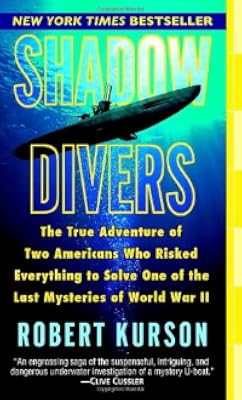
Shadow Divers: The True Adventure of Two Americans Who Risked Everything to Solve One of the Last Mysteries of World War II
by Robert Kurson
On This Page
Description
In 1991, acting on a tip from a local fisherman, two scuba divers discovered a sunken German U-boat-complete with its crew of 60 men-not too far off the New Jersey coast. The divers, realizing the momentousness of their discovery, began probing the mystery. Over the next six years, they became expert and well-traveled researchers, taught themselves German, hunted for clues in Germany, and constructed theories corrective of the history books, all in an effort to identify this sunken U-boat show more and its crew. During that time, three of their colleagues died exploring the wreck, including a father and son team. In 1997, when it all seemed in vain, the two divers came up with a final plan, so dangerous that the book ends with this last dive. show lessTags
Recommendations










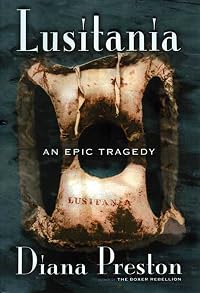




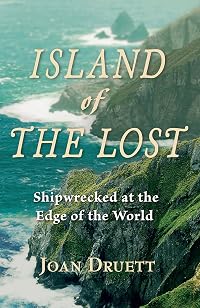

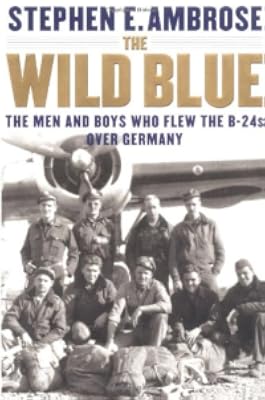


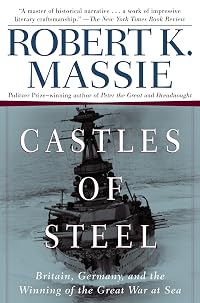

Member Recommendations
Stbalbach About epic cave diving expeditions.
Member Reviews
A group of deep sea wreck divers take a chance and go out to coordinates given to Captain Bill Nagle to see if they can discover an unknown shipwreck off the coast of New Jersey. What they find is a U-boat, at a depth of 230 feet, where only the best deep sea divers can get to, and even that at very high risk. Kurson recounts the story of the U-boat's discovery and the quest of the divers - particularly John Chatterton and Richie Kohler - to uncover the identity of the U-boat that, according to known history, shouldn't be anywhere near where it is.
Kurson's debut is compelling narrative nonfiction. He balances the story of the U-boat's discovery and the dives with background information about the divers, details about deep sea diving and show more its dangers, and the research quests that Chatterton and Kohler go on. The U-boat discovery happened in 1991, so their research meant writing letters and going to the naval and national archives to look at original accounts of World War 2. Chatterton and Kohler also came from different schools of diving - Kohler enjoyed getting artifacts from wrecks, and to Chatterton that wasn't the main point - and started out as enemies, but over the course of the book you see that shift to mutual respect that eventually deepened into true friendship. I personally would have liked to know more about some of the other divers, such as the one female diver who came with them and barely makes an appearance other than when another diver jokingly asks her to get coffee. But I also can't fault Kurson for focusing on what interested him, and crafting a detailed, thoroughly enjoyable story from it. show less
Kurson's debut is compelling narrative nonfiction. He balances the story of the U-boat's discovery and the dives with background information about the divers, details about deep sea diving and show more its dangers, and the research quests that Chatterton and Kohler go on. The U-boat discovery happened in 1991, so their research meant writing letters and going to the naval and national archives to look at original accounts of World War 2. Chatterton and Kohler also came from different schools of diving - Kohler enjoyed getting artifacts from wrecks, and to Chatterton that wasn't the main point - and started out as enemies, but over the course of the book you see that shift to mutual respect that eventually deepened into true friendship. I personally would have liked to know more about some of the other divers, such as the one female diver who came with them and barely makes an appearance other than when another diver jokingly asks her to get coffee. But I also can't fault Kurson for focusing on what interested him, and crafting a detailed, thoroughly enjoyable story from it. show less
A book to tear through, Robert Kurson's Shadow Divers is an excellent example of narrative non-fiction. It tells the story of the discovery of an unidentified U-boat off the New Jersey coast in the 1990s, a deep and dangerous wreck that comes to claim the lives of some of the divers exploring it and challenging some of the others to their outer limits. There's danger, adventure, mystery, tragedy and a human core; it's one of those true stories that just hits the sweet spot, as compelling as any fictional enterprise.
If the story were not enough, it's also helped by Kurson's unobstructive telling of it. The author organises his mass of information well, giving us a keen appreciation of the dangers of deep-sea wreck diving and teasing out show more the mystery of the U-boat's identity until the end without once frustrating us about doing so. There are one or two minor flaws in the book if you were to accept it as sober history: America apparently won the U-boat war by "dig[ging] deep into its instinct for freedom" (pg. 237), with scarcely a mention of the overwhelming contribution of the British, while Kurson is excessively keen to stress that the German U-boat crew and their families were not Nazis and hated Hitler - probably to secure their families' support for the research of the book, with Kurson even repeating uncritically their tall tales of publicly dissenting against the regime. But Kurson knows his audience and you turn the pages happily, so engrossed are you in reading it. It's a fantastic true story well told; a home run for any avid reader. show less
If the story were not enough, it's also helped by Kurson's unobstructive telling of it. The author organises his mass of information well, giving us a keen appreciation of the dangers of deep-sea wreck diving and teasing out show more the mystery of the U-boat's identity until the end without once frustrating us about doing so. There are one or two minor flaws in the book if you were to accept it as sober history: America apparently won the U-boat war by "dig[ging] deep into its instinct for freedom" (pg. 237), with scarcely a mention of the overwhelming contribution of the British, while Kurson is excessively keen to stress that the German U-boat crew and their families were not Nazis and hated Hitler - probably to secure their families' support for the research of the book, with Kurson even repeating uncritically their tall tales of publicly dissenting against the regime. But Kurson knows his audience and you turn the pages happily, so engrossed are you in reading it. It's a fantastic true story well told; a home run for any avid reader. show less
Imagine you are deep sea diving to a shipwreck over 200 feet below the surface, swimming inside, disturbing the surrounding silt such that visibility becomes nil, and having to find your way back out. And, oh, by the way, the ship is angled or sideways or upside down, with wires dangling down and debris sticking out. Your body is building up narcosis so your brain and extremities are functioning much slower than normal. This is the stuff of nightmares to me, but it is what these divers faced in trying to identify the sunken U-boat they had discovered. This book contains plenty of adventure, exploration, historical research, and mystery. I found the first half of this book fascinating. I think it is difficult to make historical research show more particularly interesting, and the second half slowed down considerably. Other than this minor issue, I was riveted. Recommended to those interested in non-fiction, WWII, slowly-building mysteries, exploration, maritime history and deep sea diving. Contains a great deal of crude language which may be offensive to some. show less
From the author: "While researching the dangers of deep-shipwreck diving, I was struck by a remark that the divers make about depth. The mystery . . . lay in such deep, dark waters that occasionally they could do little more than dive at shadows. It occurred to me then that there were shadows cast throughout the story - by the fallen crewmen, by World War II, by the seeming infallibility of written history, by questions the divers came to ask about themselves as men. For six years, Chatterton and Kohler were shadow divers. For six years, they went on a remarkable journey. I wrote this book to take you there with them."
In Shadow Divers, Robert Kurson does a masterful job of taking us there with them. And what a story it is. A late night show more meeting in a bar leads to the sharing of coordinates for a mysterious ocean location off the New Jersey shore where fish and other sea life congregate - often the sign of a wreck. But whatever it is, it's very deep, maybe too deep, in the water.
Wreck diving is a dangerous sport - people die attempting it. There are only a few hundred divers in the U.S. who try it, and only a few, the top elite, can handle deep dives beyond 200 feet. One big reason why is narcosis. Divers breathe a mixture of oxygen and nitrogen (and, in more recent times, helium), and the nitrogen building up in the blood under increasing pressure from the dive's depth diminishes the senses, narrowing vision, impairing reasoning, and sometimes creating hallucinations. It is necessary to stay calm, even while impaired like this, and not run through your oxygen with anxious breathing , and to make good, life-saving decisions, sometimes in a wreck full of potential traps, and always in a huge ocean that will be your death if you lose your way back to your boat. Only a few can begin to do what is necessary, and even some of those fail in the end.
At one point, one of the wreck divers sees crabs emerging from the ocean floor and talking to him, urging him to follow them away from the wreck and away from the life-saving line back up to the boat. "He started talking to himself. 'I gotta get out of here', he said. 'Crabs are talking to me. When a crab talks it's time to go home.'"
The two central characters in this story, Chatterton and Kohler, are fascinating. Both were bright men who were fish out of water (!) in school, searching for something to give their life meaning. Chatterton became a heroic medic in Viet Nam. Kohler kicked around, but later found his keen interest and self-taught education in his German ancestry and World War II to be an essential component of solving the book's mystery. Chatterton is a deep and methodical thinker, even developing a carefully rendered set of beliefs in Viet Nam. That list of beliefs begins - "If an undertaking was easy, someone else would already have done it." -"If you follow in another's footsteps, you miss the problems really worth solving." - "Excellence is born of preparation, dedication, focus and tenacity; compromise on any of these, and you become average." You can see the type of person we're talking about. He maximizes success and minimizes danger by studying wrecks first, including videotaping them at the outset to help planning, and yet in Viet Nam and in wreck diving, he takes chances that others would cower at.
At first he is skeptical about Kohler, who initially had allied himself with a motorcycle gang-type group of divers. But Kohler's excellence in diving and passion for solving the wreck's mysteries deepens their relationship over time. They go to great lengths, not only in dangerous, tension-filled diving that has the reader on pins and needles, but in researching around the world what exactly happened to cause what they found. There is an emotional connection with the victims, and they learn that written history is sometimes very wrong. As a result, while remaining "a voracious reader of history", Kohler says, "In the back of my mind I {now} question a little bit of everything. To me, that makes history even more interesting." It does for readers of this book, too.
The author's afterword in this book is one of the most gracious I've ever read, and even the "Reader's Guide" in my edition features a discussion by Kurson, Chatterton and Kohler that demonstrates how close and honest their relationship became. The result is an unlikely page turner, full of treasure of a different kind for the reader. show less
In Shadow Divers, Robert Kurson does a masterful job of taking us there with them. And what a story it is. A late night show more meeting in a bar leads to the sharing of coordinates for a mysterious ocean location off the New Jersey shore where fish and other sea life congregate - often the sign of a wreck. But whatever it is, it's very deep, maybe too deep, in the water.
Wreck diving is a dangerous sport - people die attempting it. There are only a few hundred divers in the U.S. who try it, and only a few, the top elite, can handle deep dives beyond 200 feet. One big reason why is narcosis. Divers breathe a mixture of oxygen and nitrogen (and, in more recent times, helium), and the nitrogen building up in the blood under increasing pressure from the dive's depth diminishes the senses, narrowing vision, impairing reasoning, and sometimes creating hallucinations. It is necessary to stay calm, even while impaired like this, and not run through your oxygen with anxious breathing , and to make good, life-saving decisions, sometimes in a wreck full of potential traps, and always in a huge ocean that will be your death if you lose your way back to your boat. Only a few can begin to do what is necessary, and even some of those fail in the end.
At one point, one of the wreck divers sees crabs emerging from the ocean floor and talking to him, urging him to follow them away from the wreck and away from the life-saving line back up to the boat. "He started talking to himself. 'I gotta get out of here', he said. 'Crabs are talking to me. When a crab talks it's time to go home.'"
The two central characters in this story, Chatterton and Kohler, are fascinating. Both were bright men who were fish out of water (!) in school, searching for something to give their life meaning. Chatterton became a heroic medic in Viet Nam. Kohler kicked around, but later found his keen interest and self-taught education in his German ancestry and World War II to be an essential component of solving the book's mystery. Chatterton is a deep and methodical thinker, even developing a carefully rendered set of beliefs in Viet Nam. That list of beliefs begins - "If an undertaking was easy, someone else would already have done it." -"If you follow in another's footsteps, you miss the problems really worth solving." - "Excellence is born of preparation, dedication, focus and tenacity; compromise on any of these, and you become average." You can see the type of person we're talking about. He maximizes success and minimizes danger by studying wrecks first, including videotaping them at the outset to help planning, and yet in Viet Nam and in wreck diving, he takes chances that others would cower at.
At first he is skeptical about Kohler, who initially had allied himself with a motorcycle gang-type group of divers. But Kohler's excellence in diving and passion for solving the wreck's mysteries deepens their relationship over time. They go to great lengths, not only in dangerous, tension-filled diving that has the reader on pins and needles, but in researching around the world what exactly happened to cause what they found. There is an emotional connection with the victims, and they learn that written history is sometimes very wrong. As a result, while remaining "a voracious reader of history", Kohler says, "In the back of my mind I {now} question a little bit of everything. To me, that makes history even more interesting." It does for readers of this book, too.
The author's afterword in this book is one of the most gracious I've ever read, and even the "Reader's Guide" in my edition features a discussion by Kurson, Chatterton and Kohler that demonstrates how close and honest their relationship became. The result is an unlikely page turner, full of treasure of a different kind for the reader. show less
My husband and I got certified to scuba dive this past spring and I absolutely love it but I have to say that I am incredibly grateful that I didn't read this book before we took our classes. Holy toledo! The bends are a magnitude of 100 times worse than I ever imagined. But being underwater is phenomenal. I don't know that I'd ever want to do deep wreck diving; I'm probably more than content to always be one of the thousands of recreational divers out there. I will never turn down the chance to read about the men and women who dive on the edge of the knife blade though, risking their very lives, especially if the account is as gripping as Kurson's non-fiction account of the discovery and eventual identification of the mystery German show more U-boat laying in 230 feet of water off the coast of New Jersey, where no U-boat should have been according to official war accounts.
Kurson follows the two divers who were most instrumental in the identification of the U-boat, two men who initially disliked each other but came to respect the driving force behind their different desires to dive the wreck, put a name to it, and to honor the sailors who were forever trapped in their watery grave. Kurson weaves dramatic tension throughout his narrative, even ratcheting it up as he presents the terrible tragedies of first Steve Feldman's death and then Chris and Chrissy Rouse's. He never minimizes the risks taken by all of the divers although his main focus remains on Vietnam vet John Chatterton, who ultimately pulled the spare parts box that would identify the wreck and Richie Kohler, who felt such a responsibility to the long dead sailors that he traveled to Germany to meet with their families.
Kurson does tend to neglect many of the other divers, especially those on the initial dives, mentioning their names briefly but without offering any suggestion of their impressions or contributions. However, his laser focus on Chatterton and Kohler makes for a tight and thrilling narrative that will keep readers, even those with zero knowledge of diving, on the edge of their seats. His descriptions of the dangers inherent in deep water diving, especially in the 90's, before nitrox mixes gained ascendency for such dives, are absolutely heart pounding. And he is spot on when detailing the swirling mess of sediment that contributes to zero visibility. Kurson does not shy away from graphic descriptions of the physical effects of the bends or from the vision of what a drowned body would look like after 5 months in the water and these descriptions will induce horror indeed but they reinforce the dangers and their potential results to which these wreck divers willingly and repeatedly expose themselves.
The book is not all diving though; it is also an historical mystery and Kurson takes the reader along as, much to the dismay of Chatterton and Kohler, each credible theory about the identity of the U-boat falls apart. As the wreck continued to withhold its secrets, the divers had to do archival research and in the process discovered that history as it is written is not always accurate and true. And as they waded through both the factual and the murky, they learn quite a bit about U-boats themselves. At the end of the narrative, as the quest for the boat's identity is coming to its conclusion, Kurson also draws a very credible picture of life on this particular U-boat as well as the lives of the lost crew members.
The writing is polished and the story exciting. I gulped the book down in a little over a day, pulled ever onward by the mystery and the persistence of these men. Dramatic and intense, this was a cracking good read. I just hope the image of what happens to your blood in extreme cases of the bends fades from my head before I have the chance to put a regulator in my mouth again. show less
Kurson follows the two divers who were most instrumental in the identification of the U-boat, two men who initially disliked each other but came to respect the driving force behind their different desires to dive the wreck, put a name to it, and to honor the sailors who were forever trapped in their watery grave. Kurson weaves dramatic tension throughout his narrative, even ratcheting it up as he presents the terrible tragedies of first Steve Feldman's death and then Chris and Chrissy Rouse's. He never minimizes the risks taken by all of the divers although his main focus remains on Vietnam vet John Chatterton, who ultimately pulled the spare parts box that would identify the wreck and Richie Kohler, who felt such a responsibility to the long dead sailors that he traveled to Germany to meet with their families.
Kurson does tend to neglect many of the other divers, especially those on the initial dives, mentioning their names briefly but without offering any suggestion of their impressions or contributions. However, his laser focus on Chatterton and Kohler makes for a tight and thrilling narrative that will keep readers, even those with zero knowledge of diving, on the edge of their seats. His descriptions of the dangers inherent in deep water diving, especially in the 90's, before nitrox mixes gained ascendency for such dives, are absolutely heart pounding. And he is spot on when detailing the swirling mess of sediment that contributes to zero visibility. Kurson does not shy away from graphic descriptions of the physical effects of the bends or from the vision of what a drowned body would look like after 5 months in the water and these descriptions will induce horror indeed but they reinforce the dangers and their potential results to which these wreck divers willingly and repeatedly expose themselves.
The book is not all diving though; it is also an historical mystery and Kurson takes the reader along as, much to the dismay of Chatterton and Kohler, each credible theory about the identity of the U-boat falls apart. As the wreck continued to withhold its secrets, the divers had to do archival research and in the process discovered that history as it is written is not always accurate and true. And as they waded through both the factual and the murky, they learn quite a bit about U-boats themselves. At the end of the narrative, as the quest for the boat's identity is coming to its conclusion, Kurson also draws a very credible picture of life on this particular U-boat as well as the lives of the lost crew members.
The writing is polished and the story exciting. I gulped the book down in a little over a day, pulled ever onward by the mystery and the persistence of these men. Dramatic and intense, this was a cracking good read. I just hope the image of what happens to your blood in extreme cases of the bends fades from my head before I have the chance to put a regulator in my mouth again. show less
When I was around ten years old my dad handed me this book. Looking back on it, I'm not too sure why he did so.
This is what I remember: I heard the word "motherfucker" for the first time, and reflected that it's one hell of a curse word. I became engrossed in the truth and real journalism in this novel--it made me realize the mysteries of the world and the great depths of the sea. Mostly, though, I remember loving the men and their devotion to this wreck. I remember them perservering through it all to try to uncover the truth about something they had fallen in love with, in a way.
I guess he had wanted to entertain me while I was stuck with him at his office the whole day. Maybe he wanted to teach me a lesson about dedication and show more freindship. Maybe he wanted to teach me about my Jewish heritage and submarines and warfare and such, somehow.
I remember loving this book and not putting it down until I was finished. Mostly, though, I just remember asking my dad what a motherfucker was, hah! show less
This is what I remember: I heard the word "motherfucker" for the first time, and reflected that it's one hell of a curse word. I became engrossed in the truth and real journalism in this novel--it made me realize the mysteries of the world and the great depths of the sea. Mostly, though, I remember loving the men and their devotion to this wreck. I remember them perservering through it all to try to uncover the truth about something they had fallen in love with, in a way.
I guess he had wanted to entertain me while I was stuck with him at his office the whole day. Maybe he wanted to teach me a lesson about dedication and show more freindship. Maybe he wanted to teach me about my Jewish heritage and submarines and warfare and such, somehow.
I remember loving this book and not putting it down until I was finished. Mostly, though, I just remember asking my dad what a motherfucker was, hah! show less
In 1991, a small group of recreational wreck divers found an unknown German U-Boat off the coast of New Jersey. It had never been found, never been explored, and the quest of its discoverers quickly changed from recreation to investigation, and a quickly developing sense of fellowship with the crew, whose bones lay scattered thickly in piles of silt. How the divers grew from thrill-seekers to heroes is the central theme of this book, disguised in a story of diving at extreme depths amidst near-zero visibility and the ever-present possibility of vivid and terrifying death.
Although superficially a simple adventure tale of man against nature, the ethical and moral issues of treasure-hunting wreck sites are not skirted, and the character show more studies are compelling. One man drinks himself to death. Three die exploring the wreck. The two who become the central figures in the story change in surprising ways, and when the boat is identified and the identities of the German crew are uncovered, their stories are revealed with great poignancy and a satisfying resolution. show less
Although superficially a simple adventure tale of man against nature, the ethical and moral issues of treasure-hunting wreck sites are not skirted, and the character show more studies are compelling. One man drinks himself to death. Three die exploring the wreck. The two who become the central figures in the story change in surprising ways, and when the boat is identified and the identities of the German crew are uncovered, their stories are revealed with great poignancy and a satisfying resolution. show less
Members
- Recently Added By
Lists

Top Five Books of 2020
982 works; 348 members

Research/Inquiry - mentor texts
43 works; 2 members

Best Maritime Non Fiction
11 works; 4 members

Dim Sum Lunch Reading
43 works; 2 members

Ryan Holiday's Books To Base Your Life On
97 works; 2 members

Books read in 2014
66 works; 1 member
Author Information

9+ Works 4,262 Members
Robert Kurson received a bachelor's degree in philosophy from the University of Wisconsin and a law degree from Harvard Law School. He practiced real estate law before becoming a writer. In 2000, Esquire published his first magazine story My Favorite Teacher, which became a finalist for a National Magazine Award. He won a National Magazine Award show more in 2006 for a profile in Esquire, which he later turned into a book. His stories have also appeared in Rolling Stone and The New York Times Magazine. He has written several books including Crashing Through, Shadow Divers, and Pirate Hunters: Treasure, Obsession, and the Search for a Legendary Pirate Ship. (Bowker Author Biography) show less
Awards and Honors
Awards
Distinctions
Work Relationships
Common Knowledge
- Original title
- Shadow Divers
- Original publication date
- 2004
- People/Characters
- John Chatterton; Richie Koller
- Important places
- Atlantic Ocean
- Important events
- World War II (1939 | 1945); Battle of the Atlantic (1939 | 1945)
- Epigraph
- Life's splendor forever lies in wait about each one of us
in all its fullness, but veiled from view, deep down, invisible,
far off. It is there, though, not hostile, not reluctant,
not deaf. If you summon it ... (show all)by the right word, by its right
name, it will come.
- Franz Kafka, Diaries - Dedication
- FOR AMY,
the answer to my life's search
FOR NATE,
already a seeker - First words
- Bill Nagle's life changed the day a fisherman sat beside him in a ramshackle bar and told him about a mystery he had found lying at the bottom of the Atlantic Ocean.
- Original language
- English
Classifications
- Genres
- General Nonfiction, History, Nonfiction
- DDC/MDS
- 940.5451 — History & geography History of Europe History of Europe 1918- Military history of World War II Naval operations
- LCC
- VA515 .U158 .K87 — Naval Science Navies: Organization, distribution, naval situation Navies: Organization, distribution, naval situation Other regions or countries
- BISAC
Statistics
- Members
- 2,485
- Popularity
- 7,814
- Reviews
- 81
- Rating
- (4.21)
- Languages
- 8 — Dutch, English, German, Indonesian, Italian, Polish, Spanish, Swedish
- Media
- Paper, Audiobook, Ebook
- ISBNs
- 34
- ASINs
- 16