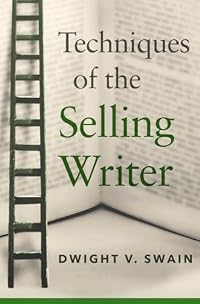
Techniques of the Selling Writer
by Dwight V. Swain
On This Page
Description
Techniques of the Selling Writer provides solid instruction for people who want to write and sell fiction, not just to talk and study about it. It gives the background, insights, and specific procedures needed by all beginning writers. Here one can learn how to group words into copy that moves, movement into scenes, and scenes into stories; how to develop characters, how to revise and polish, and finally, how to sell the product. No one can teach talent, but the practical skills of the show more professional writer's craft can certainly be taught. The correct and imaginative use of these kills can shorten any beginner's apprenticeship by years. This is the book for writers who want to turn rejection slips into cashable checks. show lessTags
Recommendations




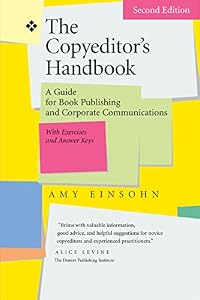
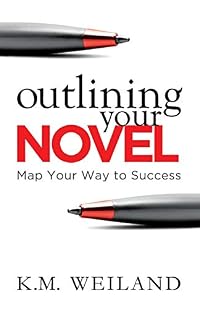
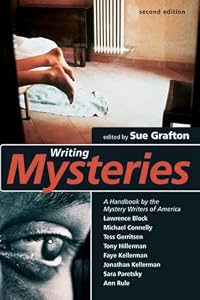
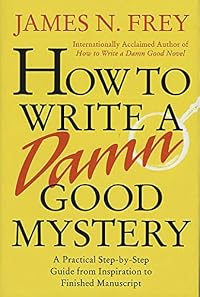

Member Reviews
This is definitely going into my top 3 books about writing. I doubled back and re-read passages, not just because I was tired and distracted, but also because I could instantly see the implications for various stories I've written and/or am working on. I plan to go back and take notes on most of the book, because there's so much in here that I feel I, personally, need to absorb. It hit all my weak points as a writer, and the author's beliefs on why writers write, and how to do your own best work pretty much coincide with my own thoughts on the matter... which I guess makes me almost 50 years out of date!
The book was published in 1965, which makes for a staggering amount of miscellany that's out of date, from the author's casual sexism show more to "a scientist says that a machine to play unbeatable chess would have to be 'slightly larger than the universe.'" Uh. Yeah. He had quaint little complaints about distraction in the pre-internet world. Those things aside, I think this book has the potential to do more for my writing than any other how-to-write book I've read, but it wouldn't be right for everyone. show less
The book was published in 1965, which makes for a staggering amount of miscellany that's out of date, from the author's casual sexism show more to "a scientist says that a machine to play unbeatable chess would have to be 'slightly larger than the universe.'" Uh. Yeah. He had quaint little complaints about distraction in the pre-internet world. Those things aside, I think this book has the potential to do more for my writing than any other how-to-write book I've read, but it wouldn't be right for everyone. show less
Although Dwight V. Swain's Techniques of the Selling Writer is older than I am (which is pretty darn old), it stands the test of time and remains a valuable read for writers, especially beginners and those still striving to perfect their craft. So, you may be asking, why bother reviewing a 49-year old book? Fair question. It's one of the most cited and referenced books on writing I've encountered, and after reading it, I can understand why. If you haven't heard of it, or given it a try, I'll attempt to convince you.
Techniques of the Selling Writer focuses on the premise of understanding your reader’s motivation for reading. With that goal in mind, the book then provides instructions on how to successfully assemble your story to give show more your readers a powerful emotional experience. Dwight V. Swain's book can be thought of as a builder's manual for crafting a satisfying and rewarding story.
Possibly the most well-known concept Swain presents in this book is the Motivation-Reaction Unit (MRU). The core building block of storytelling, MRUs are comprised of something that your point-of-view (POV) character experiences (sees, hears, thinks, or even tastes or smells), which motivates him/her to react to. At its basic level, a story consists of a character experiencing life (and its inevitable conflict) and reacting to it, over and over again. Techniques of the Selling Writer explains MRUs in fine detail and provides a plethora of examples. Swain then shows you how to take MRUs and use them to build scenes and sequels using structure and simple patterns, which in turn comprise chapters, and, ultimately, your novel.
Swain's scene pattern consists of Goal-Conflict-Disaster combinations, followed by a corresponding sequel, which is comprised of a Reaction-Dilemma-Decision trio. If this process seems formulaic and too structured for your taste, understand there is nearly an infinite amount of flexibility in how you can apply and interpret these suggestions. They are guidelines to help you build your story without gaps that leave your reader confused.
For me, Techniques of the Selling Writer was not a quick read, as the concepts and multitude of examples required time to digest, and I found myself reading much slower than I do with a fiction novel, for fear of skimming through something important.
And, as nothing is perfect, I found a few issues that could be potentially off-putting. I think the book offers more examples than most people probably need. I felt like I understood Swain's points after reading about half of the provided examples. In addition, as can be expected with a book published in 1965, some portions are outdated, based on today's technology, markets, and culture. I would recommend focusing on the storytelling advice and not worrying about the dated content (it comprises only a small part of the book). show less
Techniques of the Selling Writer focuses on the premise of understanding your reader’s motivation for reading. With that goal in mind, the book then provides instructions on how to successfully assemble your story to give show more your readers a powerful emotional experience. Dwight V. Swain's book can be thought of as a builder's manual for crafting a satisfying and rewarding story.
Possibly the most well-known concept Swain presents in this book is the Motivation-Reaction Unit (MRU). The core building block of storytelling, MRUs are comprised of something that your point-of-view (POV) character experiences (sees, hears, thinks, or even tastes or smells), which motivates him/her to react to. At its basic level, a story consists of a character experiencing life (and its inevitable conflict) and reacting to it, over and over again. Techniques of the Selling Writer explains MRUs in fine detail and provides a plethora of examples. Swain then shows you how to take MRUs and use them to build scenes and sequels using structure and simple patterns, which in turn comprise chapters, and, ultimately, your novel.
Swain's scene pattern consists of Goal-Conflict-Disaster combinations, followed by a corresponding sequel, which is comprised of a Reaction-Dilemma-Decision trio. If this process seems formulaic and too structured for your taste, understand there is nearly an infinite amount of flexibility in how you can apply and interpret these suggestions. They are guidelines to help you build your story without gaps that leave your reader confused.
For me, Techniques of the Selling Writer was not a quick read, as the concepts and multitude of examples required time to digest, and I found myself reading much slower than I do with a fiction novel, for fear of skimming through something important.
And, as nothing is perfect, I found a few issues that could be potentially off-putting. I think the book offers more examples than most people probably need. I felt like I understood Swain's points after reading about half of the provided examples. In addition, as can be expected with a book published in 1965, some portions are outdated, based on today's technology, markets, and culture. I would recommend focusing on the storytelling advice and not worrying about the dated content (it comprises only a small part of the book). show less
This is an excellent guide for those who are interested in writing professionally. Swain has laid out the book in a way that makes sense, so that you can skim or skip any section that doesn't interest you. That being said, I read every word, as interested as I would have been with a work of fiction. Swain's suggestions are brilliant, and at the same time he advises you to be as flexible as possible when using his advice. I'll come back to this book again and again.
A word of warning: This book was written decades ago, and that's clear--it's very sexist and at times racist. But don't let that stop you. Just ignore the gendered references and accept Swain's suggestions for writing.
A word of warning: This book was written decades ago, and that's clear--it's very sexist and at times racist. But don't let that stop you. Just ignore the gendered references and accept Swain's suggestions for writing.
Excellent resource for any writer. A little dated, in style and information, but there is enough material still applicable to make this a must-read.
If I reflect on bestselling books like J.K.Rowling's "The Philosopher's Stone" or Stephanie Meyer's "Twilight", they both closely match Dwight Swain's requirements for a good commercial novel.
From interviews it seems that both Rowling and Meyer felt an overwhelming desire to write their worlds, and I assume that they weren't referencing "Techniques of the Selling Writer", so maybe they were just lucky to get everything right in a most natural way.
For not so talented writers, Swains "How To" book explains techniques for plot, character, emotion and pacing in order to retain the reader and avoid the worst mistakes, but it's still inevitably of greater interest to a budding novelist rather than the general book buyer.
Swain says that show more writing is one of the hardest ways to earn a living, which isn't a surprise, and he interestingly says that the inspiration of the writer's created world gives its own reward and helps in carrying a work through to completion. show less
From interviews it seems that both Rowling and Meyer felt an overwhelming desire to write their worlds, and I assume that they weren't referencing "Techniques of the Selling Writer", so maybe they were just lucky to get everything right in a most natural way.
For not so talented writers, Swains "How To" book explains techniques for plot, character, emotion and pacing in order to retain the reader and avoid the worst mistakes, but it's still inevitably of greater interest to a budding novelist rather than the general book buyer.
Swain says that show more writing is one of the hardest ways to earn a living, which isn't a surprise, and he interestingly says that the inspiration of the writer's created world gives its own reward and helps in carrying a work through to completion. show less
This book explains very common sense techniques to writing, all geared towards one goal - to elicit a particular reaction from the reader. The story is all about the READER - I like that, and even though this book was first released years ago, his methods still hold water. Swain explains how to hold the reader's attention, and make the scenes and sequels flow. #Iamwriting #stillwriting
My editor suggested I read this book. I am glad I did. I learned a lot about writing that I never learned from a regular University degree. A must read for any author looking to improve their writing to sell on the commercial market.
Members
- Recently Added By
Author Information

29+ Works 784 Members
Common Knowledge
- Original publication date
- 1965
- Dedication
- For Joye, who cared
- First words
- Be warned in advance that we here shall deal with one topic and one only: writing.
- Last words
- (Click to show. Warning: May contain spoilers.)Attain that status, and you win fulfillment enough for any man!
Classifications
Statistics
- Members
- 407
- Popularity
- 75,845
- Reviews
- 13
- Rating
- (4.17)
- Languages
- English, Polish
- Media
- Paper, Ebook
- ISBNs
- 7
- ASINs
- 4