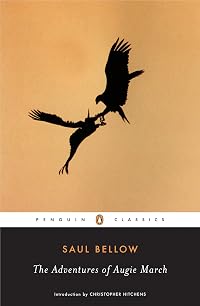
The Adventures of Augie March
by Saul Bellow
On This Page
Description
This grand-scale heroic comedy tells the story of the exuberant young Augie, a poor Chicago boy growing up during the Depression. While his neighborhood friends all settle down into their various chosen professions, Augie, as particular as an aristocrat, demands a special destiny. He latches on to a wild succession of occupations, proudly rejecting each one as too limiting. It is not until he tangles with a glamorous perfectionist named Thea, a huntress with a trained eagle, that his show more independence is seriously threatened. Luckily, his nature, like the eagle's, breaks down under the strain. He goes on to recruit himself to even more outlandish projects but always ducks out in time to continue improvising his unconventional career.With a jaunty sense of humor embedded in a serious moral view, Bellow's story both celebrates and satirizes the irrepressible American spirit.
. show less
Tags
Recommendations









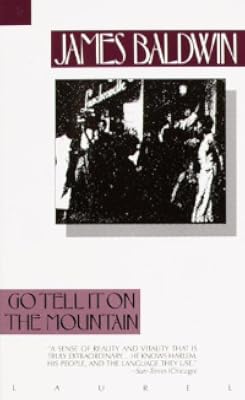
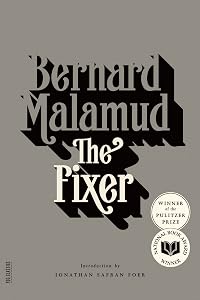
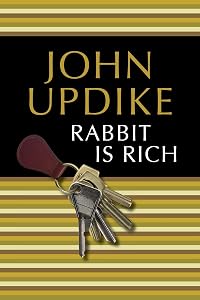
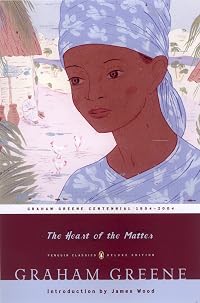
Member Recommendations
CGlanovsky Bildungsroman: the education of a young man.

CGlanovsky Young men coming of age in different eras of 20th Century America.

BookshelfMonstrosity These sprawling novels feature an irrepressible and memorable protagonist. The Adventures of Augie March is set in the 1920s and Depression-era America; Middlesex tells the family history -- spanning the 20th century -- of a hermaphroditic main character.
11
Member Reviews
It's amazing to me that people argued about Great American Novels as recently as 2003, fifty years after Augie March settled the question. It even starts with "I am an American" and ends with "America"! How can it not be the GAM?!
I'll never tire of this book, the only modern inheritor of the picaresque tradition and the first since Huck Finn. It's different from everything else I've read by Bellow, consciously visceral and eclectic, a multisensory kaleidoscope of the American century. It's a goddamn long novel but somehow the creativity never lapses and the voice never wavers and never sounds writerly, despite being intensely literary as in this streetcar trip:
It was stiff cold weather, the ground hard, the weeds standing broken in the show more frost, the river giving off vapor and the trains leghorn shots of steam into the broad blue Wisconsin-humored sky, the brass handgrip of the straw seats finger-polished, the crusty straw golden, the olive and brown of coats in their folds gold too...
Or this description of the coalyard manager Happy Kellerman:
He was a beer saufer; droopy, small, a humorist, wry, drawn, weak, his tone nosy and quinchy, his pants in creases under his paunch; his nose curved up and presented offended and timorous nostrils, and he had round, disingenuous eyes in which he showed he was strongly defended.
Bellow is brilliant at punctuation; his sentences move not like rivers but like traffic, interruptedly, with trams and big shots' cars and stumblebums syncopating the flow. The novel is profoundly planted in the picaresque tradition: in its rambling plot, of course, the story of an American trying on everything for size, but also in its assertion of the primacy of the real, the tangible, the sensual world:
Everyone tried to create a world he can live in , and what he can't use he often can't see. But the real world is already created, and if your fabrication doesn't correspond, then even if you feel noble and insist on there being something better than what people call reality, that better something needn't try to exceed what, in its actuality, since we know it so little, may be very surprising. If a happy state of things, surprising; if miserable or tragic, no worse than what we invent.
This is the reality-preferring, the reality-delighting, creed of the picaresque. It's an ironic inversion of Hamlet's spiritualist finger-wagging to Horatio. The world has more in it — more actual people, more dreams — than are dreamt of in your philosophy — turning the "philosophy" from the original "science" to the modern, hand-waving sense. Of "people generally": "they dug for unreality more than treasure, unreality being their last great hope because then they could doubt what they knew about themselves was true." This from the most hard-headed character in the novel, Mimi, who embodies resilience and pragmatism.
And the language here is such a treat, such a multifarious delight, it adds up to an alternate, better, reality of its own. Bellow stacks nouns like a gourmet burger chef: "...if I chose to be a lawyer, I wouldn't need to be a mere ambulance chaser, shyster, or birdseed wiseguy and conniver in two-bit cases." And he knows the power of the monosyllable: "blue gas stink in this hot brute shit of a street". Language is tactile, pungent, impinging on the ear: a band "began to pound and smite" and shortly after "clashed, drummed and brayed". These verbs are of the construction trade or the military, and they describe Bellow's tactile technique in this book.
The overriding theme of Augie's life (until he runs out of paper) is his clientism, his being serially adopted in his fatherlessness, his dependence on others as he gropes for his own identity: "Admitted that I always tried to elicit what I hoped for; how did people, however, seldom fail to supply it so mysteriously?" This is something I identify with — maybe in part 'cause of my race and gender, but even within the world of the story, and my world, Augie's and my caromings seem fortunate. But to what extent do Augie and I over-appreciate our dependence on others, our status as objects of fate? The novel take Heraclitus' "fate is character" for its leitmotif. To what extent is that true? Less and less I think so.
But I'll always love this book. It's a humongous beating heart of human sympathy, of love and trying to make things better. It's weird and sad (like at the end of chapter 4 when they commit Georgie to the institution — I cried) and full of dead-ends and wrong turns and schemes and capers. Rereading it caused me to fall five books behind schedule for my 2022 reading goal, and I don't regret a single second. show less
I'll never tire of this book, the only modern inheritor of the picaresque tradition and the first since Huck Finn. It's different from everything else I've read by Bellow, consciously visceral and eclectic, a multisensory kaleidoscope of the American century. It's a goddamn long novel but somehow the creativity never lapses and the voice never wavers and never sounds writerly, despite being intensely literary as in this streetcar trip:
It was stiff cold weather, the ground hard, the weeds standing broken in the show more frost, the river giving off vapor and the trains leghorn shots of steam into the broad blue Wisconsin-humored sky, the brass handgrip of the straw seats finger-polished, the crusty straw golden, the olive and brown of coats in their folds gold too...
Or this description of the coalyard manager Happy Kellerman:
He was a beer saufer; droopy, small, a humorist, wry, drawn, weak, his tone nosy and quinchy, his pants in creases under his paunch; his nose curved up and presented offended and timorous nostrils, and he had round, disingenuous eyes in which he showed he was strongly defended.
Bellow is brilliant at punctuation; his sentences move not like rivers but like traffic, interruptedly, with trams and big shots' cars and stumblebums syncopating the flow. The novel is profoundly planted in the picaresque tradition: in its rambling plot, of course, the story of an American trying on everything for size, but also in its assertion of the primacy of the real, the tangible, the sensual world:
Everyone tried to create a world he can live in , and what he can't use he often can't see. But the real world is already created, and if your fabrication doesn't correspond, then even if you feel noble and insist on there being something better than what people call reality, that better something needn't try to exceed what, in its actuality, since we know it so little, may be very surprising. If a happy state of things, surprising; if miserable or tragic, no worse than what we invent.
This is the reality-preferring, the reality-delighting, creed of the picaresque. It's an ironic inversion of Hamlet's spiritualist finger-wagging to Horatio. The world has more in it — more actual people, more dreams — than are dreamt of in your philosophy — turning the "philosophy" from the original "science" to the modern, hand-waving sense. Of "people generally": "they dug for unreality more than treasure, unreality being their last great hope because then they could doubt what they knew about themselves was true." This from the most hard-headed character in the novel, Mimi, who embodies resilience and pragmatism.
And the language here is such a treat, such a multifarious delight, it adds up to an alternate, better, reality of its own. Bellow stacks nouns like a gourmet burger chef: "...if I chose to be a lawyer, I wouldn't need to be a mere ambulance chaser, shyster, or birdseed wiseguy and conniver in two-bit cases." And he knows the power of the monosyllable: "blue gas stink in this hot brute shit of a street". Language is tactile, pungent, impinging on the ear: a band "began to pound and smite" and shortly after "clashed, drummed and brayed". These verbs are of the construction trade or the military, and they describe Bellow's tactile technique in this book.
The overriding theme of Augie's life (until he runs out of paper) is his clientism, his being serially adopted in his fatherlessness, his dependence on others as he gropes for his own identity: "Admitted that I always tried to elicit what I hoped for; how did people, however, seldom fail to supply it so mysteriously?" This is something I identify with — maybe in part 'cause of my race and gender, but even within the world of the story, and my world, Augie's and my caromings seem fortunate. But to what extent do Augie and I over-appreciate our dependence on others, our status as objects of fate? The novel take Heraclitus' "fate is character" for its leitmotif. To what extent is that true? Less and less I think so.
But I'll always love this book. It's a humongous beating heart of human sympathy, of love and trying to make things better. It's weird and sad (like at the end of chapter 4 when they commit Georgie to the institution — I cried) and full of dead-ends and wrong turns and schemes and capers. Rereading it caused me to fall five books behind schedule for my 2022 reading goal, and I don't regret a single second. show less
Bellow acolytes beware, your emperor lacks clothes and it's mighty cold outside...
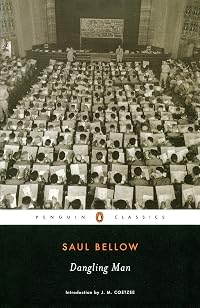
Okay, hold on, no no no...it's not quite that bad. Bellow isn't abysmal. I'd actually, if I could on goodreads.com, award this novel something like 2 1/2 stars. In fact in certain stretches of this novel 'The Adventures of Augie March' he's damn good, treading philosophical waters with the grace and aplomb of a crane. Much like his first novel Dangling Man and sporadically in his Collected Stories. But two very telling Charles Bukowski quotes came to mind as I read Augie March.
The first Bukowski quote references Truman Capote, whom the former accused of merely 'ice-skating' in terms of his literary output. This, to me, exemplifies Bellow in spots. He show more presents wonderful philosophical ideas and quotes or references (usually in place of traditional metaphor or simile) some of the greatest minds and moments of history, drawing on his extensive reading in literature, philosophy, anthropology, sociology, and various other disciplines. However, he doesn't seem to do much with the bulk of borrowed ideas he presents. They're piled on and piled on to his characters showing their (and by extension their author's) extensive knowledge in multifarious fields and disciplines, but for most of the cast, it feels distinctly out of place. Seriously, how many pool shark hustlers, illegal immigrant runners, card sharp gamblers, street walkers, high school dropouts, and various mid to low lives (as well as the other end, top of the heap intellectuals and WASPS) are able to hold court on linguistics, the meaning of life, extremely esoteric historical figures, the bathing habits of Charlemagne, and everything else...as well as be able to sling out a biting sample of yiddish slang? And then ask how your conversational latin is?
To quote Mark Hamill to George Lucas, allegedally: "(Real) People don't talk like this,"
The second Bukowski quote can be read as the antithesis to Bellow's entire authorial ethos, that 'true genius may be saying a complicated thing in a simple way'. It would seem that, much like the Stephan Fry of his day, Bellow will take a hundred words to say or describe what two or three words could easily accomplish. And be damn proud of it.
I understand that Bellow is verbose, loquacious, even hedonistic in his language. And yes, I understand that there are many authors I love who are similar (Faulkner, McCarthy, Joshua Cohen in his Witz, among others)in their style, sort of. But Bellow's delineations, while for the most part gorgeous and excellently described, drag his text down, down, down. Characters think a lot, talk a lot, describe a lot, but don't actually do, accomplish, or evolve a lot. It strikes me as a hurricane in a desolate field in the midwest, disrupting, destroying, and otherwise dominating this tract of land...until it dissipates, leaving only a slightly put off patch of land. Now granted, my reading of Dickens (one of Bellow's great influences), so far, isn't extensive, but I'm uncomfortably reminded when I read Bellow of the literary sins of Dickens (Martin Amis and Christopher Hitchens in memory forgive me), those sins being excess, frivolity, a complete lack of pacing, and a near collapse and trivializing of narrative. Though in the final sin's regard, Bellow is far worse then Dickens. This may sound odd, at least it did to me, because Bellow was lambasted by many in the literary establishment of being old fashioned in his approach to writing while I find his method vague, unfocused, and weighed down by dense but ultimately only tangentially relevant allusive detail.
I said it before in my Collected Stories review, and here it is again: Bellow's authorial voice strains almost visibly under the lash of two many influences. And I can add definitely what I only just suspected with that last work, that one thing that struck me as odd concerning Bellow's literary voice. It's fake. Well, not fake per se, but it's too practiced, too cultivated, too prepared and trained, too much a dance at too many weddings, too many times an instance of trying to be all things to all people all the time. I was reminded of Kerouac and On the Road and his struggle to find his voice. The difference is though Kerouac, sometime after the first third and definitely after the first half, found his voice and began to really develop it, ending his novel not only memorably, but almost expertly (impressive given it was the first of his published novels). And Bellow...well, some context if you please.
I just this evening read the Saul Bellow interview conducted in the pages of The Paris Review and I found myself surprised. Bellow goes into some detail about his slavery to, in his earlier novels, traditional novelistic forms and conventions. Also he discusses his need to declare himself to the, mostly, Anglo-Saxon literary establishment that, paraphrase, questioned the validity of a Jewish son born of Russian Jewish immigrants ability to use English, a perpetual 'borrowed language'.
I was...quite taken aback at this revelation as it rang true in my own mind, this idea that English was and is an 'inappropriate' language for me given my name and incredibly clustered, confused, and more than a little contradictory ethnic and cultural background.
But Bellow, unfortunately, yoked together a voice in response to this that, while bold and ambitious, collapsed under the weight of its own intellect and confused aspirations. In this same interview Bellow mentions the enthusiasm and near glee he enjoyed while writing Augie March, and it shows, certainly in the first two hundred or so pages. But the further past the halfway point of the novel you venture the more you can almost feel Bellow running out of steam, becoming more and more desperate (like Augie himself) to declare, declare, declare, while really only piling more ideas, more fancies, more theories, onto a character whose chronic inability to decide or break free from whichever random person is shepherding him that chapter becomes enervating, frustrating, and ultimately, more than a little maddening.
And this doesn't even begin to scratch the surface of the stylistic mess of this novel. Tonally it's all over the map but almost always ensconced comfortably in the clueless arms of whimsy and old fart sentimentalism, which is the main reason Bellow's much vaunted comparisons to Dostoyevsky ring false to me. This divide between the two writers is no better evidenced than when after the stock market crash of 1929, one sentence, read: ONE SENTENCE is used to reference the fact that people are jumping to their deaths from the windows of skyscrapers...while ol' Augie eventually goes down to Mexico to, i'm not kidding, train an eagle to catch iguanas...in what universe is that considered 'realist'?
And not to put too fine a point on it, but speaking of realism, and one of the writer's whom Bellow admires, Theodore Dreiser, I have to point out something funny or at least odd. In Sister Carrie, a far more naturalistic and even realistic seeming novel then most anything Bellow conceived in March, the ending consists of (spoiler) the eponymous Carrie having succeeded in the material but dying in the spiritual, sitting in a rocking chair and moving back and forth, back and forth, moving a lot but actually going nowhere...this was Augie March for the most part, to me.
I would just like to say at this point that I don't hate Saul Bellow as a writer. In fact, again, like I stated at the beginning, he's actually very good in spots. The intensity of tone of this review is directed less at him and more at the accolades upon accolades I've heard concerning Bellow, and the surprising defensiveness of some of his most die hard fans. I've read at least one review, of this book in particular, calling those who reviewed this book less than glowingly, 'uncomprehending' and I have to say two things, but I'll say the polite version now:
Leo Tolstoy set free all literary contrary types, dissenters, and just those with slight (or not so slight) differences in opinion about what defines literature when he stated, quite emphatically, that he didn't 'get' Shakespeare...let me repeat that, Leo Tolstoy, author of War and Peace, Anna Karenina, one of the greatest literary minds who ever lived, openly admitted that he just didn't get the appeal of William Shakespeare, one of the other greatest literary minds who ever lived.
So, basically, there.
Jewish Literature is a labyrinth, one I anxiously and joyfully, and also madly find myself lost in. Bellow's voice is certainly different from the rest, more willfully Old World, consciously European, and enthusiastically intellectual, but it's, so far, not a voice I'd favor. Norman Mailer's bombast rages like dying stars, Joseph Heller's blacker than night comedy affirms life while making us weep, Kakfa is cosmic horror made beautiful in its pain and relentless searching, Amos Oz, David Grossman, Etgar Keret, Yoram Kaniuk, are the beating hearts keeping alive the Israeli conscience...and onward the list goes. Bellow is of this company, but not in its upper echelon, and not the man I'd award a Nobel, though maybe, after some time, I'll more than love to lend an ear to again. show less
Okay, hold on, no no no...it's not quite that bad. Bellow isn't abysmal. I'd actually, if I could on goodreads.com, award this novel something like 2 1/2 stars. In fact in certain stretches of this novel 'The Adventures of Augie March' he's damn good, treading philosophical waters with the grace and aplomb of a crane. Much like his first novel Dangling Man and sporadically in his Collected Stories. But two very telling Charles Bukowski quotes came to mind as I read Augie March.
The first Bukowski quote references Truman Capote, whom the former accused of merely 'ice-skating' in terms of his literary output. This, to me, exemplifies Bellow in spots. He show more presents wonderful philosophical ideas and quotes or references (usually in place of traditional metaphor or simile) some of the greatest minds and moments of history, drawing on his extensive reading in literature, philosophy, anthropology, sociology, and various other disciplines. However, he doesn't seem to do much with the bulk of borrowed ideas he presents. They're piled on and piled on to his characters showing their (and by extension their author's) extensive knowledge in multifarious fields and disciplines, but for most of the cast, it feels distinctly out of place. Seriously, how many pool shark hustlers, illegal immigrant runners, card sharp gamblers, street walkers, high school dropouts, and various mid to low lives (as well as the other end, top of the heap intellectuals and WASPS) are able to hold court on linguistics, the meaning of life, extremely esoteric historical figures, the bathing habits of Charlemagne, and everything else...as well as be able to sling out a biting sample of yiddish slang? And then ask how your conversational latin is?
To quote Mark Hamill to George Lucas, allegedally: "(Real) People don't talk like this,"
The second Bukowski quote can be read as the antithesis to Bellow's entire authorial ethos, that 'true genius may be saying a complicated thing in a simple way'. It would seem that, much like the Stephan Fry of his day, Bellow will take a hundred words to say or describe what two or three words could easily accomplish. And be damn proud of it.
I understand that Bellow is verbose, loquacious, even hedonistic in his language. And yes, I understand that there are many authors I love who are similar (Faulkner, McCarthy, Joshua Cohen in his Witz, among others)in their style, sort of. But Bellow's delineations, while for the most part gorgeous and excellently described, drag his text down, down, down. Characters think a lot, talk a lot, describe a lot, but don't actually do, accomplish, or evolve a lot. It strikes me as a hurricane in a desolate field in the midwest, disrupting, destroying, and otherwise dominating this tract of land...until it dissipates, leaving only a slightly put off patch of land. Now granted, my reading of Dickens (one of Bellow's great influences), so far, isn't extensive, but I'm uncomfortably reminded when I read Bellow of the literary sins of Dickens (Martin Amis and Christopher Hitchens in memory forgive me), those sins being excess, frivolity, a complete lack of pacing, and a near collapse and trivializing of narrative. Though in the final sin's regard, Bellow is far worse then Dickens. This may sound odd, at least it did to me, because Bellow was lambasted by many in the literary establishment of being old fashioned in his approach to writing while I find his method vague, unfocused, and weighed down by dense but ultimately only tangentially relevant allusive detail.
I said it before in my Collected Stories review, and here it is again: Bellow's authorial voice strains almost visibly under the lash of two many influences. And I can add definitely what I only just suspected with that last work, that one thing that struck me as odd concerning Bellow's literary voice. It's fake. Well, not fake per se, but it's too practiced, too cultivated, too prepared and trained, too much a dance at too many weddings, too many times an instance of trying to be all things to all people all the time. I was reminded of Kerouac and On the Road and his struggle to find his voice. The difference is though Kerouac, sometime after the first third and definitely after the first half, found his voice and began to really develop it, ending his novel not only memorably, but almost expertly (impressive given it was the first of his published novels). And Bellow...well, some context if you please.
I just this evening read the Saul Bellow interview conducted in the pages of The Paris Review and I found myself surprised. Bellow goes into some detail about his slavery to, in his earlier novels, traditional novelistic forms and conventions. Also he discusses his need to declare himself to the, mostly, Anglo-Saxon literary establishment that, paraphrase, questioned the validity of a Jewish son born of Russian Jewish immigrants ability to use English, a perpetual 'borrowed language'.
I was...quite taken aback at this revelation as it rang true in my own mind, this idea that English was and is an 'inappropriate' language for me given my name and incredibly clustered, confused, and more than a little contradictory ethnic and cultural background.
But Bellow, unfortunately, yoked together a voice in response to this that, while bold and ambitious, collapsed under the weight of its own intellect and confused aspirations. In this same interview Bellow mentions the enthusiasm and near glee he enjoyed while writing Augie March, and it shows, certainly in the first two hundred or so pages. But the further past the halfway point of the novel you venture the more you can almost feel Bellow running out of steam, becoming more and more desperate (like Augie himself) to declare, declare, declare, while really only piling more ideas, more fancies, more theories, onto a character whose chronic inability to decide or break free from whichever random person is shepherding him that chapter becomes enervating, frustrating, and ultimately, more than a little maddening.
And this doesn't even begin to scratch the surface of the stylistic mess of this novel. Tonally it's all over the map but almost always ensconced comfortably in the clueless arms of whimsy and old fart sentimentalism, which is the main reason Bellow's much vaunted comparisons to Dostoyevsky ring false to me. This divide between the two writers is no better evidenced than when after the stock market crash of 1929, one sentence, read: ONE SENTENCE is used to reference the fact that people are jumping to their deaths from the windows of skyscrapers...while ol' Augie eventually goes down to Mexico to, i'm not kidding, train an eagle to catch iguanas...in what universe is that considered 'realist'?
And not to put too fine a point on it, but speaking of realism, and one of the writer's whom Bellow admires, Theodore Dreiser, I have to point out something funny or at least odd. In Sister Carrie, a far more naturalistic and even realistic seeming novel then most anything Bellow conceived in March, the ending consists of (spoiler) the eponymous Carrie having succeeded in the material but dying in the spiritual, sitting in a rocking chair and moving back and forth, back and forth, moving a lot but actually going nowhere...this was Augie March for the most part, to me.
I would just like to say at this point that I don't hate Saul Bellow as a writer. In fact, again, like I stated at the beginning, he's actually very good in spots. The intensity of tone of this review is directed less at him and more at the accolades upon accolades I've heard concerning Bellow, and the surprising defensiveness of some of his most die hard fans. I've read at least one review, of this book in particular, calling those who reviewed this book less than glowingly, 'uncomprehending' and I have to say two things, but I'll say the polite version now:
Leo Tolstoy set free all literary contrary types, dissenters, and just those with slight (or not so slight) differences in opinion about what defines literature when he stated, quite emphatically, that he didn't 'get' Shakespeare...let me repeat that, Leo Tolstoy, author of War and Peace, Anna Karenina, one of the greatest literary minds who ever lived, openly admitted that he just didn't get the appeal of William Shakespeare, one of the other greatest literary minds who ever lived.
So, basically, there.
Jewish Literature is a labyrinth, one I anxiously and joyfully, and also madly find myself lost in. Bellow's voice is certainly different from the rest, more willfully Old World, consciously European, and enthusiastically intellectual, but it's, so far, not a voice I'd favor. Norman Mailer's bombast rages like dying stars, Joseph Heller's blacker than night comedy affirms life while making us weep, Kakfa is cosmic horror made beautiful in its pain and relentless searching, Amos Oz, David Grossman, Etgar Keret, Yoram Kaniuk, are the beating hearts keeping alive the Israeli conscience...and onward the list goes. Bellow is of this company, but not in its upper echelon, and not the man I'd award a Nobel, though maybe, after some time, I'll more than love to lend an ear to again. show less
The plot, if that’s the term, isn’t exactly linear, its parts aren’t always connected, and the language is angular, usually not flowing and sometimes awkward, which often works but sometimes doesn’t. I realize it’s partly an early Jewish-American cultural position, but the language in a work of literature has to stand on its own. Not that it’s a bad story or that there isn’t some excellent writing, but the former’s a pretty random sequence and the latter’s uneven. Still, there’s a strange depth and an odd, world-weary optimism that are compelling, with more than a few insightful moments that make you stop and reflect. These form a glue and purpose and maybe even a structure that substitute for the equivalents you’d show more usually expect to come more from plot and language. It ends up working pretty well. I also like the fact that, while it seems everything today is either nihilistic or in denial, or just dumb, and while this unfortunate situation was well advanced when the book was written, it isn’t nihilistic, it’s plenty aware and it's anything but dumb. show less
In the beginning, I wanted to kill myself - it was so boring. But, when it's Saul Bellow, you read the damn thing. So, I read. I really liked the way Bellow depicted America through the 30s and 50s. In quite a few parts, when Bellow was telling of Augie in the 30s, I almost felt like I was reading Fitzgerald - the fall of the rich into poverty - but it was a little darker, a little more "American". This, I think, is the distinct difference between Bellow and Fitzgerald - one was from the streets of hometown America and the other spoke from the lenses of ex-patriotism.
Epic in the truest sense, an astonishingly dense and beautifully lyrical account of an undistinguished Chicago kid's coming of age. I wasn't too far into "The Adventures of Augie March" before I realized that one reading wasn't going to be enough and that I'd have to re-read it before too long. Bellow packs more material and feeling into two or three pages than some novelists can manage in entire novels: the book fairly bursts with characters, anecdotes, and uncannily great descriptive passages. There's something Joycean about the whole thing, too. Bellow inserts plenty of classical references in his description of grimy, busy mid-century Chicago, and his writing transmogrifies Chicago's trainyards and ethnic slums into hauntingly show more beautiful and memorable places, making them unlikely settings for literary greatness, But great is what "The Adventures of Augie March" is: its rich, almost grandiose sentences subtly probe the Big Questions while capturing the deeply affecting idiosyncrasies of the book's characters. It's nothing short of stunning. The next time I've got a few weeks to fill -- and God only knows when that will be -- I'll surely be picking this one up again. show less
Suffice it to say I can see why this is such a classic. The first person narrative by the book's title character tells the tale of a poor Chicago born Jewish kid who seems to be a natural attraction for other people's schemes. He is smart and good looking and as we listen to his story we realize Augie is always getting advice, from the Russian boarder, Mrs. Lausch to then being adopted, almost literally once, by a series of mentors who all thought Augie would be great for their plan. His jobs are listed here for a reference. He becomes a handbill-distributor, a paperboy, a Woolworth’s stocker, a newsstand clerk, a trinket-seller, a Christmas helper at a department store, a flower delivery boy, a butler, a clerk at fine department show more stores, a paint salesman, a dog groomer, a book thief, a coal yard worker, a housing inspector, a union organizer, an eagle-trainer, a gambler, a literary researcher, a business machine salesman, a merchant marine, and ultimately an importer-exporter working in wartime Europe. Throughout these endeavors, there are also wonderfully drawn characters who try to give Augie direction on how to get ahead. His brother Simon marries into money and can't understand why Augie doesn't follow in his lead. There are also the women in his life that he falls for, Thea who takes him on a wild Eagle training adventure to Mexico and Stella, the girl he meets there and eventually marries. The writing is complex, filled with allusions to Greek and Roman gods, various figures are compared to universally know references, but it is wonderfully constructed. An example below details Augie and his friends riding in the elevator cars of the luxury hotels:
"In the cage we rose and dropped, rubbing elbows with bigshots and operators, commissioners, grabbers, heelers, tipsters, hoodlums, wolves, fixers, plaintiffs, flatfeet, men in Western hats and women in lizard shoes and fur coats, hothouse and arctic drafts mixed up, brute things and airs of sex, evidence of heavy feeding and systematic shaving, of calculations, grief, not-caring, and hopes of tremendous millions in concrete to be poured or whole Mississippis of bootleg whiskey and beer.” Such sentences occur on almost every page. They are like hall closets; you open them and everything falls out. "
That's true of this book, when you open it up, everything falls out, but going through the trouble to make sense of the contents is very satisfying.
I will include here some lines from a New Yorker essay on Saul Bellow intentions regarding the novel:
"Then, as he recalled, he experienced an epiphany: “I had a room in Paris where I was working, and one day as I was going there after breakfast, a bright spring morning, I saw water trickling down the street and sparkling.” The shining stream, he said, suggested to him the form of a new novel. Perhaps so, but a few other circumstances should be taken into account. This was the time, the postwar years, when American art came into its home country. Not just Bellow but many others walked out from under the shadow of the European masters and invented new, personal styles. Bellow was part of a Zeitgeist, and the stay in Europe encouraged his enlistment. The more he hated France, the more he loved America, and wanted to make an art that was like America—big and fresh and loud.
With this teeming book Bellow returned a Dickensian richness to the American novel. As he makes his way to a full brimming consciousness of himself, Augie careens through numberless occupations and countless mentors and exemplars, all the while enchanting us with the slapdash American music of his voice." show less
"In the cage we rose and dropped, rubbing elbows with bigshots and operators, commissioners, grabbers, heelers, tipsters, hoodlums, wolves, fixers, plaintiffs, flatfeet, men in Western hats and women in lizard shoes and fur coats, hothouse and arctic drafts mixed up, brute things and airs of sex, evidence of heavy feeding and systematic shaving, of calculations, grief, not-caring, and hopes of tremendous millions in concrete to be poured or whole Mississippis of bootleg whiskey and beer.” Such sentences occur on almost every page. They are like hall closets; you open them and everything falls out. "
That's true of this book, when you open it up, everything falls out, but going through the trouble to make sense of the contents is very satisfying.
I will include here some lines from a New Yorker essay on Saul Bellow intentions regarding the novel:
"Then, as he recalled, he experienced an epiphany: “I had a room in Paris where I was working, and one day as I was going there after breakfast, a bright spring morning, I saw water trickling down the street and sparkling.” The shining stream, he said, suggested to him the form of a new novel. Perhaps so, but a few other circumstances should be taken into account. This was the time, the postwar years, when American art came into its home country. Not just Bellow but many others walked out from under the shadow of the European masters and invented new, personal styles. Bellow was part of a Zeitgeist, and the stay in Europe encouraged his enlistment. The more he hated France, the more he loved America, and wanted to make an art that was like America—big and fresh and loud.
With this teeming book Bellow returned a Dickensian richness to the American novel. As he makes his way to a full brimming consciousness of himself, Augie careens through numberless occupations and countless mentors and exemplars, all the while enchanting us with the slapdash American music of his voice." show less
I want to read this again. It is a rambling picaresque set mostly in Chicago (and Mexico) in the years before and during WWII. The writing is complex, and notable for
1. long, dense descriptions of characters and setting
2. characters that are shrply observed
3. similes and metaphors that are arresting: wait, what, let me reread that, oh, I'd never have seen that but it is so very apt! (on almost every page
4. allusions, both direct and indirect, to legend, myth, literature and philosophy that made me want to stop every two or three pages to learn more (but not pedantic)
The picaresque form is somewhat antiquated, but the writing more than holds one's attention and admiration
1. long, dense descriptions of characters and setting
2. characters that are shrply observed
3. similes and metaphors that are arresting: wait, what, let me reread that, oh, I'd never have seen that but it is so very apt! (on almost every page
4. allusions, both direct and indirect, to legend, myth, literature and philosophy that made me want to stop every two or three pages to learn more (but not pedantic)
The picaresque form is somewhat antiquated, but the writing more than holds one's attention and admiration
Members
- Recently Added By
Published Reviews
ThingScore 100
The Adventures of Augie March is for me the great creation myth of twentieth century American literature.
added by private library
Lists

The Guardian's 1000 Novels Everyone Must Read
1,005 works; 551 members

1001 Books You Must Read Before You Die
1,448 works; 1,134 members

Novels from The Guardian's Great American Novelist Tournament
148 works; 24 members

Great American Novels
158 works; 42 members

Favorite Long Books
330 works; 41 members
20th Century Literature
1,161 works; 55 members

Favorite Coming of Age Novels.
164 works; 51 members

Recommend the 20 best books you've read in the last five years
2,168 works; 601 members

1950s
340 works; 22 members

Jewish Books
367 works; 24 members
Time Magazine's "All-Time 100"
113 works; 15 members

Canon de la narrativa universal del siglo XX
254 works; 6 members

National Book Award - Fiction
78 works; 10 members
Favourite Books
1,819 works; 316 members
The American Experience
173 works; 18 members
Time's All-Time 100 Novels
100 works; 27 members

Twentieth Century Greatest Hits
27 works; 11 members

Nobel Price Winners
222 works; 20 members

Unread books
1,063 works; 87 members
Harold Bloom - The Western Canon: D. The Chaotic Age
833 works; 24 members

A Novel Cure
742 works; 23 members
TML 200 Best Books 1950-1999
202 works; 10 members

Best First Lines
133 works; 8 members

The Guardian's 100 Best Novels Written in English
105 works; 13 members
Five star books
1,767 works; 110 members
Elegant Prose
80 works; 4 members
Best Domestic Fiction
77 works; 6 members
My list of 100 books to read next
100 works; 4 members

Books Read in 2016
4,666 works; 199 members

Books Read in 2022
5,226 works; 115 members
The College Board: 101 Great Books Recommended for College-Bound Readers
111 works; 7 members

Willoyd's Tour of the USA
25 works; 1 member

SHOULD Read Books!
354 works; 9 members

Books Set in Illinois
19 works; 7 members

Nifty Fifties
129 works; 14 members
American Lit for Eng 11 Research Project
368 works; 6 members

Books Set in Chicago
19 works; 7 members

Recommended Reading : 600 Classics Reviewed, Editors of Salem Press, 2015
634 works; 6 members

Fiction with Men's Given Names in the Title
302 works; 11 members

Fiction With Familiar Settings
280 works; 93 members
Modern Library's 100 Best Novels
100 works; 2 members
.
396 works; 1 member
Books We Couldn't Put Down
443 works; 197 members

The Torchlight List
95 works; 1 member
Canon de la narrativa universal del s. XX (cicutadry)
499 works; 3 members

Lucy's Long List
69 works; 1 member

living room bookshelf
150 works; 1 member

The Atlantic's The Great American Novel
136 works; 12 members

National Book Award winners
65 works; 11 members
New Lifetime Reading Plan by Fadiman and Major
225 works; 5 members

Mustich's 1000 Books to Read Before You Die: A Life Changing List
1,001 works; 19 members

AP Lit
363 works; 6 members
Picaresque Novels
22 works; 9 members

Books I Own But Haven't Read
144 works; 2 members

The Modern Library (The Two Hundred Best Novels....
202 works; 1 member
Talk Discussions
Past Discussions
One Book One Chicago Fall 2011 in Chicagoans (August 2011)
The Adventures of Augie March - eromsted in Review Discussions (December 2009)
Author Information

143+ Works 33,868 Members
Saul Bellow was born in Lachine, Quebec, Canada on June 10, 1915. He attended the University of Chicago, received a Bachelor's degree in sociology and anthropology from Northwestern University in 1937, and did graduate work at the University of Wisconsin. He taught at several universities including the University of Minnesota, Princeton show more University, the University of Chicago, New York University, and Boston University. His first novel, Dangling Man, was published in 1944. His other works include The Victim, Seize the Day, Henderson the Rain King, Mosby's Memoirs and Other Stories, To Jerusalem and Back: A Personal Account, Him with His Foot in His Mouth and Other Stories, More Die of Heartbreak, and Something to Remember Me By. He received numerous awards including the 1975 Pulitzer Prize for Humboldt's Gift, the 1976 Nobel Prize in Literature, and three National Book Awards for fiction for The Adventures of Augie March in 1954, Herzog in 1964, and Mr. Sammler's Planet in 1970. Also a playwright, he wrote The Last Analysis and three short plays, collectively entitled Under the Weather, which were produced on Broadway in 1966. He died on April 5, 2005. (Bowker Author Biography) show less
Some Editions
Awards and Honors
Distinctions
Notable Lists
Torchlight List (33)
The Great American Novels (1953)
Series
Belongs to Publisher Series
Work Relationships
Is contained in
Contains
Is abridged in
Has as a commentary on the text
Common Knowledge
- Canonical title
- The Adventures of Augie March
- Original title
- The Adventures of Augie March
- Original publication date
- 1953
- People/Characters
- Augie March
- Important places
- Chicago, Illinois, USA
- Dedication
- To my father
- First words
- I am an American, Chicago born–Chicago, that somber city–and go at things as I have taught myself, free-style, and will make the record in my own way: first to knock, first admitted; and sometimes an innocent knock, some... (show all)times a not so innocent.
- Last words
- (Click to show. Warning: May contain spoilers.)I may well be a flop at this line of endeavor. Columbus too thought he was a flop, probably, when they sent him back in chains. Which didn't prove there was no America.
- Blurbers
- Kazin, Alfred
- Original language
- English
Classifications
Statistics
- Members
- 4,248
- Popularity
- 3,582
- Reviews
- 80
- Rating
- (3.84)
- Languages
- 16 — Czech, Danish, Dutch, English, Estonian, Finnish, French, German, Hungarian, Italian, Polish, Portuguese, Romanian, Spanish, Swedish, Vietnamese
- Media
- Paper, Audiobook, Ebook
- ISBNs
- 70
- UPCs
- 1
- ASINs
- 56