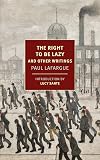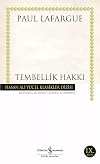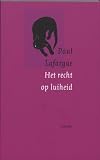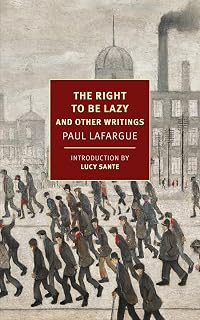
The Right to Be Lazy
by Paul Lafargue
On This Page
Description
Loafers, loungers, and malingers of the world, this is your manifesto. Though it may sound like little more than a slacker's bill of rights, Paul Lafargue's The Right to Be Lazy is actually a carefully considered philosophical defense of a life free of the demands of labor that is carried out purely in the service of capitalism. The thinker was true to his belief system, dying in a joint suicide pact with his wife (who happened to be Karl Marx's daughter) at the age of 69 to avoid burdening show more his family.. show less
Tags
Recommendations
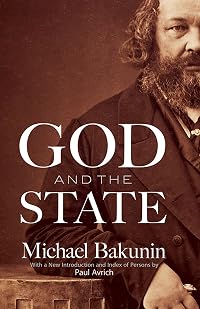

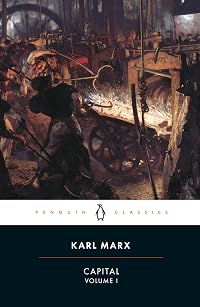




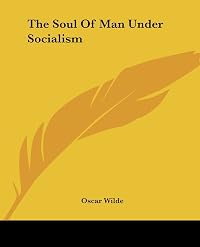
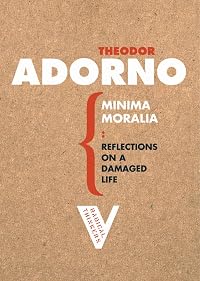

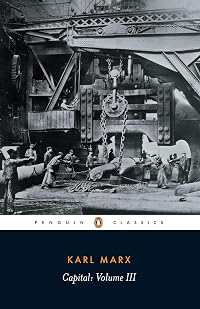
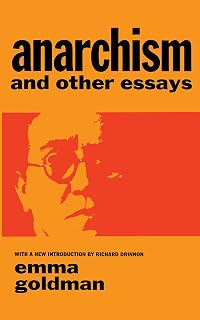














Member Recommendations
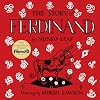
lquilter If you like "The Right To Be Lazy", perhaps you would enjoy reading to your children (and for yourself), "The Story of Ferdinand", by Munro Leaf -- a children's picture book about a bull who doesn't want to fight, but just wants to sit under a tree and enjoy nature. If you liked reading Ferdinand to your kids, maybe you'd also like spending some time with the classic pro-relaxation theoretical work of Lafargue, who argues that relaxation and creativity, not work, are the true engines of human development. Down with the corporate-capitalist-entertainment complex! Up with the enjoyment of life, bread, and roses!
Member Reviews
Dit dunne boekje is me aanbevolen door Diane Adams tijdens een weekendtraining adviesvaardigheden. Het boekje is misschien dun (68 pagina's inclusief noten) maar geen lichte kost. Het is een aanklacht tegen het dogma van de arbeid, geschreven in 1881. Plaats het dus tegen de achtergrond van de industrialisatie en het opkomende marxisme. De arbeidersklasse was straatarm, werkdagen van 12, 13 uur waren geen uitzondering en kinderarbeid heel gewoon.
Lafargue pleit voor een werkdag van 3 uur zodat een mens weer kan leven, genieten van zijn vrienden en creatief kan denken. Hij klaagt daarbij het kapitalisme en alle maatschappelijke klassen aan, inclusief de domme arbeidersklasse die zich in de luren laat leggen.
Het boekje is bijna visionair show more met zijn kijk op overproduktie en overconsumptie, zeker als je het vergelijkt met de kredietcrisis die nu speelt. Prachtig zijn de bijtende adjectieven waarmee Lafargue zijn tijdgenoten wegzet: "pijnlijk verward", "bespottelijk helder", "kwakzalverachtig romantisch"...
Kortom: zeker een boekje om - in stukjes - aandachtig tot je te nemen en om je blik op wat wij als dagelijkse realiteit beschouwen eens bij te sturen. show less
Lafargue pleit voor een werkdag van 3 uur zodat een mens weer kan leven, genieten van zijn vrienden en creatief kan denken. Hij klaagt daarbij het kapitalisme en alle maatschappelijke klassen aan, inclusief de domme arbeidersklasse die zich in de luren laat leggen.
Het boekje is bijna visionair show more met zijn kijk op overproduktie en overconsumptie, zeker als je het vergelijkt met de kredietcrisis die nu speelt. Prachtig zijn de bijtende adjectieven waarmee Lafargue zijn tijdgenoten wegzet: "pijnlijk verward", "bespottelijk helder", "kwakzalverachtig romantisch"...
Kortom: zeker een boekje om - in stukjes - aandachtig tot je te nemen en om je blik op wat wij als dagelijkse realiteit beschouwen eens bij te sturen. show less
This book is the perfect example of the echo chamber of history. When you get down to the nuts & bolts of it, the very themes the author is talking about in this book is repeating itself now. The war on women, religion is bad for you, the need for unionized labor, class warfare, evil capitalism. Will we never learn? This book is like swallowing a spoonful of cod liver oil with sugar on it.
I’m sure I’m not the first to say this but I wish the humor was easier to understand as the points get lost. The appendix is the strongest part of the book. Too bad he didn’t foreground that approach and mix it in more.
I was laughing my way through this short book . Apparently. it was influential in it's time (and even today). I love that NYRB puts out stuff like this.
The opening satire was not a strong or well-done as I had hoped, after reading it I felt there is a reason why it is not as well known as Candide or A Modest Proposal. Perhaps that was too much to expect, but the subject matter is ripe for such an effort.
I gave up on the Victor Hugo essay after a few pages, as I just don't care about how he was lionized in death.
The closing hagiography on Marx was.. fine.
Won't be keeping my copy, onto the re-sale pile.
I gave up on the Victor Hugo essay after a few pages, as I just don't care about how he was lionized in death.
The closing hagiography on Marx was.. fine.
Won't be keeping my copy, onto the re-sale pile.
El porqué y cómo no deberíamos seguir trabajando como burros.
1975 edition of a 1905 work in translation
Members
- Recently Added By
Lists

CONTRA EL TRABAJO Y A FAVOR DE LA PEREZA
3 works; 1 member
Author Information

Some Editions
Series
Belongs to Publisher Series
Work Relationships
Is contained in
Has as a reference guide/companion
Common Knowledge
- Canonical title
- The Right to Be Lazy
- Original title
- Le Droit à la paresse
- Alternate titles
- Le Droit à la paresse : La réfutation du Droit au travail; The Right to be Lazy; And Other Studies
- Original publication date
- 1883
- Important places*
- Prison de Sainte-Pélagie, Paris, France
- Epigraph
- " Paresseux en toutes choses, hormis en aimant et en buvant, hormis en paressant" Lessing
Let us be lazy in everything, except in loving and drinking, except in being lazy.--Lessing (pg.9) - First words
- M. Thiers, dans le sein de la Commission sur l'instruction primaire de 1849, disait: "Je veux rendre toute-puissante l'influence du clergé, parce que je compte sur lui pour propager cette bonne philosophie qui apprend à l'h... (show all)omme qu'il est ici-bas pour souffrir et non cette autre philosophie qui dit au contraire à l'homme: "Jouis"." M. Thiers formulait la morale de la classe bourgeoise dont il incarna l'égoïsme féroce et l'intelligence étroite.
A DISASTROUS DOGMA--
A strange delusion possesses the working classes of the nations where capitalist civilization holds its sway. This delusion drags in its train the individual and social woes which for two centuries h... (show all)ave tortured sad humanity. This delusion is the love of work, the furious passion for work, pushed even to the exhaustion of the vital force of the individual and his progeny.--(pg.9) - Quotations
- Nature designed her in all her organization to be the servant of man, just as the odious god of the Jews and Christians marked out the race of Ham for slavery.--[The Woman Question, pg.117]
- Last words
- (Click to show. Warning: May contain spoilers.)Le rêve d'Aristote est notre réalité. Nos machines au souffle de feu, aux membres d'acier, infatigables, à la fécondité merveilleuse, inépuisable, accomplissent docilement d'elles- mêmes leur travail sacré; et cependant le génie des grands philosophes du capitalisme reste dominé par le préjugé du salariat, le pire des esclavages. Ils ne comprennent pas encore que la machine est le rédempteur de l'humanité, le Dieu qui rachètera l'homme des "sordidoe artes" et du travail salarié, le Dieu qui lui donnera des loisirs et la liberté.
(Click to show. Warning: May contain spoilers.)Laborers of all crafts, you who toil so hard to create your poverty in producing the wealth of the capitalists, arise! arise! Since the buffoons of parliament unfurl the Rights of Man, do you boldly demand for yourselves, your wives and children the Rights of the Horse.--[The Rights of the Horse pg.164] - Disambiguation notice*
- Le texte a été publié une première fois en 1880 et une seconde, dotée d'un avant propos, en 1883
*Some information comes from Common Knowledge in other languages. Click "Edit" for more information.
Classifications
- Genres
- Nonfiction, Philosophy, General Nonfiction
- DDC/MDS
- 331.25 — Society, government, & culture Economics Labor economics Conditions of employment Pensions; Insurance
- LCC
- HD5106 .L22 — Social sciences Industries. Land use. Labor Industries. Land use. Labor Labor. Work. Working class Hours of labor
- BISAC
Statistics
- Members
- 686
- Popularity
- 41,688
- Reviews
- 13
- Rating
- (3.62)
- Languages
- 13 — Catalan, Dutch, English, Esperanto, Finnish, French, German, Greek, Italian, Portuguese (Portugal), Spanish, Swedish, Turkish
- Media
- Paper, Ebook
- ISBNs
- 102
- ASINs
- 19