
Camille: The Lady of the Camellias
by Alexandre Dumas
On This Page
Description
Men of great wealth bought her love. She gave it to only one.Marguerite Gautier, the greatest beauty in Paris, was known to all as "the Lady of the Camellias" because she was never seen without her favorite flowers. She was luxuriously kept by the richest men in France, who thronged to her boudoir to lay their fortunes at her feet. She lived violently, spending herself and her money in reckless abandon. She had many lovers, but she never really loved—until she met Armand Duval.
Realizing show more that her only assets in life were her face and figure, Marguerite had learned how to make men pay. But what happens to a cool, calculating beauty when she herself suffers the wound of love?
. Classic Literature. Fiction. show less
Tags
Recommendations


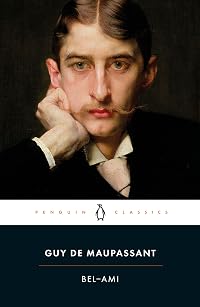

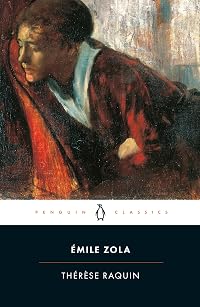
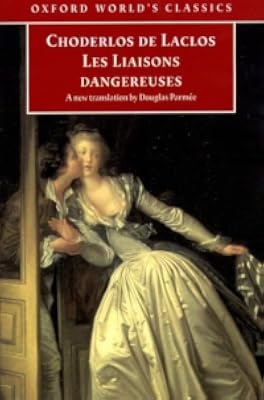

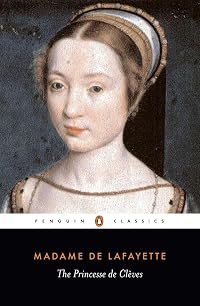
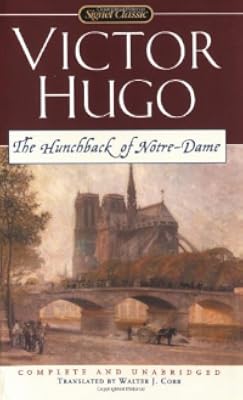
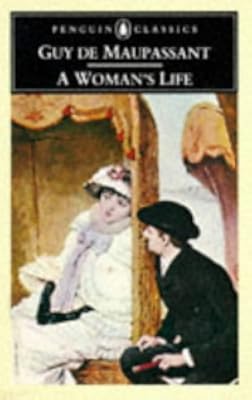

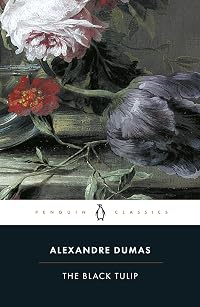

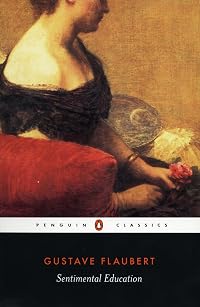












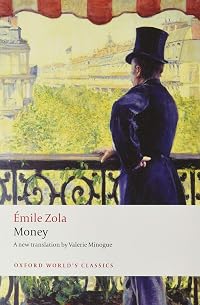







Member Recommendations

anonymous user What the younger Dumas started, Piave and Verdi transformed and turned into something greater.

Member Reviews
A view into the life of a sex worker in Paris in the 19th century. Her lifestyle required $100,000 francs a year to support; you can imagine the balancing act she had to keep up. She was 20 years old, beautiful, intelligent, but sick with tuberculosis, and a young man of modest means wanted her all to himself. The sh*thead never realized the sacrifice she made for him. Ah well.
Dumas fils writes so descriptively of Marguerite; what is hard to take is the attitude on the part of men that she is somehow less than her non-sex-worker counterparts. Shades of Sor Juana...Why do they create this job in society yet want to blame the woman who fills it?
Dumas fils writes so descriptively of Marguerite; what is hard to take is the attitude on the part of men that she is somehow less than her non-sex-worker counterparts. Shades of Sor Juana...Why do they create this job in society yet want to blame the woman who fills it?
I adore complicated, tortured stories of difficult love affairs if they don't descend into the sacarine or trite. Dumas fils does not disappoint with this fictionalized account of his own fractured love affair. Nothing burns quit so much as the passions that pain us in our youth. Although it's going on nearly 200 years old it wears well and has been mined for inspiration for books stage and film by lesser writers since. Sniff a camellia and heave a sad sigh for lost love.
Then there's the portrayal of women: the narrator made us understand the prejudice of the time (which still exists today) but it also redeems the protagonist through pain and sacrifice.
I was certainly not expecting the horror of them opening her grave or the despair of her last moments alive.
BTW, it's so funny to me that the narrator is just a nosy man that wanted to hear all
Melodramatic and with characters that aren’t all that likeable, but yet somehow an enjoyable read, perhaps because of the depth of the emotions, and how the book transports you to early 19th century France. Marguerite is a ‘kept woman’, one who trades her sexual favors to aristocratic old men for their money and lavish gifts. She keeps up an extravagant lifestyle while juggling suitors, which she can do without offending those involved too much as long as she maintains a sense of decorum about it. Armand is a young bourgeoisie who falls madly in love with her, and despite not having the economic means to pay her expenses, gets petty and jealous of her other men and tries to take her from it all, to the alarm of his father.
The show more book is restrained and doesn’t give us detail for the amorous relations, and yet it’s refreshingly frank about them, both of which were good things. While it’s a completely different world that these characters inhabit, when they go through the ups and downs of their affair, we recognize emotions and actions that are timeless. It drags on a bit towards the end, but the story of sacrifice and love is touching.
Quotes:
On affairs, this from Marguerite:
“Men, instead of being satisfied in obtaining for a long time what they scarcely hoped to obtain once, exact from their mistresses a full account of the present, the past, and even the future. As they get accustomed to her, they want to rule her, and the more one gives them the more exacting they become. If I decide now on taking a new lover, he must have three very rare qualities: he must be confiding, submissive, and discreet.”
On chance:
“One day a young man is passing in the street, he brushes against a woman, looks at her, turns, goes on his way. He does not know the woman, and she has pleasures, griefs, loves, in which he has no part. He does not exist for her, and perhaps, if he spoke to her, she would only laugh at him, as Marguerite had laughed at me. Weeks, months, years pass, and all at once, when they have each followed their fate along a different path the logic of chance brings them face to face. The woman becomes the man’s mistress and loves him. How? Why? Their two existences are henceforth one; they have scarcely begun to know one another when it seems as if they had known one another always, and all that had gone before is wiped out from the memory of the two lovers. It is curious, one must admit.” show less
The show more book is restrained and doesn’t give us detail for the amorous relations, and yet it’s refreshingly frank about them, both of which were good things. While it’s a completely different world that these characters inhabit, when they go through the ups and downs of their affair, we recognize emotions and actions that are timeless. It drags on a bit towards the end, but the story of sacrifice and love is touching.
Quotes:
On affairs, this from Marguerite:
“Men, instead of being satisfied in obtaining for a long time what they scarcely hoped to obtain once, exact from their mistresses a full account of the present, the past, and even the future. As they get accustomed to her, they want to rule her, and the more one gives them the more exacting they become. If I decide now on taking a new lover, he must have three very rare qualities: he must be confiding, submissive, and discreet.”
On chance:
“One day a young man is passing in the street, he brushes against a woman, looks at her, turns, goes on his way. He does not know the woman, and she has pleasures, griefs, loves, in which he has no part. He does not exist for her, and perhaps, if he spoke to her, she would only laugh at him, as Marguerite had laughed at me. Weeks, months, years pass, and all at once, when they have each followed their fate along a different path the logic of chance brings them face to face. The woman becomes the man’s mistress and loves him. How? Why? Their two existences are henceforth one; they have scarcely begun to know one another when it seems as if they had known one another always, and all that had gone before is wiped out from the memory of the two lovers. It is curious, one must admit.” show less
Quite good and similar to Zola's [b:Nana|371456|Nana (Les Rougon-Macquart, #9)|Émile Zola|http://d.gr-assets.com/books/1174236758s/371456.jpg|89633] in many ways, although, good storytellers as they were, neither Dumas Papa or Dumas Fils were in Zola's league.
What happens to the pretty girl who trades off her looks for money when she is past her sell-by date? Then she has to hope the man who always loved her will stump up the cash she needs so badly despite her constant rejection when she was at the top of the game and judged him too poor to supply her with the luxuries she felt entitled to. And hope he doesn't mind that she says she loves him only now she's desperate. Nor mind the sickness that has ravaged her body and destroyed her show more beauty, putting her out of work and losing her the gilded place in society and the envy, if not respect, of the women she never failed to lord it over?
Does being feckless go with the job of being a whore? Did none of them ever think of putting something by? Or is this just a literary device by the male authors who were looking to entertain rather than enlighten? show less
What happens to the pretty girl who trades off her looks for money when she is past her sell-by date? Then she has to hope the man who always loved her will stump up the cash she needs so badly despite her constant rejection when she was at the top of the game and judged him too poor to supply her with the luxuries she felt entitled to. And hope he doesn't mind that she says she loves him only now she's desperate. Nor mind the sickness that has ravaged her body and destroyed her show more beauty, putting her out of work and losing her the gilded place in society and the envy, if not respect, of the women she never failed to lord it over?
Does being feckless go with the job of being a whore? Did none of them ever think of putting something by? Or is this just a literary device by the male authors who were looking to entertain rather than enlighten? show less
The narrator buys a courtesan's old book at a whim. Some time later, the man who gave her the book comes looking for it, and shares with the narrator their tale of love and sorrow. They had but a few short months together before her debts and his family's need to maintain their reputation came between them. I hadn't realized how closely the movie Moulin Rouge was based on this--the broad outline and many of the visual details (like the courtesan visiting her true love one last time, pale and waxy under her black veil) are the same. That said, Ewan McGregor's character was far less frustrating (nay, hateful!) than Armand Duval, the "hero" of this tale. But the courtesan of this tale is even more affecting than in the bombastic movie. I show more was helplessly crying near the end, distraught at Marguerite's courage and how little she hoped for (in vain, as it turns out).
"...I am tired out with seeing people who always want the same thing; who pay me for it, and then think they are quit of me. If those who are going to go in for our hateful business only knew what it really was they would sooner be chambermaids. But no, vanity, the desire of having dresses and carriages and diamonds carries us away; one believes what one hears, for here, as elsewhere, there is such a thing as belief, and one uses up one's heart, one's body, one's beauty, little by little; one is feared like a beast of prey, scorned like a pariah, surrounded by people who always take more than they give; and one fine day one dies like a dog in a ditch, after having ruined others and ruined one's self."show less
I read the Le Livre de Poche (French) 1966 edition of this book, not the one indicated. Although intended as a Catholic morality tale, it's well-written & fun to read (of course, it's tragic). Jettisoning the "save one's immortal soul" reading prompt and replacing it with socio-economic & feminist critique makes for a more illuminating reading experience. Good detailed depiction of the catch-22 circumstances of a 19th century "kept woman" and her "respectable" lover.
Members
- Recently Added By
Lists

Best of French Literature
138 works; 27 members

Favourite 19th century fiction
257 works; 60 members

French Books
102 works; 15 members

Favourite Books
1,820 works; 308 members

Books You Read During High School (For School)
301 works; 53 members

Authors from France
23 works; 2 members
Paris, City of Lights
103 works; 17 members

Read This Next
120 works; 3 members

French Fiction of the 18th and 19th Centuries in English Translation
169 works; 3 members

Books Read in 2018
4,360 works; 110 members
Favorite Romance Fiction
247 works; 115 members

Book Titles Mentioned In Newberry Medal And Honor Books
884 works; 3 members
Books We Want To Read Again For The First Time
384 works; 160 members

Französische Romantik
16 works; 1 member

Favorite French Fiction
89 works; 32 members
Author Information

17 Works 3,488 Members
Some Editions
Awards and Honors
Series
Belongs to Publisher Series
Berömd litteratur (Baltiska förlaget)
Newton Compton Live (30)
Modern Library (69)
Tus libros (56)
Amstelboeken (87-88)
insel taschenbuch (0546)
Oxford World's Classics (999)
Gallimard, Folio (704)
Work Relationships
Is contained in
International Collector's Library Classics 19 volumes: Crime & Punishment; Twenty Thousand Leagues Under the Sea; Mysterious Island; Magic Mountain; Around the World in 80 Days; Count of Monte Cristo; Camille; Quo Vadis; Hunchback of Notre Dame; Nana; Scaramouche; Pinocchio; Fernande; War and Peace; The Egyptian; From the Earth to the Moon; Candide; Treasure of Sierra Madre; Siddhartha/Steppenwolf by Jules Verne
Is retold in
Has the adaptation
Is abridged in
Common Knowledge
- Canonical title
- Camille: The Lady of the Camellias
- Original title
- La Dame aux Camélias; Cynthia of the minute
- Alternate titles
- Camille; The Lady of the Camellias
- Original publication date
- 1848 (novel) (novel); 1852 (play) (play)
- People/Characters
- Marguerite Gautier; Armand Duval; Prudence
- Important places
- Paris, France; France
- Related movies
- Camille (1936 | IMDb); Die Kameliendame (1987 | IMDb); La dame aux camélias (1934 | IMDb); La dame aux camélias (1953 | IMDb); La dame aux camélias (1998 | IMDb); Hallmark Hall of Fame: Camille (1984 | IMDb) (show all 7); Camille (1921 | IMDb)
- First words
- Secondo me, non si possono creare personaggi se non dopo aver studiato a lungo gli uomini, così come non si può parlare una lingua straniera se non la si è imparata molto bene. Non ho ancora l'età in cui s'inventa, quindi... (show all) mi accontenterò di raccontare.
Esorto il lettore a credere alla veridicità di questa storia, di cui tutti i personaggi, ad eccezione della protagonista, sono ancora in vita. - Last words*
- (Click to show. Warning: May contain spoilers.)La storia di Marguerite è un'eccezione, ripeto; ma se così non fosse stato, non avrebbe meritato di essere raccontata.
- Original language
- French; Français
- Disambiguation notice
- Camille was written by Alexandre Dumas fils (the son of Alexandre Dumas pere).
The novel and the play should not be combined.
*Some information comes from Common Knowledge in other languages. Click "Edit" for more information.
Classifications
- Genres
- Fiction and Literature, General Fiction, Romance
- DDC/MDS
- 843.8 — Literature & rhetoric French Literature French fiction Later 19th century 1848–1900
- LCC
- PQ2231 .D2 .E5 — Language and Literature French, Italian, Spanish and Portuguese literatures French literature Modern literature 19th century
- BISAC
Statistics
- Members
- 3,464
- Popularity
- 4,820
- Reviews
- 60
- Rating
- (3.69)
- Languages
- 28 — Catalan, Chinese, Czech, Danish, Dutch, English, Estonian, Finnish, French, German, Greek, Hungarian, Icelandic, Indonesian, Italian, Japanese, Lithuanian, Norwegian (Bokmål), Polish, Romanian, Russian, Croatian, Slovak, Slovenian, Spanish, Swedish, Turkish, Portuguese (Portugal)
- Media
- Paper, Audiobook, Ebook
- ISBNs
- 421
- UPCs
- 1
- ASINs
- 167