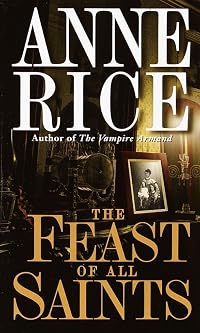
The Feast of All Saints
by Anne Rice
On This Page
Description
Before the Civil War, there lived in Louisiana, people unique in Southern history. For though they were descended from African slaves, they were also descended from the French and Spanish who enslaved them. In this dazzling historical novel, Anne Rice chronicles four of these so-called Free People of Color--men and women caught periolously between the worlds of master and slave, privilege and oppression, passion and pain. "Anne Rice seems to be at home everywhere....She makes us believe show more everything she sees." THE NEW YORK TIMES show lessTags
Recommendations
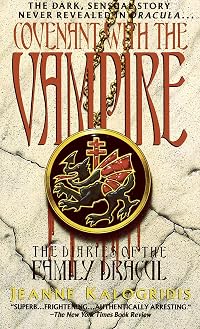
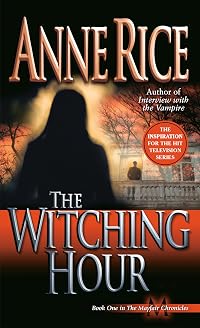
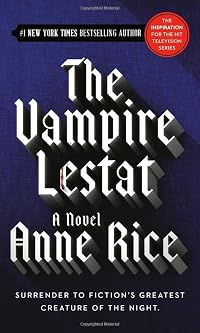
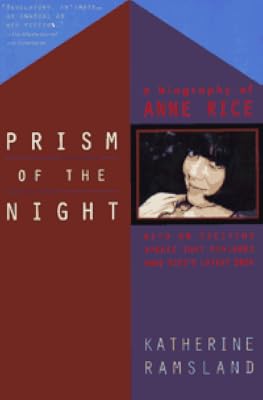
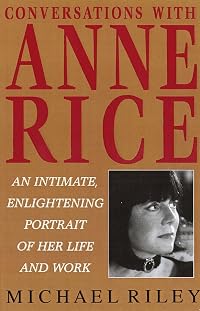


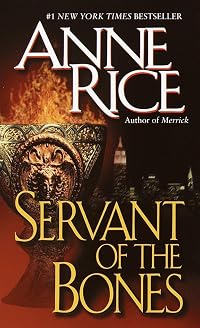
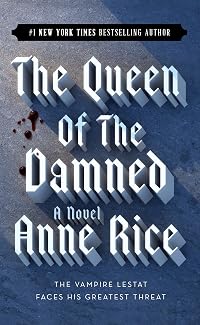

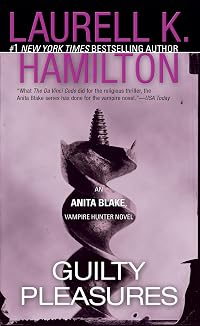

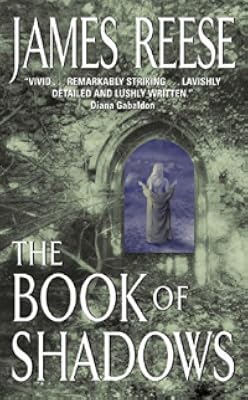
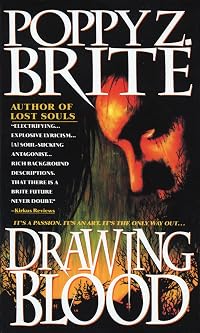

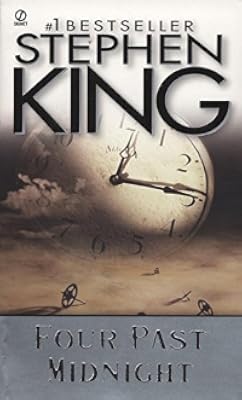
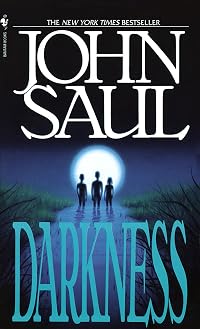
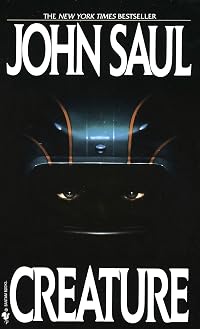
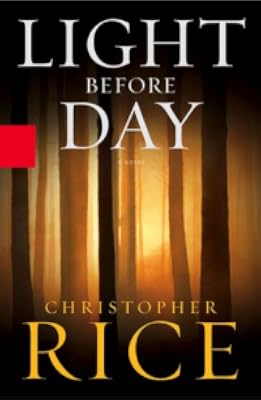
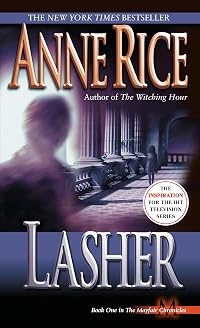
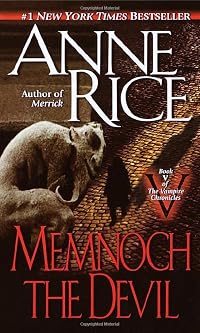
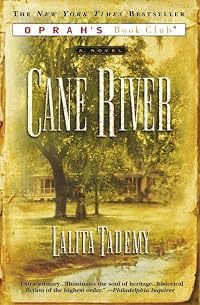


Member Recommendations
Member Reviews
This historical novel describes Creole society shortly after the Louisiana Purchase. Educated and rich, the free people of colour had a unique culture, customs and mores. Their position, however, was tenuous, very much at the mercy and whim of white people, especially in-coming Americans. This novel doesn't sugar coat the difficulties despite the advantages.
Rice showcases her style, full of flourish and drama, and the book is about 100 pages too long, but I found the read rewarding.
Rice showcases her style, full of flourish and drama, and the book is about 100 pages too long, but I found the read rewarding.
I read this book when it first came out when I was 16 & loved it. I've re-read it periodically & still love it (I think this makes my fourth read). The good thing about re-reading books is all the different perspectives you bring & the new things you notice because you've grown & changed.
When I was 16 I was taken with the romanticism of the book - the free people of color, the world of Antebellum New Orleans, the various love stories - what teenager wouldn't swoon? At this point I still enjoy the romanticism, but the history means even more &, most of all, I love the search for identity & the love of books & learning that is evident throughout this story.
This is not Anne Rice writing poorly (or otherwise) about paranormal things. This show more is Anne Rice writing well about history. I've always thought she wrote 4 really good books: this one, plus Interview With the Vampire, The Vampire Lestat, & Cry to Heaven. At some point she just started turning out page after page of garbage & I gave up on her. I return to this book often, though. Its characters & its sense of place & time draw me into its world & make me reluctant to leave. This is a good book. show less
When I was 16 I was taken with the romanticism of the book - the free people of color, the world of Antebellum New Orleans, the various love stories - what teenager wouldn't swoon? At this point I still enjoy the romanticism, but the history means even more &, most of all, I love the search for identity & the love of books & learning that is evident throughout this story.
This is not Anne Rice writing poorly (or otherwise) about paranormal things. This show more is Anne Rice writing well about history. I've always thought she wrote 4 really good books: this one, plus Interview With the Vampire, The Vampire Lestat, & Cry to Heaven. At some point she just started turning out page after page of garbage & I gave up on her. I return to this book often, though. Its characters & its sense of place & time draw me into its world & make me reluctant to leave. This is a good book. show less
I was looking at all my Anne Rice books and I noticed one of them didn't look like it had been read. My best guess as to why I hadn't read 'The Feast of All Saints' when I bought it is most likely because of the very small and heavy font.
Anyway, years after purchasing it, I have finished reading this book which was quite different to her vampire series. The novel has a familiar setting in New Orleans, however there are no vampires or supernatural themes in the story. Set in the French Quarter in the 1840s the novel is about the gens de couleur libre the free people of colour, neither black nor white, and living in a city with slave markets and black servants.
This was a real eye opener into the times and challenges faced by the gens de show more couleur, and the struggles they faced. The main character is Marcel, although the reader is treated to an in depth analysis of several 'sub characters' and much family drama is covered in the book.
I was surprised by some of the themes and it really made me think. How could women of colour look down upon women who married other men of colour for love? Instead it was expected that young women of colour would strive to be the mistress (second wife) of a white plantation owner who would only visit the city every few months. Essentially this meant knowingly being the wife/mother of a second and secret family. Unbelievable.
There is a lot of family drama, questions of lineage, family traditions, society expectations and when it's okay to break the rules.
To be honest I struggled during the first 100 pages (there are 636 pgs in total), however the story really picked up after that and I was hooked. It was such a treat to read an earlier work of Anne Rice (one of my favourite authors), as I'm hanging out for her new book. show less
Anyway, years after purchasing it, I have finished reading this book which was quite different to her vampire series. The novel has a familiar setting in New Orleans, however there are no vampires or supernatural themes in the story. Set in the French Quarter in the 1840s the novel is about the gens de couleur libre the free people of colour, neither black nor white, and living in a city with slave markets and black servants.
This was a real eye opener into the times and challenges faced by the gens de show more couleur, and the struggles they faced. The main character is Marcel, although the reader is treated to an in depth analysis of several 'sub characters' and much family drama is covered in the book.
I was surprised by some of the themes and it really made me think. How could women of colour look down upon women who married other men of colour for love? Instead it was expected that young women of colour would strive to be the mistress (second wife) of a white plantation owner who would only visit the city every few months. Essentially this meant knowingly being the wife/mother of a second and secret family. Unbelievable.
There is a lot of family drama, questions of lineage, family traditions, society expectations and when it's okay to break the rules.
To be honest I struggled during the first 100 pages (there are 636 pgs in total), however the story really picked up after that and I was hooked. It was such a treat to read an earlier work of Anne Rice (one of my favourite authors), as I'm hanging out for her new book. show less
While rummaging around in one of the many flea markets I frequent this novel stood out among several hundred romance novels. I initially pushed the book to the side thinking it was just another Anne Rice vampire novel. For some reason I was drawn back to it. I picked it up, read the summary, and decided to give the cashier the dollar it cost. I am glad I gave this book a second look because it was one of those very rare, beautiful, and stunning novels.
This is a novel about the somewhat mysterious “gens de couleur libre” -the Free People of Color-set in New Orleans around the 1840s. The “gens de couleur” are the descendants of the African and the French but they embrace the latter. These are privileged families whose primary show more language is French and most speak very little English. The women possess a certain class and grace that cannot be taught it is simply bred into the very fabric of their being. The men are true gentleman who are determined to preserve their community and way of life. These are beautiful people. Their stories are very complicated and tragic. Their world is one made of glass that is eventually shattered.
The novel is focused on the Ste. Marie family. This family consists of the mother Cecile, a patriarch Phillippe Ferronaire, and their children Marcel and Marie. Phillippe Ferronaire is white and married with a family that lives on his plantation, Bontemps. Marcel has his father’s blue eyes and blonde hair but coarseness of that blonde hair keeps him from “passing”. Marie is the stunning beauty whose white skin betrays most. Marcel is our lovely protagonist whose life revolves around traveling to Paris when he turns eighteen and the arrival of a new teacher, Christophe. Christophe left the close knit “gens de couleur” community and traveled to Paris and made a name for himself as a writer. Christophe and Marcel start a unique instant friendship that transcended teacher and pupil. This friendship proves to be an anchor to them both in the perilous times that arise quite quickly.
As we read it seems as if Marcel’s life of privilege dealt him a short hand in preparing him to be a man. He is prepared to be a gentleman but not a man. With a father that is mostly absent, Marcel is left to his own random ideas of how his life should be. Marcel is faced with some hard decisions when his father’s constant supply of money is stopped abruptly and his dreams to go to Paris are lost forever. While everyone is consumed with Marcel, Marie goes unnoticed especially by Cecile. Even though Marie is a head turning beauty she has a wounded soul. She is torn between pleasing her ever persistent aunts by attending the quadroon balls to attract a rich white suitor, as her mother did, or marry the black man she loves, Richard Lermontant who happens to be Marcel’s best friend.
The lives of the characters of this novel are intertwined very intricately. I just want to describe a few. There was Dolly Rose, the beautiful yet self destructive quadroon beauty who had to bury her only child at such a young age and later establishes a brothel. The Lermontant’s are the wealthy free black family who bury the dead white and black. Juliet, Christopher’s mother, who was both eccentric and illiterate, took the teenage Marcel as a lover. Lisette, the mulatto house slave of the Ste. Marie’s, who allowed the broken promises of freedom and jealousy lead her to a tragic end. Then there was also the precious, Anna Bella, Marcel’s closest friend whose unconditional love for him proved to be her main obstacle. The main contributors to this way of life and bloodline were the white men that maintained separate black families for their own selfish benefit but never paid much attention to the long term effects of such selfishness. The lifestyle of the “gens de couleur” was a character as well as the city of New Orleans. I can’t say enough about how captivatingly beautiful this story was even with all the flawed yet beautiful people that brought it to life. show less
This is a novel about the somewhat mysterious “gens de couleur libre” -the Free People of Color-set in New Orleans around the 1840s. The “gens de couleur” are the descendants of the African and the French but they embrace the latter. These are privileged families whose primary show more language is French and most speak very little English. The women possess a certain class and grace that cannot be taught it is simply bred into the very fabric of their being. The men are true gentleman who are determined to preserve their community and way of life. These are beautiful people. Their stories are very complicated and tragic. Their world is one made of glass that is eventually shattered.
The novel is focused on the Ste. Marie family. This family consists of the mother Cecile, a patriarch Phillippe Ferronaire, and their children Marcel and Marie. Phillippe Ferronaire is white and married with a family that lives on his plantation, Bontemps. Marcel has his father’s blue eyes and blonde hair but coarseness of that blonde hair keeps him from “passing”. Marie is the stunning beauty whose white skin betrays most. Marcel is our lovely protagonist whose life revolves around traveling to Paris when he turns eighteen and the arrival of a new teacher, Christophe. Christophe left the close knit “gens de couleur” community and traveled to Paris and made a name for himself as a writer. Christophe and Marcel start a unique instant friendship that transcended teacher and pupil. This friendship proves to be an anchor to them both in the perilous times that arise quite quickly.
As we read it seems as if Marcel’s life of privilege dealt him a short hand in preparing him to be a man. He is prepared to be a gentleman but not a man. With a father that is mostly absent, Marcel is left to his own random ideas of how his life should be. Marcel is faced with some hard decisions when his father’s constant supply of money is stopped abruptly and his dreams to go to Paris are lost forever. While everyone is consumed with Marcel, Marie goes unnoticed especially by Cecile. Even though Marie is a head turning beauty she has a wounded soul. She is torn between pleasing her ever persistent aunts by attending the quadroon balls to attract a rich white suitor, as her mother did, or marry the black man she loves, Richard Lermontant who happens to be Marcel’s best friend.
The lives of the characters of this novel are intertwined very intricately. I just want to describe a few. There was Dolly Rose, the beautiful yet self destructive quadroon beauty who had to bury her only child at such a young age and later establishes a brothel. The Lermontant’s are the wealthy free black family who bury the dead white and black. Juliet, Christopher’s mother, who was both eccentric and illiterate, took the teenage Marcel as a lover. Lisette, the mulatto house slave of the Ste. Marie’s, who allowed the broken promises of freedom and jealousy lead her to a tragic end. Then there was also the precious, Anna Bella, Marcel’s closest friend whose unconditional love for him proved to be her main obstacle. The main contributors to this way of life and bloodline were the white men that maintained separate black families for their own selfish benefit but never paid much attention to the long term effects of such selfishness. The lifestyle of the “gens de couleur” was a character as well as the city of New Orleans. I can’t say enough about how captivatingly beautiful this story was even with all the flawed yet beautiful people that brought it to life. show less
I couldn't get through this - and that rarely happens. I guess I expected something akin to her vampire series. The story of the "Free People of Color" was interesting in itself, but her pages number too many for the content conveyed. Ultimately, at p. 296 of 640, I realized this was either third-rate historical fiction or a second-rate romance novel. For me, it was the end.
This was an excellent book which gave much historical information about the Octroon balls and how these women were kept by the white slave and pklantation owners. It also focused on what life was like for the children born into that arrangement and what it was like for the free black business who lived in that era.
Very interesting historically-especially for a mulatto like myself:)
Very interesting historically-especially for a mulatto like myself:)
Very, very slow to get into like so many of her books, but once captivated by the free negros of New Orleans, I was intrigued and interested in their world and their stories. Richard was a true hero. I was glad he came through.
Members
- Recently Added By
Lists

Best Historical Fiction
620 works; 261 members

Read the book and saw the movie
1,170 works; 192 members

Best Historical Fiction authors
41 works; 9 members
Author Information

132+ Works 189,697 Members
Anne Rice was born Howard Allen O'Brien on October 4, 1941 in New Orleans, Louisiana. She received a bachelor's degree in political science in 1964 and master's degree in English and creative writing in 1972 from San Francisco State University. She published her first short story in 1965 called October 4, 1948. Her first book, Interview with the show more Vampire, was published in 1976. It was made into a film starring Brad Pitt, Kirsten Dunst, and Tom Cruise in 1994. She wrote various series in the same genre including the rest of the Vampire Chronicles, the Mayfair Witches books, and The Wolf Gift Chronicles. Her novel, Feast of All Saints, became a Showtime mini-series in 2001. Her other works include Cry to Heaven, Servant of the Bones, and Violin. In 1998, Rice returned to the Catholic Church and for some time only wrote for Christ or about Christ. These works include Christ the Lord: Out of Egypt, Christ the Lord: The Road to Cana, and Called Out of Darkness. Anne Rice died on December 11, 2021 at the age of 80. (Bowker Author Biography) show less
Work Relationships
Is contained in
10 Anne Rice Books: Interview with the Vampire, The Feast of All Saints, Tale of the Body Thief, Lasher, Taltos, Servant by Anne Rice
Exit to Eden / Feast of All Saints / Interview With the Vampire / Lasher / Merrick / The Mummy / Pandora / Queen of the Damned / Servant of the Bones / The Tale of the Body Thief / The Vampire Lestat / Vittorio the Vampire / The Witching Hour by Anne Rice
Has the adaptation
Has as a student's study guide
Common Knowledge
- Canonical title*
- Alle helgeners fest
- Original title
- The Feast of All Saints
- Original publication date
- 1979
- People/Characters
- Marcel Ste. Marie; Cecil; Anna Bella
- Important places
- New Orleans, Louisiana, USA
- Important events
- American Civil War
- Related movies
- Feast of All Saints (2001 | IMDb)
- Dedication
- This book is dedicated with love to Stan Rice, Carolyn Doty, and my parents, Howard and Katherine O'Brien.
*Some information comes from Common Knowledge in other languages. Click "Edit" for more information.
Classifications
- Genres
- Fiction and Literature, General Fiction, Horror, Historical Fiction, Fantasy
- DDC/MDS
- 813.54 — Literature & rhetoric American literature in English American fiction in English 1900-1999 1945-1999
- LCC
- PS3568 .I265 .F4 — Language and Literature American literature American literature Individual authors 1961-
- BISAC
Statistics
- Members
- 2,716
- Popularity
- 6,840
- Reviews
- 31
- Rating
- (3.64)
- Languages
- Danish, Dutch, English, Spanish
- Media
- Paper, Audiobook, Ebook
- ISBNs
- 20
- UPCs
- 2
- ASINs
- 16