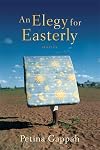
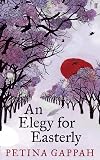
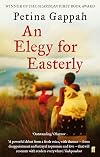
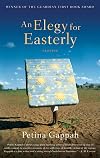
An Elegy for Easterly
by Petina Gappah
On This Page
Description
A woman in a township in Zimbabwe is surrounded by throngs of dusty children but longs for a baby of her own; an old man finds that his new job making coffins at No Matter Funeral Parlor brings unexpected riches; a politician's widow stands quietly by at her husband's funeral, watching his colleagues bury an empty casket. Petina Gappah's characters may have ordinary hopes and dreams, but they are living in a world where a loaf of bread costs half a million dollars, where wives can't trust show more even their husbands for fear of AIDS, and where people know exactly what will be printed in the one and only daily newspaper because the news is always, always good.In her spirited debut collection, the Zimbabwean writer Petina Gappah brings us the resilience and inventiveness of the people who struggle to live under Robert Mugabe's regime. She takes us across the city of Harare, from the townships beset by power cuts to the manicured lawns of privilege and corruption, where wealthy husbands keep their first wives in the "big houses" while their unofficial second wives wait in the "small houses," hoping for a promotion.Despite their circumstances, the characters in An Elegy for Easterly are more than victims--they are all too human, with as much capacity to inflict pain as to endure it. They struggle with the larger issues common to all people everywhere: failed promises, unfulfilled dreams, and the yearning for something to anchor them to life. show lessTags
Recommendations














Member Recommendations
Member Reviews
Petina Gappah's writing is so masterly that it is hard to believe that this is her debut collection of stories. Her writing has an elegance which reminded this reader of Katherine Mansfield, which is especially true in the things that Gappah does not say. The characters in these stories are very real and whilst they seem very rooted to their geography and situation they are also universal, we all know people like 'My Cousin-Sister Rambanai' and the people who live 'In the Heart of the Golden Triangle' and people's whose marriages are similar to the one in 'The Negotiated Settlement'. 'Midnight at the Hotel California' made me laugh out loud, but Gappah never lets you forget that behind the laughter there are tears. Superb.
 This review was written for LibraryThing Early Reviewers.
This debut short-story collection by Zimbabwean writer Petina Gappah is a wonderful read. The tone of each one is perfect: the language is consistently beautiful but also completely natural. You get to know the characters very quickly, through small details artfully described, and are left at just the right moment to move on to the next tale.
The title gives a clue to what's in store. "Elegy" is defined by the Oxford English Dictionary as "A song of lamentation, esp. a funeral song or lament for the dead". This book feels like Petina Gappah's lament for the Zimbabwe she grew up in, a Zimbabwe that has been scarred by political corruption, economic chaos and the scourge of AIDS. I can't say whether she means to say that the Zimbabwe she show more knew is dead. Of course the country endures, the people endure, and that's what these stories are about. Perhaps the lament is not so much for the country itself as for the people who have suffered so much. In any case, there's a deep sadness underlying all these stories, and there's a death or a funeral in most of the stories.
Yet the strange thing is that there's also a lot of humour, and the humour often goes hand-in-hand with the sadness. There's the old carpenter who is cheated out of his pension and wins a dancing contest, the diplomat who is new to email and loses thousands of euros to the old lottery scam, and the bizarre goings-on at the Hotel California. In many of the stories, the humour is very real and genuinely funny, and yet it feels like a thin veneer which Gappah deliberately lets slip every now and then, exposing the horror underneath.
My favourite story, though, has no real humour. It's called 'Something Nice from London' and tells of a family waiting at the airport for the twice-weekly flight from London. The title refers to the hope that relatives in the UK will either return or send back money or gifts for their families. With the collapse of the economy, a few UK pounds is millions of Zimbabwe dollars, and can help a family to survive. But it gradually becomes clear that what this particular family is waiting for is the coffin of their son, Peter. And what follows is a tragic, drawn-out description of the anxious waiting for weeks and weeks, interspersed with explanations of what brought Peter and the family to this point, all the sacrifices and mistakes and disappointments. It's important that the body returns because the whole extended family is staying at their house awaiting the funeral, and they literally can't afford to feed them much longer.
It's probably not a representative story to pick - the others, as I said, had more humour mixed in with the tragedy, and I think it's that mixture that makes the book successful. But this particular story really got to me more than all the others. There's just a real power to that image of the family waiting at the airport, surrounded by all the other people waiting for 'Something nice from London' while they are waiting for the coffin of their son.
Which brings me back to the tone. When describing suffering, and especially when interspersing it with humour, there are a lot of pitfalls to avoid: melodrama, tastelessness, didacticism and exploitation to name but a few. Gappah skips effortlessly through the minefield, achieving just the right tone in every story. It's a tremendous achievement, and I look forward to reading more from her. show less
The title gives a clue to what's in store. "Elegy" is defined by the Oxford English Dictionary as "A song of lamentation, esp. a funeral song or lament for the dead". This book feels like Petina Gappah's lament for the Zimbabwe she grew up in, a Zimbabwe that has been scarred by political corruption, economic chaos and the scourge of AIDS. I can't say whether she means to say that the Zimbabwe she show more knew is dead. Of course the country endures, the people endure, and that's what these stories are about. Perhaps the lament is not so much for the country itself as for the people who have suffered so much. In any case, there's a deep sadness underlying all these stories, and there's a death or a funeral in most of the stories.
Yet the strange thing is that there's also a lot of humour, and the humour often goes hand-in-hand with the sadness. There's the old carpenter who is cheated out of his pension and wins a dancing contest, the diplomat who is new to email and loses thousands of euros to the old lottery scam, and the bizarre goings-on at the Hotel California. In many of the stories, the humour is very real and genuinely funny, and yet it feels like a thin veneer which Gappah deliberately lets slip every now and then, exposing the horror underneath.
My favourite story, though, has no real humour. It's called 'Something Nice from London' and tells of a family waiting at the airport for the twice-weekly flight from London. The title refers to the hope that relatives in the UK will either return or send back money or gifts for their families. With the collapse of the economy, a few UK pounds is millions of Zimbabwe dollars, and can help a family to survive. But it gradually becomes clear that what this particular family is waiting for is the coffin of their son, Peter. And what follows is a tragic, drawn-out description of the anxious waiting for weeks and weeks, interspersed with explanations of what brought Peter and the family to this point, all the sacrifices and mistakes and disappointments. It's important that the body returns because the whole extended family is staying at their house awaiting the funeral, and they literally can't afford to feed them much longer.
It's probably not a representative story to pick - the others, as I said, had more humour mixed in with the tragedy, and I think it's that mixture that makes the book successful. But this particular story really got to me more than all the others. There's just a real power to that image of the family waiting at the airport, surrounded by all the other people waiting for 'Something nice from London' while they are waiting for the coffin of their son.
Which brings me back to the tone. When describing suffering, and especially when interspersing it with humour, there are a lot of pitfalls to avoid: melodrama, tastelessness, didacticism and exploitation to name but a few. Gappah skips effortlessly through the minefield, achieving just the right tone in every story. It's a tremendous achievement, and I look forward to reading more from her. show less
This review was written for LibraryThing Early Reviewers.I wasn’t too sure whether to put my name down on Early Reviewers for this book, as the setting in Zimbabwe with all its various troubles didn’t suggest a particularly cheerful read. However, I’m glad I did as it is a wonderfully readable book, which although obviously very sad in places has lovely touches of humour too. An Elegy for Easterly is just one of the 13 short stories contained in the book, each averaging about 20 pages long. The subjects of the stories vary from the thoughts of a politician’s wife at her husband’s funeral, to a student who spends time in ‘the annexe’ (a mental institution), to a coffin-making dancing champion, to a Zimbabwean working in Geneva who thinks he has won a million euros, to life in the show more “Golden Triangle”. What they all share is a sense of real people living in somewhat unreal circumstances, and many have an interesting or unexpected ‘twist’ in the story too, which makes it difficult to describe them in too much detail without giving the plot away. A sense of Africa comes over well, with vivid descriptions, but at the same time the people in the story are ‘universal’ too. show less
This review was written for LibraryThing Early Reviewers.I sometimes don’t get on very well with collections of short stories but these are long enough for the characters to be more developed and the stories to be more satisfying than others I’ve read. But several I thought would be even better developed as full length novels. They are about the lives of people in Zimbabwe, struggling to live with escalating inflation, where a loaf of bread costs half a million dollars, of corruption, scams, disappointed lives, unfulfilled dreams and broken promises. They paint a bleak picture of the resilence and resistance of people in extreme circumstances, coping with despair.
Something Nice From London is one of the most poignant tales. Relatives living in England often sent something special to their show more families back home but one family are waiting at Harare airport for something different - the arrival of Peter who died in London. His cousin, also living in England keeps promising his body will be on the flight. Peter was the golden boy and much was expected of him. This is the story of unfulfilled ambition and expection. Because you’re not allowed to speak ill of the dead, the family have to forget how he bled them dry with constant demands for more money to pay his fees and provide accommodation and food as they mourn his death. Eventually the body does arrive, but not how they expected.
I also enjoyed Our Man in Geneva Wins a Million Euros, the story of a diplomat conned by an internet scam. In At the Sound of the Last Post, a politician’s widow at her husband’s funeral ponders the corrupt society they’re living in as his collegues bury an empty coffin - her husband was not the national hero he was made out to be. Death and sickness figure quite prominently in most of the stories and the book as a whole, although laced through with ironic humour, is a lament - a lament for Zimbabwe and its suffering people. show less
Something Nice From London is one of the most poignant tales. Relatives living in England often sent something special to their show more families back home but one family are waiting at Harare airport for something different - the arrival of Peter who died in London. His cousin, also living in England keeps promising his body will be on the flight. Peter was the golden boy and much was expected of him. This is the story of unfulfilled ambition and expection. Because you’re not allowed to speak ill of the dead, the family have to forget how he bled them dry with constant demands for more money to pay his fees and provide accommodation and food as they mourn his death. Eventually the body does arrive, but not how they expected.
I also enjoyed Our Man in Geneva Wins a Million Euros, the story of a diplomat conned by an internet scam. In At the Sound of the Last Post, a politician’s widow at her husband’s funeral ponders the corrupt society they’re living in as his collegues bury an empty coffin - her husband was not the national hero he was made out to be. Death and sickness figure quite prominently in most of the stories and the book as a whole, although laced through with ironic humour, is a lament - a lament for Zimbabwe and its suffering people. show less
This review was written for LibraryThing Early Reviewers.There are stories in this collection such as the one looking at a woman's desperation with her infertility and a story about a college girl's breakdown which would make bleak reading in any setting. In the context of Mugabe's Zimbabwe they are devastating. Others are more overtly political and throughout the book the problems of hyper-inflation and the AIDS epidemic are ever-present. There is a darkly ironic tone to many of the stories, particularly evident when Gappah focusses on the wives of the men who rule Zimbabwe. These women shop in South Africa, protected from Zimbabwe's financial problems but live in fear of contracting AIDS because of their husband's mistresses.
Highly recommended.
Highly recommended.
This review was written for LibraryThing Early Reviewers.An Elergy for Easterly by Pettinah Gappah is a debut collection of 13 beautifully written short stories about current day Zimbabwe and Zimbabweans.
I grew up in Central Africa, and know Zimbabwe quite well and I thought that the author had captured the place and the people brilliantly. Living in Zimbabwe under Robert Mugabe's despotic regime is fairly ghastly, and I had thought these stories might be quite depressing, however Petina Gappah is very skilful, she manages to depict the crazy nightmare of daily life in Zim without loosing the humour, doggedness and sheer determination of the ordinary people as they struggle to keep everything as normal as possible. Life goes on, people fall in love, marry (even if no-one will tell the bride show more that the groom has AIDS), gossip about servants, try to eke a living or complete their academic studies. One delightful tale is about a low-ranking Zimbabwean diplomat who has been posted to Switzerland where in his innocence he falls prey to one of the infamous Nigerian 419 email scams. Another tells of a night spent in the 'Hotel California' - located in Kamativi - an establishment that should be given a wide berth. One of the most poignant stories is that a family waiting at Harare airport for the flight from London. Many of the passengers who arrive on this regular flight bring foreign currency or goods no longer available in Zim - something to look forward to; but this family is waiting for the body of a son who died abroad, so that he can be laid to rest in the ancestral village. The reader learns how he came to go abroad and die there, and the stresses it has placed on the family.
Petina Gappah is a terrific writer and a great addition to the fairly short list of modern African writers from Zimbabwe, and I am really looking forward to reading her next book, which I believe is a novel. show less
I grew up in Central Africa, and know Zimbabwe quite well and I thought that the author had captured the place and the people brilliantly. Living in Zimbabwe under Robert Mugabe's despotic regime is fairly ghastly, and I had thought these stories might be quite depressing, however Petina Gappah is very skilful, she manages to depict the crazy nightmare of daily life in Zim without loosing the humour, doggedness and sheer determination of the ordinary people as they struggle to keep everything as normal as possible. Life goes on, people fall in love, marry (even if no-one will tell the bride show more that the groom has AIDS), gossip about servants, try to eke a living or complete their academic studies. One delightful tale is about a low-ranking Zimbabwean diplomat who has been posted to Switzerland where in his innocence he falls prey to one of the infamous Nigerian 419 email scams. Another tells of a night spent in the 'Hotel California' - located in Kamativi - an establishment that should be given a wide berth. One of the most poignant stories is that a family waiting at Harare airport for the flight from London. Many of the passengers who arrive on this regular flight bring foreign currency or goods no longer available in Zim - something to look forward to; but this family is waiting for the body of a son who died abroad, so that he can be laid to rest in the ancestral village. The reader learns how he came to go abroad and die there, and the stresses it has placed on the family.
Petina Gappah is a terrific writer and a great addition to the fairly short list of modern African writers from Zimbabwe, and I am really looking forward to reading her next book, which I believe is a novel. show less
This review was written for LibraryThing Early Reviewers.A deeply affecting collection of stories about people from all walks of life in Mugabe's Zimbabwe.
Petina Gappah writes about a world I know nothing about, but with such great sympathy and humour that I was utterly drawn in. Most of the tales are just increadibly heart-wrenching, but few are without hope.
Highlights, for me, were "The Annex Shuffle" (about a law student who enters an asylum after a breakdown) and particularly, "The Mupandawana Dancing Champion" (which does what it says on the tin) - neither are what you expect. I heartily recommend this.
Petina Gappah writes about a world I know nothing about, but with such great sympathy and humour that I was utterly drawn in. Most of the tales are just increadibly heart-wrenching, but few are without hope.
Highlights, for me, were "The Annex Shuffle" (about a law student who enters an asylum after a breakdown) and particularly, "The Mupandawana Dancing Champion" (which does what it says on the tin) - neither are what you expect. I heartily recommend this.
Members
- Recently Added By
Published Reviews
ThingScore 100
Petina Gappah was born in Zimbabwe and currently works as a lawyer in Geneva. This, her first published work of fiction, is a collection of 13 stories, all but one of which are set in her homeland and feature characters struggling with the hyperinflation, bureaucracy and misogyny that beset life in Mugabe's Zimbabwe.
"More and more I have come to admire resilience," begins the epigraph, a poem show more by Jane Hirshfield. Yet sometimes laughter is the only form of resilience Petina Gappah's characters can manage, and it is the frequent humour in these stories that makes them remarkable, even if their outcomes can be tragic. Often satirical, occasionally lyrical, they are a delight. show less
"More and more I have come to admire resilience," begins the epigraph, a poem show more by Jane Hirshfield. Yet sometimes laughter is the only form of resilience Petina Gappah's characters can manage, and it is the frequent humour in these stories that makes them remarkable, even if their outcomes can be tragic. Often satirical, occasionally lyrical, they are a delight. show less
added by kidzdoc
Lists

Best African Books
126 works; 46 members

Short Story Collections and Anthologies
261 works; 42 members

Expand Your Reading Demographics!
47 works; 15 members

Black Authors
384 works; 32 members

Books discovered on LibraryThing
256 works; 36 members
Author Information

6+ Works 1,018 Members
Some Editions
Awards and Honors
Awards
Notable Lists
Series
Belongs to Publisher Series
Keltainen pokkari (96)
Work Relationships
Contains
Common Knowledge
- Canonical title*
- Sorgesång för Easterly
- Original title
- An Elegy for Easterly
- Original publication date
- 2009-04-16
- Important places
- Africa; Harare, Zimbabwe; Zimbabwe
- Epigraph
- More and more I have come to admire resilience. Not the simple resisance of a pillow, whose foam returns over andf over to the same shape, but the sinuous
tenacity of a tree: finding the light newly blocked on one side, - Dedication
- For Tererai and Simbiso Gappah, my beloved parents, and for Regina, Ratiel, Vimbai anfd Vuchirai
- First words
- The bugle call shatters the stillness of the shrine. Its familiar but haunting melancholy cannot fail to move. Even the President seems misty-eyed behind his glasses.
- Last words
- (Click to show. Warning: May contain spoilers.)I walked into the house with the phone to my ear and listened as he talked about the diamonds that had been discovered in Marange and that would make us, him and me, rich beyond all our dreams.
- Blurbers
- Li, Yiyun
- Disambiguation notice
- This is the 2009 short story collection. Please do not combine with the title story.
*Some information comes from Common Knowledge in other languages. Click "Edit" for more information.
Classifications
Statistics
- Members
- 278
- Popularity
- 115,884
- Reviews
- 32
- Rating
- (3.83)
- Languages
- 5 — Dutch, English, Finnish, French, Swedish
- Media
- Paper, Ebook
- ISBNs
- 14
- ASINs
- 4