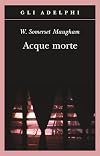
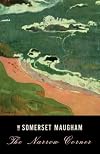
The Narrow Corner
by W. Somerset Maugham 
On This Page
Description
The Narrow Corner is a novel by the British writer W. Somerset Maugham, published by William Heinemann in 1932. A quote from Meditations, iii 10, by Marcus Aurelius, introduces the work: "Short therefore, is man's life, and narrow is the corner of the earth wherein he dwells." In the story, set "a good many years ago" in what is now Indonesia, a young Australian, cruising the islands after his involvement in a murder in Sydney, has a passionate affair on an island which causes a further show more tragedy. William Somerset Maugham was an English playwright, novelist, and short-story writer. He was among the most popular writers of his era and reputedly the highest-paid author during the 1930s. Both Maugham's parents died before he was 10, and the orphaned boy was raised in Whitstable, Kent by a paternal uncle, who was emotionally cold. He did not want to become a lawyer like other men in his family, so he trained and qualified as a physician. His first novel Liza of Lambeth (1897) sold out so rapidly that Maugham gave up medicine to write full-time. In 1915 he wrote Of Human Bondage, widely considered his masterpiece. During the First World War, he served with the Red Cross and in the ambulance corps before being recruited in 1916 into the British Secret Intelligence Service. He worked for the service in Switzerland and Russia before the October Revolution of 1917 in the Russian Empire. During and after the war, he travelled in India, Southeast Asia and the Pacific. He drew from those experiences in his later short stories and novels. show lessTags
Recommendations


















Member Recommendations
Member Reviews
Maugham descrive alla perfezione l'animo dei suoi personaggi. Qui abbiamo un medico molto probabilmente radiato dall'ordine e ritiratosi in Cina, un marinaio senza scrupoli, un giovane con un passato probabilmente torbido e una comunità di emigrati su un'isoletta dei mari del sud "decaduta", una sorta di simbolo di un tempo che fu.
Ci sono equilibri molto precari tra tutti i personaggi, luci e ombre, detti e non detti: e il medico, che sotto molti aspetti potrebbe essere una sorta di alter ego dell'autore, in qualche modo è un direttore d'orchestra delle voci che si incrociano. Non abbiamo verità, tutto è raccontato dalle voci dei personaggi, nessun narratore è affidabile, a partire dal dottore. E il fatto che lo siano più o meno show more tutti, li rende tutti, nel complesso, interessanti e fastidiosi allo stesso modo: non è possibile prendere "le parti" di nessuno, se non forse di Louise, l'unica figura femminile di rilievo di tutto il romanzo.
Il fatto che sia stato il libro giusto al momento giusto lo rende poi una delle migliori letture di un periodo già molto soddisfacente. show less
Ci sono equilibri molto precari tra tutti i personaggi, luci e ombre, detti e non detti: e il medico, che sotto molti aspetti potrebbe essere una sorta di alter ego dell'autore, in qualche modo è un direttore d'orchestra delle voci che si incrociano. Non abbiamo verità, tutto è raccontato dalle voci dei personaggi, nessun narratore è affidabile, a partire dal dottore. E il fatto che lo siano più o meno show more tutti, li rende tutti, nel complesso, interessanti e fastidiosi allo stesso modo: non è possibile prendere "le parti" di nessuno, se non forse di Louise, l'unica figura femminile di rilievo di tutto il romanzo.
Il fatto che sia stato il libro giusto al momento giusto lo rende poi una delle migliori letture di un periodo già molto soddisfacente. show less
Update: January 7, 2019. The book has haunted me since I read it a little less than a year ago. It grew on me, and I have now greatly revised my opinion of it. I'm taken with the characters, Saunders, Nicholls, Fred, Erick, Firth. All of them part of a mosaic of individuals who cannot reintegrate their lives into their former world. Saunders has become almost an outside narrative force, an impassive observer. The others have lost their moorings and will settle to their fates accordingly. Not only a commentary on empire and the people who made it but on people who don't belong anywhere and know it. Some reconcile, some flourish. Others wither.
--------------------------------------------------------------
An uneven work, The Narrow Corner show more nevertheless generates much meaning and intensity for its characters. It is actually almost like two different books in one cover. The first half begins as a work of adventure fiction--or even something built upon one of Maugham's travel books. But the second half returns to far more familiar territory for the author--the parlor room drama, where characters' souls are nakedly revealed and almost all left wanting.
Two things stand out: Maugham's notion of "distance." It is a matter of time rather than miles. What may seem just 45 miles beyond is a passage in time almost incalculable. Thus it makes it strangely complicated to shift from the overwhelming landscapes of Asian and Pacific islands to the isolated hothouse of human emotions broiling under the jungle sun of the island of Takana in the Dutch East Indies.
Second, Maugham questions the difference between "reality" and "dreams." Something of a favorite topic of mine, although I usually frame it as a question of whether there is a difference between "reality" and "fantasy." Maugham rightly sees that both ideas grow and die in our minds. They are an experience of our experience. There is no difference. And in the end it gives us special insight into the author's narrator, Dr. Saunders, who has willingly isolated himself in China and then broken away for a sea voyage to Takana. Saunders is an observer of people--and a bit of a psychoanalyst. Because of his being able to balance reality and dreams, however, he is the only one to emerge intact at book's end. The representative of dreams, Erik, fails and falls. So quite literally does the emblem of reality, Fred.
Interesting exercise, this novel. show less
--------------------------------------------------------------
An uneven work, The Narrow Corner show more nevertheless generates much meaning and intensity for its characters. It is actually almost like two different books in one cover. The first half begins as a work of adventure fiction--or even something built upon one of Maugham's travel books. But the second half returns to far more familiar territory for the author--the parlor room drama, where characters' souls are nakedly revealed and almost all left wanting.
Two things stand out: Maugham's notion of "distance." It is a matter of time rather than miles. What may seem just 45 miles beyond is a passage in time almost incalculable. Thus it makes it strangely complicated to shift from the overwhelming landscapes of Asian and Pacific islands to the isolated hothouse of human emotions broiling under the jungle sun of the island of Takana in the Dutch East Indies.
Second, Maugham questions the difference between "reality" and "dreams." Something of a favorite topic of mine, although I usually frame it as a question of whether there is a difference between "reality" and "fantasy." Maugham rightly sees that both ideas grow and die in our minds. They are an experience of our experience. There is no difference. And in the end it gives us special insight into the author's narrator, Dr. Saunders, who has willingly isolated himself in China and then broken away for a sea voyage to Takana. Saunders is an observer of people--and a bit of a psychoanalyst. Because of his being able to balance reality and dreams, however, he is the only one to emerge intact at book's end. The representative of dreams, Erik, fails and falls. So quite literally does the emblem of reality, Fred.
Interesting exercise, this novel. show less
This is one of Somerset Maugham's less well known novels, published in 1932. Dr Saunders is an expert eye surgeon who travels to a Malay island to cure a Chinese merchant's cataracts. This is the spur for him to spend some time touring round some (fictional) Malay places meeting a range of interesting and often eccentric characters (all European; there are no substantive Asian characters in the story). Not a great deal happens for much of the story, though one of the younger characters Fred Blake seems to have a secret that he is terrified of having found it, which emerges towards the end of the novel, after a tragic suicide following a misunderstanding. There are some good descriptions of the Malay archipelago, with Dr Saunders feeling show more he is in his natural environment here "with the sea and the jungle, and all the memories of the past crowding in upon you, and these people, the Malays, the Papuans, the Chinese, the stolid Dutch, with my books and as much leisure as if I were a millionaire – good heavens, what can the imagination want more". He believes that "The world consists of me and my thoughts and my feelings; and everything else is mere fancy......There is no possibility and no necessity to postulate anything outside myself. Dream and
reality are one. Life is a connected and consistent dream, and when I cease to dream, the world, with its beauty, its pain and sorrow, its unimaginable variety,
will cease to be." After the main action of the novel is over, he "rejoiced in a heavenly sense of spiritual independence. It was an exquisite pleasure to
him to know that there was no one in the world who was essential to his peace of mind". An interesting character study set in a lovely place, though not one of his strongest novels. show less
reality are one. Life is a connected and consistent dream, and when I cease to dream, the world, with its beauty, its pain and sorrow, its unimaginable variety,
will cease to be." After the main action of the novel is over, he "rejoiced in a heavenly sense of spiritual independence. It was an exquisite pleasure to
him to know that there was no one in the world who was essential to his peace of mind". An interesting character study set in a lovely place, though not one of his strongest novels. show less
Eurocentric, male-centric tale of passion and dispassion in the old East Indies. Maugham’s style is always a comfort: precise descriptions, detachment from his characters, an air of calm authority. So the action and the characters (rogues, frauds, obsessives, a mellow nihilist as the principal) are relayed to us from civilised, sedate scenes: gin pahits before dinner, cheroots on the veranda.
Published in 1932, W.Somerset Maugham novel The narrow corner harks back to the author's experiences in the Far East. The novel features some remarkably beautiful and sensuous descriptions of life in China, the beauty of the land and the people, and the purity and devotion of the main character's Chinese boy. In those days, having a "Chinese boy" was a very standard part of the expat's lifesyle, and the "boy" referred to a young male manservant, who would serve the Master from sun-up to late night, preparing tea, cooking meals, boiling water for shaving and preparing opium pipes, etc. For Somerset Maugham who was extremely discrete regarding his own personal life and privacy, it has been suggested that the tender descriptions of the show more "Chinese boy" in The narrow corner are a reflection of his interest in Asian men.
The plot of The narrow corner are reminiscent of novels by Jack London while the setting, cruising the Malayan archipelago, where the Dutch were the colonial masters, may remind readers of the novels of Joseph Conrad.
The narrow corner starts out slowly, with Dr. Saunders being called upon by an old Chinese relation to leave Fuzhou and come to operate on his eyes offering to pay him extremely well. After the operation, Dr. Saunders is stuck on the island, and when Captain Nichols, with the young Australian Fred Blake in tow arrives, he is tempted to offer for passage on their vessel. Captain Nichols is a bit of a boastful character, and unreliable at not just that, while Fred hides a dark secret. When the three of them put in at another island. On the island, under Dutch rule, Dr Saunders will wait for the Dutch packet boat Princess Jualiana , which can take him to a larger island. They mix with the local resident foreigners, a mixed bag of oddballs, and the handsome Blake falls in love with the daughter of an eccentric Englishman called Frith. Their presence and Blake's involvement with Louise leads to the suicide of the Danish Erik Christessen.
While not spectacular, and the plot development in the second part of the novel being a bit obscure, The narrow corner is a beautifully written novel, that might interest quite a few readers.
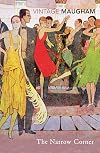
All the novels and short stories, as well as essays by W.Somerset Maugham were re-issued in new editions by Vintage in 2001. All book covers are styled in the art deco style of the Roaring Twenties, which unfortunately means that the cover for The narrow corner would give interested readers a completely wrong idea about the content and style of the novel. show less
The plot of The narrow corner are reminiscent of novels by Jack London while the setting, cruising the Malayan archipelago, where the Dutch were the colonial masters, may remind readers of the novels of Joseph Conrad.
The narrow corner starts out slowly, with Dr. Saunders being called upon by an old Chinese relation to leave Fuzhou and come to operate on his eyes offering to pay him extremely well. After the operation, Dr. Saunders is stuck on the island, and when Captain Nichols, with the young Australian Fred Blake in tow arrives, he is tempted to offer for passage on their vessel. Captain Nichols is a bit of a boastful character, and unreliable at not just that, while Fred hides a dark secret. When the three of them put in at another island. On the island, under Dutch rule, Dr Saunders will wait for the Dutch packet boat Princess Jualiana , which can take him to a larger island. They mix with the local resident foreigners, a mixed bag of oddballs, and the handsome Blake falls in love with the daughter of an eccentric Englishman called Frith. Their presence and Blake's involvement with Louise leads to the suicide of the Danish Erik Christessen.
While not spectacular, and the plot development in the second part of the novel being a bit obscure, The narrow corner is a beautifully written novel, that might interest quite a few readers.
All the novels and short stories, as well as essays by W.Somerset Maugham were re-issued in new editions by Vintage in 2001. All book covers are styled in the art deco style of the Roaring Twenties, which unfortunately means that the cover for The narrow corner would give interested readers a completely wrong idea about the content and style of the novel. show less
Another worthwhile read by Maugham. The story captures the essence of a life in the South Seas that has long since past. Interesting characters and story lines- however, it was odd that while the majority of the book focuses on Dr. Saunders, the real "action" concerned Fred Blake's interactions with women, both of which have unintended and compelling results.
Maugham's characters are always special and usually placed in provoking situations. This work is proof of Maugham's magic.
Members
- Recently Added By
Lists

In or About the 1930s
198 works; 27 members

The Novels of W. Somerset Maugham
22 works; 2 members
Author Information

709+ Works 46,804 Members
Writer William Somerset Maugham was born in Paris on January 25, 1874. He attended St. Thomas's Medical School in London. A prolific writer, Maugham produced novels, short stories, plays, and an autobiographical novel, "Of Human Bondage." Although he remains popular for his novels and short stories, when he was alive his plays, now dated, were show more also popular, and in 1908 four of his plays ran simultaneously. Maugham died in Nice, France, on December 16, 1965. (Bowker Author Biography) show less
W. Somerset Maugham has a Legacy Library. Legacy libraries are the personal libraries of famous readers, entered by LibraryThing members from the Legacy Libraries group.
Some Editions
Series
Belongs to Publisher Series
Work Relationships
Common Knowledge
- Canonical title
- The Narrow Corner
- Original title
- The Narrow Corner
- Alternate titles
- Acque morte [Italian]; Невъзможно бягство [Bulgarian]
- Original publication date
- 1932
- People/Characters
- Dr. Saunders; Captain Nichols; Fred Blake; Dr. Frith; Louise Frith; Erik Christessen (show all 8); Ah Kay; Kim Ching
- Important places
- Kanda Meira
- Related movies
- The Narrow Corner (1933 | IMDb); Isle of Fury (1936 | IMDb)
- Epigraph
- Short, therefore, is man's life, and narrow is the corner of the earth wherein he dwells.
- First words
- All this happened a good many years ago.
- Quotations
- La cosa più preziosa che ho imparato dalla vita è di non rimpiangere niente. La vita è breve, la natura ostile, e l’uomo assurdo; ma, stranamente, le sventure hanno per lo più i loro compensi e con un certo umorismo e u... (show all)na buona dose di senso comune possiamo cavarcela discretamente in questa faccenda del vivere, che dopotutto ha ben poca importanza
Transmigration? Look at the sea: wave follows wave, it is not the same wave, yet one causes another. So the beings travelling through the world are not the same today and tomorrow, nor in one life the same as in another; and ... (show all)yet it is the urge and the form of the previous lives that determine the character of those that follow. - Last words
- (Click to show. Warning: May contain spoilers.)He sighed a little, for whatever it was, if the richest dreams the imagination offered came true, in the end it remained nothing but illusion.
- Original language
- English
Classifications
Statistics
- Members
- 658
- Popularity
- 44,021
- Reviews
- 14
- Rating
- (3.83)
- Languages
- 11 — Dutch, English, Finnish, French, German, Hebrew, Hungarian, Italian, Russian, Spanish, Swedish
- Media
- Paper, Audiobook, Ebook
- ISBNs
- 29
- UPCs
- 1
- ASINs
- 39